


Getting a new dog changes everything—your daily routine, your home environment, and probably your sleeping schedule. Whether you're bringing home your first puppy or you've had dogs before, solid advice for new dog owners makes the difference between a smooth transition and months of preventable frustration. This guide walks you through everything you need to know, from day one decisions to long-term habits that'll serve you and your dog for years.
What Does Getting a New Dog Really Mean?
Getting a new dog isn't just about picking out a cute face at the shelter or bringing home a puppy. It's a 10 to 15-year commitment that affects nearly every part of your life. I've seen this a hundred times—people focus on the fun stuff like choosing a name and buying toys, then feel blindsided by the actual work involved.

The reality includes:
- Daily feeding schedules (twice a day for most adult dogs, 3-4 times for puppies)
- Potty breaks every 2-4 hours initially, gradually extending as the dog matures
- Training sessions that need to happen consistently, not just when you feel like it
- Veterinary care including initial exams, vaccinations, spay/neuter surgery, and annual check-ups
- Exercise requirements ranging from 30 minutes for small breeds to 2+ hours for working breeds
- Mental stimulation through training, puzzle toys, and social interaction
Dogs are den animals that thrive on routine and clear communication. They need to understand what you expect from them, and they need you to be consistent about it. That consistency starts before your dog even arrives home.
The commitment also means financial responsibility. Between food, veterinary care, supplies, training tools, and unexpected medical expenses, you're looking at several thousand dollars per year depending on your dog's size and health needs. First-time owners especially should budget realistically before bringing a dog home.
How the First 30 Days Actually Work
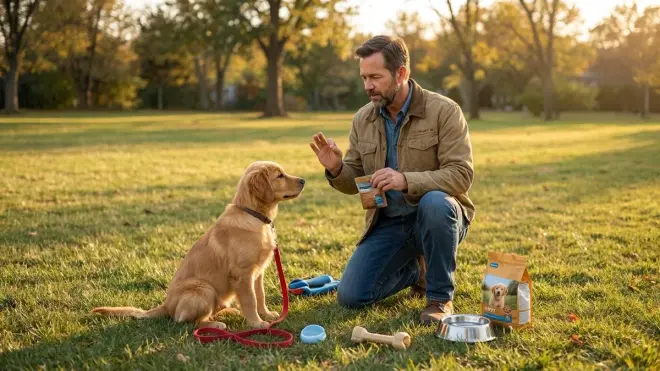
The first month determines everything. This is when your dog learns what's allowed, what your daily rhythm looks like, and whether they can trust you. Here's what usually works, based on what I've seen succeed over and over.
The first 72 hours are critical. Your dog is figuring out their new environment, processing stress, and testing boundaries. During this period, keep things simple—establish a feeding spot, a sleeping spot, and a potty area. Don't invite every friend and neighbor over to meet the new dog. Give them space to decompress.
You'll want to establish a feeding routine immediately. Choose a high-quality food appropriate for your dog's age and size—if you're unsure where to start, check out our guide on how to choose dog food. Feed at the same times every day, and pick up the bowl after 20 minutes whether they've finished or not. This creates predictability and helps with potty training since you'll know when they need to go out.
Potty training starts hour one. Take your dog out first thing in the morning, after every meal, after naps, and before bed. For puppies under 6 months, that means every 2-3 hours during the day. Stand outside with them—don't just let them out—and reward them immediately when they go in the right spot. Training aids like the NatureVet Potty Here Training Spray can help establish a designated potty area, especially if you have a large yard or need to train for apartment pad use.
Sleep arrangements matter more than most people realize. Where your dog sleeps the first night often becomes their expectation. If you want them in a crate eventually, start there now. If you're okay with them on your bed forever, fine—but know that's the pattern you're setting. I usually recommend crate training for the first few months regardless, since it helps with potty training and gives your dog a safe space.
The first week is about patterns, not perfection. You're establishing routines: wake-up time, breakfast, potty break, play time, lunch, another potty break, training session, dinner, evening walk, final potty, bedtime. Dogs learn through repetition, so the more consistent you are this first week, the faster everything clicks into place.
By week two, you can start introducing short training sessions—just 5-10 minutes, twice a day. Start with simple stuff: name recognition, sit, and recall. Use small, soft treats that your dog can eat quickly without breaking focus. Our article on how to use treats for puppy training covers portion control and timing, which matters more than most first-time owners realize.
Week three is when you'll see their real personality emerge. The initial stress wears off, and your dog starts testing what they can get away with. This is normal. Stay consistent with your rules—if they weren't allowed on the couch last week, they're still not allowed today.
By day 30, you should have a predictable routine, house training should be progressing (though not necessarily perfect), and your dog should recognize their name and respond to at least one or two basic commands. If you're not there yet, don't panic—rescue dogs especially can take longer to adjust. The 3-3-3 rule for rescue dogs explains why some dogs need extra time.
Why This Early Period Matters So Much

The first 30 days aren't just about survival—they're about setting foundations that either make the next decade easier or create problems you'll fight for years.
Dogs learn constantly, whether you're actively teaching or not. Every interaction teaches them something. When you let them pull on the leash to get to the park, you've taught them that pulling works. When you give them attention because they're barking, you've reinforced barking. The advice for new dog owners that I give most often is this: assume your dog is always learning, and make sure you're teaching what you actually want.
Early socialization affects your dog's entire life, especially for puppies under 16 weeks. This is their critical learning period when they form opinions about the world. Positive experiences with other dogs, people, sounds, and environments during this window create confident adult dogs. Lack of socialization or negative experiences create fearful, reactive dogs that are harder to manage.
That doesn't mean overwhelming your puppy with stimulation. I've seen people take 8-week-old puppies to crowded farmers markets and wonder why the dog is terrified. Socialization means controlled, positive exposures at the dog's pace—not forcing them into situations they're clearly uncomfortable with.
The habits you allow become permanent expectations. If your 12-week-old puppy sleeps in your bed because they're small and cute, they'll expect to sleep there at 80 pounds. If you feed them scraps at the table, you'll have a beggar for life. If you skip training sessions when you're tired, you're teaching yourself that training is optional—and your dog's behavior will reflect that.
This early period is also when you catch potential health or behavioral issues before they become serious problems. Your first vet visit checklist for new dogs should happen within the first week, ideally. The vet will check for parasites, evaluate overall health, discuss vaccination schedules, and answer questions about diet and development. Don't wait until something seems wrong.
Types of Dogs and How It Changes Your Approach
Not all new dog advice applies equally to every situation. A 10-week-old Labrador puppy needs completely different management than a 5-year-old rescue Beagle or a 12-year-old senior dog you're adopting.
Puppies (8 weeks to 6 months)
Puppies are blank slates with sharp teeth and no bladder control. They need structure, consistency, and patience. Your main focus areas are house training, socialization, bite inhibition, and basic obedience.
Puppies under 12 weeks need to eat 3-4 times daily. Their nutritional needs are specific—they need puppy-formulated food with appropriate calcium and phosphorus ratios, especially large-breed puppies where improper nutrition can cause skeletal problems. Our guide on best puppy food for large breeds explains why this matters and what to look for on labels.
House training takes 4-6 months for most puppies, sometimes longer for small breeds. You cannot expect a 10-week-old puppy to "hold it" for more than 2-3 hours. Their bladder physically isn't developed enough. When accidents happen, clean them thoroughly with an enzymatic cleaner and take responsibility for not getting the puppy outside in time—don't blame the puppy.
The biting phase (8-16 weeks typically) frustrates every first-time puppy owner. Puppies explore the world with their mouths, and they're teething. Proper training aids help redirect that chewing to appropriate items, but you'll still need to teach bite inhibition through consistent reactions when they bite too hard.
Adult Dogs (1-7 years)
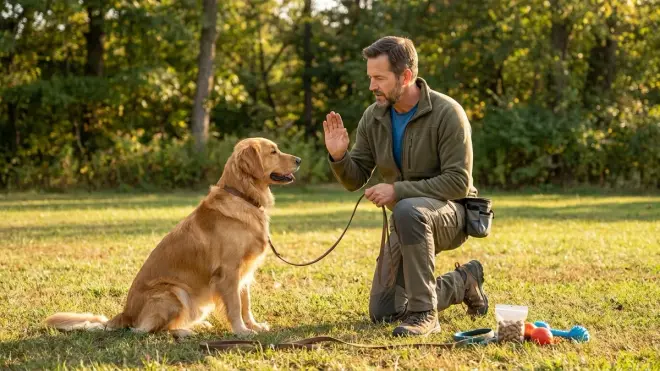
Adult dogs come with established personalities and some degree of training, though "some degree" varies wildly. A well-socialized 3-year-old from a good home is a completely different project than a 2-year-old who spent their life tied in a backyard.
The biggest advice for new dog owners adopting adults: give them time to decompress. Adult rescue dogs often shut down for the first few days—they might not eat much, they seem scared, they won't play. This is normal stress response. Don't force interaction. Let them observe and adjust on their schedule.
Adult dogs can typically hold their bladder for 6-8 hours, but don't assume a newly adopted dog is house trained just because they're past puppyhood. They need to learn where you want them to go in your home with your schedule. Start house training protocols from scratch for the first week, then adjust based on what you observe.
Many adult rescue dogs come with some degree of training, which is great—but they also come with established habits and potential behavioral baggage. Food guarding, fear-based reactivity, separation anxiety, these are all things puppies rarely show but adult rescues sometimes bring with them. You're not starting with a blank slate, which can be good or challenging depending on what's already written there.
Senior Dogs (7+ years, varies by breed)
Senior dogs are underrated adoption candidates. They're typically calmer, already trained, and past the destructive chewing phase. But they need consideration for age-related changes. Our complete guide to senior dog care covers health monitoring in detail, but the basics include joint support, dental health, and cognitive function.
Senior dogs need appropriate nutrition. Their metabolism slows, their activity decreases, and they're prone to weight gain. They also need easily digestible protein and ingredients that support joint health. Choosing the right food for senior dogs matters more than it did when they were younger.
Exercise requirements change. A senior Labrador might need two 20-minute walks instead of one 90-minute run. Watch for limping, reluctance to jump, or difficulty standing after rest—these are signs of arthritis, which affects most dogs over 8 years old to some degree. Understanding mobility issues in senior dogs helps you adjust their environment and activities appropriately.
Don't assume a senior dog's behavior is fixed and unchangeable. Old dogs absolutely can learn new things. I've successfully trained 10-year-old dogs who never had structured training before. It just takes patience and shorter sessions since older dogs tire more easily.
Breed-Specific Considerations
Herding breeds (Border Collies, Australian Shepherds, Cattle Dogs) need jobs. Without sufficient mental stimulation, they create their own entertainment—usually something you won't appreciate. These dogs need training, tasks, puzzle toys, and activities beyond basic walks.
Terriers were bred to hunt and kill small animals independently. This means high prey drive, stubbornness, and often significant dog-selectiveness. Terrier owners need consistent boundaries and realistic expectations about off-leash reliability.
Hounds (Beagles, Bassets, Coonhounds) follow their noses, sometimes to the exclusion of everything else. Recall training is harder with hounds. They're also vocal—Beagles bark and howl, it's what they do. If you can't handle noise, don't get a hound.
Brachycephalic breeds (Bulldogs, Pugs, Boston Terriers) have specific health considerations due to their flat faces. They overheat easily, can't exercise as intensely as other breeds, and often have breathing problems that require veterinary management. First-time owners sometimes underestimate the medical costs associated with these breeds.
Frequently Asked Questions
What's the hardest part of having a new dog?

The hardest part is maintaining consistency when you're tired, frustrated, or busy. Training a dog means following through with rules and routines even when you've had a long day and just want to relax. The second hardest part is managing your expectations—most behavioral issues and training challenges take weeks or months to resolve, not days, and new owners often expect faster progress than is realistic for dogs still adjusting to a new environment.
How long before my new dog feels at home?
Most dogs show significant comfort by 3 months, though rescue dogs and anxious dogs can take 6 months to a year to fully settle in. The first three days they're usually overwhelmed, the first three weeks they're learning your routine, and the first three months they're building real trust and confidence. You'll know they feel at home when they seek you out for comfort, show their personality through play, and relax enough to sleep deeply in your presence.
Should I adopt a puppy or an adult dog as a first-time owner?
Adult dogs are often better for first-time owners because they're past the demanding puppy phase, usually have some training foundation, and their adult personality is already evident so you know what you're getting. Puppies require more time investment, training consistency, and patience through destructive phases. That said, if you have time to dedicate to training and want to shape a dog from the beginning, puppies can work—just understand it's a bigger commitment. Our comparison of puppy versus adult dog adoption covers this decision in detail.
How much does it cost in the first year of dog ownership?
Budget $2,000-$4,000 for the first year, depending on dog size and health. This includes adoption fees ($50-$500), initial veterinary care including spay/neuter ($300-$800), vaccinations and preventatives ($200-$400), quality food ($300-$800 annually), supplies like crate, bowls, leash, collar, bed ($200-$400), training tools and possibly classes ($100-$500), and emergency fund for unexpected vet visits. Large breed dogs cost more to feed and medicate, and purebred dogs from breeders have higher initial costs than shelter adoptions.
What do I do if my new dog won't eat?
Don't panic—many dogs skip meals for the first 24-48 hours due to stress. Offer food at regular times, leave it down for 20 minutes, then pick it up without comment or fuss. Make sure the food is fresh and appropriate for their age. If your dog hasn't eaten anything after 48 hours, call your vet. For puppies under 4 months, contact your vet after 12-24 hours without eating, as they're more vulnerable to low blood sugar. Sometimes switching to a different food helps if the dog simply doesn't like what you're offering, but make changes gradually.
Essential Supplies and Tools
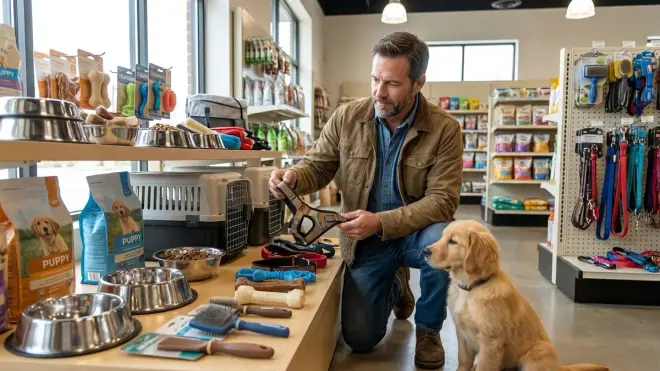
You need specific items ready before your dog arrives. Our new dog checklist covers everything, but here are the non-negotiables.
Food and water bowls: Stainless steel or ceramic, elevated or floor-level depending on your dog's size. Avoid plastic, which harbors bacteria and can cause chin acne in some dogs.
Collar and leash: Start with a flat buckle collar and a 6-foot leash. Skip retractable leashes for now—they teach pulling and give you less control. Make sure the collar fits properly: you should be able to fit two fingers between the collar and your dog's neck.
ID tag: Get this immediately, before your dog even comes home. Include your phone number at minimum. Microchipping happens at the vet, but a visible tag works if someone finds your dog before they can get to a scanner.
Crate: Size matters—your dog should be able to stand up, turn around, and lie down comfortably, but not so large they can pee in one corner and sleep in another. For growing puppies, get a crate with a divider so you can adjust the space as they grow.
Bedding: Something washable, because accidents happen. Veterinary-grade crate pads or simple blankets work fine. Skip expensive orthopedic beds until you know your dog won't destroy them.
Food: Start with whatever your dog was eating before, even if you plan to switch later. Sudden food changes cause digestive upset. If you're bringing home a puppy from a breeder or adopting from a shelter, ask what they've been feeding and get at least a week's supply of the same thing.
Cleaning supplies: Enzymatic cleaner specifically designed for pet accidents. Regular cleaners don't eliminate the odor fully, and dogs will return to the same spot if they can still smell it. Stock up—you'll need it.
Training treats: Small, soft, high-value treats your dog actually cares about. Think pea-sized pieces of real meat, cheese, or commercial training treats, not large milk bones. Our guide on puppy training treats explains what makes a good training treat and how much to use.
Toys: A variety of textures and purposes—chew toys like Kongs, tug toys for interactive play, and puzzle toys for mental stimulation. Rotate toys weekly so they stay interesting. Supervise new toys initially to make sure your dog can't destroy them and swallow pieces.
Gates and barriers: To control access and create safe spaces during the adjustment period. Especially important if you have stairs, rooms you want off-limits, or areas where your dog shouldn't be unsupervised yet.
For specific training situations, you might need additional tools. Training collars, for example, can help with specific behavioral issues when used correctly—our guide on dog training collars covers when they're appropriate and how to introduce them safely. But most new owners should start with basic flat collars and focus on positive reinforcement before considering specialized training equipment.
If you work long hours or travel regularly, consider automatic feeders for consistent meal times, though these should supplement—not replace—your presence and interaction.
Training Foundations for the First Month
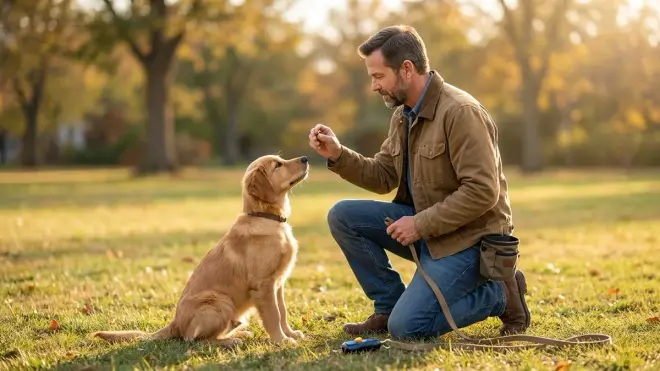
Training starts the moment your dog arrives, whether you're actively teaching or not. Here's what to prioritize.
Name recognition comes first. Say your dog's name, and when they look at you, immediately reward them. Do this dozens of times daily in different contexts—before meals, during play, randomly throughout the day. The goal is that your dog's name means "pay attention to me right now." Don't poison their name by using it when you're angry or when something bad is about to happen.
Sit is your foundation obedience command. Hold a treat at your dog's nose, lift it slightly up and back over their head. Most dogs naturally sit as they track the treat upward. Mark the moment their butt hits the ground with "yes!" or a clicker, then reward. Practice this 10-15 times daily in short sessions. Once they're reliably sitting when you lure with a treat, add the verbal cue before the hand motion.
Recall (coming when called) literally saves lives. Start in low-distraction environments. Say your dog's name followed by "come!" in an upbeat tone, then reward heavily when they reach you—treats, praise, everything good happens when they come to you. Never call your dog to you for something negative like nail trimming or to end play time. If you need to do something unpleasant, go get them instead.
Loose-leash walking prevents years of shoulder pain for you. The rule is simple: if the leash is tight, we don't move forward. When your dog pulls, stop walking. When they look back at you or the leash loosens, continue. This takes time—you might only make it 20 feet down the sidewalk in the first session. That's fine. You're teaching that pulling doesn't work. Basic training techniques for new dogs covers this progression in detail.
Crate training is controversial but valuable. Done correctly, a crate becomes your dog's safe space. Feed meals in the crate, toss treats in randomly, never use it for punishment. Start with short durations while you're home—5 minutes, then 10, then 20. Build duration gradually. Most dogs will nap in their crate willingly within 2-3 weeks if you don't force the issue or use it as a punishment.
House training requires management, not punishment. Take your dog out frequently, reward heavily when they go outside, supervise constantly when inside, and confine them when you can't supervise. If you catch them mid-accident, interrupt with "ah-ah!" (not yelling, just disruption) and immediately take them outside to finish. If you find an accident after the fact, you missed your chance to teach—clean it up without drama. Rubbing a dog's nose in their mess teaches nothing except that you're scary and unpredictable.
Avoid common training mistakes. Don't repeat commands—if you say "sit" five times, you've trained your dog that "sit" means nothing until the fifth repetition. Give the command once, then help them succeed by luring or guiding. Don't use treats as bribes held in front of your dog's face—they're rewards delivered after the behavior happens. And don't start training sessions when you're frustrated. Dogs read your emotions, and training when you're angry creates negative associations.
Health and Veterinary Care Setup
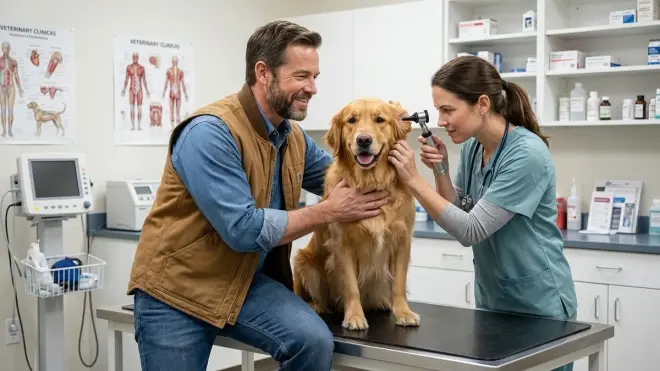
Your dog's health foundation gets established in these first weeks. Skip these steps, and you're likely facing preventable problems later.
Schedule a vet appointment within your first week, ideally within 72 hours of bringing your dog home. This visit establishes baseline health, catches any existing issues, and starts your dog's medical records at a new practice. Bring any health records from the shelter, breeder, or previous owner. The vet will check overall condition, listen to the heart and lungs, examine eyes, ears, and teeth, check for parasites, and discuss vaccination schedules.
Vaccinations protect against serious diseases. Core vaccines include distemper, parvovirus, adenovirus, and rabies. Puppies need a series of vaccinations starting at 6-8 weeks and continuing every 3-4 weeks until 16 weeks old. Adult dogs with unknown vaccination history typically get two rounds of vaccines 3-4 weeks apart, then annual or three-year boosters depending on local regulations and veterinary recommendations.
Parasite prevention matters year-round in most climates. Heartworm prevention is typically a monthly chewable or topical treatment—heartworm disease is expensive to treat and potentially fatal, so prevention is crucial. Flea and tick prevention comes in various forms: oral medications, topical treatments, or collars. Your vet will recommend what works best for your area and your dog's lifestyle.
Spaying or neutering typically happens between 6-12 months, though timing varies by breed and size. Large-breed dogs benefit from waiting longer to allow proper skeletal development—18-24 months for giant breeds. Discuss timing with your vet based on your specific dog. This surgery prevents unwanted pregnancies, reduces certain health risks like mammary cancer and testicular cancer, and often helps with behavioral issues like marking and roaming, though it's not a magic fix for all behavior problems.
Dental health starts now, not when your dog is 7 years old with rotten teeth. Get your dog comfortable with mouth handling from the beginning. Work up to brushing teeth daily with veterinary toothpaste—human toothpaste contains xylitol, which is toxic to dogs. Senior dog dental care becomes critical as dogs age, but you prevent most problems by starting good habits early.
Nutrition quality matters more than brand names. Look for foods that meet AAFCO standards, which ensures the food provides complete and balanced nutrition for your dog's life stage. Ingredient lists should start with named protein sources (chicken, beef, salmon—not "meat meal"). Avoid foods with artificial colors, unnecessary fillers, and ingredients known to cause problems.
Watch for signs that something's wrong: lethargy, loss of appetite for more than 24 hours, vomiting more than once, diarrhea lasting more than a day, excessive thirst, difficulty breathing, limping, or behavioral changes. When in doubt, call your vet. I've never met a veterinarian who minded answering questions, especially for new pet owners trying to figure out what's normal.
Common Problems in the First 30 Days
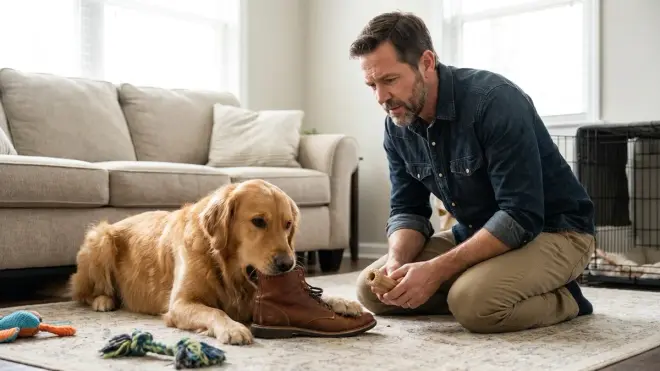
Even with perfect preparation, you'll hit some bumps. Here's what I see most often and what actually works to fix it.
Nighttime crying drives new owners crazy. Puppies especially will vocalize when crated at night—they're used to sleeping with littermates, and now they're alone. This is normal, but you can't reinforce it by letting them out every time they cry. Set up the crate in your bedroom for the first few weeks so they can hear and smell you. Cover the crate partially to create a den feeling. A ticking clock or heartbeat toy sometimes helps. If they cry, wait for a pause in the crying, then offer quiet reassurance. Don't make a big deal of it. Strategies for stopping nighttime barking cover this in depth.
Accidents happen. You will find pee puddles. You will step in poop. This is part of the deal for the first few months. The solution is management and consistency, not punishment. Supervise constantly, confine when you can't supervise, and take your dog out frequently. When accidents happen, clean thoroughly with enzymatic cleaner and adjust your schedule—clearly they need more frequent breaks.
Chewing is exploration and teething for puppies. Redirect to appropriate items immediately when you catch them chewing something forbidden. Provide variety—soft toys, hard rubber toys, rope toys, frozen Kongs. Puppy-proof your home by removing temptation: shoes in closets, kids' toys picked up, electrical cords hidden or covered.
Separation anxiety shows up as destruction, inappropriate elimination, or excessive vocalization when you're gone. Start building independence immediately. Leave your dog alone for short periods even when you're home—put them in their crate or behind a gate while you're in another room. Build duration gradually. Don't make departures and arrivals big emotional events. Understanding dog behavior in the first month explains what's normal adjustment versus actual separation anxiety that needs professional help.
Leash reactivity (barking, lunging at other dogs or people while on leash) is common in rescue dogs and sometimes develops in puppies who weren't properly socialized. Management comes before training: increase distance from triggers, keep treats handy for counterconditioning, and don't put your dog in situations they can't handle yet. This problem usually needs professional help if it's severe.
Food aggression ranges from mild guarding to serious aggression. Never punish a dog for growling near their food bowl—you're teaching them to skip the warning and go straight to biting. Instead, make your approach mean good things: walk by and toss high-value treats into their bowl. If the guarding is serious, contact a professional trainer before someone gets bitten.
Jumping on people is self-rewarding—they jump, they get attention, even if that attention is you pushing them off. The fix is removing the reward: ignore completely when they jump (turn away, cross your arms, no eye contact, no speaking), then reward heavily when four paws are on the floor. Every family member and visitor must be consistent or you're just teaching the dog that jumping sometimes works.
Building Long-Term Success
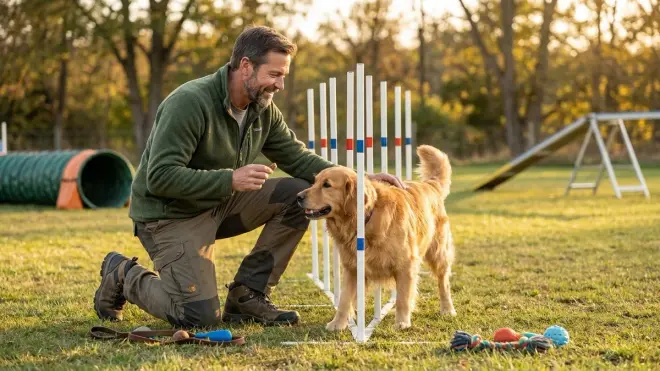
The first month creates your foundation, but these early patterns need to extend into permanent habits.
Training is ongoing, not a phase. Even after your dog knows basic commands, you need regular practice. Dogs don't generalize well—a sit command learned in your kitchen doesn't automatically transfer to the park without practice in multiple environments. Short, frequent training sessions (5-10 minutes daily) maintain and improve your dog's skills better than occasional marathon sessions.
Socialization continues past puppyhood. Dogs need regular, positive exposure to the world throughout their lives. Dogs who stop having new experiences become fearful and reactive. This doesn't mean overwhelming them, but it does mean regular walks in different locations, meeting friendly dogs, and encountering various people and situations.
Exercise and mental stimulation prevent behavioral problems. A tired dog is a good dog—but mental stimulation tires dogs faster than physical exercise. Training sessions, puzzle toys, food-dispensing toys, and games that make them think all qualify. Proper training tools can help provide structure and mental engagement, especially for intelligent breeds.
Routine provides security. Dogs thrive on predictability. Feed at the same times, walk the same routes (while occasionally adding variety), and maintain consistent rules. This doesn't mean your life has to be rigid, but your dog should generally know what to expect from their day.
Your relationship deepens over time. The bond you have with your dog at 3 months won't compare to the relationship at 3 years. You'll learn each other's signals and patterns. They'll learn what you expect, and you'll learn what they need. This takes time. Don't expect instant connection, especially with rescue dogs who need to build trust.
Adjust as your dog ages. A training plan that works for a 1-year-old needs modification for a senior dog. Exercise requirements change, health needs shift, and patience becomes even more important. The advice for new dog owners getting a senior dog includes preparing for age-related changes from the beginning—joint supplements, appropriate exercise levels, and modified training approaches.
Your First Month Checklist
Here's what you need to accomplish in the first 30 days, realistically:
Week 1:
- First vet visit completed
- Feeding routine established (same times, same location)
- Designated potty area and regular outdoor schedule
- Sleep location decided and consistently used
- Dog responds to their name
- Basic house rules clear (what furniture is allowed, where dog can/can't go)
Week 2:
- Consistent potty training progress (fewer accidents)
- "Sit" on verbal cue in low-distraction environments
- Comfortable in crate for 30-minute periods
- Regular walk schedule established
- Socialization begun (if appropriate for vaccination status)
Week 3:
- Recall started in house and yard
- Leash walking improving (less pulling)
- Comfortable being left alone for short periods
- One or two safe dog friends identified for play if dog is social
- Teething/chewing redirected to appropriate items
Week 4:
- Emergency vet contact information saved
- Training routine established (time of day, location, duration)
- Exercise needs being met consistently
- Clear communication patterns developing
- Both you and your dog adjusting to new normal
This isn't perfection—it's progress. Some dogs will exceed these milestones, others will lag behind, especially rescue dogs dealing with previous trauma or lack of training. What matters is consistent forward movement and realistic expectations.
Moving Forward
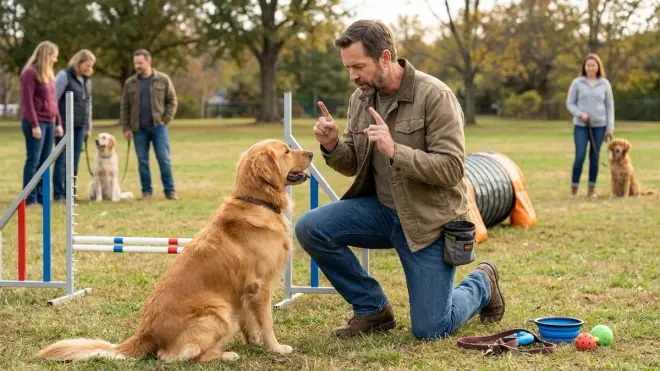
Getting a new dog rewrites your daily life, and those first 30 days determine whether you're building habits that'll serve you for years or creating problems you'll spend months fixing later.
The advice for new dog owners I come back to most often: Be consistent, be patient, and remember that your dog is learning constantly—make sure you're teaching what you actually want them to know. Every interaction is training, every experience shapes their behavior, and every day you invest in solid foundations pays off exponentially down the road.
You don't need to be a perfect trainer. You don't need expensive equipment or complicated protocols. You need commitment to following through with what you start, realistic expectations about timelines, and willingness to adjust your approach when something isn't working. That's what separates dogs who integrate smoothly into family life from dogs who become frustrating, expensive problems.
The relationship you build with your dog over these first weeks—and months, and years—becomes one of the most rewarding things in your life. But only if you do the work now, when it counts most. Your future self will thank you for every training session you didn't skip, every time you maintained boundaries when it was easier to make exceptions, and every moment you invested in building clear communication with your dog.
Get started with the basics—check out our guide to puppy-proofing your home if you haven't brought your dog home yet, review our complete supply list to make sure you have what you need, and consider what type of food will work best for your specific dog using our comprehensive nutrition guide. You've got this.