
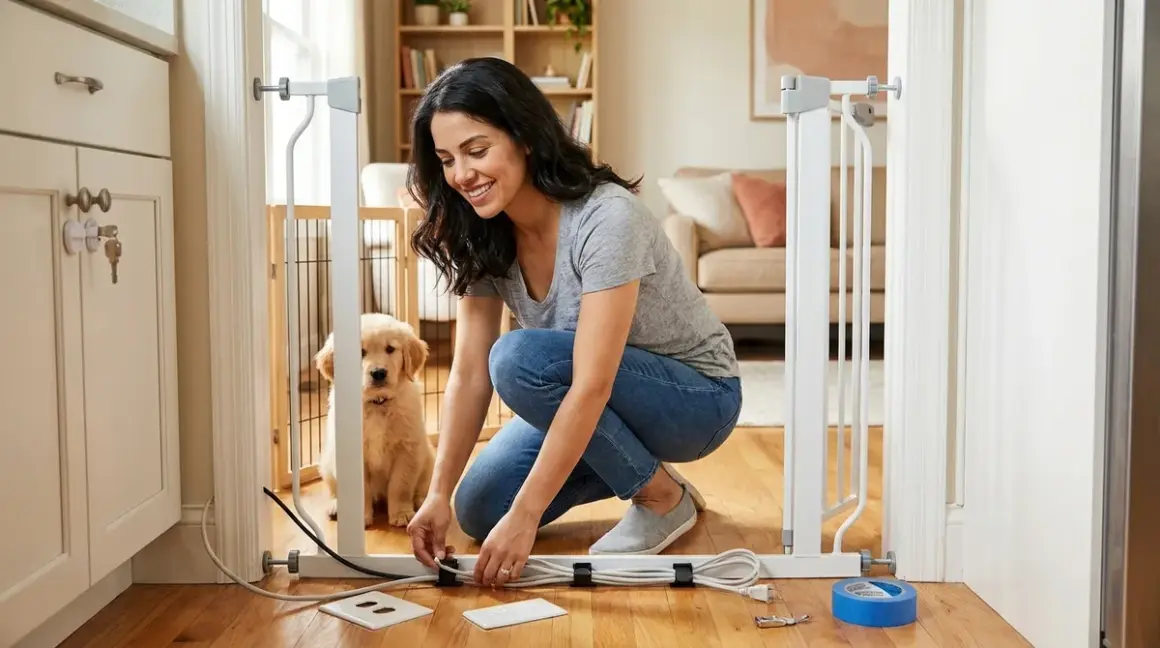

I'll be honest—I'm more familiar with guinea pig-proofing my tiny apartment than learning how to puppy proof your home, but the principles are surprisingly similar. Whether you're setting up a cozy corner for cavies or preparing for an eight-week-old Labrador, it's all about identifying hazards before your new family member finds them first. In this guide, I'll walk you through the room-by-room process of creating a safe environment for your incoming puppy, covering everything from electrical cords to toxic plants. This project takes about 3-4 hours for an average home, requires no special skills, and could literally save your puppy's life—not to mention your favorite shoes.
What You'll Need
Before you start puppy-proofing, gather these essential supplies:
- Baby gates or pet barriers (at least 2, adjustable to fit doorways 28-40 inches wide)
- Cable management solutions (cord covers, cable ties, or cord concealers)
- Cabinet locks or magnetic closures (childproof latches work perfectly)
- Bitter apple spray or pet-safe deterrent (choose food-grade formulations)
- Secure trash cans (step-on models with locking lids)
- Storage bins with tight-fitting lids (for organizing hazardous items you're relocating)
- Outlet covers (standard childproof plugs)
- Non-toxic cleaning supplies (for your final cleaning sweep)
- Notepad and pen (for keeping track of trouble spots as you walk through)
Step-by-Step Instructions
1. Start With a Floor-Level Perspective Assessment
Get down on your hands and knees—I know it sounds ridiculous, but this is where puppy-proofing gets real. When I first brought home my guinea pigs, I thought I'd spotted every potential issue from standing height. Then I got down to their level and discovered an entire world of dangling cords, dusty corners, and gaps behind furniture that looked like adventure playgrounds.
Crawl through each room of your home, paying special attention to what's within 24 inches of the floor. Puppies explore with their mouths, so anything chewable, swallowable, or temptingly dangly is a target. Look for electrical cords, phone chargers, window blind cords, and computer cables—these are prime chewing hazards that pose electrocution risks. Check baseboards for loose nails, splinters, or peeling paint (especially concerning in older homes with lead paint). Peer under furniture for forgotten items: coins, paperclips, rubber bands, hair ties, and those mysteriously migrating socks.
Make notes as you go. I use a simple room-by-room checklist, marking each hazard with its location and urgency level. You'll spot things you'd completely overlooked—like that gap behind the bookshelf that's exactly puppy-sized, or the fascinating pile of dust bunnies under the couch that definitely contains something questionable.
2. Secure All Chemicals, Medications, and Toxic Substances
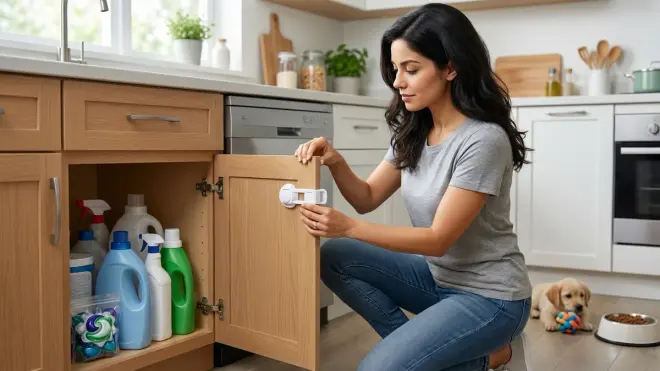
Puppies have zero judgment about what's safe to ingest, which makes your cleaning supplies, medications, and household chemicals major threats. Move everything potentially toxic to high shelves or locked cabinets—and I mean everything.
Start in the kitchen: dish soap, dishwasher pods (especially dangerous due to their candy-like appearance), oven cleaner, drain uncloggers, and anything containing bleach or ammonia. Even seemingly innocent items like baking chocolate, xylitol-containing products (gum, peanut butter, some baked goods), grapes, raisins, onions, and garlic need to go up high. Install childproof latches on lower cabinets or commit to keeping them completely empty of hazards.
Move to the bathroom: medications (both human and pet), vitamins, supplements, dental floss, razors, nail polish remover, hair dyes, and cosmetics. That bathroom trash can? It needs a secure lid or needs to be relocated entirely—used dental floss and cotton swabs are inexplicably fascinating to puppies and can cause serious intestinal blockages.
In your laundry room or utility area: detergents, fabric softeners, dryer sheets, bleach, stain removers, and especially antifreeze (ethylene glycol tastes sweet but is lethally toxic even in tiny amounts). In the garage: fertilizers, pesticides, automotive fluids, paints, solvents, and rodent poisons. The effort you put into this step pays off—according to the ASPCA, household toxins are among the top reasons puppies end up in emergency veterinary care.
3. Address Electrical Hazards and Chewable Temptations
When I puppy-proofed for my friend's new Golden Retriever, we counted seventeen accessible charging cables in her living room alone. Seventeen! Each one was a potential electrocution hazard wrapped in deliciously chewable rubber coating.
Bundle and elevate cords wherever possible. Run them behind furniture, tape them to baseboards with cord concealers, or use cable management sleeves (those split plastic tubes that zip around multiple cords). For cords that absolutely must remain accessible—like the lamp next to your reading chair—apply bitter apple spray or wrap them in cord protectors made from PVC or braided cable sleeves. Test the bitter spray on an inconspicuous area first to ensure it doesn't damage the cord coating.
Cover unused electrical outlets with standard childproof plugs. Puppies don't intentionally go after outlets the way they do cords, but an exploring nose or paw can make contact.
Remove or secure other chewable temptations: shoes (every single pair goes in a closet with a closed door), TV remotes, game controllers, books on low shelves, kids' toys, throw pillows with dangling tassels, and houseplant leaves within reach. I learned this lesson when my guinea pigs systematically destroyed every cardboard box corner in my apartment—if it's accessible and has texture, it's getting sampled. Puppies are exactly the same, just with more jaw strength.
4. Eliminate Toxic Plants and Create Safe Zones
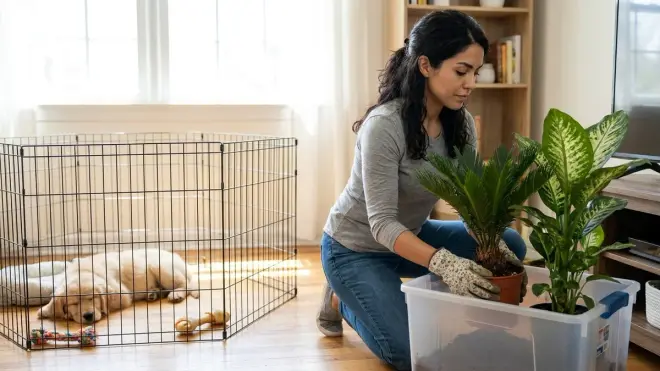
Here's where my plant-loving friends always push back: "But my fiddle-leaf fig is my baby!" I get it, truly. But many common houseplants are toxic to dogs, and puppies will absolutely sample that tempting greenery.
Remove or relocate these common toxic plants: lilies (extremely toxic), sago palms (all parts are deadly), azaleas, oleander, tulip bulbs, daffodils, chrysanthemums, English ivy, pothos, philodendrons, dieffenbachia, and aloe vera. Even "mildly toxic" plants can cause vomiting, diarrhea, drooling, and discomfort—not worth the risk during those chaotic first months. Move them to rooms your puppy won't access, hang them well out of reach, or temporarily rehome them with friends.
If you're attached to your greenery, create a puppy-safe plant collection instead: spider plants, Boston ferns, bamboo palms, prayer plants, and most succulents (except aloe) are non-toxic to dogs. Position them on high shelves or hanging planters—because even safe plants can cause digestive upset if your puppy devours half the pot, and you don't want disturbed soil all over your carpet.
While you're thinking spatially, establish puppy-free zones using baby gates. Block off rooms with particular hazards: home offices full of cables, craft rooms with small supplies, or any space with expensive or irreplaceable items. You might want to check out a comprehensive New Dog Checklist: Everything You Need Before Adoption Day to ensure you're covering all the bases beyond just safety.
5. Puppy-Proof Your Trash, Food Storage, and Laundry Areas
Trash cans are like treasure chests to puppies—fascinating smells, interesting textures, and occasionally "food" (spoiler: chicken bones and moldy leftovers are not food, but try telling that to a Beagle puppy). Every single trash can in your home needs to be puppy-proofed or relocated.
Invest in step-on trash cans with locking lids for the kitchen and bathroom. These require human coordination that puppies lack. Alternatively, move trash cans inside cabinets with secure latches or behind closed doors. Yes, this is less convenient for you—welcome to pet parenthood. That bathroom trash I mentioned earlier? It's a particular concern because of dental floss, which can cause life-threatening linear foreign body obstructions if swallowed.
Secure your food storage: Move dog food bags (and cat food, if you have felines) into sealed containers. Many puppies will chew through paper or plastic bags, gorge themselves, and end up with bloat or food poisoning. Store human food in upper cabinets or the refrigerator. Push chairs away from counters so they can't be used as launching pads—you'd be amazed how creative a motivated puppy gets.
In the laundry room, keep dirty laundry in closed hampers. Socks and underwear are inexplicably irresistible to puppies and are among the most common causes of intestinal blockages requiring surgery. The same goes for used dryer sheets—those things smell amazing to dogs and can cause chemical burns or blockages.
6. Secure Furniture, Block Small Spaces, and Create Physical Barriers
Puppies squeeze into spaces you wouldn't think possible—it's like they're part liquid. I once watched a friend's Corgi puppy wedge himself behind a radiator and then panic because he couldn't back out. That's the kind of scenario we're preventing.
Block access to tight spaces: behind and under appliances (refrigerator, stove, washer, dryer), behind entertainment centers, under beds with low clearances, and in the gaps between furniture and walls. Use furniture itself, cardboard barriers, or foam pipe insulation cut to size and wedged into gaps.
Stabilize tippy furniture: Bookcases, TV stands, and floor lamps can topple if a rambunctious puppy jumps against them or pulls on dangling cords. Secure tall furniture to walls using furniture anchors or L-brackets—this is standard earthquake safety that doubles as puppy protection.
Check window treatments: Cords from blinds pose strangulation risks. Use cord cleats to secure them high on the wall, or switch to cordless window coverings. Mini-blinds with tempting pull cords are particularly concerning.
Create a designated puppy area for when you can't supervise directly. This might be a kitchen sectioned off with baby gates, an exercise pen (X-pen), or a puppy-proofed bedroom. This space should contain your puppy's crate, water bowl, and safe toys—essentially, a hazard-free zone where they can't get into trouble. Many new dog owners find that establishing this safe space early ties into broader strategies like the 3-3-3 Rule for Rescue Dogs, which helps puppies adjust to their new environment gradually.
7. Prepare Your Outdoor Spaces and Garage
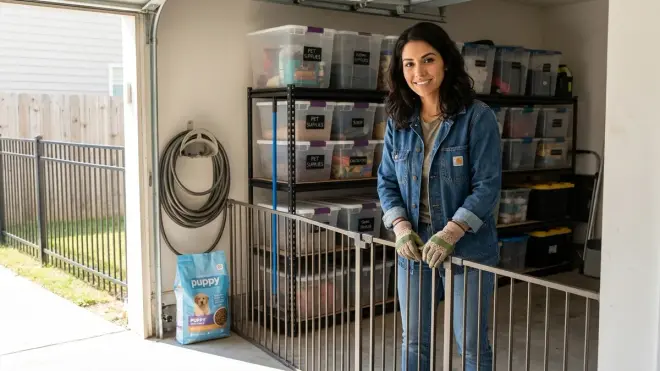
If you have a yard or patio, it needs puppy-proofing too. I don't have outdoor space myself—apartment living and all—but my friends with yards have learned this lesson the hard way.
Fence inspection: Walk your entire fence line looking for gaps, loose boards, holes dug by other animals, or spaces under gates. Puppies can squeeze through surprisingly small openings—if their head fits, their body will follow. A six-inch gap under your gate is an escape route. Secure all openings with wire mesh, additional boards, or buried fencing.
Remove or fence off hazards: Swimming pools (puppies can't always find the steps and can drown), koi ponds, hot tubs, fire pits, grills, and propane tanks. Check for toxic outdoor plants: foxglove, morning glory, yew, castor bean plants, and certain mushrooms that might sprout after rain.
Garden and lawn products: Lock away fertilizers, pesticides, herbicides, cocoa mulch (contains theobromine, the same toxin in chocolate), and slug bait. Even "pet-safe" products should be used with caution—wait until they've fully dried or been watered in before allowing puppy access.
Garage dangers: In addition to the chemicals mentioned earlier, secure tools with sharp edges, nails and screws (often spilled on garage floors), and anything small enough to swallow. Keep the garage door closed or use a baby gate to block access entirely.
8. Conduct a Final Walk-Through and Establish Training Setup
You've done the heavy lifting—now it's time for quality control. Go through your home one final time, this time thinking about the first 24 hours with your puppy.
Where will your puppy sleep? Set up a crate in a quiet corner of your bedroom or designated puppy area. Make sure the path from crate to outdoor potty spot is clear and hazard-free—you'll be making this walk at 2 a.m., half-asleep.
Establish a training station: Set aside a drawer or basket for training supplies: treats (consider Best Puppy Training Treats: 12 Top Picks for Fast Learning for recommendations), clicker if you're using one, and potty training aids. You might want to explore How to Use Puppy Training Spray for Potty Training Success or check out options like NatureVet Potty Here Training Aid Spray Explained: Ingredients and Effectiveness to give your puppy clear signals about appropriate elimination spots.
Double-check your supplies: Food and water bowls, age-appropriate puppy food (see Best Puppy Food for Large Breed Puppies if you're bringing home a big-breed pup), collar with ID tag, leash, and safe chew toys. You'll want multiple toy options—puppies need appropriate outlets for their chewing instincts.
Emergency preparedness: Save your veterinarian's number and the nearest 24-hour emergency vet clinic in your phone. Keep the ASPCA Poison Control number handy (888-426-4435). Having these ready before you need them makes crisis moments less panicky.
Do one last floor-level crawl. I promise you'll spot something you missed—we all do.
Pro Tips & Common Mistakes
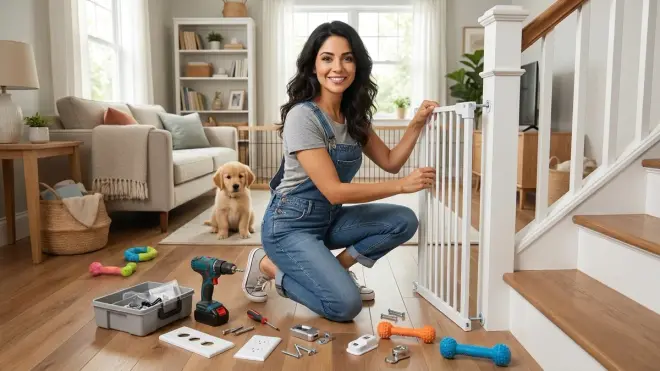
The biggest mistake? Assuming you'll remember to close that one cabinet or keep the bedroom door shut. You won't. In the chaos of puppy life, doors get left open and cabinets stay ajar. Build your puppy-proofing assuming human error—because it will absolutely happen.
Pro tip on cord management: For cords that must remain low (like that floor lamp), try running them through PVC pipes or foam pipe insulation split lengthwise. It's not pretty, but it's effective and much cheaper than an emergency vet visit.
Don't puppy-proof just the living areas. Puppies are Houdinis. That guest bedroom you "never use"? Your puppy will somehow end up in there, probably when you're in the shower. Proof the entire house or commit to keeping doors closed—and honestly, closed doors are easier to forget than you'd think.
The scent trick: After you've puppy-proofed, wipe down tempting surfaces (bottom shelves, baseboards, furniture legs) with a pet-safe cleaner or diluted vinegar solution. This removes interesting smells that might attract investigation. It's like hitting the reset button on scent trails.
Rotate your hazard checks: Puppies grow fast. That coffee table they couldn't reach last week? They can reach it now. Every few weeks, repeat your floor-level assessment to catch newly accessible hazards. What's safe for an eight-week-old puppy might be completely vulnerable to a twelve-week-old with an extra three inches of height and a lot more confidence.
Consider your puppy's breed characteristics: Terriers dig and burrow. Retrievers carry everything in their mouths. Herding breeds nip at moving objects. Knowing your breed's tendencies helps you predict problem areas. Your First Vet Visit Checklist for New Dogs and Puppies is a great time to ask your vet about breed-specific behaviors to watch for.
Frequently Asked Questions
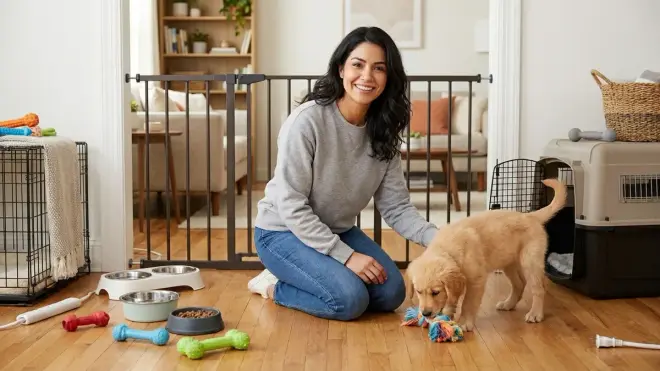
How long does a house stay puppy-proofed? Most homes need active puppy-proofing for 12-18 months, though this varies by breed and individual dog. Destructive chewing typically peaks between 4-7 months during teething, then gradually decreases as your dog matures and learns house rules. Keep safety measures like secured chemicals and covered outlets permanently, but you can relax restrictions on accessible furniture and decor once your dog demonstrates consistent good judgment and completes basic obedience training.
Do I need to puppy-proof if I'm getting an adult dog instead of a puppy? Yes, though the focus shifts slightly. Adult dogs—especially those new to home environments or coming from shelters—still explore unfamiliar spaces with their mouths and may have anxiety-driven destructive behaviors during the adjustment period. Focus on securing trash, toxic substances, and valuable items, while giving your new dog 3-4 weeks to demonstrate their behavior patterns before deciding what additional puppy-proofing you can remove. The Understanding Dog Behavior in the First 30 Days: What to Expect guide provides helpful context for this adjustment period.
What rooms should I completely block off from my new puppy? At minimum, block off any room containing substantial hazards you can't easily relocate: home offices with computer equipment and cables, craft rooms with small supplies, bathrooms with accessible medications and cleaning products, and rooms with valuable or fragile items. Most puppy parents block off 2-4 rooms initially, then gradually expand access as the puppy learns house rules over 4-6 months. A good starting point is keeping your puppy's world small—kitchen, living room, and their crate area—then adding rooms one at a time once they demonstrate good behavior.
Should I use puppy pads or take my puppy directly outside for potty training? This depends on your living situation and schedule, but direct outdoor training generally creates faster, more reliable results because it establishes the ultimate goal from day one. Puppy pads can create confusion—you're essentially teaching two different potty locations and then later trying to eliminate the indoor one. However, pads make sense if you live in a high-rise apartment, have mobility limitations, or work long hours where immediate outdoor access isn't feasible. If you choose pads, commit to consistent placement and consider training aids like How to Use Puppy Training Spray for Potty Training Success to reinforce the correct elimination spot, then plan a transition strategy to outdoor-only as your puppy matures.
Summary
Learning how to puppy proof your home is fundamentally about seeing your space through your puppy's curious, mouthy, boundary-testing perspective. Get down to floor level, secure anything toxic or hazardous, manage electrical cords and chewable temptations, eliminate dangerous plants, proof your trash and food storage, block escape routes and tight spaces, extend your efforts to outdoor areas, and conduct regular reassessments as your puppy grows. The 3-4 hours you invest before bringing your puppy home prevents emergency vet visits, protects your belongings, and creates a foundation for successful house training and bonding.
Your home doesn't need to become a sterile, personality-free zone—it just needs to be safe while your puppy learns the rules. Those rules take months to stick, but the effort you put into preparing now gives you both the best possible start.