


I'll be honest—I'm way more comfortable setting up aquarium filtration systems than I am talking about dog supplies, but when my sister adopted her first dog last year, I watched her scramble through pet stores three days in a row because she kept forgetting essentials. It reminded me of my early fishkeeping days when I'd bring home a new species without checking whether my tank parameters were even compatible. So I sat down with her, made a proper new dog checklist, and realized the preparation process isn't all that different from what I do before adding new livestock to my tanks: get the environment right first, understand the species' needs, and have your equipment dialed in before the animal arrives.
Whether you're bringing home a puppy, an adult dog, or a senior rescue, having everything ready before adoption day makes the transition smoother for everyone involved. This new dog checklist covers the foundational supplies and setup considerations that'll help your new companion settle in without the stress of last-minute shopping trips.

Quality Food Formulated for Your Dog's Life Stage
The Hill's Science Diet Adult Dry Dog Food🛒 Amazon represents what you should be looking for—AAFCO-certified complete nutrition formulated specifically for adult dogs, with named protein sources and balanced macronutrients. Puppies need food with higher protein and fat content (usually 22-28% protein and 8-15% fat) to support rapid growth, while senior dogs often benefit from lower-calorie formulas with joint-supporting supplements like glucosamine and chondroitin. What I've found works, after watching my sister navigate this, is checking the life stage designation on the bag and making sure it matches your dog's current age—puppies under 12 months for most breeds, adult from 1-7 years, and senior typically beginning around 7-8 years.
In my experience helping my sister research options, the ingredient panel matters more than the marketing on the front of the bag. Look for whole protein sources (chicken, beef, fish, lamb) in the first three ingredients rather than generic "meat meal" or excessive grain fillers, and verify the food meets AAFCO nutritional standards for your dog's life stage. Large breed puppies require special consideration—they need controlled calcium and phosphorus ratios (around 1.2:1) to prevent developmental orthopedic issues, so specialized large breed puppy formulas aren't just marketing fluff. The real downside to many quality foods is the initial digestive adjustment period—even premium formulas can cause temporary loose stools during the transition, so plan to gradually switch over 7-10 days by mixing increasing amounts of the new food with whatever the shelter or breeder was feeding.
Stainless Steel or Ceramic Food and Water Bowls
I learned this lesson the hard way with aquarium equipment: cheap plastic degrades, harbors bacteria in scratches, and just doesn't hold up. The same applies to dog bowls. Stainless steel bowls are your most practical choice because they're dishwasher-safe, virtually indestructible, won't retain odors, and can't be chewed through by teething puppies. Ceramic is a solid second option if you want something heavier that won't slide across the floor, but make sure it's lead-free and check periodically for chips or cracks that could harbor bacteria or cut your dog's tongue.
Size matters here more than you'd think—a Chihuahua and a Great Dane obviously need different bowl capacities, but what's less obvious is that bowl depth affects eating comfort, especially for flat-faced breeds like Bulldogs or Pugs who struggle with deep dishes. Wide, shallow bowls around 2-3 inches deep work for brachycephalic breeds, while deeper bowls (4-6 inches) suit longer-snouted dogs. For large breeds or dogs with joint issues, elevated feeders positioned at chest height reduce neck strain, though there's some veterinary debate about whether they increase bloat risk in deep-chested breeds—something worth discussing with your vet if you're adopting a Great Dane, German Shepherd, or similar breed. The main drawback to stainless steel is that lightweight bowls skate across hard floors during meals, leaving food scattered everywhere; look for bowls with rubber bases or non-slip rings if your floors are tile or hardwood.
Properly Fitted Collar with ID Tags
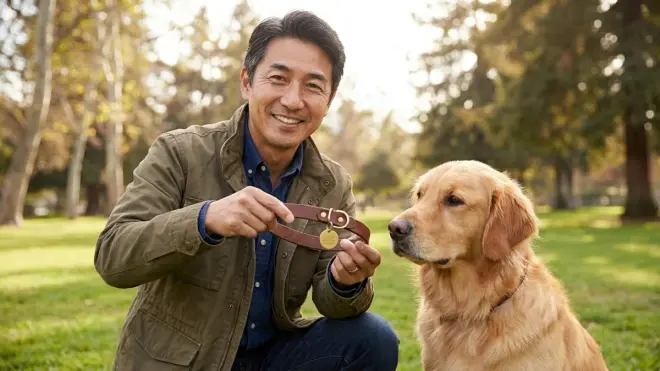
Every dog needs a flat buckle or snap collar with current identification tags attached before they step outside your home—I don't care if you're planning to microchip them next week, that tag is your first line of defense if they slip out the door during the adjustment period. Collar fit follows the two-finger rule: you should be able to slide two fingers comfortably between the collar and your dog's neck when it's fastened, which is snug enough to prevent slipping off but loose enough not to restrict breathing or cause discomfort.
Material choice depends on your dog's coat type and activity level—nylon collars with plastic buckles work well for most dogs and come in every size imaginable (typically 6-26 inch neck circumferences), while leather develops a nice patina over time and tends to be more comfortable for thick-coated breeds that might mat against rougher materials. For puppies, buy an inexpensive adjustable collar since they'll outgrow it in weeks anyway, then invest in a quality collar once they hit adult size around 12-18 months depending on breed. ID tags should include your phone number at minimum (I'd add your address too, but opinions vary), and if you're getting a metal tag, know that they jingle constantly against the collar ring—it drove my sister crazy until she switched to silicone tag silencers. The biggest issue with traditional collars is that they don't offer much control during walks if your dog pulls, which is why most trainers recommend using a harness for leash training while keeping the collar on for ID purposes only.
Walking Harness and 6-Foot Leash
A proper walking harness distributes pressure across your dog's chest rather than concentrating it around their trachea the way collar-only walking does, which is especially important for puppies still learning leash manners and small breeds prone to tracheal collapse. Front-clip harnesses (where the leash attaches at the chest) provide better steering control and naturally discourage pulling because they redirect your dog toward you when they lunge forward, while back-clip harnesses work fine for dogs who already walk politely but offer less control for pullers.
Sizing a harness properly takes more effort than a collar—you'll need to measure your dog's chest girth at the widest part (usually right behind the front legs) and compare it to the manufacturer's sizing chart, because a too-loose harness can slip off and a too-tight one can cause chafing or restricted movement. Most harnesses fit chest circumferences from 13 inches for toy breeds up to 40+ inches for giant breeds like Mastiffs. For the leash itself, a standard 6-foot nylon or leather leash gives you the perfect balance of control and freedom for training walks—retractable leashes might seem convenient, but they teach dogs to pull and offer almost no control in emergency situations. The annoying thing about harnesses is the learning curve; some dogs absolutely hate having them pulled over their head the first few times, and step-in styles can be confusing to put on correctly (I watched my sister struggle with buckles for five minutes the first morning), but once you get the routine down it takes ten seconds.
Comfortable Bed or Crate with Bedding
Dogs need a designated sleeping space where they feel secure, and whether that's an open bed or a crate depends partly on your training approach and partly on your dog's personality. Crate training provides a safe den-like space and helps with house training since dogs naturally avoid soiling their sleeping area, but crates only work if they're sized correctly—your dog should be able to stand up, turn around, and lie down comfortably, but not so spacious that they can eliminate in one corner and sleep in another. Standard crate sizes run from 18-inch lengths for toy breeds up to 48-inch crates for giant breeds, measured from the inside.
If you're skipping the crate, choose a bed with washable covers because accidents, drool, and muddy paws are inevitable in the first few months. Orthopedic memory foam beds are worth considering for large breeds, senior dogs, or any breed prone to hip dysplasia or joint issues, while simple bolster beds with raised sides work well for dogs who like to curl up. Location matters more than you'd expect—in my experience watching my sister's dog settle in, having the bed in a quiet corner away from high-traffic areas helped reduce the anxious pacing those first few nights, but not so isolated that the dog felt separated from the family. The biggest complaint about crates is the space they consume (a 48-inch crate takes up as much floor space as a small desk), and many dogs resist entering them initially without positive reinforcement training, so plan to spend time making the crate rewarding with treats and meals inside before expecting your dog to sleep there peacefully.
Age-Appropriate Toys for Mental Stimulation
Toys aren't just entertainment—they're essential mental stimulation tools that prevent destructive boredom behaviors like chewing furniture or excessive barking. Different toy types serve different purposes: durable chew toys like hard rubber Kong toys (sized appropriately—small, medium, large, or extra-large based on your dog's weight) satisfy the natural chewing instinct and can be stuffed with treats or frozen peanut butter for extended engagement, while interactive puzzle toys challenge your dog's problem-solving skills and tire them mentally even on days when physical exercise is limited.
For puppies specifically, you'll want softer rubber teething toys that soothe sore gums during the 3-6 month teething phase, and it's worth having multiple backups because puppies destroy toys faster than you'd believe possible. Rope toys work well for tug games and dental health, but supervise play since swallowed rope fibers can cause intestinal blockages—I pull these out only during active play sessions, similar to how I only feed certain foods to my fish under supervision. Tennis balls are fine occasionally but not ideal for power chewers because the abrasive fuzz can wear down tooth enamel over time, and those dollar-store plush toys with plastic eyes and noses are accidents waiting to happen since the attachments pop off and become choking hazards within minutes. The frustrating thing about building a toy collection is figuring out your individual dog's preferences—my sister bought six different toys before discovering her dog only cared about one specific rubber ball, which felt like wasting money, but that's part of the adjustment process.
High-Value Training Treats and Treat Pouch
You'll burn through a shocking number of treats during the first few weeks of basic training, so stock up on small, soft, high-value training treats that your dog goes crazy for but won't fill them up too quickly. Look for treats that are roughly pea-sized or smaller (you can cut larger treats into pieces), low in calories (usually 3-5 calories per treat), and soft enough to chew quickly without interrupting the training flow—crunchy biscuits make dogs stop and work on chewing when you need their attention back on you immediately.
"High-value" means protein-rich with strong smells—think freeze-dried liver, real meat jerky pieces, or cheese cubes—because you need something more exciting than their regular kibble to motivate learning, especially in distracting environments. The safe daily limit for training treats is roughly 10% of your dog's daily caloric intake, which for a 50-pound adult dog is around 100-150 calories from treats, or about 20-30 small training treats depending on their calorie density. A treat pouch that clips to your belt or waistband keeps treats accessible during training sessions without requiring you to dig through pockets and break your timing, which I imagine works on the same principle as keeping my aquarium testing supplies organized in a caddy—efficiency matters when you're doing the same task repeatedly. The downside to soft training treats is they can be greasy and leave residue in your pouch (and your pockets if you forget the pouch), and some high-value options like cheese or hot dog pieces need refrigeration, so you can't pre-load a pouch the night before without ending up with a disgusting mess.
Enzymatic Cleaner for Accidents
Unless you're adopting a fully house-trained adult dog with a settled routine, accidents are going to happen—it's just part of the adjustment period covered in the 3-3-3 rule for rescue dogs. Regular household cleaners might remove visible stains, but they don't eliminate the enzymatic proteins in urine that dogs can still smell, which means your dog will keep returning to the same spot because their nose tells them "this is the bathroom." Enzymatic cleaners use specific bacteria and enzymes to break down the organic compounds in urine, feces, and vomit at the molecular level, actually destroying the scent rather than masking it.
Application matters—you need to saturate the affected area completely (not just surface spray) and let it sit for the full contact time listed on the bottle, usually 10-15 minutes, for the enzymes to work. Products like Nature's Miracle or Rocco & Roxie are formulated specifically for pet messes and work on carpet, hardwood, tile, and upholstery, though you should spot-test on delicate fabrics first since some cleaners can cause discoloration. I keep a bottle in the same cabinet as my aquarium water conditioner because both are things you need immediately when something goes wrong—there's no time to run to the store when you discover a puddle. The inconvenient truth about enzymatic cleaners is they don't work instantly like chemical cleaners; you won't see results for several hours, and in my sister's experience, really set-in stains in carpet padding sometimes needed multiple applications and a blacklight to verify complete odor removal, which felt like fighting persistent algae in a planted tank—sometimes you need multiple treatment rounds.
Basic Grooming Supplies

Even if you're planning to use professional groomers, you'll need basic at-home grooming tools for maintenance between appointments and for breeds that don't require professional grooming. At minimum, get a slicker brush or bristle brush appropriate for your dog's coat type (short-haired breeds do fine with rubber curry brushes or soft bristle brushes, while long-haired or double-coated breeds need pin brushes or slicker brushes to work through the undercoat), nail clippers (guillotine-style or scissor-style—I've heard scissor-style offers more control, similar to how precision scissors work better than bulky shears for aquascaping), and dog-safe shampoo formulated to match their skin pH (around 7.5 for dogs versus 5.5 for humans, which is why human shampoo causes dryness and irritation).
Nail trimming frequency depends on activity level and surface types—dogs who walk frequently on pavement naturally wear down their nails and might only need trims every 4-6 weeks, while less active dogs or those walking primarily on grass need trimming every 2-3 weeks to prevent the quick from overgrowing and causing gait problems. The quick is the blood vessel inside the nail, and cutting it causes pain and bleeding, which is why many new dog owners are terrified of nail trims—in dark nails you can't see the quick, so you have to trim tiny amounts at a time and watch for the chalky white inner core that appears just before the quick. Having styptic powder on hand stops bleeding quickly if you do nick the quick, though cornstarch works in a pinch. The frustrating part about grooming is that many dogs absolutely hate it initially, especially nail trims and baths, so you're dealing with a squirming, anxious animal while trying to avoid hurting them, which takes patience and positive reinforcement—not unlike catching a skittish fish in a planted tank without destroying your aquascape.
First Aid Kit and Emergency Vet Contact Information
Having a basic pet first aid kit assembled before you need it can make the difference between a minor incident and an emergency vet visit, though it's important to understand that first aid is about stabilization and transport, not replacement for veterinary care. Your kit should include sterile gauze pads and rolls for wound coverage, medical tape, antiseptic wipes or solution (chlorhexidine-based), a digital thermometer (normal dog temperature is 101-102.5°F), tweezers for removing splinters or ticks, and a muzzle or strips of cloth since even the friendliest dog might bite when injured and frightened.
Add your regular vet's contact information plus the nearest 24-hour emergency veterinary clinic information to your phone immediately—in my experience, emergencies never happen during convenient business hours. The ASPCA Animal Poison Control number (888-426-4435) should be saved as well since accidental poisoning from household items, medications, or toxic foods like chocolate, grapes, or xylitol-containing products is one of the most common dog emergencies. Keep a recent photo of your dog accessible too, because if they escape during the stressful first few weeks, having a clear photo speeds up the search process dramatically. The uncomfortable reality about pet emergency care is that clinics often require payment upfront or proof of insurance before treatment, which means having a credit card with available credit or researching pet insurance options before crisis hits—it's similar to keeping emergency funds available for aquarium disasters like heater failures or major leaks; you hope you never need it, but you're in trouble if you don't have it when something goes wrong.
How We Made Our Picks
My approach to building this new dog checklist came from watching my sister's adoption experience last year and recognizing that preparation follows the same logic I use before adding new species to my aquarium systems—understand the requirements first, get the environment stable, then introduce the animal. I consulted with her veterinarian at their first checkup appointment about essential supplies versus optional nice-to-haves, cross-referenced recommendations from behavioral training resources, and paid attention to what items got used daily versus which ones collected dust in the closet.
What I've found works is focusing on functional essentials that directly impact your dog's health, safety, and training success during the critical adjustment period rather than getting distracted by cute accessories that don't serve a practical purpose. The items on this new dog checklist represent the foundation—you can always add specialty items later as you understand your individual dog's needs, personality, and preferences, but these basics need to be in place before your dog arrives. I prioritized durability and safety certifications where applicable, since replacing cheap equipment that breaks or causes harm ends up costing more than buying quality items initially, which is a lesson I learned expensively through failed aquarium equipment over the years.
Frequently Asked Questions
What should I buy first when getting a new dog?
Start with food and water bowls, appropriate food for your dog's life stage, a collar with ID tags, a leash and harness for walks, and an enzymatic cleaner for accidents, because these items address immediate survival needs (food, water, identification) and the most common first-week challenges (house training accidents and getting your dog outside safely). Once those basics are covered, add sleeping arrangements, a few toys, and grooming supplies within the first few days.
How much does it cost to set up for a new dog?
Expect to spend around $200-400 for essential supplies on this new dog checklist before your dog arrives, with food and bedding representing the largest expenses (around $50-80 for a large bag of quality food and $40-100 for a decent bed or crate), followed by collar, leash, harness, bowls, and initial toy and grooming supply purchases. This doesn't include adoption fees, initial veterinary care, spaying/neutering if not already done, or ongoing monthly costs for food, preventative medications, and routine care.
Should I get puppy supplies or adult dog supplies for my new rescue?

Match supplies to your dog's actual current age and size rather than potential adult size—if you're adopting a 4-month-old puppy, you need puppy-specific food, smaller-sized supplies, and softer chew toys even though they'll outgrow them within months, while adult dogs need supplies sized for their current dimensions and life stage-appropriate nutrition. For puppies of breeds that grow significantly, plan to replace collars, harnesses, and crates as they grow rather than buying adult-sized equipment that fits poorly and creates safety or training issues.
Can I use my old dog's supplies for my new dog?
You can reuse bowls, crates, leashes, and grooming tools after thorough cleaning and disinfection, but start with fresh food (never continue a previous dog's food unless it's appropriate for your new dog's needs), new toys to prevent resource guarding issues and disease transmission, and a new bed if the previous one carries strong scent associations that might stress a new dog during the adjustment period. Replace any worn equipment with compromised safety like frayed leashes, cracked plastic bowls, or collars with damaged buckles.
Final Thoughts
Getting everything on this new dog checklist sorted before adoption day gives you the mental space to focus on what actually matters those first few weeks—helping your new dog adjust, establishing house training routines, and starting to build the relationship that'll last their lifetime. In my experience watching my sister navigate this process, the dogs who settle fastest are the ones entering homes where the humans have already done their homework and eliminated the chaos of scrambling for supplies.
Think of it as cycling a new aquarium before adding fish—sure, you could dump everything in at once and hope it works out, but taking time to prepare the environment properly leads to way better outcomes and less stress for everyone involved. Your new dog is going to test your patience, make mistakes, and probably destroy something you care about during the adjustment period regardless of how prepared you are, but at least you'll have the tools on hand to handle it rather than making frustrated midnight trips to whatever pet store is still open.