
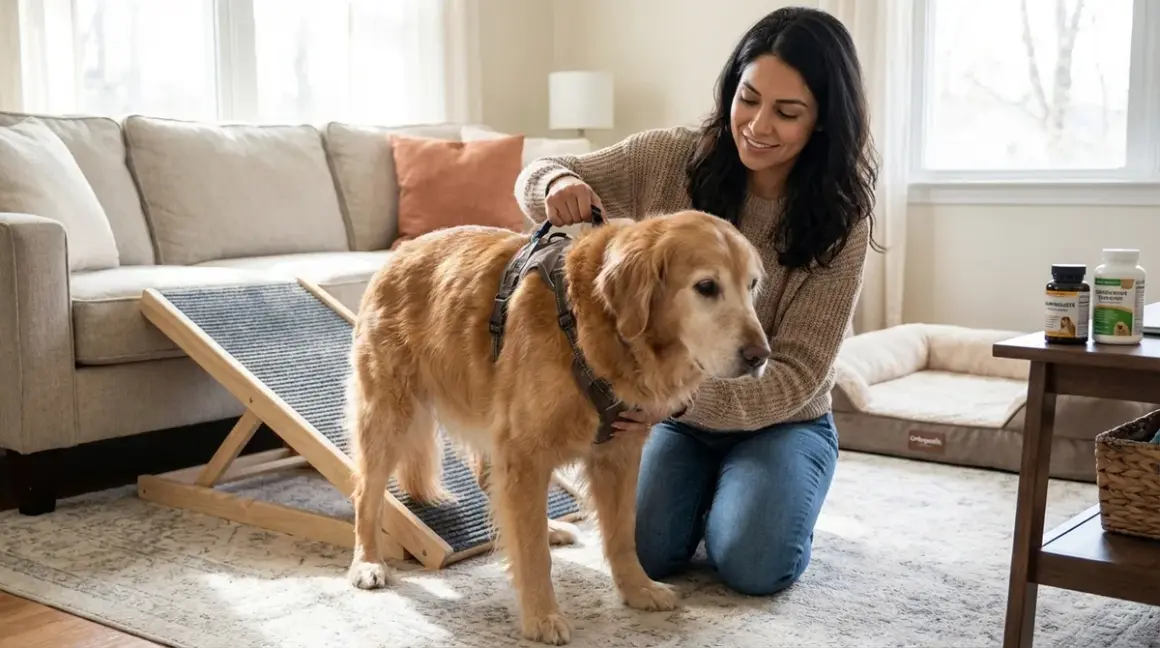

I'll be honest—I'm more accustomed to watching guinea pigs popcorn around their enclosures than I am to navigating canine health concerns. But when my neighbor's beloved twelve-year-old Golden Retriever, Max, went from bounding up the apartment stairs to hesitating at each step, the parallels to aging in any pet became heartbreakingly clear. Senior dog mobility issues affect millions of older dogs, transforming once-energetic companions into cautious, sometimes painful versions of themselves. If you've noticed your graying pup struggling to jump on the couch, limping after walks, or moving stiffly in the morning, you're witnessing changes that deserve your attention—and action. Understanding what's happening inside those aging joints can help you give your senior dog the comfort and quality of life they've earned.
What Are Senior Dog Mobility Issues?
Senior dog mobility issues encompass a range of physical challenges that limit an older dog's ability to move freely and comfortably. These typically appear in dogs aged seven years and older (though large and giant breeds often show signs earlier, around five to six years), and they stem primarily from degenerative changes in joints, muscles, ligaments, and the skeletal system.
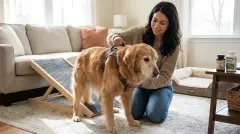
The umbrella term covers conditions like osteoarthritis (the most common culprit), hip dysplasia, degenerative myelopathy, intervertebral disc disease, and general muscle atrophy that accompanies aging. While each condition has distinct causes, they share common symptoms: stiffness, limping, difficulty rising from rest, reluctance to climb stairs or jump, decreased activity levels, and sometimes behavioral changes like irritability when touched in painful areas.
Most senior dogs experience some degree of mobility decline—the Arthritis Foundation estimates that approximately one in five adult dogs suffers from osteoarthritis, with prevalence increasing significantly in geriatric populations. It's not just large breeds like German Shepherds or Labradors, either. Small and medium-sized dogs develop these issues too, though weight-bearing stress manifests differently across body types. The key distinction from acute injuries is that mobility issues in seniors develop gradually, often so slowly that owners don't notice until the condition has significantly progressed.
How Senior Dog Mobility Issues Develop
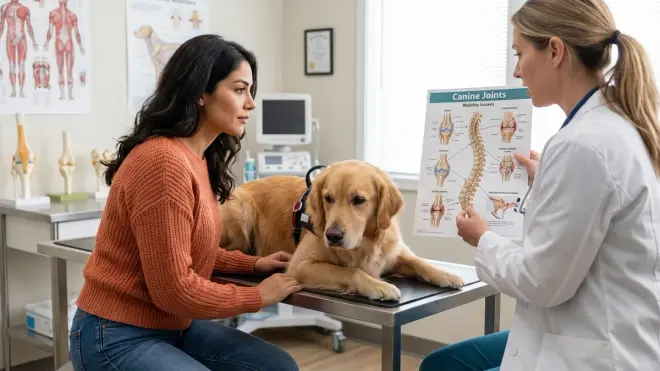
The mechanism behind most senior dog mobility issues starts at the microscopic level, in the cartilage that cushions joints. Think of healthy cartilage as a smooth, shock-absorbing surface that lets bone ends glide effortlessly during movement. Over years of walking, running, jumping, and playing, this cartilage gradually wears down—a natural part of aging accelerated by factors like previous injuries, genetic predisposition, obesity, and repetitive stress.
Osteoarthritis, the primary driver of mobility problems, begins when cartilage deteriorates to the point where bone surfaces start rubbing together. This friction triggers inflammation in the joint capsule, causing pain, swelling, and reduced range of motion. The body responds by forming bone spurs (osteophytes) around the joint in an attempt to stabilize it, but these bony growths actually restrict movement further and create additional discomfort. The joint becomes stiff, especially after periods of rest—hence the classic "old dog stiffness" after naps.
Meanwhile, the muscles supporting these compromised joints begin to atrophy. When movement hurts, dogs naturally reduce activity, creating a vicious cycle: less movement leads to weaker muscles, which puts more stress on already-damaged joints, which causes more pain and further reduces movement. Ligaments lose elasticity, tendons become less flexible, and the entire musculoskeletal system becomes less resilient.
For conditions like hip dysplasia (a genetic malformation where the hip joint doesn't fit properly in its socket), the process starts earlier but accelerates with age as the abnormal joint mechanics cause premature cartilage wear. Degenerative myelopathy, on the other hand, involves progressive degeneration of the spinal cord, affecting nerve signals to the hind legs—it's less about joint damage and more about neurological decline, though the visible result (difficulty walking, dragging paws, eventual paralysis) appears similar to severe arthritis.
Inflammation plays a starring role throughout. Chronic low-grade inflammation in aging joints creates a constant state of tissue damage and attempted repair, with the damage typically outpacing the body's healing capacity. This inflammatory environment not only causes pain but also further degrades cartilage through enzymatic breakdown—a process veterinary researchers continue to study intensely.
Why Senior Dog Mobility Issues Matter
Mobility isn't just about physical movement—it's fundamentally tied to your dog's quality of life, mental health, and even longevity. A dog who can't chase a ball, explore the neighborhood, or comfortably shift positions while sleeping experiences a dramatically diminished daily existence. I've watched friends' senior dogs lose their spark not because they've stopped being playful mentally, but because their bodies won't cooperate anymore.
Pain management becomes paramount. Dogs are remarkably stoic about discomfort, often masking pain until it becomes severe. Untreated mobility issues mean chronic pain that affects everything from appetite (it hurts to bend down to eat) to social interaction (they avoid playing with other dogs or family members because movement hurts). The emotional toll is real—dogs experiencing persistent pain can develop anxiety, depression, and behavioral changes including aggression when touched in sensitive areas.
From a practical standpoint, declining mobility affects your daily routine too. Dogs who struggle with stairs might have bathroom accidents if they can't reach the yard in time. Those who can't jump into cars need lifting assistance—challenging when you're dealing with a 70-pound Labrador. You might need to rethink your living space entirely, which is something I know about intimately from adapting apartments for different pet needs. Hardwood floors become hazard zones for dogs with weak hind legs; furniture arrangements need modification to create easier pathways.
Early recognition and intervention make an enormous difference in trajectory. Addressing senior dog mobility issues in their initial stages—through weight management, appropriate exercise modifications, joint supplements, pain medication, and environmental adaptations—can add years of comfortable, active life. Left unaddressed, these conditions progress rapidly, sometimes advancing from "slightly stiff in the morning" to "can't walk without assistance" within months.
Types and Variations of Mobility Issues in Senior Dogs
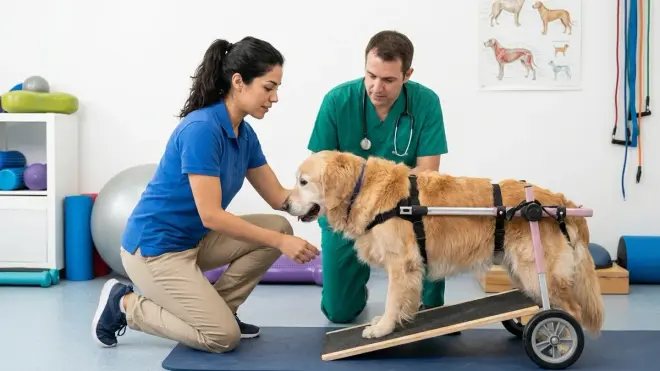
While they often overlap, understanding the distinct categories helps target appropriate interventions:
Osteoarthritis (Degenerative Joint Disease) is the heavyweight champion of senior mobility problems. It affects weight-bearing joints—hips, knees (stifles), elbows, shoulders, and the spine. You'll notice stiffness after rest, limping that worsens with activity, and reluctance to use affected limbs. Breeds with genetic predispositions include German Shepherds, Golden Retrievers, Labradors, and Rottweilers, though any dog can develop it.
Hip Dysplasia manifests as abnormal hip joint development, causing a loose, unstable connection between the femur and pelvis. While technically a developmental condition present from youth, its effects compound with age. Affected dogs develop a characteristic "bunny hop" gait, have difficulty rising, and show decreased range of motion in the hips. Large breeds like Great Danes, Saint Bernards, and German Shepherds face higher risk.
Degenerative Myelopathy is a progressive spinal cord disease most common in German Shepherds (though it appears in other breeds including Corgis, Boxers, and Rhodesian Ridgebacks). It starts with hind leg weakness and loss of coordination, progressing to dragging of the paws, eventual paralysis, and incontinence. Unlike arthritis, it's painless but devastating for mobility—and currently has no cure or effective treatment beyond physical therapy to maintain function as long as possible.
Intervertebral Disc Disease (IVDD) occurs when the cushioning discs between vertebrae herniate or degenerate, compressing the spinal cord. It's particularly common in long-backed breeds like Dachshunds, Corgis, and Basset Hounds. Symptoms range from mild pain and reluctance to move to complete paralysis, depending on severity and location. Some cases require emergency surgical intervention; others respond to conservative management with strict rest and anti-inflammatory medications.
Muscle atrophy and general weakness accompany most mobility conditions but can also occur independently as dogs age. You'll notice visible muscle wasting, especially in the hind legs and haunches, creating a disproportionate appearance compared to the front body. This makes every movement more effortful and compounds joint problems since muscles can no longer adequately support skeletal structures.
Many senior dogs present with a combination of these issues—a twelve-year-old Lab might have both hip dysplasia (present since puppyhood but now symptomatic) and new-onset osteoarthritis in multiple joints. Accurate veterinary diagnosis through physical examination, gait analysis, X-rays, and sometimes advanced imaging like MRI or CT scans helps determine which conditions are present and guides treatment planning. Resources like our senior dog health checklist can help you track symptoms and prepare for veterinary consultations.
Frequently Asked Questions
What are the first signs of mobility issues in senior dogs?
The earliest signs of senior dog mobility issues often appear as subtle behavioral changes: your dog hesitates before jumping onto furniture they previously leaped onto easily, takes longer to rise from lying down (especially after naps), shows stiffness that improves after a few minutes of movement, or begins bunny-hopping on stairs instead of taking them normally. You might also notice decreased enthusiasm for walks, reluctance to play, licking or chewing at specific joints, and a preference for softer resting surfaces—these early indicators often appear months or even years before obvious limping develops.
Can senior dog mobility issues be reversed or only managed?
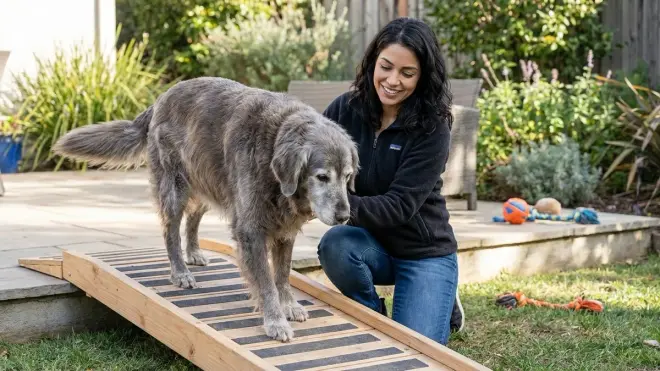
Most senior dog mobility issues cannot be fully reversed because they involve permanent structural changes like cartilage loss, bone spur formation, or nerve degeneration, but they can be significantly managed and their progression slowed through multimodal approaches including weight management, low-impact exercise modifications, joint supplements (glucosamine, chondroitin, omega-3 fatty acids), prescription pain medications (NSAIDs, gabapentin), physical therapy, hydrotherapy, and environmental modifications. Some dogs experience dramatic improvement in comfort and function with appropriate intervention, essentially regaining quality of life even though the underlying condition remains—early intervention produces the best outcomes, making prompt veterinary consultation crucial when you notice symptoms.
Should I stop exercising my senior dog if they have mobility problems?
You should absolutely not stop exercising your senior dog with mobility issues, but you must modify the type, intensity, and duration of activity to prevent further joint damage while maintaining muscle strength and cardiovascular health—complete rest actually worsens mobility problems by accelerating muscle atrophy and joint stiffness. Focus on low-impact activities like short, frequent walks on soft surfaces (grass rather than concrete), controlled swimming or hydrotherapy sessions, gentle play without jumping or sharp turns, and structured physical therapy exercises recommended by your veterinarian—our guide on how to adjust exercise routines for elderly dogs provides specific protocols for different mobility conditions and severity levels.
What home modifications help dogs with mobility issues?
Essential home modifications for dogs with senior dog mobility issues include installing ramps or pet stairs to access furniture and vehicles (eliminating jumping), placing non-slip rugs or yoga mats over slippery floors to provide traction, elevating food and water bowls to reduce neck and shoulder strain, providing orthopedic memory foam beds (at least 4 inches thick for medium to large dogs) to cushion painful joints during rest, blocking off stairs with baby gates if necessary, and creating a main living area on one floor to minimize stair use. Additional helpful modifications include using rear-support harnesses or slings to assist with standing and walking, keeping nails trimmed short to improve traction, maintaining a warm environment (cold exacerbates joint stiffness), and ensuring easy access to outdoor potty areas—check out our comprehensive guide to senior dog comfort needs for room-by-room modification checklists.
When should I consider euthanasia for a dog with severe mobility issues?
The decision to consider euthanasia for a dog with severe mobility issues depends not on the mobility limitation itself but on your dog's overall quality of life, specifically whether they're experiencing unmanageable pain despite maximal medical intervention, have lost interest in eating and normal activities, cannot eliminate without assistance (and this causes distress), spend most time appearing anxious or depressed, or have more bad days than good days despite your best care efforts. Many dogs live contentedly for years with significant mobility limitations when provided appropriate pain management, assistive devices, and environmental modifications—mobility loss alone doesn't equal poor quality of life if the dog remains mentally engaged, pain-controlled, and able to perform basic functions with reasonable assistance. Consult your veterinarian for an honest quality-of-life assessment using validated scales that evaluate pain, hunger, hydration, hygiene, happiness, and mobility in combination rather than any single factor.
Supporting Your Senior Dog Through Mobility Changes
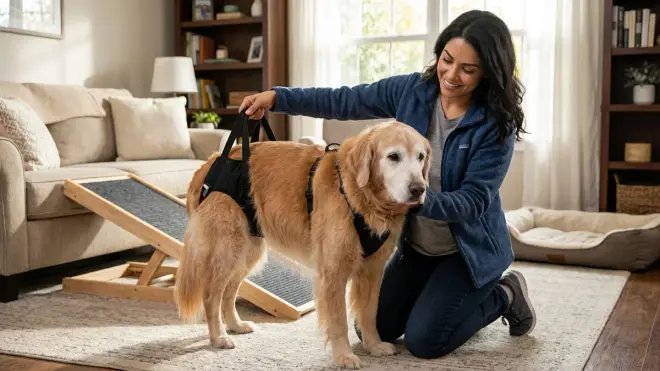
Watching a dog age brings a particular kind of tenderness mixed with helplessness—not unlike the careful attention I pay to my oldest guinea pig's movements as her joints stiffen. But here's what I've learned from watching friends navigate this stage with their canine companions: senior dog mobility issues don't have to mean the end of joy, comfort, or connection.
The dogs who fare best are those whose owners recognize changes early, pursue veterinary diagnosis promptly, and commit to a comprehensive management approach that addresses pain, maintains muscle strength, reduces joint stress, and adapts the environment to support changing physical capabilities. This might mean adding joint support supplements to meals, transitioning to senior-specific nutrition that supports healthy weight maintenance, incorporating physical therapy exercises into daily routines, and yes, accepting that your dog's mobility will continue declining over time despite your best efforts.
The goal isn't to restore your fourteen-year-old dog to puppyhood—it's to maximize comfort and function at each stage of their senior years, preserving the activities they find meaningful for as long as possible. Some dogs continue enjoying gentle walks until their final months. Others find contentment in shorter outings supplemented by mental enrichment at home. The path looks different for every dog, shaped by their specific conditions, your resources, and the honest conversations you have with your veterinarian about realistic expectations and quality of life.
Your aging dog has given you years of loyalty, companionship, and those soft moments of connection that make the work of pet ownership worthwhile. Returning that devotion through their senior years—adapting your home, adjusting your expectations, and advocating for their comfort—is perhaps the most meaningful responsibility of pet parenthood.