
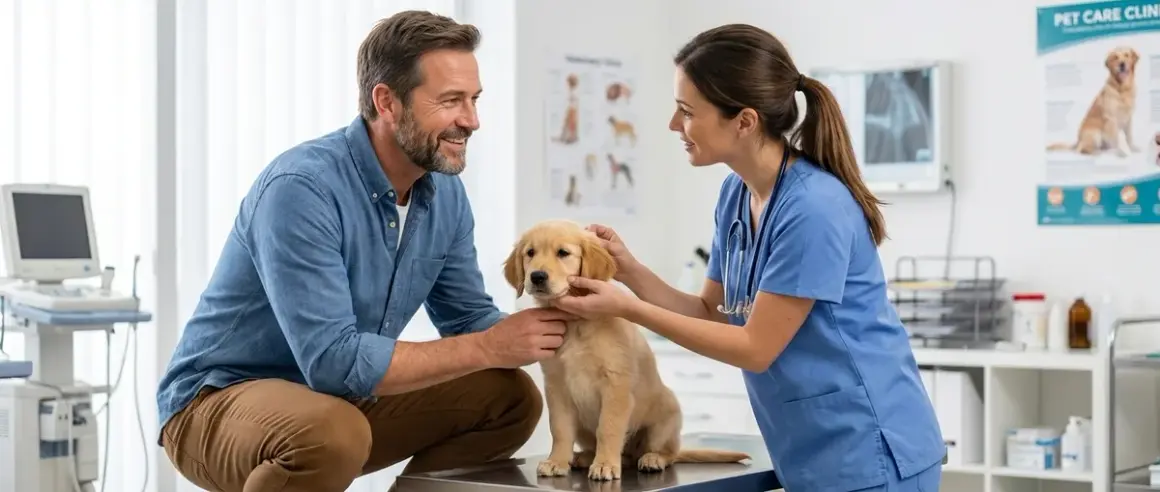

Your first vet visit checklist new dog appointment is coming up, and you're probably feeling a mix of excitement and nerves. I've seen this a hundred times—new dog owners show up unprepared, forgetting important details their vet needs to know, or they miss asking questions they really should have asked. This first vet visit checklist new dog guide covers everything you need to bring, prepare, and ask to make that appointment productive. Whether you've got an eight-week-old puppy or a newly adopted adult dog, this checklist will help you walk in confident and leave with a clear plan for your dog's health.
Documents and Medical Records to Bring
Your vet needs paperwork before they can assess your dog's current health status. Missing records means guesswork, and guesswork isn't what you want when it comes to vaccinations or parasite prevention.

Adoption or purchase paperwork: Bring any contracts, health guarantees, or breed documentation that came with your dog—these often include genetic health information or initial vet checks that matter for ongoing care.
Previous vaccination records: If your breeder, shelter, or rescue provided proof of vaccines (especially DHPP, rabies, or bordetella), bring the physical records or clear photos—your vet needs exact dates and vaccine brands to determine what's due next.
Deworming and parasite prevention history: Many puppies receive deworming treatments before adoption; knowing what they've already had prevents overdosing or gaps in coverage.
Microchip registration documents: If your dog came pre-chipped, bring the registration number and provider name so your vet can verify it's working and update contact information if needed.
Health certificates from transport or breeders: Interstate transport or imported dogs often come with USDA health certificates that document recent exams and disease testing—these give your vet a baseline.
Your driver's license and payment method: Most clinics require photo ID for new client registration, and you'll need to settle payment for the visit unless you've arranged pet insurance billing in advance.
If you're starting with a puppy, you might also want to review our Complete Guide to Getting a New Dog for broader preparation tips beyond the vet visit itself.
Health Information Your Vet Needs to Know
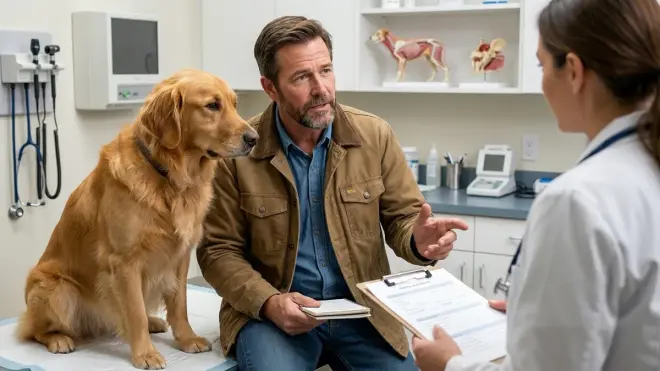
This is where you become your dog's medical historian. The more details you share upfront, the better your vet can tailor their exam and recommendations.
Diet details: Tell your vet exactly what you're feeding—brand name, flavor, whether it's puppy formula or all-life-stages, and how much per day—because nutritional deficiencies or overfeeding show up in exam findings, and your vet needs that context. If you're not sure what to feed, ask about options; you can also read our guide on How to Choose the Right Dog Food for Your Dog's Needs after the appointment.
Treat and supplement intake: If you've started training with treats or giving supplements (even "natural" ones), mention the brand and frequency—some ingredients interfere with medications or diagnostic tests.
Stool consistency and frequency: Describe what you've seen in the yard or on walks (firm, soft, liquid, color, presence of mucus or blood)—this tells your vet whether a fecal test is urgent or routine.
Vomiting or regurgitation incidents: Even one episode matters; note what came up, when it happened relative to meals, and whether your dog seemed sick afterward or bounced back immediately.
Energy level and behavior changes: Share if your dog is lethargic, hyperactive, sleeping more than expected, or showing any behavior that strikes you as "off"—vets rely on your observations of normal versus abnormal for your specific dog.
Known allergies or reactions: If your dog has had any adverse reactions to foods, environmental triggers, or materials (like certain bedding or shampoos), mention it even if it seems minor—it can affect vaccine or medication choices.
Household exposure risks: Let your vet know if you have other pets (and their vaccination status), if your dog will attend daycare or dog parks, or if you live in an area with high tick or heartworm prevalence—this shapes the preventive care plan.
For puppies specifically, your vet will want to know how training is progressing, especially around potty habits, because frequent accidents can signal urinary tract issues rather than just behavioral challenges.
Questions to Ask Your Veterinarian
This is your chance to get professional guidance on the stuff that keeps you up at night. Don't leave without answers to the questions that matter for your dog's specific situation.
What's the vaccination schedule from here? Ask for a written timeline showing exactly when your dog needs core vaccines (DHPP, rabies) and whether lifestyle-specific vaccines like leptospirosis, Lyme, or canine influenza are recommended based on your location and activities.
When should I spay or neuter, and why that timing? Recommendations vary by breed size—large breed puppies often benefit from waiting until growth plates close, while small breeds can be safely altered earlier; get your vet's reasoning for their specific recommendation for your dog.
What parasite prevention do you recommend year-round? Ask about heartworm, flea, tick, and intestinal parasite prevention—product names, application frequency, and whether your region requires year-round coverage or if seasonal breaks are safe.
Is my dog's weight appropriate for their age and breed? Puppies should follow a growth curve, and adult dogs should meet breed-typical body condition scores; ask if your feeding amount needs adjustment now or at checkpoints going forward.
What should I watch for as red flags between now and the next visit? Get a specific list of symptoms that warrant an urgent call versus things that can wait for a scheduled appointment—this varies by age and health status.
Do you recommend pet insurance, and if so, when should I enroll? Many policies have waiting periods and exclude pre-existing conditions, so timing matters; your vet can share which companies their clients have had good or bad experiences with.
How do you handle after-hours emergencies? Find out if your clinic has on-call service, if they refer to a specific emergency hospital, and whether you need to register with that ER in advance to streamline urgent visits.
Physical Items to Pack for the Appointment

Showing up with the right supplies makes the visit smoother for you, your dog, and the vet staff. Here's what actually gets used during a typical first exam.
Sturdy leash and properly fitted collar or harness: Even if your dog is small enough to carry, your vet needs to observe how your dog walks and moves—bring a six-foot leash (not a retractable) and a collar or harness that won't slip off if your dog backs up nervously.
Fresh stool sample in a sealed bag or container: Collect a sample from that morning's bowel movement if possible, seal it in a plastic bag or clean jar, and hand it directly to the vet tech—they'll run a fecal test to check for parasites that visual exams miss.
High-value training treats your dog loves: Bring small, soft treats (pea-sized pieces) that your dog finds irresistible—the vet staff will use them to make the exam table less scary and to reward cooperation during handling. If you're still figuring out what works, check out our recommendations for Best Puppy Training Treats.
A towel or blanket from home: Lay it on the exam table to give your dog a familiar scent and texture under their paws—it reduces slipping and stress during the physical exam.
Your phone with camera ready: You might want to capture your puppy's weight or take a photo of the printed vaccination schedule for your records—having it handy beats trying to remember details later.
Water bottle and collapsible bowl: If it's hot or you're traveling more than 20 minutes each way, bring water so your dog can hydrate before or after the appointment—dehydration skews some test results.
Behavioral Preparation Before You Go
Your dog's first vet visit sets the tone for how they'll feel about the clinic for years. A little prep work now pays off every time you walk through those doors later.
Practice handling exercises at home: Spend a few days before the appointment touching your dog's ears, paws, mouth, and tail while giving treats—this desensitizes them to the kind of handling the vet will do and makes the exam less startling.
Skip the meal right before the appointment: A nervous dog with a full stomach is more likely to vomit in the car or on the exam table; feed a light breakfast early or wait until after the visit if it's scheduled mid-morning.
Arrive ten minutes early to let your dog decompress: Rushing straight from the car to the exam room spikes stress; give your dog time to sniff around the waiting area, meet the staff, and settle before the physical handling starts.
Keep your own energy calm and matter-of-fact: Dogs read your tension like a billboard—if you're anxious or overly comforting ("It's okay, sweetie, don't worry"), your dog assumes there's something to fear; stay upbeat and casual instead.
Bring a friend or family member if your dog is reactive: If your dog is fearful, overly excited, or large and strong, an extra set of hands helps you manage leash control while you focus on answering the vet's questions.
Understanding new dog behavior in the first 30 days can also help you contextualize any nervousness at the vet—it's normal for recently adopted dogs to be unsure in unfamiliar environments.
What Happens During the Exam
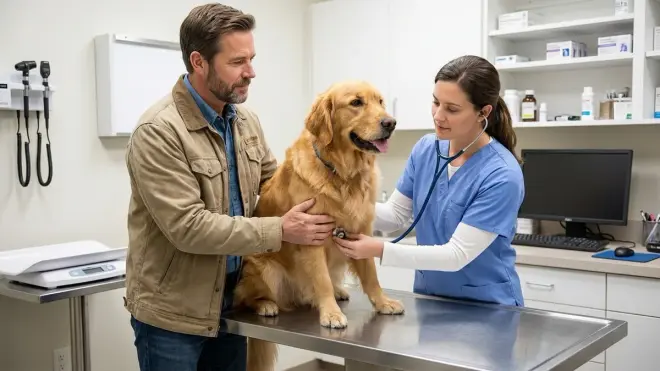
Knowing what to expect helps you stay relaxed, which keeps your dog calmer. Here's the typical flow for a first vet visit checklist new dog appointment.
The vet tech will usually start by recording your dog's weight and temperature. Weight gets tracked over time to ensure proper growth (for puppies) or maintenance (for adults). Temperature is taken rectally, which most dogs tolerate fine but some squirm—this is where those treats come in handy.
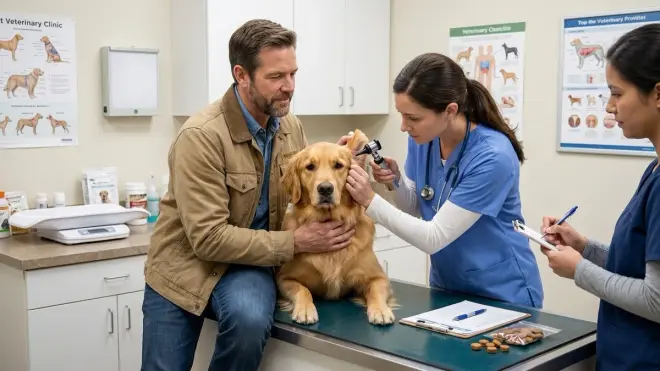
Next, the veterinarian will perform a nose-to-tail physical exam. They'll check your dog's eyes, ears, teeth, and gums; listen to the heart and lungs with a stethoscope; palpate the abdomen for abnormalities; and assess joint mobility and muscle condition. They're also checking skin and coat for parasites, hot spots, or irritation.
Your vet will likely recommend a fecal test and possibly blood work. The fecal checks for intestinal parasites (roundworms, hookworms, whipworms, giardia, coccidia). Blood work isn't always standard for healthy puppies, but it establishes a baseline for adult dogs or if your vet suspects illness.
Vaccinations come next if your dog is due. Your vet will explain which vaccines they're giving and why, then administer them via injection (usually in the scruff or shoulder area). Puppies typically need a series of DHPP boosters every 3-4 weeks until they're 16 weeks old, per American Animal Hospital Association guidelines, plus rabies at the age required by your state law.
Finally, your vet will discuss parasite prevention and schedule the next appointment. They'll send you home with heartworm and flea/tick preventatives (or prescriptions) and book your next visit based on your dog's age and health needs.
Final Check Before You Go
Run through this quick summary checklist the night before your appointment to make sure nothing's forgotten:
- Adoption paperwork, previous vaccine records, and microchip documents packed
- Fresh stool sample collected that morning and sealed in a bag
- Leash, collar/harness, treats, water, and comfort towel in your bag
- List of questions written down or saved in your phone notes
- Diet details ready to share (food brand, amount per day, treat types)
- Health observations noted (stool quality, energy level, any concerns)
- Appointment time confirmed and clinic location mapped
- Payment method and ID ready for check-in
If you've recently adopted your dog and haven't gotten through the adjustment period yet, you might also want to familiarize yourself with the 3-3-3 rule for rescue dogs to understand how settling-in stress can affect behavior at the vet.
Frequently Asked Questions
What should I bring to my dog's first vet visit?
Bring all adoption and vaccination paperwork, a fresh stool sample from that morning, a sturdy leash and collar, high-value training treats, your dog's current food information, a list of any health concerns you've noticed, your driver's license, and a payment method—having these items ready streamlines the appointment and ensures your vet has everything needed to create an accurate health plan for your dog.
How much does a first vet visit for a new dog typically cost?
A first vet visit for a new dog typically costs between $75 and $200 depending on your location and what services are included; this usually covers the physical exam, fecal testing, and initial vaccines, though blood work, microchipping, or additional diagnostics will increase the total—call your clinic ahead of time to ask for a new puppy or dog exam package estimate so you can budget accordingly.
When should I schedule my new dog's first vet appointment?
Schedule your new dog's first vet appointment within the first week of bringing them home, ideally within the first 48 to 72 hours, to establish a health baseline, verify vaccination status, and catch any congenital or developing issues early—if you adopted a young puppy under 8 weeks old or a dog showing any signs of illness like coughing, diarrhea, or lethargy, book an appointment for the same day or the next morning.
Final Thoughts
That first vet visit checklist new dog appointment doesn't have to feel overwhelming once you know what to expect. Showing up with the right documents, honest health information, and a prepared list of questions turns what could be a stressful scramble into a productive conversation about your dog's long-term wellbeing. Your vet is your partner in keeping your dog healthy, and this first visit is where that partnership really begins.
I've watched hundreds of dog owners walk out of that first appointment feeling relieved because they finally had a clear plan—vaccines scheduled, questions answered, and a professional they trust on their team. That's the goal here. Get these items checked off, stay calm for your dog's sake, and use this visit to set up a foundation of preventive care that'll save you worry (and money) down the road.