
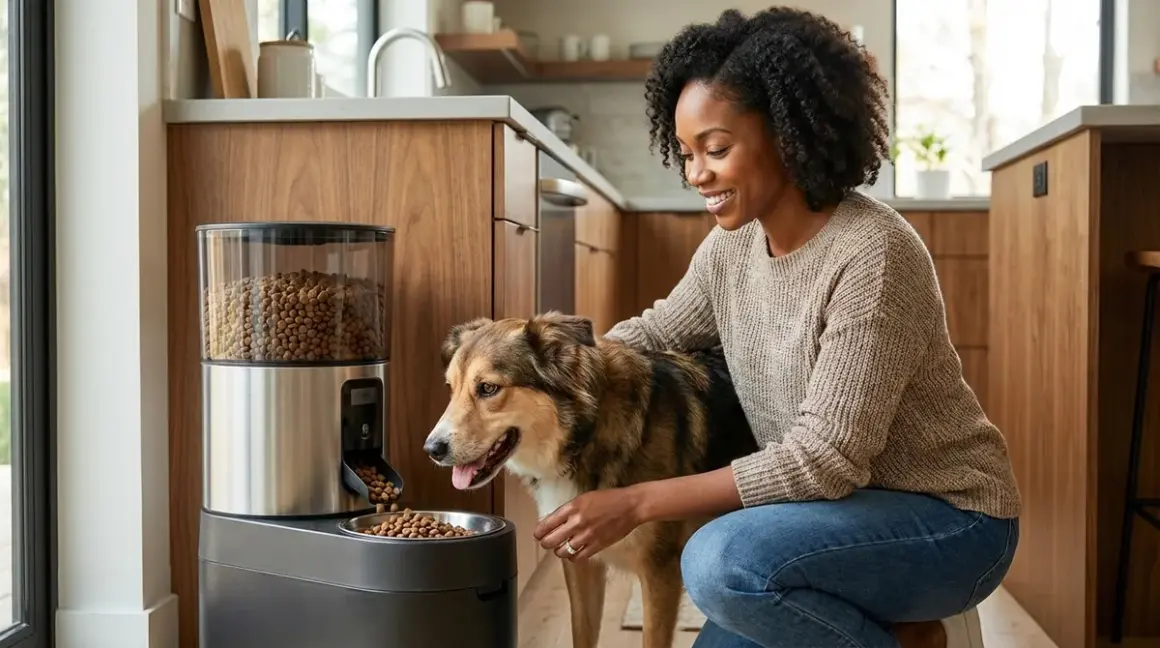

I'll be honest—the morning I slept through my alarm and woke to four expectant faces staring at me from the bedside was the morning I realized I needed backup. My senior shepherd mix, Maggie, was patient as always, but my terrier was doing his signature anxiety spin by the empty bowls. That's when I started seriously researching the best automatic dog feeder options, and I haven't looked back. These devices aren't about replacing the feeding routine—they're about protecting it when life throws you curveballs. Whether you work irregular hours, need to manage portion control for a dog prone to weight gain, or just want the peace of mind that comes with consistent meal times, the right automatic feeder becomes an extension of good care.
Quick verdict: The best automatic dog feeder depends on your specific situation, but gravity feeders work well for free-choice eaters with good self-control, while programmable portion-control models are essential for dogs who need weight management or scheduled meals when you're away.
What to Look For in an Automatic Dog Feeder
Feeding Style and Portion Control
The first decision splits into two camps: gravity feeders that continuously refill a bowl as your dog eats, or programmable portion-control feeders that dispense specific amounts on a schedule. I only use gravity feeders for water at this point—after watching too many dogs at the grooming shop balloon up from unlimited kibble access, I'm firmly in the portion-control camp for food. Look for feeders that let you set meal sizes down to a quarter-cup or less. This matters enormously for small breeds and for any dog managing weight. My terrier mix needs exactly ⅔ cup twice daily, and eyeballing it doesn't cut it when his metabolism runs this hot.
Programmable feeders should offer at least four meals per day for puppies or dogs with medical conditions requiring frequent small feedings. Adult dogs typically do fine with two or three, but that flexibility helps when transitioning your dog to an automatic feeder or managing specialized diets.
Hopper Capacity and Food Compatibility
Hopper size determines how long you can leave the feeder unattended. A 12-cup capacity might last a single 30-pound dog four days, but my household of four would blow through that in 36 hours. I've learned to calculate based on total daily food volume across all dogs, plus a buffer day. Most automatic feeders hold between 6 and 25 cups—match this to your actual usage pattern, not aspirational weekend trips.
Kibble size compatibility is something nobody mentions until their feeder jams at 6 AM. Most feeders handle standard kibble (roughly ½-inch diameter) fine, but small-breed formulas and large-breed chunks can cause problems. Check the manufacturer specs for kibble size range—it's usually buried in the manual PDF. Freeze-dried raw food and anything with irregular shapes tends to jam gravity mechanisms, though some higher-end feeders use auger-style dispensers that handle varied textures better.
Power Source and Backup Options
I trust battery-only feeders about as far as I can throw them—which is to say, not at all after the morning I discovered dead AAs and a very hungry terrier. AC power with battery backup is the only configuration I recommend. The batteries kick in during power outages or if someone (a dog, a toddler, a clumsy adult backing into the wall) unplugs the unit. Look for feeders that clearly indicate when backup batteries are low, ideally with both visual and app alerts.
Some feeders use D-cell batteries for backup, which last longer than AAs but cost more to replace. I swap mine every six months whether they seem dead or not—cheap insurance against missed meals.
Smart Features and Connectivity
Wi-Fi-enabled feeders let you adjust meal times and portions remotely, which sounds gimmicky until you're stuck at the grooming shop through dinner time and can push the evening meal back an hour from your phone. The genuinely useful smart features include real-time feeding notifications (so you know the meal actually dispensed), portion adjustment from the app, and feeding history logs that help you catch changes in appetite—often the first sign of illness in dogs.
Camera features range from pointless to surprisingly valuable. A basic view confirms your dog is accessing the food and helps you spot behavioral issues like nighttime anxiety around feeding time. Two-way audio lets you call your dog to meals, which helped reinforce routine consistency when I first introduced automatic feeding to my crew. Don't pay extra for treat-dispensing add-ons unless you're actively using the feeder for training—they're usually gimmicks that jam or break within months.
Build Quality and Cleaning Ease
Stainless steel or BPA-free plastic bowls are non-negotiable—I've seen too many dogs develop chin acne or digestive upset from cheap plastic that harbors bacteria. The bowl should remove completely without tools for daily washing. Feeders with complex internal pathways or non-removable parts will grow mold in the crevices—there's no realistic way to keep them sanitary long-term.
The hopper should be fully removable and dishwasher-safe on the top rack. Every few weeks you'll need to deep-clean the dispenser mechanism where kibble oils and dust accumulate. If you can't disassemble it without a screwdriver, it's not designed for actual pet ownership. My real-world benchmark: can I break it down and clean it thoroughly while half-awake on a Sunday morning? If not, it won't stay clean.
Our Top Picks
PetSafe Healthy Pet Simply Feed
The PetSafe Healthy Pet Simply Feed Automatic Dog and Cat Feeder🛒 Amazon offers straightforward programmable feeding for dogs who need consistent portion control without the bells and whistles. This feeder dispenses up to 12 meals per day in ⅛-cup increments, making it ideal for puppies, small breeds, or dogs with medical conditions requiring frequent small portions. The hopper holds 24 cups—enough for several days for most single-dog households.
I appreciate the slow-feed option that dispenses meals gradually over 15 minutes, which has been a game-changer for my terrier who used to inhale his breakfast and then vomit it up during his morning zoomies. The stainless steel bowl removes easily for washing, and the battery backup (4 D-cells) keeps the schedule running during power outages.
Pros:
- Highly granular portion control starting at ⅛ cup
- Slow-feed setting reduces gulping and bloat risk
- Large 24-cup hopper for extended unattended periods
- Dishwasher-safe stainless steel bowl
- Reliable battery backup system
Cons:
- No Wi-Fi connectivity or remote control options
- Conveyor belt mechanism can jam with very small kibble (under ¼ inch diameter)
- Programming interface uses small buttons that require good dexterity
- No meal history tracking
WOPET SmartFeeder with Camera
The WOPET Automatic Pet Feeder with Camera🛒 Amazon combines scheduled feeding with live video monitoring and two-way audio—features that proved surprisingly useful when I needed to verify that Maggie, my senior shepherd, was actually eating and not just lying near her bowl during a health scare last fall. The 1080p camera provides clear views even in low light, and the 20-cup hopper capacity works for medium to large dogs.
Portion sizes adjust from about ⅛ cup up to two full cups per meal through the smartphone app, which uses reasonably intuitive controls. The two-way audio actually has decent speaker quality—my dogs respond to voice calls through it, which helped maintain the ritual feeling of mealtimes when I transitioned them to automatic feeding.
Pros:
- Clear HD camera with night vision capability
- Two-way audio with good speaker quality
- App-based portion and schedule adjustments from anywhere
- Feeding notifications confirm meal dispensing
- Food-grade stainless steel bowl insert
Cons:
- Wi-Fi setup can be finicky with 5GHz networks (requires 2.4GHz)
- App occasionally loses connection and requires restart
- The twist-lock hopper lid can be difficult to remove when full
- Camera angle is fixed and doesn't capture the entire feeding area
Cat Mate C500 Digital 5-Meal Feeder
The Cat Mate C500 Digital 5-Meal Automatic Pet Feeder🛒 Amazon uses a rotating tray design rather than a hopper dispenser, which makes it uniquely suited for wet food, semi-moist food, or dogs on raw diets. Each of the five compartments holds about one cup and includes an ice pack slot underneath to keep food fresh—a feature I've used successfully for my senior dog's prescription canned food on hot summer days.
This isn't a long-term solution for extended absences, but it handles a full day of scheduled feedings (up to five meals) for dogs who can't eat kibble. The lid seals each compartment well enough that my food-motivated terrier hasn't figured out how to pry it open, though I wouldn't bet against a determined Labrador. Programming is straightforward with clearly labeled buttons, and the unit runs on four C-cell batteries with impressive longevity.
Pros:
- Accommodates wet food, raw food, and treats unlike hopper-style feeders
- Ice pack slots keep food fresh for extended periods
- Five separate meal compartments prevent food mixing
- Simple battery operation with no Wi-Fi complications
- Dishwasher-safe tray for thorough cleaning
Cons:
- Limited to five meals maximum (not suitable for puppies needing six+ daily feedings)
- Relatively small one-cup compartment capacity
- The rotating mechanism can be loud enough to startle anxious dogs
- No portion flexibility—each compartment is fixed size
Arf Pets Automatic Feeder
The Arf Pets Automatic Pet Feeder🛒 Amazon positions itself as a budget-friendly programmable option, and it mostly delivers on that promise for straightforward feeding schedules. The 14-cup hopper capacity sits in the sweet spot for single-dog households, and portion sizes adjust from roughly ¼ cup to 2 cups per meal across up to four daily feedings.
I've recommended this feeder to several grooming clients with uncomplicated feeding needs—adult dogs eating standard kibble on a twice-daily schedule. The voice recording feature lets you record a 10-second message that plays at feeding time, which some dogs respond well to (though my crew largely ignores it). The bowl is removable but not stainless steel—it's BPA-free plastic that you'll need to replace more frequently to avoid bacterial buildup in surface scratches.
Pros:
- Affordable entry point for first-time automatic feeder users
- Voice recording feature for feeding-time cues
- Mid-size capacity appropriate for most single dogs
- Low-profile design works in smaller spaces
- Simple button programming without app requirements
Cons:
- Plastic bowl rather than stainless steel
- Portion accuracy decreases at very small sizes (under ½ cup)
- No battery backup—requires constant AC power
- Build quality feels less durable than higher-end models
Sure Petcare Microchip Pet Feeder Connect
The Sure Petcare Microchip Pet Feeder Connect with Hub🛒 Amazon solves the specific nightmare of feeding multiple dogs with different dietary needs by using RFID chip recognition or collar tags to control bowl access. The sealed lid only opens for the programmed pet, preventing food stealing and allowing you to track which dog ate what and when through the smartphone app.
This feeder doesn't dispense on a schedule—it's essentially a smart bowl that opens when the correct dog approaches. You manually fill it with each dog's appropriate portion or use it for free-feeding situations where one dog needs unlimited access while others don't. The feeding data tracking has been invaluable for monitoring appetite changes in my senior shepherd—subtle eating pattern shifts showed up in the app data before I would have noticed them visually.
Pros:
- Reliably recognizes microchips and collar tags to control access
- Prevents food stealing in multi-dog households
- Detailed feeding data shows eating patterns and timing
- Sealed lid keeps food fresh and away from insects
- Works with both wet and dry food
Cons:
- Doesn't automatically dispense meals—requires manual filling
- Significantly more expensive than standard automatic feeders
- Requires Sure Petcare Hub for app connectivity (sold separately or as bundle)
- The bowl opening mechanism can startle skittish dogs initially
- Single-bowl design means one feeder per dog in multi-pet homes
PetKit Fresh Element Infinity Smart Feeder
The PetKit Fresh Element Infinity Smart Feeder🛒 Amazon brings premium build quality and sophisticated programming to automatic feeding, with a built-in weight sensor that verifies actual food dispensed versus programmed amount—a feature that catches mechanical jams and empty hoppers before your dog misses a meal. The companion app provides exceptional control over portion sizes (down to 1/20 cup precision) and supports up to 10 meals per day.
The stainless steel internals and food-grade plastic exterior disassemble completely for cleaning, and the desiccant bag slot in the hopper helps keep kibble fresh in humid environments—something I appreciate living in the Pacific Northwest where everything develops mold if you blink twice. The unit runs on AC power with battery backup, and the app sends push notifications for low food levels, missed meals, and power interruptions.
Pros:
- Weight sensor confirms actual food dispensed
- Exceptional portion precision for dogs requiring exact amounts
- Completely disassembles for thorough cleaning
- Built-in desiccant storage maintains food freshness
- Comprehensive app notifications and feeding logs
Cons:
- Higher price point than most automatic feeders
- The app requires account creation and active internet connection
- Dispensing mechanism is quieter than most but still audible in small apartments
- The sleek modern design may tip more easily than wider-base models
HoneyGuaridan A36 Automatic Feeder
The HoneyGuaridan A36 Automatic Pet Feeder🛒 Amazon offers a 6-liter (about 25-cup) hopper capacity that makes it particularly appealing for large-breed owners or those planning extended trips. I know a grooming client with a pair of German Shepherds who relies on this feeder when traveling—it holds enough kibble for nearly a week at their combined eating rate.
The feeder programs up to six meals daily in portion sizes ranging from about ⅕ cup to 3 cups per feeding. The infrared sensor detects when food has successfully dispensed and stops the mechanism to prevent overfilling or jams. Voice recording capability lets you associate your voice with meal times, and the stainless steel bowl removes without tools for daily washing.
Pros:
- Very large hopper capacity for extended unattended periods
- Infrared dispensing sensor prevents overfilling
- Wide portion size range accommodates small to large breeds
- Dual power system with D-cell battery backup
- Transparent hopper window shows remaining food level
Cons:
- Large footprint requires significant floor space
- No Wi-Fi connectivity or remote adjustments
- The voice recording quality is noticeably compressed and tinny
- Dispensing mechanism can be loud enough to wake light sleepers
Petwant F13 Automatic Feeder with Video
The Petwant F13 Automatic Pet Feeder with 1080P Camera🛒 Amazon bundles scheduled feeding with video monitoring at a mid-range price point that undercuts many competing camera-equipped feeders. The 1080p camera provides clear live streaming through the smartphone app, and the two-way audio works well enough for voice commands—I've watched grooming clients use these successfully to call dogs to meals and reinforce feeding routine consistency.
The 4-liter (roughly 17-cup) hopper handles several days of food for most medium-sized dogs, and portion sizes adjust from about ¼ cup to 2 cups across up to six daily meals. The app allows real-time feeding triggers in addition to scheduled meals, which is useful for extending meal times when you're running late. The unit includes a desiccant bag compartment to maintain kibble freshness.
Pros:
- Clear HD video with night vision capability
- App-based remote feeding and schedule adjustments
- Desiccant compartment helps prevent kibble staleness
- Feeding notifications and dispensing history logs
- Mid-range pricing for features offered
Cons:
- Wi-Fi connection stability varies with router distance
- The bowl is removable but not stainless steel (BPA-free plastic)
- Camera viewing angle is narrow and may not capture full feeding area
- App interface translation is occasionally awkward (originally designed for Asian markets)
Westlink Automatic Feeder 6L
The Westlink 6L Automatic Pet Feeder🛒 Amazon focuses on simplicity and reliability over smart features—there's no Wi-Fi, no camera, no app to fuss with. What it does offer is straightforward programmable feeding with up to four meals daily, portion sizes from roughly ½ cup to 2 cups, and a large 25-cup hopper capacity that handles extended periods away from home.
I actually run one of these as a backup feeder for situations where I need dead-simple operation without depending on internet connectivity or smartphone apps. The voice recording feature lets you record a 10-second message that plays at feeding time, and the unit runs on either AC power or three D-cell batteries (though I'd never trust batteries as the primary power source for days-long feeding schedules).
Pros:
- Large hopper capacity for extended use
- No Wi-Fi dependency or app complications
- Straightforward button programming
- Dual power options (AC and battery)
- Lower price point than smart feeders
Cons:
- No remote adjustments or feeding notifications
- Portion accuracy decreases at smallest settings
- Plastic bowl rather than stainless steel
- No verification that meals actually dispensed
- The digital display is dim and hard to read in bright light
PetLibro Automatic Feeder with Camera
The PetLibro Automatic Cat Feeder with Camera and App🛒 Amazon (despite the name, it works perfectly well for small to medium dogs) provides a balance of smart features and reasonable pricing that makes it accessible for first-time automatic feeder buyers who want connectivity without premium costs. The 1080p camera streams clear video, and the companion app handles scheduling, portion control (⅛ cup to 3 cups per meal), and remote manual feeding.
The 13-cup hopper capacity is adequate for short trips or daily use with a single medium-sized dog. I appreciate the twist-lock lid with rubber seal that keeps kibble fresh and prevents clever dogs from accessing the hopper—my terrier inspected this feeder thoroughly and gave up after about 20 minutes of problem-solving attempts. The stainless steel bowl removes easily for washing, and the unit runs on AC power with battery backup.
Pros:
- Good feature set at accessible pricing
- Clear camera with night vision
- Secure hopper lid resists tampering
- Stainless steel bowl insert
- Feeding notifications and meal history tracking
Cons:
- App connectivity occasionally drops and requires router restart
- The speaker quality for two-way audio is noticeably compressed
- Dispensing mechanism is louder than premium models
- Customer service response times vary significantly
Frequently Asked Questions
Can automatic feeders handle wet food or just dry kibble?
Most hopper-style automatic feeders are designed exclusively for dry kibble and will jam or fail if you attempt wet food, semi-moist food, or anything with moisture content. The mechanical dispensing systems rely on dry, free-flowing pellets that won't stick to internal mechanisms. However, rotating tray feeders like the Cat Mate C500 specifically accommodate wet food by sealing individual portions in separate compartments with ice pack cooling underneath. If your dog requires wet food due to dental issues, age, or preference, you'll need either a rotating tray model or a smart bowl with microchip access control that you manually fill. I've seen too many people try to hack hopper feeders for wet food with predictably messy results—save yourself the cleanup and choose the right tool for the job.
How long can I safely leave my dog alone with an automatic feeder?
The automatic feeder itself can run for days or even weeks depending on hopper capacity, but the limiting factor is your dog's overall welfare, not the feeding equipment. Adult dogs generally shouldn't be left alone for more than 8-10 hours regularly due to bathroom needs, even with automatic feeding and water systems. For extended absences beyond 24 hours, you need a pet sitter or dog walker checking in regardless of feeding automation—dogs require bathroom breaks, medical monitoring, and social interaction that no device can provide. I've written more detail about how long you can leave a dog with an automatic feeder covering the welfare considerations beyond just food access. Automatic feeders are fantastic for managing consistent meal schedules during your work day or overnight shifts, but they're not a substitute for regular human supervision and care.
Will an automatic feeder work for a puppy who needs frequent small meals?
Absolutely—in fact, automatic feeders can be more consistent than manual feeding for puppies requiring four to six daily meals on a precise schedule. Puppies typically need frequent small feedings to maintain blood sugar levels and support rapid growth, and the best automatic feeders allow programming up to 10-12 meals per day in portions as small as ⅛ cup. Look for models with granular portion control like the PetSafe Simply Feed or PetKit Fresh Element that measure in small increments rather than full-cup portions. The consistency of automatic feeding actually helps with puppy training by establishing reliable routine—puppies thrive on predictability. Just ensure you're still present for most meals during critical socialization periods (roughly 8-16 weeks), since feeding time is valuable bonding and training opportunity. As your puppy matures into an adult feeding schedule around 12-18 months depending on breed, you can gradually reduce meal frequency through the feeder's programming.
Do I need Wi-Fi and an app, or is a basic programmable feeder enough?
It depends on your specific situation and how much control you need when away from home. Basic programmable feeders without Wi-Fi work perfectly well if you have consistent daily schedules and don't need to adjust feeding times remotely—you program them once using the control panel buttons, and they run on that schedule until you manually change it. These models cost less, have no dependency on internet connectivity, and won't stop working if your router dies or the manufacturer discontinues app support. However, Wi-Fi-enabled feeders with apps provide genuinely useful capabilities like remote portion adjustments when you're running late, feeding notifications that confirm meals actually dispensed, and feeding history logs that help you spot appetite changes indicating illness. I use both types—basic feeders for routine daily schedules that don't change, and smart feeders for situations where I need verification and remote control. If you work unpredictable hours, travel frequently, or are managing a dog with health issues where tracking eating patterns matters, the smart feeder capability justifies the extra cost and complexity.
What happens if the automatic feeder jams or malfunctions while I'm away?
Honestly, this is the nightmare scenario, and it's why I never rely on automatic feeders without backup plans in place. The most reliable feeders include weight sensors or dispensing verification that send app alerts when meals fail to dispense, giving you time to have a neighbor or pet sitter check in. For extended absences, I always arrange for a pet sitter visit at least once every 24 hours specifically to verify the automatic feeder is functioning correctly—they can address jams, power issues, or empty hoppers before your dog misses multiple meals. Some common jam causes include kibble size mismatches (too small or large for the mechanism), kibble dust and oil accumulation in the dispenser, or power interruptions without battery backup. Regular cleaning every two weeks dramatically reduces jam risk—food oils and dust create sticky buildup that gradually narrows dispensing pathways until they clog. I also recommend filling the hopper only about 80% full rather than packing it tight, which reduces the pressure on the dispensing mechanism and allows better kibble flow. Battery backup prevents power-outage meal skipping, but no amount of technology replaces having an actual human verify your dog's welfare regularly.
The Verdict
The best automatic dog feeder for your household depends on whether you prioritize portion precision for weight management, need extended capacity for trips, or require smart features for monitoring and remote control. For most dog owners, I'd point toward the PetSafe Healthy Pet Simply Feed as the reliable workhorse—it handles precise portions, includes slow-feed options for gulpers, and operates independently without app dependencies. If you need visual confirmation and remote adjustments, the PetKit Fresh Element Infinity justifies its higher cost with weight verification and exceptional build quality.
Remember that automatic feeders work best as consistent routine maintainers rather than pet sitter replacements—they handle the feeding schedule, but dogs still need regular human contact, bathroom breaks, and welfare checks. Start the transition process gradually using small schedule adjustments over several days, and you'll find that automatic feeding reduces stress for both you and your dogs. My four have adapted beautifully to their feeders, and I sleep better knowing their meal schedule stays consistent even when my alarm clock and I have disagreements.