


My oldest rescue, a shepherd mix named Duke, hit seven a few years back and suddenly started leaving half his kibble in the bowl. He'd always been a vacuum cleaner at mealtime, so I knew something was off. Turns out his teeth were bothering him, and the food he'd eaten for years was just too hard for his aging jaw. That's when I started digging into the best dog food for senior dogs—not as a groomer, but as someone watching her own dog slow down and need different things. Quick verdict: senior dogs need less fat and calories, more joint support, softer textures for aging teeth, and highly digestible proteins. The right food can genuinely extend your dog's quality of life during those precious later years.
What to Look For in Dog Food for Senior Dogs
Finding the best dog food for senior dogs means understanding how their bodies change after about age seven for most breeds (earlier for giant breeds, a bit later for small ones). I've groomed hundreds of senior dogs, and I can tell you that coat quality, energy levels, and even temperament shift noticeably when their nutrition isn't keeping up with their needs. Here's what actually matters when you're comparing bags at the pet store.

Lower Calorie Density and Reduced Fat
Senior dogs move less. That's not laziness—it's biology. Their metabolism slows, joint issues limit activity, and they simply don't burn calories the way they did at three years old. Duke used to run five miles with me; now he's good for a gentle twenty-minute walk. If I kept feeding him the same calorie load, he'd pack on pounds that would wreck his already-compromised hips.
Look for formulas with 18-25% protein and 8-12% fat. That's usually enough to maintain muscle mass without adding excess weight. Understanding geriatric dogs helped me realize that what looks like "slowing down" is often a dog compensating for joint pain—and extra weight makes that exponentially worse. Many senior formulas reduce fat by using leaner protein sources like chicken or turkey instead of beef or lamb.
High-Quality, Digestible Protein Sources
Older dogs don't process nutrients as efficiently as they used to. Their digestive systems produce less acid, their intestinal walls get less efficient, and food moves through slower. That means protein quality becomes critical—not just quantity. I've seen dogs with dull, brittle coats at the grooming shop suddenly grow shiny, healthy fur again after switching to a senior formula with better protein sources.
Look for named meat proteins in the first three ingredients: chicken, turkey, salmon, lamb. Avoid vague terms like "meat meal" or "poultry by-product meal." According to AAFCO standards, senior dog food should meet specific nutrient profiles, but you still need to read the actual ingredient list. Real meat should come first, followed by whole grains or vegetables if it's a grain-inclusive formula.
Joint Support Ingredients

This is non-negotiable for me. Every single senior dog I groom—and I mean every single one—shows some degree of joint stiffness, whether it's diagnosed arthritis or just general aging. Duke's back legs shake when he stands up from his bed. My terrier mix, who's only six but already showing signs, hesitates before jumping into the car.
Quality senior formulas include glucosamine (at least 400 mg/kg) and chondroitin (at least 100 mg/kg). Some add MSM, omega-3 fatty acids from fish oil, or even green-lipped mussel. These aren't cure-alls, but combined with appropriate exercise adjustments, they genuinely help. I've watched Duke's mobility improve over three months just from switching to a formula with serious joint support.
Softer Textures or Smaller Kibble
Senior dogs deal with dental disease, missing teeth, weaker jaw muscles, and reduced saliva production. That rock-hard kibble they crunched through for years? It might literally hurt now. When Duke was struggling with his food, I tried adding warm water to soften it, but that turned it into an unappetizing mush.
Better option: choose smaller kibble sizes designed for easier chewing, or consider formulas that are naturally softer. Some senior foods use a different extrusion process that creates a kibble that's still crunchy but breaks down more easily. If your dog has significant dental issues, wet food becomes worth serious consideration despite the higher cost per feeding.
Added Antioxidants and Cognitive Support
This one surprised me until I learned more about canine cognitive dysfunction—basically doggy dementia. Duke started pacing at night and getting confused in familiar spaces. It's heartbreaking to watch. Quality senior formulas now include antioxidants like vitamin E, vitamin C, beta-carotene, and sometimes omega-3 DHA specifically for brain health.
The research on cognitive support in dogs is still emerging, but the theory is solid: older brains need different nutritional support. Some premium brands add botanicals like blueberries or sweet potatoes for additional antioxidant content. I'm not convinced these are miracle workers, but combined with mental enrichment activities, they seem to help keep senior dogs sharper longer.
Fiber Content for Digestive Health
Senior dogs get constipated. They get diarrhea. Their guts just don't work as smoothly as they used to. I've cleaned up more than my share of accidents from elderly dogs at the shop—it's part of the territory, and there's no shame in it. Proper fiber content helps regulate everything.
Look for formulas with 3-5% crude fiber. That's enough to keep things moving without causing gas or loose stools. Good senior foods balance soluble fiber (from sources like beet pulp or chicory root) with insoluble fiber (from whole grains or vegetables). Prebiotics and probiotics are increasingly common additions too, and I've seen them make a real difference for dogs with sensitive stomachs.
Our Top Picks
Hill's Science Diet Adult 7+ Small Bites
The Hill's Science Diet Adult 7+ Small Bites Dry Dog Food🛒 Amazon is my go-to recommendation for most senior dogs, especially small to medium breeds. This formula uses chicken meal and barley as its primary ingredients, with a protein content around 19% and fat around 13%—right in that sweet spot for maintaining muscle without adding weight. The kibble is genuinely small, about half the size of standard adult food, which makes it accessible for dogs with dental issues.
Pros:
- Small kibble size works well for dogs with missing teeth or jaw weakness
- Contains glucosamine and chondroitin for joint support (though amounts aren't disclosed on the bag)
- Highly digestible for sensitive senior stomachs
- Made in the USA with quality control standards
- Widely available at most pet stores and veterinary offices
Cons:
- Chicken flavor only—no variety if your dog has poultry sensitivities
- Contains corn gluten meal as a protein booster, which some owners prefer to avoid
- Relatively expensive per pound compared to grocery store brands
I've recommended this food to at least a dozen clients whose dogs were struggling with their regular adult formulas. The smaller kibble alone solved eating problems for three of them. Duke did well on this for about six months before I switched him to something with more joint support for his specific hip issues.
Blue Buffalo Life Protection Formula Senior
Blue Buffalo Life Protection Formula Senior Chicken and Brown Rice Recipe🛒 Amazon brings solid nutrition with a focus on whole ingredients. Real chicken is the first ingredient, followed by chicken meal and brown rice. Protein sits at 20% with fat at 10%—lean enough for weight management but substantial enough for active seniors. Blue Buffalo's "LifeSource Bits" are those dark kibble pieces mixed in, which contain their antioxidant blend.
Pros:
- No chicken by-product meals, corn, wheat, or soy
- Includes glucosamine and chondroitin at disclosed levels (400 mg/kg and 100 mg/kg respectively)
- LifeSource Bits add vitamin E, beta-carotene, and other antioxidants without separate supplementation
- Available in multiple protein options (chicken, lamb, fish)
- Grain-free options exist in the same product line if needed
Cons:
- LifeSource Bits are significantly harder than the main kibble—some dogs sort them out and leave them
- More expensive than Science Diet per feeding
- Some dogs experience loose stools during transition, likely from the higher fiber content
My terrier mix eats this currently. She's technically not senior yet, but she's showing early joint stiffness, and I wanted to get ahead of it. She's maintained perfect weight on it for eight months, and her coat has never looked better. The one annoyance: she absolutely will not eat those LifeSource Bits, so I end up picking them out of her bowl every evening.
Purina Pro Plan Bright Mind Adult 7+ Formula
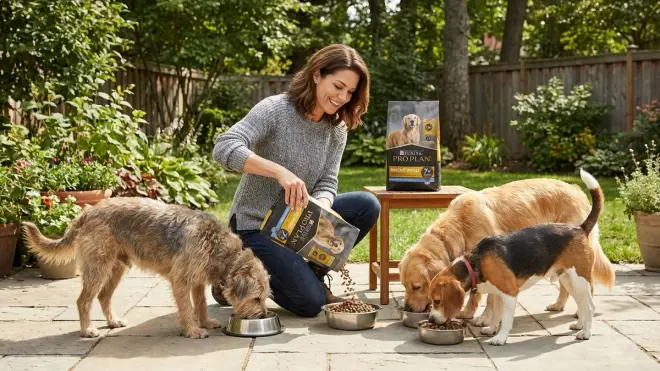
The Purina Pro Plan Bright Mind Adult 7+ Chicken and Rice Formula🛒 Amazon focuses specifically on cognitive function, which makes it unique in this category. Purina's research (backed by actual published studies) suggests that enhanced botanical oils improve mental sharpness in older dogs. The formula uses chicken as the first ingredient, with 29% protein and 14% fat—higher than most senior foods because it's designed for still-active older dogs rather than truly geriatric ones.
Pros:
- Enhanced botanical oils specifically target brain function and alertness
- Higher protein content helps maintain muscle mass in active seniors
- Contains EPA and DHA omega-3 fatty acids for joint and cognitive support
- Natural sources of glucosamine from chicken cartilage
- Relatively affordable compared to premium boutique brands
Cons:
- Higher fat content isn't appropriate for overweight seniors or dogs with mobility issues
- Contains corn gluten meal as a secondary protein source
- Standard kibble size may be too large for small-breed seniors with dental problems
- Not suitable for dogs with chicken sensitivities
I fed Duke this for about four months when I first noticed his nighttime confusion. I genuinely think it helped—the pacing decreased noticeably after about six weeks. But his weight started creeping up because the fat content was just too much for his activity level. If your dog is seven to nine years old and still hiking with you on weekends, this is worth trying. For truly geriatric dogs who mostly sleep, it's probably too rich.
Nutro Ultra Senior Dry Dog Food
Nutro Ultra Senior Dry Dog Food🛒 Amazon takes a "trio of proteins" approach, using chicken, lamb, and salmon as its first three ingredients. That variety provides a broader amino acid profile than single-protein formulas. At 25% protein and 13% fat, it sits at the higher end for senior foods. Nutro emphasizes whole ingredients—you'll see chia seeds, coconut, and kale on the ingredient list.
Pros:
- Three protein sources provide diverse amino acids and reduce likelihood of protein sensitivities developing
- Contains salmon, which adds natural omega-3s beyond supplementation
- No chicken by-product meal, corn, wheat, or soy
- Non-GMO ingredients (Nutro's brand commitment)
- Includes antioxidants from superfoods like blueberries and pumpkin
Cons:
- The "superfood" ingredients like kale and chia are present in tiny amounts—more marketing than substance
- Significantly more expensive than mass-market brands
- Not appropriate for dogs with multiple protein allergies
- Kibble size is medium—not ideal for tiny breeds or dogs with severe dental disease
One of my regular grooming clients switched her golden retriever to this last year, and the dog's coat quality improved so dramatically I actually asked what she'd changed. The variety of proteins seems to make a difference for dogs who've been eating chicken-only their whole lives. But that price point is real—you're paying premium boutique pricing for a bag that doesn't last as long as a value brand.
Wellness Complete Health Senior
The Wellness Complete Health Senior Deboned Chicken and Barley Recipe🛒 Amazon offers balanced nutrition without extreme positions on grain-free, high-protein, or other trends. Deboned chicken and chicken meal lead the ingredients, with 25% protein and 12% fat. Wellness includes their "Healthy Balance Guarantee"—probiotics, omega fatty acids, and antioxidants in every bite.
Pros:
- Guaranteed levels of glucosamine and chondroitin (250 mg/kg and 200 mg/kg)
- Contains four strains of probiotics for digestive health
- No meat by-products, wheat, corn, or soy
- Flaxseed provides plant-based omega-3s in addition to fish oil
- Made in the USA with globally sourced ingredients
Cons:
- The kibble has an unusually strong smell that some dogs love but that permeates storage areas
- Contains peas and lentils, which some owners avoid after FDA investigations into legume-heavy diets
- More expensive per pound than grocery store brands
- Doesn't offer the cognitive-specific support of some competitors
This is what I'd call a "safe middle option." It's quality nutrition without extreme formulation choices. If your senior dog is generally healthy and you want straightforward, well-balanced food, Wellness delivers. My shepherd mix has eaten various Wellness formulas over the years (I rotate proteins), and he's always done well. The smell is legitimately intense though—I store it in an airtight container in the garage.
Merrick Grain-Free Senior Formula
For dogs with confirmed grain sensitivities, Merrick Grain-Free Senior Real Texas Beef and Sweet Potato Recipe🛒 Amazon provides high-quality grain-free nutrition. Deboned beef is the first ingredient, followed by lamb meal and salmon meal, creating a rich protein profile at 32% protein and 12% fat. This is a high-protein senior formula designed for active older dogs without metabolic issues.
Pros:
- True grain-free formula using sweet potatoes and peas instead of grain fillers
- Higher protein content maintains muscle mass effectively
- Contains glucosamine and chondroitin at functional levels (1,200 mg/kg and 300 mg/kg)
- Made in the USA in Merrick's own kitchens
- Includes omega-6 and omega-3 fatty acids for skin, coat, and joint health
Cons:
- High protein and moderate-high fat inappropriate for dogs with kidney issues or obesity
- Pea-heavy formula raises concerns following FDA investigation into legume-based diets and heart issues
- Significantly more expensive than grain-inclusive options
- Rich formula can cause digestive upset in dogs with sensitive stomachs
I'm honestly conflicted about recommending grain-free formulas in 2026. The FDA's investigation into potential links between grain-free diets and canine dilated cardiomyopathy (DCM) hasn't been definitively resolved, though newer research suggests the risk was overstated. If your dog has a diagnosed grain allergy—confirmed by a veterinary elimination diet, not just your suspicion—this is a solid choice. But if you're choosing grain-free as a lifestyle preference, I'd suggest reconsidering. Duke ate grain-free for a year before the FDA reports came out, and I switched him back to grain-inclusive out of caution.
Frequently Asked Questions
When should I switch my dog to senior food?
Most dogs should transition to senior-specific formulas around seven years old for medium breeds, six years for large breeds, and five to six years for giant breeds. Small dogs can often wait until eight or nine years. The timing depends more on your individual dog's health status than a magic number. I switched Duke at seven when I noticed he was gaining weight and moving stiffly—his body was telling me he needed different nutrition even though he didn't look "old" yet. Watch for signs like reduced activity, weight gain despite consistent feeding, dental issues, or changes in coat quality. Those indicators matter more than age alone. If your dog is still highly active and maintaining ideal weight on adult food, there's no rush. But if you're seeing mobility changes or weight creep, earlier is better than later. Many veterinarians now recommend transitioning gradually over 7-10 days to avoid digestive upset, mixing increasing amounts of senior food with their current formula.
Is grain-free or grain-inclusive better for senior dogs?
Grain-inclusive food is generally safer and more appropriate for most senior dogs unless your dog has a confirmed grain allergy diagnosed by a veterinarian through an elimination diet. The FDA's investigation into grain-free diets and potential links to dilated cardiomyopathy (DCM) in dogs isn't fully resolved, but current evidence suggests that legume-heavy formulas—particularly those using peas, lentils, and potatoes as primary ingredients—may pose risks for some dogs. Whole grains like brown rice, barley, and oatmeal provide digestible fiber, B vitamins, and sustained energy without the concerns surrounding grain-free alternatives. I've seen more digestive issues in senior dogs on grain-free diets than grain-inclusive ones at the grooming shop. That said, genuine grain allergies do exist, though they're much rarer than pet food marketing suggests. If your dog has itchy skin, ear infections, or digestive issues, work with your vet to identify the actual trigger before assuming it's grains. More often, it's a protein sensitivity to chicken or beef.
Should I feed my senior dog wet food or dry food?

The answer depends on your dog's dental health, hydration status, and preferences. Most senior dogs do best on high-quality dry food because the crunch helps reduce tartar buildup and maintains jaw muscle strength. But if your dog has significant dental disease, missing teeth, or chronic dehydration issues, wet food becomes more appropriate. I feed Duke a combination: primarily dry kibble with about a quarter-cup of wet food mixed in at dinner. The moisture helps with his hydration (senior dogs often don't drink enough), and the soft texture makes eating more comfortable for his aging jaw. Wet food is significantly more expensive per calorie and requires refrigeration after opening, which adds hassle. If you're considering switching between dry and wet, do it gradually to avoid digestive upset. Some owners soak dry kibble in warm water for 5-10 minutes before feeding—that's a middle ground that softens the food without the cost of commercial wet formulas. Just don't leave soaked kibble sitting out for more than 30 minutes or it becomes a bacterial breeding ground.
How much should I feed my senior dog?
Senior dogs need 20-30% fewer calories than adult dogs due to reduced metabolism and activity levels. Most quality senior dog foods provide feeding guidelines on the bag based on your dog's ideal weight, not their current weight if they're overweight. Start with the manufacturer's recommendation and adjust based on your dog's body condition over 4-6 weeks. You should be able to feel your dog's ribs easily but not see them prominently. There should be a visible waist when viewed from above. I weigh Duke monthly because his weight creeps up so gradually I don't notice day-to-day. He needs about three-quarters of what he ate at age four, even though he's only two years older. If your senior dog is overweight, reduce portions by 10% and reassess after two weeks rather than making dramatic cuts that leave them hungry and stressed. Consider using an automatic feeder if you have multiple dogs or an inconsistent schedule—consistent meal times and portions help senior dogs maintain healthy digestion and weight.
Do senior dogs need supplements in addition to senior dog food?
High-quality senior dog food should provide complete nutrition without additional supplements for most healthy senior dogs. However, dogs with specific health conditions may benefit from targeted supplementation under veterinary guidance. The most common beneficial supplements for senior dogs are additional glucosamine/chondroitin for joint health (beyond what's in food), omega-3 fatty acids for inflammation and cognitive function, and probiotics for digestive health. I give Duke an additional joint supplement because his hip dysplasia needs more support than his food alone provides—but I worked with my vet to determine appropriate dosing and avoid dangerous over-supplementation. Never add supplements without professional guidance, especially vitamin D, calcium, or fat-soluble vitamins that can reach toxic levels. Many "senior support" supplements are marketing more than medicine. Focus first on quality food that meets AAFCO standards for senior dogs, then address specific deficiencies or conditions with your veterinarian through targeted supplementation rather than shotgun approaches.
The Verdict
Choosing the best dog food for senior dogs isn't about finding one perfect formula—it's about matching your specific dog's needs to the right nutrition at this stage of their life. Duke thrives on different food than my terrier mix, even though they're both in my "senior" category. Focus on appropriate calorie density for your dog's activity level, quality protein sources they can digest efficiently, and functional levels of joint-supporting ingredients. Don't get distracted by marketing claims about superfoods or grain-free trends unless your dog has specific diagnosed needs.
Start with one of the formulas above based on your dog's size, activity level, and any health concerns, then watch their response over 6-8 weeks. Improved energy, healthy weight maintenance, good coat quality, and comfortable movement tell you more than any ingredient list. And if you're seeing signs that your dog needs more than dietary changes—persistent mobility issues, cognitive changes, or other health concerns—check out our complete senior dog care guide for a broader approach to keeping your older dog comfortable and thriving. These years matter. Feed them well.