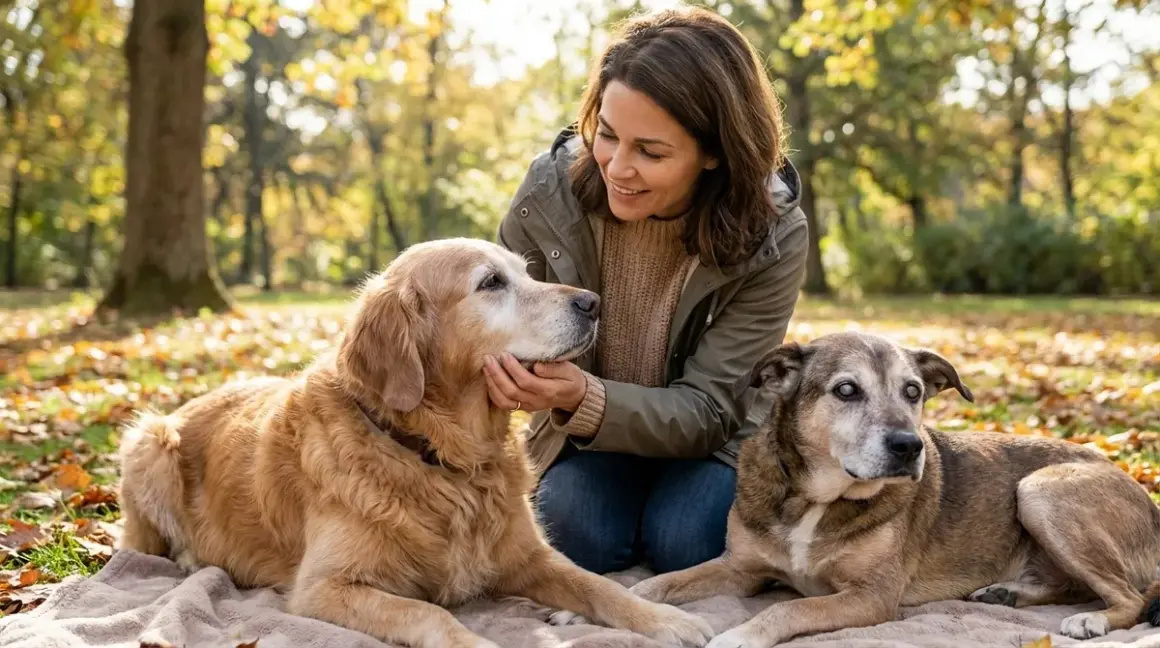

I'll never forget the morning I looked at my shepherd mix, Dakota, and realized she'd gone completely gray around the muzzle. It hadn't happened overnight, obviously—but somehow I'd missed the gradual shift from "adult dog" to "geriatric dog." She was moving a little slower, sleeping a bit more, and those changes had crept in so quietly that I'd adapted without really noticing. Understanding when your dog crosses into their senior years isn't just about counting birthdays. It's about recognizing the physical, behavioral, and health changes that come with aging, and adjusting your care approach so your dog's golden years are genuinely comfortable.
What Is a Geriatric Dog?
A geriatric dog is a canine that has entered the final life stage, typically characterized by age-related physical changes, decreased activity levels, and increased vulnerability to health conditions. But here's where it gets tricky: there's no single age when every dog becomes geriatric. Size matters enormously. Giant breeds like Great Danes or Mastiffs may be considered senior by age 5-6 and geriatric by 8-9, while small breeds like Chihuahuas or Yorkshire Terriers might not reach senior status until 10-11 and geriatric until 13-14.
The general veterinary guideline uses the term "senior" for the last 25% of a breed's expected lifespan, with "geriatric" typically referring to dogs in the final 10-15% or those showing multiple age-related health conditions regardless of exact age. From my grooming table, I see this play out constantly—a 7-year-old Bernese Mountain Dog might have the mobility issues and gray coat I'd expect in a 12-year-old Border Terrier.
Breed-specific factors influence aging dramatically. Brachycephalic breeds (flat-faced dogs like Bulldogs or Pugs) often develop respiratory complications earlier. Large, deep-chested breeds face higher risks of bloat and joint problems. Mixed breeds sometimes benefit from hybrid vigor, potentially aging more slowly than their purebred counterparts. Your veterinarian will use a combination of chronological age, breed expectations, and individual health markers to determine when your dog has transitioned into geriatric status.
How Aging Works in Dogs
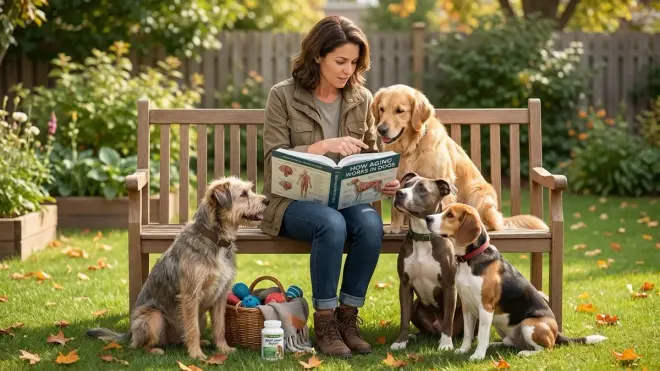
The aging process in dogs involves cellular deterioration, organ system decline, and metabolic changes that happen at an accelerated rate compared to humans. The classic "one dog year equals seven human years" formula is oversimplified and inaccurate. According to research from the University of California San Diego, dogs age much faster in their early years—a one-year-old dog is roughly equivalent to a 30-year-old human, while aging then slows and varies by size.
Cellular aging happens through several mechanisms. Telomeres (protective caps on DNA strands) shorten with each cell division, eventually limiting cells' ability to replicate properly. Oxidative stress from free radicals accumulates, damaging cell structures. Mitochondrial function declines, reducing cellular energy production. In practical terms, this means tissues repair more slowly, immune function weakens, and organ systems become less efficient.
Organ-specific changes vary but follow predictable patterns. The cardiovascular system experiences reduced cardiac output and vessel elasticity—your geriatric dog's heart works harder to pump blood, and circulation becomes less efficient. Kidney function naturally declines, reducing the body's ability to filter toxins and maintain hydration balance. The liver's detoxification capacity decreases. Cognitive function can decline as brain cells deteriorate, leading to canine cognitive dysfunction (essentially doggie dementia). I see this last one frequently—dogs who once knew my grooming shop routine suddenly seem confused about where they are or don't recognize spaces they've visited dozens of times.
Metabolic changes affect how geriatric dogs process nutrients and maintain body condition. Basal metabolic rate typically decreases, meaning older dogs need fewer calories to maintain weight—yet many owners continue feeding adult portions, leading to obesity. Protein requirements may actually increase because aging dogs use dietary protein less efficiently. They need higher-quality, more digestible nutrients because their gastrointestinal tract absorbs nutrients less effectively.
Musculoskeletal deterioration is perhaps the most visible aspect of aging. Muscle mass naturally decreases (sarcopenia), even in dogs maintaining stable weight. Cartilage in joints wears down, leading to osteoarthritis in 80% of dogs over age 8 according to veterinary estimates. Bone density can decrease, increasing fracture risk. Ligaments and tendons lose elasticity. One of my own dogs, a senior terrier mix named Biscuit, went from leaping onto the couch to needing a ramp in what felt like six months. Her muscle tone had degraded faster than I'd realized.
The immune system becomes both less responsive and sometimes paradoxically overactive. Geriatric dogs are more susceptible to infections because their immune response weakens, yet they're also more prone to autoimmune conditions where the immune system attacks the body's own tissues. Vaccination responses may be less robust, though regular vaccines remain important.
Why Understanding Geriatric Changes Matters
Recognizing that your dog is geriatric fundamentally changes your care priorities and daily management approach. This isn't about accepting decline—it's about proactive adjustment. When I finally acknowledged Dakota's geriatric status, I completely restructured her routine: shorter, more frequent walks instead of one long hike; raised food and water bowls to reduce neck strain; orthopedic bedding in every room she frequented. These changes didn't just make her comfortable—they extended her active, happy years.
Early intervention prevents suffering. Many conditions that seem like "normal aging" are actually treatable problems. Arthritis pain can be managed with NSAIDs, joint supplements, and physical therapy. Dental disease (present in 80% of dogs over age 3, and nearly universal in geriatric dogs) causes chronic pain that diminishes quality of life but responds well to dental cleanings and extractions. Cognitive decline may be slowed with environmental enrichment, specific diets, and supplements. But you can only intervene if you're watching for the signs. For detailed guidance on monitoring health changes, see our Senior Dog Health Checklist: Essential Veterinary Care and Monitoring.
Financial planning matters. Geriatric dogs need more frequent veterinary care—typically every 6 months rather than annually. They require bloodwork to monitor organ function, earlier cancer screenings, and often long-term medications. In my experience, care costs for senior and geriatric dogs easily double or triple compared to adult maintenance. Understanding this timeline helps you budget appropriately and avoid the heartbreaking situation where treatment options exist but aren't financially accessible.
Home safety and comfort modifications become essential. Geriatric dogs with vision or hearing loss startle more easily and struggle with navigation. Those with arthritis or neurological decline need traction on slippery floors (I use yoga mats as runners through my house), ramps or stairs to elevated surfaces, and careful management of fall risks like stairs or decks. For comprehensive home adjustment strategies, check out Everything You Need for Senior Dog Comfort: Home Modifications Checklist.
Understanding the geriatric phase also helps you make informed end-of-life decisions when the time comes. Knowing what's normal geriatric aging versus what constitutes unmanageable suffering gives you a framework for quality-of-life assessments. It's not a conversation anyone wants to have, but I've watched too many owners keep dogs alive past the point of comfort because they weren't sure when "enough was enough." Having realistic expectations about the geriatric stage helps you prioritize your dog's wellbeing over your own attachment.
Recognizing the Transition to Geriatric Status
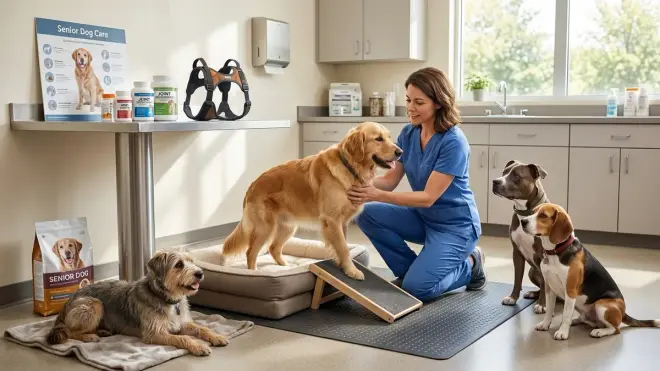
Physical indicators are often the first signs owners notice. Gray hair, particularly around the muzzle, eyes, and paws, is nearly universal—though some dogs gray earlier due to genetics or stress. Coat texture may become coarser or thinner. I notice this constantly in the grooming shop: coats that used to hold a scissored shape beautifully become flyaway and difficult to style because the hair shaft itself has changed structure.
Mobility changes are critical markers. Watch for stiffness after rest (particularly in the morning), reluctance to jump onto furniture or into cars, difficulty with stairs, and shortened stride length. Many owners interpret these as "just slowing down," but they usually indicate joint pain or muscle weakness. Dakota developed a distinctive bunny-hop gait in her hind end—both legs moving together rather than alternating—which signaled hip arthritis. For detailed information about joint problems, see Senior Dog Mobility Issues Explained: Arthritis, Joint Pain and Movement.
Sensory decline happens gradually. Dogs develop nuclear sclerosis (a bluish haze in the eyes) that doesn't significantly impair vision, but cataracts—which look like white cloudiness—do cause blindness. Hearing loss is harder to spot initially; you might think your dog is ignoring commands when they genuinely can't hear you. I test this by making sounds outside the dog's visual field—if they don't react to keys jingling or a hand clap when they can't see me, hearing loss is likely.
Behavioral shifts can be subtle. Increased sleep (geriatric dogs may sleep 16-20 hours daily), decreased interest in play, anxiety or clingy behavior, disorientation, and housetraining accidents all signal geriatric changes. Some of these indicate cognitive decline—if your dog gets "stuck" in corners, doesn't recognize familiar people, or has disrupted sleep-wake cycles, discuss cognitive support with your vet. Our guide How to Recognize and Manage Cognitive Decline in Senior Dogs covers this in depth.
Weight and body condition changes go both directions. Some geriatric dogs become overweight due to decreased activity and unchanged food portions. Others—particularly those with dental pain, kidney disease, or cancer—lose weight despite adequate food availability. I can feel these changes through a dog's coat when I'm grooming; the spine and ribs become more prominent, or conversely, I lose the ability to feel individual ribs through fat deposits. For dogs carrying excess weight, How to Help Your Senior Dog Lose Weight Safely provides specific strategies.
Dental deterioration accelerates in geriatric dogs. Severe tartar buildup, red or receding gums, loose teeth, and mouth odor are common. Many dogs become head-shy during grooming because touching their face triggers dental pain—I've learned to approach ear and face work carefully with older dogs, watching for flinching or avoidance that wasn't present before. See Senior Dog Dental Care: Understanding Aging Teeth and Gum Health for maintenance guidance.
Adjusting Care for Geriatric Dogs
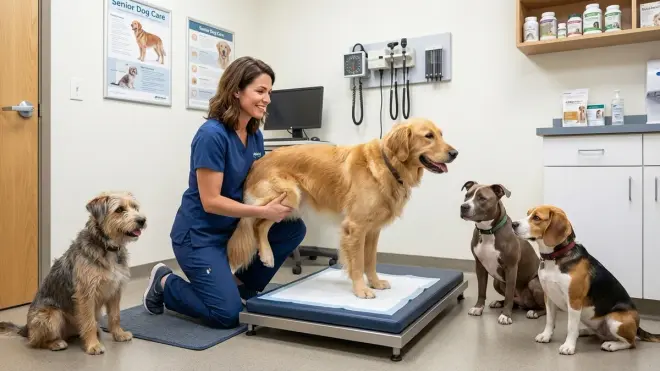
Nutrition modifications are foundational. Geriatric dogs benefit from diets specifically formulated for senior needs—typically lower in calories but higher in easily digestible protein (25-30% protein on a dry matter basis), with added joint support (glucosamine, chondroitin), omega-3 fatty acids for inflammation management, and antioxidants for cognitive support. Brands like the Hill's Science Diet Adult 7+ Senior Dog Food specifically address these needs with adjusted protein-to-fat ratios and targeted nutrients.
Some geriatric dogs need prescription diets for kidney support, joint care, or cognitive function. I've transitioned several of my own dogs to moistened kibble or soft foods as dental problems made dry food uncomfortable. For comprehensive senior nutrition guidance, see Best Dog Food for Senior Dogs: Top Nutrition for Aging Canines.
Feeding schedules may need adjustment too—smaller, more frequent meals often work better for dogs with digestive sensitivities. Raised feeders (bowls elevated 6-12 inches depending on dog size) reduce neck strain during eating, though they're controversial for bloat-prone breeds. For dogs who struggle to reach bowls due to mobility issues, consider systems like Best Automatic Dog Feeders: 10 Smart Feeders for Busy Pet Parents (2024) that can dispense food at accessible heights on schedule.
Exercise adjustments don't mean stopping activity—they mean modifying it. Geriatric dogs still need movement for joint health, muscle maintenance, and mental stimulation, but shorter, more frequent sessions work better than long, strenuous outings. I walk my senior dogs 15-20 minutes three times daily rather than one 45-minute walk. Swimming and underwater treadmills provide low-impact exercise that maintains fitness without joint stress. Mental enrichment through scent games, puzzle toys, and training exercises helps maintain cognitive function even when physical capacity decreases. For specific exercise guidance, read How to Adjust Exercise Routines for Elderly Dogs.
Veterinary care intensifies. Move to twice-yearly wellness exams rather than annual visits. Geriatric bloodwork panels (complete blood count, chemistry panel, thyroid testing, urinalysis) catch organ dysfunction early when it's most treatable. Many vets recommend baseline chest X-rays and abdominal ultrasounds to establish normal parameters for your individual dog. Stay current on vaccinations, but discuss titer testing with your vet—some geriatric dogs may have adequate immunity without full vaccination, reducing vaccine load on aging immune systems.
Supplement considerations become relevant for many geriatric dogs. Glucosamine and chondroitin support joint health. Omega-3 fatty acids (EPA and DHA from fish oil) reduce inflammation. SAM-e and medium-chain triglycerides may support cognitive function. Probiotics help aging digestive systems. However, not all supplements are necessary for all dogs—discuss your specific dog's needs with your veterinarian rather than adding supplements indiscriminately. Our Senior Dog Supplement Checklist: Vitamins, Joint Support and Cognitive Health breaks down which supplements address specific conditions.
Grooming adjustments matter more than owners realize. Geriatric dogs often can't stand comfortably for extended grooming sessions, so I work in shorter increments with rest breaks. Their skin becomes thinner and more sensitive—I use gentler shampoos and am extremely careful with clippers to avoid nicking fragile skin. Nails often need more frequent trimming because reduced activity means less natural wear. Matting becomes more common in long-coated breeds because older dogs groom themselves less effectively and may have mobility limitations that prevent reaching certain areas.
Pay special attention to pressure points—hips, elbows, hocks—where bony prominences rest against surfaces. Hair matting in these areas or callus formation indicates your dog needs better padding in their resting spaces. I check these areas on every geriatric dog I groom and flag concerns for owners.
Pain management is perhaps the most underutilized aspect of geriatric dog care. Many owners don't realize their dog is in pain because dogs instinctively hide discomfort. Watch for subtle signs: reluctance to move, changes in posture, decreased appetite, irritability, or avoidance of touch in specific areas. Modern pain management includes NSAIDs (carprofen, meloxicam), gabapentin for neuropathic pain, tramadol, adequan injections for joints, and even cannabis-derived products in states where they're legal for veterinary use. Don't let your dog suffer because you think pain is "normal aging"—it's not, and it's treatable.
Frequently Asked Questions
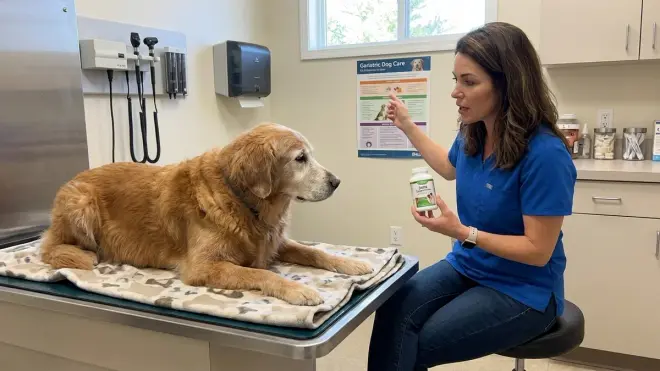
At what age does a dog become geriatric?
A dog becomes geriatric during the final 10-15% of their breed's expected lifespan, which varies dramatically by size—giant breeds may be geriatric by age 8-9, while small breeds might not reach this stage until 13-15 years old. Your veterinarian determines geriatric status based on a combination of chronological age, breed life expectancy, and the presence of age-related health conditions rather than a single birthday.
What are the first signs my dog is becoming geriatric?
The first signs your dog is becoming geriatric typically include graying around the muzzle, stiffness after rest (particularly in the morning), decreased enthusiasm for activities they previously enjoyed, increased sleep time, and subtle changes in coat texture or body condition. Behavioral changes like mild disorientation, increased clinginess, or taking longer to respond to commands often appear before obvious physical limitations develop.
How should I change my geriatric dog's diet?
You should transition your geriatric dog to a senior-formulated diet with reduced calories (to prevent obesity from decreased activity), higher-quality digestible protein at 25-30% on a dry matter basis, added joint support compounds like glucosamine and chondroitin, omega-3 fatty acids for inflammation management, and antioxidants for cognitive support. Some geriatric dogs also benefit from moistened food or smaller, more frequent meals if they have dental issues or digestive sensitivities.
Can I still exercise my geriatric dog?
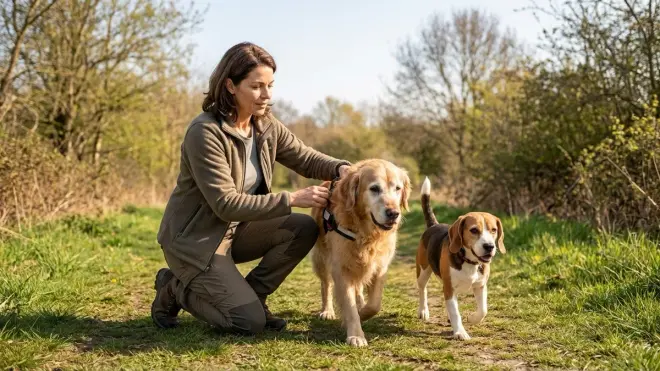
Yes, you can and should still exercise your geriatric dog, but you need to modify the intensity, duration, and type of activity—shorter, more frequent walks (15-20 minutes, two to three times daily) work better than long outings, low-impact activities like swimming are ideal for maintaining fitness without joint stress, and mental enrichment through puzzle toys and scent games provides stimulation when physical capacity decreases. The goal is maintaining muscle mass, joint mobility, and cognitive function without causing pain or exhaustion.
How often should geriatric dogs see the veterinarian?
Geriatric dogs should see the veterinarian every six months rather than annually, with each visit including a thorough physical examination and regular bloodwork (complete blood count, chemistry panel, and urinalysis) to monitor organ function and catch diseases like kidney failure, liver disease, or diabetes in early, treatable stages. Additional diagnostic imaging like X-rays or ultrasounds may be recommended based on your dog's specific health concerns or breed predispositions.
Summary
Understanding when and how your dog becomes geriatric gives you the framework to make their senior years comfortable and meaningful. The transition isn't defined by a single birthday—it's marked by physical changes, mobility shifts, and increased health vulnerability that vary by breed size and individual factors. From my years working with dogs at every life stage, I've learned that the owners who proactively adjust care—modifying nutrition, restructuring exercise, intensifying veterinary monitoring, and addressing pain early—give their dogs the longest, highest-quality senior years.
Your geriatric dog isn't "just getting old." They're entering a distinct life stage with specific needs that, when met thoughtfully, can be genuinely rewarding for both of you. For complete guidance on navigating this phase, explore our Senior Dog Care: Complete Guide to Caring for Your Aging Dog. The gray muzzle and slower pace don't mean the relationship is winding down—they mean it's time to meet your dog where they are now and adapt your care to match.