


I've spent nearly a decade grooming dogs of every size and breed, and I can tell you that what goes into your dog shows up on the outside—in their coat, their skin, their energy on my table, even their behavior during stressful handling. My own four rescues have taught me that dog food ingredients to avoid aren't just an academic concern. They're the difference between a senior shepherd with a glossy coat and manageable inflammation, and one who's itchy, lethargic, and miserable. This checklist is for anyone who's ever stared at a dog food label and felt overwhelmed by the ingredient list. I'll walk you through the red flags, the filler jargon, and the ingredients that have no business in your dog's bowl—whether you're feeding a puppy, an adult, or a senior dog.
Problematic Protein Sources and By-Products
Protein is non-negotiable for dogs, but the source matters more than most pet parents realize. I've seen dogs come into the shop with dull, brittle coats and chronic skin issues that cleared up within weeks of switching away from low-quality protein sources. Here's what to watch for:

Meat by-products (unspecified): When a label just says "meat by-products" or "poultry by-products" without naming the animal, you're looking at a grab-bag of slaughterhouse leftovers—beaks, feet, feathers, intestines. AAFCO defines by-products broadly, and while some organ meats are nutritious, unspecified by-products are a quality gamble.
Meat and bone meal (generic): Similar issue—if it doesn't specify "chicken meal" or "lamb meal," you have no idea what animals went into that rendering process, and the protein quality is usually rock-bottom.
4-D meats (diseased, dying, disabled, or dead livestock): Not always disclosed directly, but this is the risk with vague protein sources from manufacturers without transparent sourcing practices; look for brands that specify USDA-inspected meats or human-grade ingredients as covered in what is human-grade dog food.
Excessive plant proteins used as primary protein: Ingredients like corn gluten meal, soy protein isolate, or pea protein listed in the top five ingredients mean the manufacturer is using cheap plant proteins to boost the overall protein percentage while skimping on animal protein—dogs are facultative carnivores who thrive on meat.
Rendered fat from unknown sources: "Animal fat" without specifying the animal is a quality red flag; fat should come from named sources like "chicken fat" or "salmon oil" and be preserved with natural antioxidants like mixed tocopherols, not chemical preservatives.
When I switched my terrier mix off a food with generic "meat meal" as the second ingredient to one with named chicken and turkey, the change in her coat texture was noticeable within three weeks. That's not placebo—that's what quality protein does.
Chemical Preservatives and Artificial Additives

This category is where I get most fired up, because these ingredients serve the manufacturer's shelf-life needs, not your dog's health. My senior shepherd had chronic ear infections and low-grade inflammation until I eliminated foods with these preservatives:
BHA (butylated hydroxyanisole) and BHT (butylated hydroxytoluene): Synthetic antioxidants banned in human food in some countries but still legal in US pet food; the National Institutes of Health has linked them to potential carcinogenic effects in animal studies.
Ethoxyquin: Originally developed as a rubber stabilizer and pesticide, used in some fish meals and pet foods as a preservative; it's been restricted or banned in several countries and has been associated with organ damage in high doses.
Propylene glycol: Used to maintain moisture in semi-moist foods, it's the same chemical in automotive antifreeze (food-grade, but still problematic); it can cause oxidative damage to red blood cells, especially in cats but also concerning for dogs.
Artificial colors (Blue 2, Red 40, Yellow 5 and 6): Dogs don't care what color their food is—these petroleum-derived dyes exist purely for human appeal and have been linked to hyperactivity and allergic reactions in sensitive dogs.
Artificial flavors (unspecified): If a food needs chemical flavoring to be palatable, that tells you everything about the quality of the base ingredients; good food smells like real meat to a dog's nose.
I've seen too many dogs with mysterious skin flare-ups and GI issues that resolved when their owners switched to foods preserved with natural vitamin E (mixed tocopherols) or rosemary extract instead of chemical preservatives. If you're comparing dry dog food vs wet dog food, check the preservatives in both—wet food in cans typically needs less, but pouches and trays often still use them.
Controversial Fillers and Low-Quality Carbohydrates
Carbs aren't inherently bad for dogs—they can provide energy and fiber—but cheap fillers used to bulk up food without adding nutrition are a different story. I learned this the hard way with my rescue beagle mix who was chronically gassy and had loose stools until we eliminated these ingredients:
Corn and wheat gluten: These are protein-boosting fillers that are highly processed and have minimal bioavailability for dogs; they're often used to artificially inflate protein percentages on the guaranteed analysis without providing quality nutrition.
White rice flour and brewer's rice: These are the leftover fragments after milling rice for human consumption—they're essentially empty calories with the fiber and nutrients stripped away, causing blood sugar spikes.
Cellulose (powdered wood pulp): Yes, you read that right—some manufacturers use this as a "fiber source," but it's nutritionally worthless filler that just adds bulk.
Peanut hulls: Another fiber source that's basically sawdust from peanut processing; if the manufacturer is padding the fiber content this way, they're cutting corners everywhere.
Excessive peas, potatoes, or legumes in grain-free formulas: The FDA investigated a link between grain-free diets heavy in peas, lentils, and potatoes and dilated cardiomyopathy (DCM) in dogs; while the research is ongoing, foods where these are the top three ingredients raise concern—check best grain-free dog food for dogs with allergies for better-formulated options.
Corn syrup or added sugars: Dogs don't need sweeteners, and these contribute to obesity, dental disease, and energy crashes; I've seen dogs come in wired and anxious from foods with added sugars, especially in the best puppy training treats category.
When I'm reading labels at the shop while chatting with clients, I tell them to look at the first ten ingredients—that's where the bulk of the food comes from. If half of those are cheap fillers, it doesn't matter what fancy marketing is on the front of the bag.
Problematic Additives and Allergens

This category covers ingredients that aren't universally problematic but cause issues for many dogs, especially those with sensitivities. My high-strung rescue pit mix taught me this lesson—she had chronic itching and hot spots that cleared up when we removed these from her diet:
Soy (soy flour, soybean meal, soy protein): A common allergen in dogs and a cheap protein source that's poorly digestible; it's also a phytoestrogen that can disrupt hormone balance in some dogs.
Dairy products (milk, cheese, whey): Most adult dogs are lactose intolerant to some degree, and dairy can cause GI upset, gas, and loose stools; exceptions are small amounts of low-lactose options like plain yogurt, but these shouldn't be primary ingredients.
Wheat and wheat middlings: Besides being a filler, wheat is one of the most common food allergens in dogs; middlings are the sweepings from the milling floor—essentially dust and debris.
Carrageenan: A thickening agent derived from seaweed, used in many canned and wet foods; research suggests it may cause inflammatory gut responses and has been linked to digestive issues.
Menadione sodium bisulfite complex (synthetic vitamin K3): A synthetic vitamin K source that's been banned in several countries due to potential toxicity; natural vitamin K is readily available from quality ingredients, so there's no reason to use the synthetic version.
Excessive salt (sodium): While dogs need some sodium, foods that list "salt" high in the ingredient list or have more than 0.5% sodium on a dry matter basis can contribute to hypertension and kidney stress, especially in senior dogs—see best senior dog food for older dogs for age-appropriate options.
I always tell clients that if their dog is scratching constantly, getting ear infections, or having digestive issues, checking the ingredient list for these common allergens is step one—before you spend hundreds at the vet for allergy testing.
Misleading and Vague Ingredient Terminology
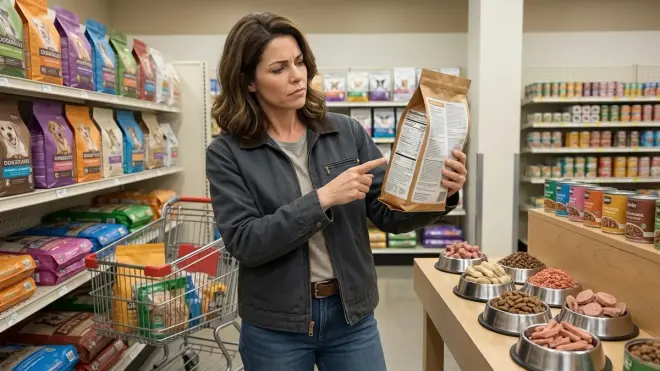
This section is about the language tricks manufacturers use to make low-quality ingredients sound premium. After reading thousands of labels over the years, I can spot these a mile away:
"Natural flavors" without specification: This catch-all term can mean anything from organ meat extracts to chemical processing byproducts; without transparency, you're flying blind.
"Animal digest": This is material that's been chemically or enzymatically broken down—basically pre-digested animal tissue used as a flavor enhancer; the animal source is often unspecified.
"Chicken meal" vs. "chicken": This isn't necessarily bad, but understand that "chicken" is 80% water, while "chicken meal" is rendered down; a food with "chicken" first and "chicken meal" fifth might actually have less chicken protein than one with "chicken meal" first—ingredient splitting obscures this.
Ingredient splitting: When manufacturers break up one ingredient into multiple forms to push it down the list—for example, listing "ground corn," "corn gluten meal," and "corn bran" separately when combined they'd be the top ingredient.
"With" or "flavor" qualifiers: A food called "Dog Food With Beef" only needs to contain 3% beef, and "Beef Flavor Dog Food" can have 0% actual beef—just flavoring; contrast this with "Beef Dog Food" which requires 95% beef.
"Meal time" or "dinner" descriptors: These mean the named ingredient only needs to make up 25% of the product; "Chicken Dinner" has much less chicken than "Chicken Dog Food."
When you're learning how to choose the right dog food for your dog's needs, understanding these label tricks is essential. I've seen pet parents pay premium prices for foods that use fancy marketing language to disguise mediocre ingredient quality.
Final Check Before You Go
Before you buy your next bag of dog food, run through this quick checklist. I keep this mental list whenever I'm recommending food to clients or shopping for my own pack:
Red flag ingredients to avoid:
- Generic "meat by-products" or "animal fat" (no species named)
- Chemical preservatives: BHA, BHT, ethoxyquin, propylene glycol
- Artificial colors: Blue 2, Red 40, Yellow 5/6
- Protein fillers: corn gluten meal, wheat gluten, excessive plant proteins
- Empty fillers: cellulose, peanut hulls, brewer's rice
- Synthetic vitamin K3 (menadione sodium bisulfite)
- Added sugars or corn syrup
- Unspecified "natural flavors" or "animal digest"
What to look for instead:
- Named meat sources as first ingredients (chicken, beef, lamb, salmon)
- Natural preservatives (mixed tocopherols, rosemary extract)
- Whole food carbs (sweet potato, oats, brown rice)
- Named fat sources (chicken fat, salmon oil)
- AAFCO nutritional adequacy statement for your dog's life stage
- Transparent ingredient sourcing from reputable manufacturers
Understanding AAFCO dog food standards and nutrition labels helps you verify that a food meets minimum nutritional requirements, but avoiding these problematic ingredients takes you beyond minimum and into optimal territory. When you're ready to make the switch, check out how to transition your dog to new dog food without digestive issues—even the best food can cause problems if you switch too abruptly.
Frequently Asked Questions
Are grain-free dog foods automatically better than foods with grains?
No, grain-free isn't automatically superior, and recent FDA investigations have linked some grain-free formulas heavy in peas, lentils, and potatoes to dilated cardiomyopathy in dogs. Grains like oats, barley, and brown rice provide digestible nutrients and fiber for most dogs. The quality of the protein source and the overall ingredient profile matters far more than whether the food contains grains—unless your dog has a diagnosed grain allergy, which is actually quite rare. Focus on avoiding the low-quality fillers and chemical additives listed in this article rather than eliminating all grains by default.
How can I tell if my dog is reacting to a bad ingredient in their food?
The most common signs are chronic itching and scratching, ear infections, hot spots, digestive issues like gas or loose stools, low energy, dull or brittle coat, and excessive shedding outside of normal seasonal patterns. In my grooming shop, I can often tell when a dog's been eating poor-quality food just from their coat texture and the amount of dander on my table. If you suspect a food ingredient issue, try an elimination diet with a limited-ingredient formula for 8-12 weeks—that's how long it takes for dietary changes to fully manifest in skin and coat health.
Do expensive dog foods always have better ingredients than budget brands?
Not always, though there's often a correlation—quality ingredients cost more to source. I've seen boutique brands with gorgeous marketing that still use vague protein sources and synthetic preservatives, and I've found budget-friendly brands with transparent sourcing and solid ingredients. The price-per-pound matters less than reading the actual ingredient panel and checking for the red flags in this checklist. Some mid-range brands offer excellent ingredient quality because they skip the fancy packaging and marketing budgets. Always read the label yourself rather than assuming price equals quality.
Final Thoughts
The ingredient panel on your dog's food bag tells the real story—not the marketing claims on the front or the price tag. I've watched hundreds of dogs transform when their owners started scrutinizing those ingredients and making informed choices. My senior shepherd's mobility and inflammation improved dramatically when we cut out foods with chemical preservatives and mystery meat sources. My terrier's coat went from dull and thin to thick and glossy when we upgraded her protein quality.
You don't need a degree in animal nutrition to feed your dog well. You just need to know what to avoid, and now you have that checklist. Start with best dog food options that meet these standards, pay attention to your dog's individual response, and remember that what works for one dog might not work for another. The goal isn't perfection—it's progress toward ingredients you can identify and trust. Your groomer will notice the difference, your vet will notice the difference, and most importantly, your dog will feel the difference every single day.