

I'll be honest—I'm a dog groomer through and through, but over the years I've learned that understanding how to read cat food labels matters just as much as knowing dog nutrition. Several of my clients are multi-pet households, and watching cats thrive (or struggle) based on what's in their bowl has taught me that label literacy isn't optional. Whether you're a first-time cat parent or you've had felines for years, learning to decode these labels takes about 20 minutes and will change how you shop forever. I'll walk you through exactly what to look for, what red flags to avoid, and how to translate all that fine print into better health for your cat.
This guide is designed for cat owners at any experience level—you don't need a nutrition degree, just a willingness to flip the bag over and actually read what's printed there.
What You'll Need
- A cat food bag or can with the full label visible (not just the front marketing panel)
- Your cat's current weight and age for reference
- Any known health conditions or allergies your cat has
- A calculator or smartphone for comparing feeding amounts across brands
- Access to AAFCO nutritional profiles (available through the Association of American Feed Control Officials or printed on most quality labels)
- Your vet's contact info if you need to verify recommendations for specific health concerns
- Paper and pen for notes if you're comparing multiple brands
Step 1: Start With the AAFCO Statement—It's Your First Quality Filter
Before you even glance at ingredients, find the AAFCO nutritional adequacy statement. It's usually tucked on the back or side panel in small print, and it tells you whether the food has actually been tested or simply formulated to meet feline nutritional standards. You're looking for language like "formulated to meet the nutritional levels established by the AAFCO Cat Food Nutrient Profiles" or—even better—"animal feeding tests using AAFCO procedures substantiate that this food provides complete and balanced nutrition."
The feeding trial version means actual cats ate this food for a minimum period and demonstrated adequate health markers. That's the gold standard. If there's no AAFCO statement at all, put the bag back—it's not considered complete nutrition and shouldn't be your cat's primary diet.
You'll also see life stage designations: adult maintenance, growth and reproduction (kittens and pregnant/nursing cats), or all life stages. Don't feed kitten food to your senior cat just because you have leftovers—the caloric density and nutrient ratios are calibrated differently, and you'll risk weight gain or nutrient imbalances. For more context on how AAFCO standards work specifically for cats, check out What Is AAFCO Certification and Why It Matters for Cat Food.
This statement is non-negotiable. Everything else on the label is meaningless if this basic quality threshold isn't met.
Step 2: Read the Ingredient List Like a Recipe—First Five Ingredients Matter Most

The ingredient list is organized by weight before processing, which means wet ingredients (like "chicken") will always rank higher than dry ones (like "chicken meal") even if the dry version contains more protein after moisture is removed. This trips up a lot of cat owners when learning how to read cat food labels.
Your first five ingredients should include at least two to three animal protein sources. Cats are obligate carnivores—their bodies are designed to derive nutrients from animal tissue, not plants. Look for specific named proteins: chicken, turkey, salmon, beef, or duck. Avoid vague terms like "meat by-products" or "poultry meal" without a species named—you have no idea what animal that came from, and quality varies wildly.
Chicken meal or salmon meal is concentrated protein (about 300% more protein by weight than fresh chicken) and is actually a quality ingredient despite sounding processed. Fresh chicken listed first is great, but once the water cooks out, it might contribute less protein than that chicken meal listed fourth.
Watch out for ingredient splitting—when manufacturers list multiple forms of the same ingredient separately to push it lower on the list. If you see "ground corn, corn gluten meal, and corn bran" all in the top ten, that's a red flag. Combined, corn might be the primary ingredient, but splitting it makes it look like there's more meat.
I've seen clients switch their cats from a food with "chicken, corn, wheat gluten, soy" as the first four ingredients to one with "chicken, chicken meal, turkey, chicken liver," and the difference in coat quality at grooming time (yes, I groom the occasional cat) is night and day. Shinier coats, less dander, better skin—all traceable back to what's actually in the bowl.
Step 3: Decode the Guaranteed Analysis—But Know Its Limitations
The Guaranteed Analysis panel shows minimum percentages of crude protein and crude fat, plus maximum percentages of crude fiber and moisture. These are legal guarantees, not exact amounts, and "crude" means they're measuring total content—not digestibility or quality.
For adult cats, you generally want to see:
- Minimum 26% crude protein in dry food (35-40% is better for obligate carnivores)
- Minimum 9% crude fat in dry food (healthy fats support coat, brain, and hormone function)
- Maximum 3-5% crude fiber (cats don't need high fiber unless managing specific health issues)
- Maximum 10-12% moisture in dry food, or 78-82% moisture in wet food
The tricky part: a dry food with 30% protein and a wet food with 10% protein aren't directly comparable because of moisture content. To compare accurately, you need to convert to dry matter basis. Subtract the moisture percentage from 100, then divide the nutrient percentage by that number. For example, wet food with 10% protein and 78% moisture: 100 - 78 = 22. Then 10 ÷ 22 = 0.45, or 45% protein on a dry matter basis—significantly higher than many dry foods.
I'll be honest—most cat owners skip this math, and that's fine for healthy cats eating quality food. But if you're comparing wet vs dry cat food options or troubleshooting weight or coat issues, this calculation matters.
One more thing: the Guaranteed Analysis doesn't tell you about bioavailability—how well your cat can actually use those nutrients. A food with 40% protein from feather meal is technically high-protein but largely indigestible. This is where ingredient quality (Step 2) and AAFCO feeding trials (Step 1) become critical.
Step 4: Look for Named Fats and Essential Nutrients Cats Can't Produce

Fat source matters. Look for specific named fats like "chicken fat," "salmon oil," or "sunflower oil." Avoid vague terms like "animal fat" (what animal?) or excessive amounts of generic "vegetable oil." Cats need omega-3 and omega-6 fatty acids for skin, coat, and anti-inflammatory benefits, and animal-based fats provide these in more bioavailable forms than plant sources.
Because cats are obligate carnivores, they cannot synthesize certain nutrients that omnivores can make from plant precursors. Check that the label specifically lists:
- Taurine (an amino acid critical for heart and eye health—deficiency causes dilated cardiomyopathy and blindness)
- Arachidonic acid (an omega-6 fatty acid cats can't make from plant oils)
- Vitamin A (cats can't convert beta-carotene from plants into usable vitamin A)
- Niacin (cats have poor conversion efficiency from tryptophan)
Most quality commercial foods add these, but it's worth verifying, especially with boutique brands or homemade diets. I've seen well-meaning owners try grain-free formulas thinking they're healthier, only to discover the formula was poorly balanced. For more on this debate, read Grain-Free vs Grain-Inclusive Cat Food: Which Should You Choose?.
Chelated minerals (like "zinc proteinate" rather than just "zinc oxide") are absorbed more efficiently, which is a nice bonus in premium foods but not a dealbreaker if absent.
If you want a deeper dive into specific nutrients and their functions, Essential Nutrients in Cat Food: What Obligate Carnivores Need breaks down the science without the jargon overload.
Step 5: Calculate Actual Caloric Density and Cost Per Day
The feeding guidelines on the label are starting points—not gospel. They're often calculated for intact, moderately active adult cats, which means they'll overfeed most spayed/neutered indoor cats and underfeed high-energy hunters or kittens.
Find the caloric content, usually listed as "kcal per cup" or "kcal per kilogram" on the label. If it's missing, contact the manufacturer—reputable brands will provide this information freely. Then calculate what you're actually feeding:
If your 10-pound adult cat needs about 200-250 calories daily (a rough average for an indoor, spayed cat), and the food contains 400 kcal per cup, you're feeding about 1/2 cup daily. But if you switch to a denser food with 500 kcal per cup, you'll need to reduce to about 2/5 cup to maintain the same calorie intake.
Cost per day matters more than cost per bag. A 15-pound bag at $40 might seem expensive, but if it's calorically dense and you feed less, it could be cheaper per day than a $25 bag where your cat needs 50% more volume to meet caloric needs.
I keep a simple spreadsheet for my dogs (yes, dogs—but the math works identically for cats), tracking cost per serving across brands. It's saved me from buying "budget" foods that actually cost more because I'm serving twice as much. For cats especially, nutrient-dense food often means smaller portions, less litter box volume, and better weight management.
Step 6: Identify Red Flag Ingredients and Fillers That Don't Serve Cats
Not all ingredients are created equal, and some are just cheap fillers taking up space where quality protein should be. When learning how to read cat food labels, you'll want to watch out for:
- Corn, wheat, and soy as primary ingredients (top five)—these are cheap protein boosters that cats digest poorly compared to meat
- By-products without species identification—"meat by-products" could be anything; "chicken by-products" (organs, necks, feet) are actually fine and nutritious, if lower-tier
- Artificial colors (Red 40, Yellow 5, Blue 2)—your cat doesn't care if the kibble is brown or rainbow, and some evidence suggests these may trigger sensitivities
- Excessive carbohydrate content—while cats can digest some carbs, dry foods with 40%+ carbohydrate (calculated by subtracting protein, fat, moisture, and ash from 100) are too high for obligate carnivores
- Propylene glycol (used in semi-moist foods)—banned in cat food in some countries due to potential effects on red blood cells
- BHA, BHT, and ethoxyquin as preservatives—controversial synthetic antioxidants; natural preservatives like mixed tocopherols (vitamin E) or rosemary extract are safer
Generic meat terminology is another warning sign. "Meat and bone meal" or "animal digest" tells you nothing about quality or source. Compare that to "deboned chicken, chicken liver, turkey meal"—you know exactly what's going into your cat's system.
One ingredient that confuses people: ash. It's not added—it's the mineral content left after burning off organic matter in lab analysis. Dry foods typically contain 5-8% ash. Higher ash (9-10%+) can indicate more bone content or lower-quality ingredients, but moderate ash from quality animal sources is perfectly normal.
I'm not saying a food with one of these ingredients will poison your cat, but when you're comparing two options and one has artificial colors while the other uses natural ingredients, the choice is obvious. For a broader look at what to avoid across the board, Dog Food Ingredients to Avoid: Complete Checklist for Pet Parents covers many overlapping concerns (yes, it's dog-focused, but the sketchy ingredient logic applies to cats too).
Step 7: Cross-Reference the Marketing Claims on the Front Panel
The front of the bag is designed to sell, not inform. Understanding how to read cat food labels means knowing that marketing terms are often regulated but still misleading within legal boundaries.
"Natural" means the ingredients are minimally processed and contain no synthetic additives—but it says nothing about quality or nutritional balance. "Natural" by-products are still by-products.
"Holistic" has no legal definition in pet food. It's pure marketing unless backed by other verifiable claims.
"Human-grade" means ingredients meet FDA standards for human consumption and were processed in human-food facilities. This is a meaningful step up, but rare and expensive. Most quality cat foods use "feed-grade" ingredients, which are safe and nutritious even if not technically edible by humans.
Flavor rules matter too. If the label says "Chicken Cat Food," chicken must make up at least 95% of the product (excluding water for processing). "Chicken Dinner," "Chicken Formula," or "Chicken Entrée" only requires 25% chicken. "With Chicken" means just 3% chicken. "Chicken Flavor" can contain zero chicken—just a flavoring derived from chicken.
So "Salmon and Sweet Potato Entrée" has notably less salmon than "Salmon Cat Food," even though the front panel makes both look substantial.
I've watched clients get drawn in by gorgeous packaging with words like "premium," "gourmet," and "natural," only to flip the bag and find corn listed before any animal protein. Front panel first impressions are great for narrowing options, but always verify with the back panel details before committing. If you're comparing broad nutrition approaches, Best Cat Food: Complete Guide to Choosing Quality Nutrition for Your Feline lays out different formulations worth considering.
Step 8: Match the Food to Your Cat's Life Stage, Health Status, and Activity Level
Learning how to read cat food labels is pointless if you're feeding the wrong food for your cat's specific needs. A kitten formula fed to a senior cat with kidney disease is a recipe for problems, even if it's a "premium" brand.
Kittens (up to 12 months) need significantly more calories, protein (minimum 30% dry matter), and fat (minimum 9%) to support rapid growth. They also need higher levels of DHA (an omega-3) for brain and eye development. Look for AAFCO "growth" or "all life stages" statements. Don't skimp here—poor kitten nutrition has lifelong consequences.
Adult cats (1-7 years) need maintenance-level nutrition focused on lean muscle and healthy weight. Depending on activity level, you're typically looking at 26-30% protein and 9-12% fat (dry matter basis). Indoor-only cats usually need fewer calories than outdoor or highly active cats.
Senior cats (7+ years) often benefit from higher protein (30%+) to preserve lean muscle mass, but lower phosphorus if kidney function is declining. Seniors may also need joint support (glucosamine, chondroitin), more moisture (wet food or hydration support), and easier-to-digest ingredients. Some senior-specific formulas reduce calories to prevent weight gain in less active cats, but starving an aging cat of protein is counterproductive.
Health conditions change everything. Cats with chronic kidney disease need restricted phosphorus and sometimes limited protein (though this is debated). Diabetic cats need low-carbohydrate, high-protein diets. Cats with food allergies need novel protein sources or hydrolyzed formulas. Overweight cats need calorie-controlled, high-protein foods to preserve muscle during weight loss.
Your vet is your partner here—these labels provide the raw data, but interpreting them for a cat with hyperthyroidism or inflammatory bowel disease requires clinical context.
One thing I've learned from my own multi-dog household: just like my senior shepherd can't eat what my terrier mix thrives on, your 12-year-old Persian shouldn't eat the same food as your 6-month-old Bengal. Tailor the food to the cat in front of you, not some generic "cat."
Pro Tips & Common Mistakes
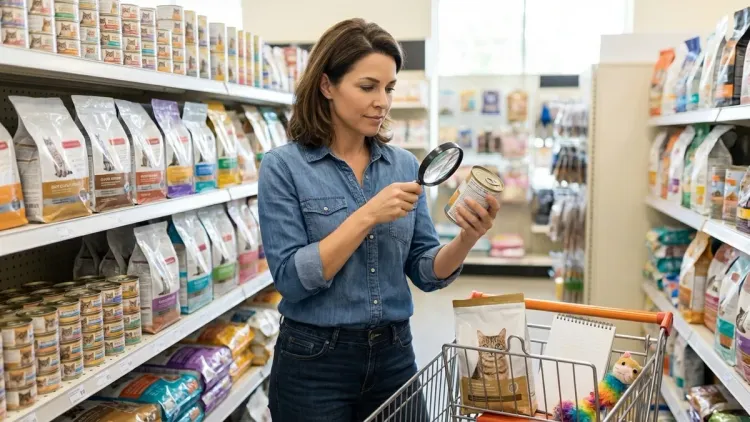
Don't fall into the "grain-free = healthier" trap. While some cats have genuine grain sensitivities, most tolerate moderate grain content fine. The bigger issue is whether meat is the primary ingredient, not whether there's rice in the formula. I've seen cats do poorly on grain-free foods loaded with peas and potatoes (high carb, low nutritional value) and thrive on grain-inclusive foods with chicken as the first three ingredients.
Rotate proteins if possible. Feeding the same single-source protein for years can increase allergy risk and limit micronutrient diversity. If your cat tolerates it, rotate between chicken, turkey, and fish-based formulas every few months. Just transition gradually over 7-10 days to avoid digestive upset—Complete Cat Food Transition Checklist: Switching Foods Safely walks through the process step-by-step.
Store food properly or you're wasting money. Even the best food degrades if exposed to heat, light, and air. Keep kibble in the original bag (it's designed to preserve freshness), seal it in an airtight container, and store in a cool, dry place. Use within 4-6 weeks of opening. Wet food should be refrigerated after opening and used within 2-3 days. For detailed preservation tactics, see Cat Food Storage and Freshness Checklist: Maintaining Nutritional Quality.
The most common mistake I see? Trusting the front panel and ignoring the back. A bag with a beautiful cat and the word "Premium" in script font can still have corn as the first ingredient and single-digit protein percentages. Flip it over. Read the fine print. Every time.
Another mistake: assuming expensive means better. Sometimes you're paying for marketing and packaging, not meaningfully better nutrition. Compare labels side by side—you might find a mid-priced food with better ingredient quality than a boutique brand charging double.
Finally, don't let perfect be the enemy of good. If your cat is healthy, maintaining good weight, has a shiny coat, solid stools, and good energy on their current food, you don't need to overhaul everything just because the label isn't perfect. Use this knowledge to make incremental improvements or informed choices when it's time to switch—not to create feeding anxiety.
Frequently Asked Questions
What does "complete and balanced" mean on cat food labels? "Complete and balanced" means the food meets AAFCO nutritional standards for a specific life stage (kitten, adult, senior, or all life stages) and can be fed as your cat's sole diet without supplementation. It must either pass feeding trials or be formulated to match AAFCO nutrient profiles for cats.
How do I compare wet and dry cat food nutritional values? You cannot compare wet and dry food directly using the Guaranteed Analysis because of moisture differences. Convert both to dry matter basis by subtracting the moisture percentage from 100, then dividing each nutrient percentage by that number. This gives you apples-to-apples protein, fat, and fiber comparisons.
Are by-products in cat food actually bad for my cat? Not necessarily—by-products are organ meats, necks, feet, and other parts humans don't eat but cats would consume in the wild. The key is specificity: "chicken by-products" or "turkey by-products" are identifiable and can be nutritious. Generic "meat by-products" or "poultry by-products" are red flags because you don't know the source or quality.
How often should I change my cat's food based on what the label says? You don't need to change food frequently unless your cat's life stage, health status, or weight changes. If the current food meets AAFCO standards, has quality ingredients, and your cat is thriving, stick with it. If you choose to rotate proteins for variety, transition gradually over 7-10 days and monitor for digestive issues or sensitivities.
Summary
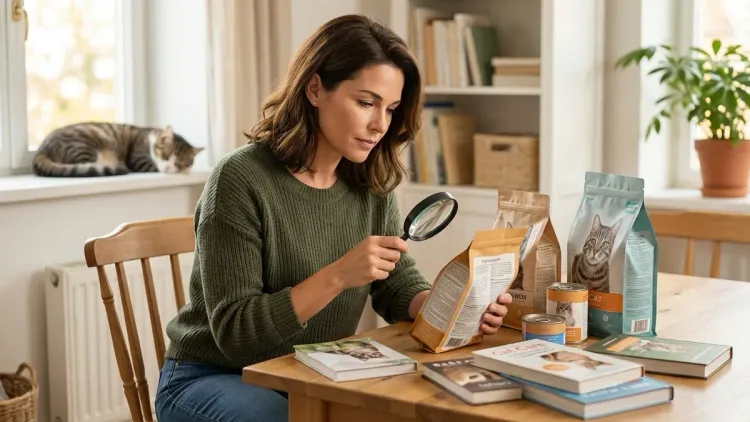
Learning how to read cat food labels transforms you from a passive consumer into an informed advocate for your cat's health. Start with the AAFCO statement to confirm the food is complete and balanced, then work through the ingredient list looking for named animal proteins in the first five ingredients. Decode the Guaranteed Analysis (converting to dry matter basis when comparing wet and dry), verify essential nutrients like taurine and vitamin A are included, and calculate actual cost and calories per day. Watch for red flag fillers, ignore front-panel marketing hype, and always match the food to your specific cat's age, health, and activity level.
This isn't about achieving perfection or spending a fortune—it's about making informed choices with the information literally printed on every bag and can. Once you know what you're looking at, shopping for cat food becomes faster, clearer, and far more effective. Your cat can't read these labels, but you can, and that makes all the difference between feeding blindly and feeding smart.