
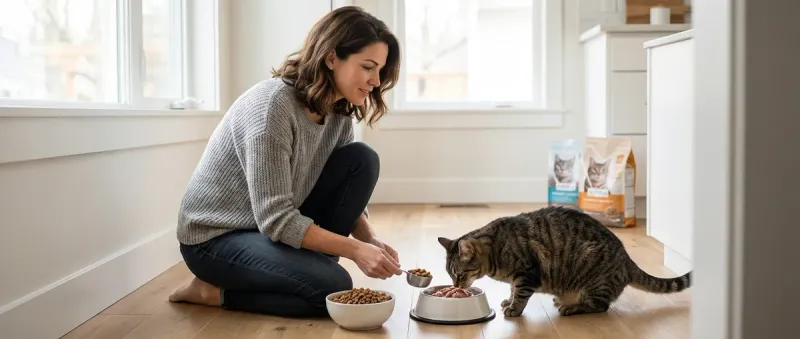

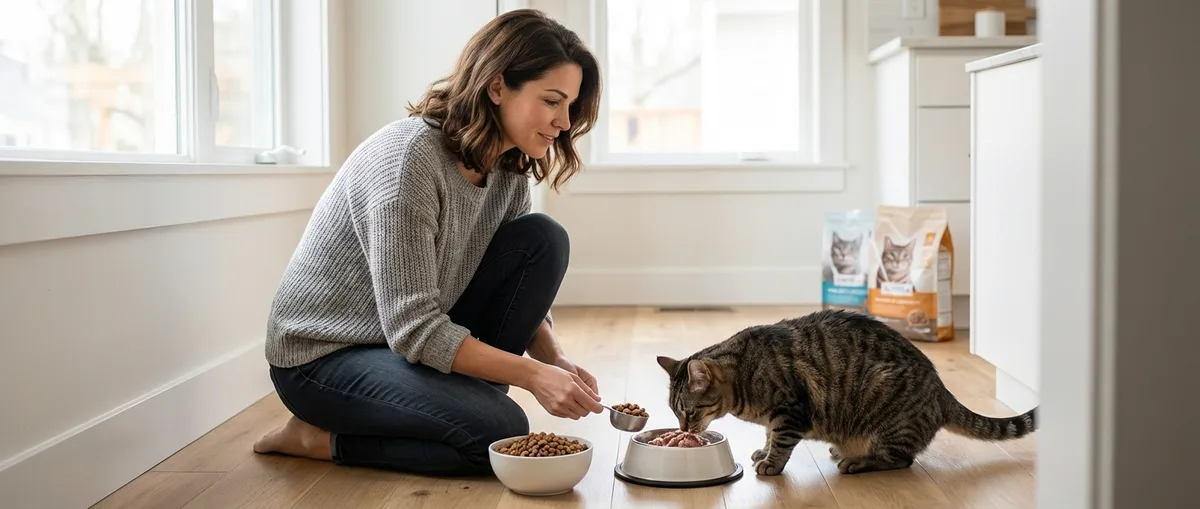
After nearly a decade working with cats in grooming appointments—watching how diet affects coat quality, hydration, and overall health—I'd tell you this: most cats thrive best on a combination of both wet and dry food, but if I had to choose just one, wet food edges ahead for hydration and species-appropriate nutrition. The wet vs dry cat food debate isn't about finding a universal winner; it's about understanding what each format offers and matching it to your specific cat's age, health status, and lifestyle needs.
This article breaks down the nutritional differences, cost considerations, dental health impacts, convenience factors, and storage realities of both options. I'll share what I've observed in cats whose owners feed exclusively wet, exclusively dry, or a mixed approach—and help you figure out which path makes sense for your household.
Quick Comparison
| Criteria | Wet Cat Food | Dry Cat Food |
|---|---|---|
| Moisture Content | 75-80% water; supports hydration and urinary tract health | 10-12% water; requires cats to drink more separately |
| Protein Concentration | Higher meat content per serving; closer to natural prey diet | Often grain-heavy with lower meat percentage by volume |
| Cost per Serving | $1-3 per day for average adult cat; premium brands higher | $0.50-1.50 per day; more economical for multi-cat homes |
| Convenience | Requires refrigeration after opening; spoils within 2-4 hours if left out | Shelf-stable; can be free-fed or used in automatic feeders |
| Dental Benefits | Minimal mechanical cleaning; softer texture | Limited actual plaque reduction despite marketing claims |
| Calorie Density | Lower calorie per volume; helpful for weight management | Calorically dense; easier to overfeed without measuring |
Moisture Content and Hydration
Here's something I noticed early in my grooming career: cats who ate primarily wet food consistently had better coat texture and skin elasticity. That's not coincidence—it's hydration working from the inside out.
Wet cat food contains 75-80% moisture, which mimics the water content of natural prey like mice and small birds. Cats evolved as desert animals with a low thirst drive, meaning they're biologically wired to get most of their water from food rather than a bowl. When I'm grooming a cat with chronic mild dehydration—you can feel it in the skin's "tent test" and see it in a dull coat—the owner often mentions feeding exclusively dry kibble.
Dry food sits at only 10-12% moisture content. Even cats with water fountains and multiple bowls rarely compensate enough through drinking alone. This chronic low-grade dehydration contributes to kidney disease and urinary tract issues, both frighteningly common in older cats. The Cornell University College of Veterinary Medicine has documented the connection between hydration and feline lower urinary tract disease (FLUTD).
For kittens and adult cats with healthy kidney function, the hydration difference matters but isn't immediately visible. For senior cats over age 10, or any cat with a history of urinary crystals, bladder stones, or early kidney disease, wet food's moisture content becomes genuinely therapeutic. I've seen cats with recurring UTIs stop the cycle entirely after switching to predominantly wet feeding.
If you're committed to dry food for budget or convenience reasons, consider adding a tablespoon or two of water to each serving. It won't match wet food's hydration level, but it helps more than you'd think.
Protein Quality and Ingredient Composition
This is where the wet vs dry cat food conversation gets into obligate carnivore territory. Cats aren't small dogs—they require animal-based protein and lack the digestive enzymes to efficiently process plant carbohydrates.
Wet food formulas typically contain 40-50% protein on a dry matter basis, with meat or fish listed as the first three ingredients. When you strip out that 75-80% water content and calculate what's actually in the food, you're looking at concentrated animal protein. Quality wet foods like Wellness CORE Grain-Free Pate🛒 Amazon use named meat sources (chicken, turkey, salmon) rather than vague "poultry by-products."
Dry kibble faces a manufacturing challenge: it needs starch to bind into those crunchy pieces. Even grain-free formulas rely on potatoes, peas, or tapioca as binders. The result? Many dry foods contain 30-40% carbohydrates—far higher than a cat would encounter eating prey. Some budget kibbles list corn or wheat gluten as primary ingredients, which provides cheap protein numbers on paper but lacks the complete amino acid profile cats evolved to process.
I'm not saying all dry food is nutritionally bankrupt. Premium brands formulated to AAFCO standards for complete nutrition absolutely support healthy cats. But gram for gram, wet food aligns more closely with feline biology. For more on reading ingredient panels, check out our guide on how to read cat food labels.
One grooming-table indicator: cats on high-quality wet food diets often have firmer, less odorous stools. The protein they're eating gets digested efficiently rather than fermenting in the gut. It makes the litter box situation more pleasant for everyone involved.
Cost and Practical Budget Considerations
Let's talk money, because I live with four rescue dogs and understand that feeding philosophy meets real-world budget limits pretty quickly.
Dry food wins on cost per calorie, no question. A 15-pound bag of quality dry cat food runs around $40-60 and lasts a single adult cat 6-8 weeks. That's roughly $0.75-1.50 per day. You can leave it in an automatic feeder when you're at work, it won't spoil sitting in the bowl, and you're not constantly opening cans or pouches.
Wet food runs $1-3 per day for an average 10-pound adult cat, depending on whether you buy grocery store brands or premium limited-ingredient formulas. A cat eating 5.5 oz of wet food daily needs roughly two 3-oz cans or pouches. If you're feeding multiple cats or have a large Maine Coon who needs 8+ ounces daily, that cost multiplies fast. I've met cat owners spending $150+ monthly just on wet food for a three-cat household.
The compromise I see work for many families: dry food as free-choice throughout the day, wet food as a morning or evening meal. This gives cats the hydration and protein benefits of wet food while stretching your dollar. One 3-oz can or pouch of quality wet food plus free-choice dry costs around $1.25-2 per day—middle ground between the extremes.
Buy wet food by the case when it's on sale. Stock up during pet store promotions. Consider store brands that meet AAFCO standards—the ingredient difference between mid-tier and premium wet foods is often smaller than the price gap suggests. I'm picky about my dogs' food, but I'm also realistic about budgets. Feed the best you can afford consistently rather than cycling between premium and junk based on your paycheck.
Convenience and Feeding Logistics
I'll be honest: wet food is messier and less forgiving than kibble. If convenience is your top priority—you travel frequently, work long hours, or have mobility issues that make daily feeding tasks difficult—dry food offers practical advantages that matter.
Dry kibble is shelf-stable for months in a sealed container. You can fill an automatic feeder and leave for a long weekend without worry. It doesn't attract flies, won't spoil if your cat doesn't finish it immediately, and measuring portions takes five seconds with a scoop. For multi-cat households, you can leave out dry food and let cats eat on their own schedule without territorial conflicts over feeding times.
Wet food spoils within 2-4 hours at room temperature—faster in summer heat. Leftover canned food needs refrigeration and should be used within 2-3 days after opening. Many cats refuse cold food straight from the fridge, so you're microwaving portions for 5-10 seconds to take the chill off. If you're feeding twice daily, that's opening cans, spooning out portions, storing leftovers, washing dishes, and dealing with the slightly fishy smell that clings to everything. I love my cats, but I'm not pretending this is glamorous.
The best automatic feeders don't work with wet food unless you invest in models with ice packs—and even those only extend freshness for 8-12 hours. If you're gone for 10-12 hour workdays, wet-only feeding requires a midday caretaker or risks leaving your cat hungry.
Here's the workaround I use with my dogs and recommend to cat owners: wet food for the meal you're home for (usually morning or evening), dry food available the rest of the day. This gives cats timed, high-quality protein meals plus the security of always having something in their bowl. You're not tied to precise feeding windows, but you're also not relying entirely on kibble.
Dental Health: Separating Myth from Reality
The dental argument for dry food is the most oversold benefit in the wet vs dry cat food conversation. I need to be blunt here: kibble does not clean teeth effectively.
The theory sounds reasonable—crunchy texture scrapes away plaque and tartar as cats chew. In practice, most cats barely chew kibble. They use their molars to crack pieces just enough to swallow, then the kibble crumbles on contact. Any mechanical cleaning effect is minimal and limited to the tips of teeth, not the gum line where periodontal disease actually develops.
Studies from veterinary dental specialists show dry food provides negligible plaque reduction compared to actual dental care—brushing, dental treats designed with specific textures, or professional cleanings. Cats on exclusively dry food develop tartar, gingivitis, and tooth resorption at similar rates to cats on wet food diets. I've groomed 14-year-old cats on lifetime wet food diets with pristine teeth because their owners brushed regularly. I've also seen 6-year-old kibble-fed cats with stage 3 periodontal disease.
Wet food doesn't actively harm teeth, but it doesn't clean them either. The real dental advantage of wet food is indirect: better hydration and less carbohydrate content may reduce bacteria growth in the mouth. But that's a stretch compared to the value of actually brushing your cat's teeth 2-3 times weekly.
If dental health is a concern, focus on actual dental care rather than food format. Veterinary dental diets exist (Hill's Prescription Diet t/d, for example) with larger kibble size and specific fiber matrix designed to scrape teeth—but even those are supplements to brushing, not replacements. For tips on handling cats during grooming tasks, our guide on how to groom a cat at home covers the cooperation-building techniques that also apply to tooth brushing.
Who Should Choose Wet Cat Food
Choose primarily wet food if your cat:
- Has any history of urinary tract issues—crystals, FLUTD, or recurring UTIs. Hydration is therapeutic, not optional.
- Is a senior cat (10+ years) with declining kidney function or early chronic kidney disease. Moisture helps kidneys process waste more efficiently.
- Drinks very little water despite fountains and multiple bowls. Some cats just never drink enough voluntarily.
- Struggles with weight management. Wet food's lower calorie density lets cats feel full on fewer calories, making portion control easier without leaving them hungry.
Wet food also works beautifully for kittens transitioning from nursing, as the texture is easier to eat than kibble, and for cats recovering from illness or surgery who need palatable, easy-to-digest nutrition. I'd pair it with guidance from our complete cat food transition checklist to avoid digestive upset when switching.
Budget and convenience are real constraints—I won't pretend otherwise. But if you can manage the logistics and cost, wet food edges closer to species-appropriate nutrition for obligate carnivores.
Who Should Choose Dry Cat Food
Choose primarily dry food if you:
- Need free-feeding flexibility for unpredictable work schedules, frequent travel, or multi-cat households where scheduled feeding creates stress.
- Are on a tight budget and feeding multiple cats. The cost difference becomes prohibitive quickly when you're buying for three or four cats.
- Have a cat who genuinely prefers kibble—yes, some cats are picky in the opposite direction and turn up their noses at wet food.
- Want to use automatic feeders for consistent portion control without being home. Our guide on how to transition your dog to an automatic feeder covers principles that work equally well for cats.
Dry food also makes sense for young, healthy adult cats with no medical issues who drink water consistently. If your 3-year-old cat has good kidney values at the annual vet check, a healthy coat, and you see them drinking from their fountain regularly, dry food alone can absolutely support them. Just measure portions rather than topping off the bowl endlessly—dry food's calorie density makes it easy to overfeed.
Pair dry feeding with environmental enrichment to encourage water intake: multiple water sources around the house, a fountain with moving water, and even adding a splash of low-sodium chicken broth to the water bowl occasionally. Small adjustments offset dry food's hydration shortfall.
Frequently Asked Questions
Can I mix wet and dry cat food together in the same meal?
Yes, mixing wet and dry cat food is safe and actually combines the benefits of both formats—you get the hydration and meat content of wet food with the convenience and calorie density of kibble. Many cats enjoy the texture variety, and mixing can help picky eaters transition to new foods more willingly. Just calculate total calories from both sources to avoid overfeeding, since it's easy to exceed daily needs when combining formats. A typical approach is 2-3 oz of wet food plus a quarter cup of dry food for an average 10-pound adult cat, adjusted based on activity level and body condition.
How long can wet cat food sit out before it spoils and becomes unsafe?
Wet cat food should be discarded after 2-4 hours at room temperature, or sooner in warm weather above 75°F when bacterial growth accelerates rapidly. Canned food loses nutritional quality and develops harmful bacteria once exposed to air, especially in humid conditions. Refrigerate opened cans or pouches immediately, covering them tightly, and use within 2-3 days. If your cat doesn't finish a wet food meal within an hour or two, pick up the dish, discard the leftovers, and adjust portion sizes for the next feeding—smaller, more frequent meals reduce waste and keep food fresh.
Does wet food cause diarrhea or soft stools in cats more than dry food?
Wet food doesn't inherently cause diarrhea, but sudden diet changes—switching from dry to wet too quickly—absolutely can trigger temporary digestive upset and loose stools in cats with sensitive stomachs. Cats need gradual transitions over 7-10 days, slowly increasing the ratio of new food to old food. Once adjusted, most cats on quality wet food actually have firmer, better-formed stools than on dry food because they're digesting animal protein efficiently rather than fermenting plant-based fillers. If diarrhea persists beyond two weeks after a complete transition, the issue is likely a specific ingredient sensitivity or protein source intolerance rather than the wet format itself—consult your veterinarian and consider limited-ingredient formulas.
Bottom Line
The wet vs dry cat food question isn't really about declaring a winner—it's about matching food format to your cat's biology, health status, and your household realities. Wet food delivers superior hydration, higher meat content, and better weight management, making it the closer match to what cats evolved to eat. Dry food offers undeniable convenience and cost savings that matter when you're feeding multiple cats or managing a tight budget.
I've seen thriving 18-year-old cats on both sides of this debate. What matters more than format is quality ingredients, portion control, and regular veterinary monitoring. Choose the best quality wet or dry cat food you can consistently afford, measure portions instead of free-feeding endlessly, and watch your cat's body condition and energy level rather than relying on packaging promises.
For most cats, splitting the difference—wet food for one or two meals daily plus free-choice dry food—gives you flexibility without sacrificing the health benefits of moisture-rich nutrition. Your cat gets variety, you get convenience, and everyone sleeps better knowing they're covered nutritionally. That's a winning combination from where I stand.
Frequently Asked Questions
Can I mix wet and dry cat food together in the same meal?
Yes, mixing wet and dry cat food is safe and actually combines the benefits of both formats—you get the hydration and meat content of wet food with the convenience and calorie density of kibble. Many cats enjoy the texture variety, and mixing can help picky eaters transition to new foods more willingly. Just calculate total calories from both sources to avoid overfeeding, since it's easy to exceed daily needs when combining formats. A typical approach is 2-3 oz of wet food plus a quarter cup of dry food for an average 10-pound adult cat, adjusted based on activity level and body condition.
How long can wet cat food sit out before it spoils and becomes unsafe?
Wet cat food should be discarded after 2-4 hours at room temperature, or sooner in warm weather above 75°F when bacterial growth accelerates rapidly. Canned food loses nutritional quality and develops harmful bacteria once exposed to air, especially in humid conditions. Refrigerate opened cans or pouches immediately, covering them tightly, and use within 2-3 days. If your cat doesn't finish a wet food meal within an hour or two, pick up the dish, discard the leftovers, and adjust portion sizes for the next feeding—smaller, more frequent meals reduce waste and keep food fresh.
Does wet food cause diarrhea or soft stools in cats more than dry food?
Wet food doesn't inherently cause diarrhea, but sudden diet changes—switching from dry to wet too quickly—absolutely can trigger temporary digestive upset and loose stools in cats with sensitive stomachs. Cats need gradual transitions over 7-10 days, slowly increasing the ratio of new food to old food. Once adjusted, most cats on quality wet food actually have firmer, better-formed stools than on dry food because they're digesting animal protein efficiently rather than fermenting plant-based fillers. If diarrhea persists beyond two weeks after a complete transition, the issue is likely a specific ingredient sensitivity or protein source intolerance rather than the wet format itself—consult your veterinarian and consider limited-ingredient formulas.