
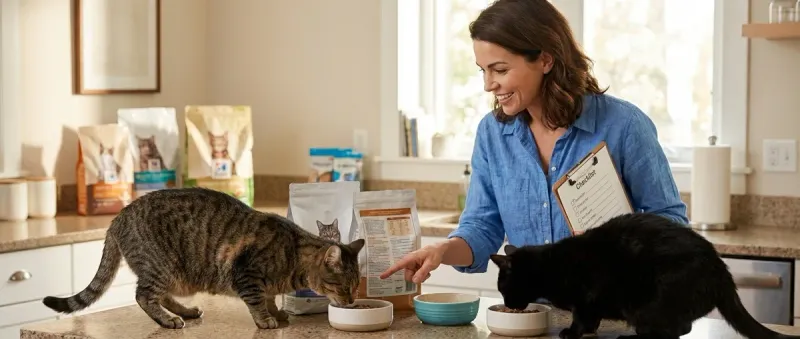

I'll be honest—even though I've spent nearly a decade grooming dogs, my four rescues have taught me more about dietary transitions than any textbook ever could. Switching food is delicate work, whether you've got a dog with a sensitive stomach or a cat who turns their nose up at anything new. This cat food transition checklist walks you through every step of changing your cat's food safely, from prep work through those first crucial weeks. I'm applying the same methodical approach I use when introducing anxious dogs to the grooming table: slow, deliberate, and always watching for signals.
Before You Start: Pre-Transition Planning
Consult your veterinarian about timing and necessity. Cats with chronic conditions like kidney disease, diabetes, or inflammatory bowel disease need veterinary oversight before any diet change—the wrong transition can destabilize carefully managed health issues.
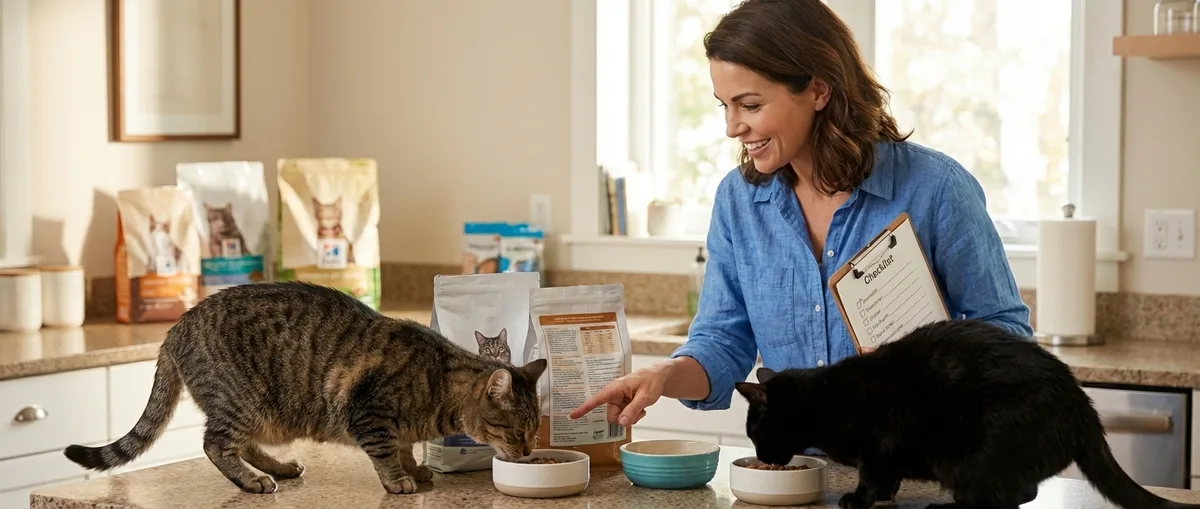
Document your cat's current baseline. Note litter box habits (frequency, consistency, odor), energy levels, coat condition, and body weight before you switch—this gives you objective markers to track whether the new food is working or causing problems.
Research the new food's AAFCO certification status and guaranteed analysis. As obligate carnivores, cats require specific nutrient profiles including taurine, arachidonic acid, and vitamin A from animal sources—the Association of American Feed Control Officials sets minimum nutritional standards for complete and balanced formulas.
Check the protein source and first five ingredients. Quality cat foods list a specific animal protein (chicken, salmon, turkey) as the first ingredient, not generic "meat" or "by-products"—you can dive deeper into this in our guide on how to read cat food labels.
Consider the food format match: dry to dry, wet to wet, or mixed feeding. Switching between wet vs dry cat food adds an extra variable since texture, moisture content, and caloric density differ dramatically—if you're also changing formats, extend your transition timeline by at least a week.
Purchase a small bag or case first, not bulk quantities. Even with a perfect transition plan, some cats simply won't accept certain proteins or formulas—I've watched too many pet parents stuck with thirty pounds of food their cat refuses to eat.
Plan your transition timing around household stability. Avoid food changes during moves, new pet introductions, vacations, or other stressors that can independently trigger digestive upset or behavioral changes.
Verify storage conditions and expiration dates. Rancid fats in expired or improperly stored food can cause immediate rejection and digestive issues—our cat food storage and freshness checklist covers this in detail.
Week-by-Week Transition Protocol

Days 1-3: Mix 25% new food with 75% current food. Measure precisely using a kitchen scale if possible, especially with wet food where "eyeballing" portions leads to inconsistent ratios—cats notice texture and smell variations immediately.
Days 4-6: Progress to 50/50 blend if stools remain normal. "Normal" means formed but not rock-hard, no mucus coating, no undigested food visible, and no sudden increase in litter box frequency—any of these signals means holding at the previous ratio for another 2-3 days.
Days 7-9: Increase to 75% new food, 25% old food. This is where I see most rejection happen with picky cats—the old food no longer masks the new flavor profile, and some cats stage a hunger strike rather than accept the change.
Days 10-12: Transition to 100% new food. Even at full switch, keep a small amount of the old food on hand for at least two weeks in case you need to backtrack due to digestive issues or refusal to eat.
Week 3-4: Monitor for delayed reactions and adjustment completion. Some sensitivities don't show up immediately—skin reactions to novel proteins, for example, can take 2-3 weeks to manifest as increased scratching or coat dullness.
For kittens under 6 months: extend each phase by 1-2 days. Young digestive systems are simultaneously more adaptable and more vulnerable to upset—slower transitions reduce the risk of diarrhea that can quickly lead to dangerous dehydration in small bodies.
For senior cats (11+ years): consider extending to a 3-week transition. Aging cats often have reduced digestive resilience, lower thirst drive, and established food preferences that make them less tolerant of sudden changes—patience here prevents unnecessary stress on kidneys and GI tract.
For cats with known sensitivities: use a 4-week gradual transition. Inflammatory bowel disease, food allergies, or chronic digestive issues require the slowest possible introduction—some veterinarians recommend 5% increments rather than the standard 25% jumps.
Daily Monitoring Checklist
Check stool consistency in the litter box every day. I know this isn't glamorous—trust me, I clean up after four dogs daily—but stool quality is your earliest warning system for digestive distress or food intolerance.
Watch for vomiting patterns and timing. Occasional hairballs are normal; vomiting within 30 minutes of eating the new food repeatedly suggests the formula isn't sitting well—distinguish between regurgitation (undigested food in tubular form) and true vomiting (digested food with bile).
Monitor water intake and urination frequency. Cats switching from wet to dry food especially need increased water consumption to maintain hydration—decreased urination or darker urine concentration can signal inadequate fluid intake.
Track meal enthusiasm and eating speed. Healthy cats approach meals with consistent interest; reluctance, picking around the new food, or only eating when desperately hungry indicates palatability issues—don't confuse patience with successful transition.
Observe coat condition and grooming behavior. Increased dander, dull fur, or excessive grooming focused on the belly or hindquarters can indicate developing food sensitivity—these signs appear before GI symptoms in some cats.
Note energy level changes and play behavior. Lethargy, decreased interest in typical play, or increased sleeping might reflect inadequate nutrition from a formula that doesn't meet your cat's needs—young active cats especially show energy drops from insufficient calories or protein.
Watch for behavioral changes around the food bowl. Aggression toward other pets at feeding time, guarding the bowl, or eating unusually fast can signal anxiety about the new food's availability or competition concerns—separate feeding stations help distinguish true food issues from resource guarding.
Red Flags That Require Immediate Veterinary Attention

Diarrhea lasting more than 24 hours or containing blood. While some stool softening during transition is normal, frank diarrhea—especially if it contains red blood or black tarry material—can quickly lead to dehydration and indicates serious GI upset requiring professional intervention.
Vomiting more than twice in 24 hours or projectile vomiting. Repeated vomiting prevents proper hydration and nutrition absorption; projectile vomiting specifically suggests severe intolerance or obstruction rather than simple dietary adjustment.
Complete refusal to eat for 24+ hours (12 hours for kittens). Cats can develop hepatic lipidosis (fatty liver disease) after just 2-3 days without food—this is a genuine medical emergency, not stubborn pickiness, especially in overweight cats.
Visible lethargy, weakness, or inability to jump normally. While some cats are naturally less active, sudden mobility changes or reluctance to jump onto familiar surfaces can indicate muscle weakness from taurine deficiency or other nutritional inadequacy.
Skin reactions including hives, facial swelling, or intense scratching. True food allergies are relatively rare in cats but can manifest as dermatological reactions—swelling around the face, ears, or paws warrants immediate evaluation.
Respiratory distress or difficulty breathing. Though uncommon, severe allergic reactions can cause airway swelling—any labored breathing, open-mouth breathing at rest, or wheezing requires emergency care regardless of suspected cause.
Seizures or neurological symptoms. While unlikely to be directly food-related, any seizure activity, loss of balance, head pressing, or disorientation during a food transition needs immediate evaluation to rule out toxin exposure or underlying disease.
Final Check Before You Go
Before starting your cat food transition, verify you've covered these essentials:
- ✓ Veterinary consultation completed for cats with health conditions
- ✓ Baseline health markers documented (weight, stool quality, energy)
- ✓ New food's AAFCO certification and protein source verified
- ✓ Small quantity purchased to test acceptance before bulk buying
- ✓ Transition timeline selected based on cat's age and health status
- ✓ Kitchen scale or measuring tools ready for accurate portion mixing
- ✓ Household calendar clear of major stressors during transition period
- ✓ Old food supply sufficient to last through entire transition plus backup days
- ✓ Daily monitoring system established (notebook, phone app, or calendar)
- ✓ Veterinarian's emergency contact information readily accessible
Frequently Asked Questions
How long should a cat food transition take? A standard cat food transition should take 10-14 days for healthy adult cats, using a gradual 25% increment approach every 3-4 days, though kittens, senior cats, and those with digestive sensitivities may require 3-4 weeks to safely complete the switch without causing GI upset or food refusal.
Can I switch cat food immediately in an emergency? Immediate cat food switches should only happen under veterinary guidance during true emergencies like food recalls or severe allergic reactions—even then, veterinarians often recommend a bland transition diet or prescription formula first to minimize digestive shock rather than jumping directly to a new commercial food.
What if my cat refuses to eat the new food during transition? If your cat refuses the new food mixture for more than 12-24 hours, return to a higher percentage of the old food that they will eat, then slow your transition timeline to smaller increments (10-15% changes instead of 25%) over a longer period—some cats also respond better to warming wet food slightly or offering the new food separately to build familiarity before mixing.
Final Thoughts

Looking back at my years managing dietary changes for my own four rescues, I've learned that cat food transition checklists succeed when you treat them as frameworks, not rigid rules. My senior shepherd needed six weeks to switch to her joint-support formula, while my terrier mix adapted in eight days flat. Every cat brings their own digestive resilience, taste preferences, and stress responses to the table.
The temptation to rush because your cat seems fine at day five is real—but I've seen too many setbacks at day seven to recommend shortcuts. Your cat's digestive system is rebuilding its bacterial populations, adjusting enzyme production, and adapting to new nutrient ratios. That invisible work takes time, even when everything looks smooth on the surface.
Keep your documentation simple but consistent. The notes you take during week one become your diagnostic tool if problems emerge in week three. If you're transitioning to address specific concerns—better coat quality, weight management, or essential nutrient needs for life stage—give the new food a full 4-6 weeks at 100% before evaluating results. Real change in skin, coat, energy, and body condition requires sustained nutrition, not just successful transition.
And if this transition doesn't work? That's valuable information, not failure. Some cats genuinely don't thrive on certain protein sources or formulations. Better to discover that during a careful transition than to force a food that leaves your cat undernourished or uncomfortable. Trust what you're seeing in the litter box, at the food bowl, and in your cat's daily behavior. They're telling you everything you need to know—you just have to watch closely enough to hear it.