
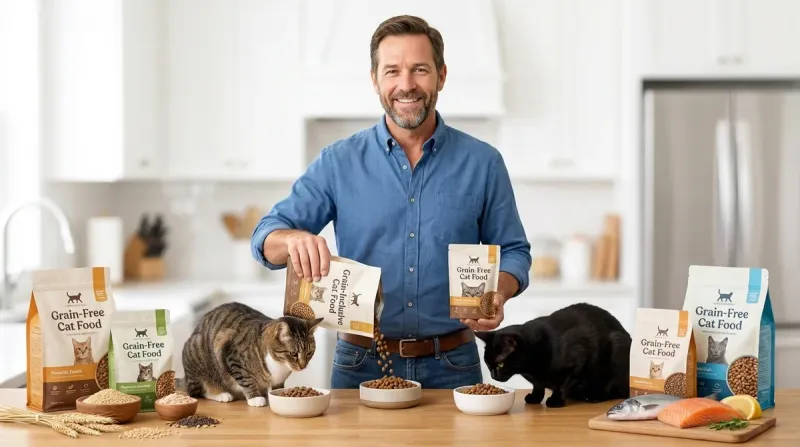

If your cat is healthy and doesn't have diagnosed allergies, grain-inclusive food is usually the better choice. That said, the grain free vs grain inclusive cat food debate isn't as simple as picking a winner—it depends entirely on your individual cat's needs, age, and health status.
I've spent over twenty years working with animals, and while my specialty is dogs, I've seen plenty of cat owners get tangled up in the same nutrition confusion. Here's what you need to know about grains in cat food, what the science actually says, and how to figure out which option makes sense for your feline friend. We'll cover the nutritional differences, digestive considerations, cost factors, and what veterinarians are recommending in 2026.
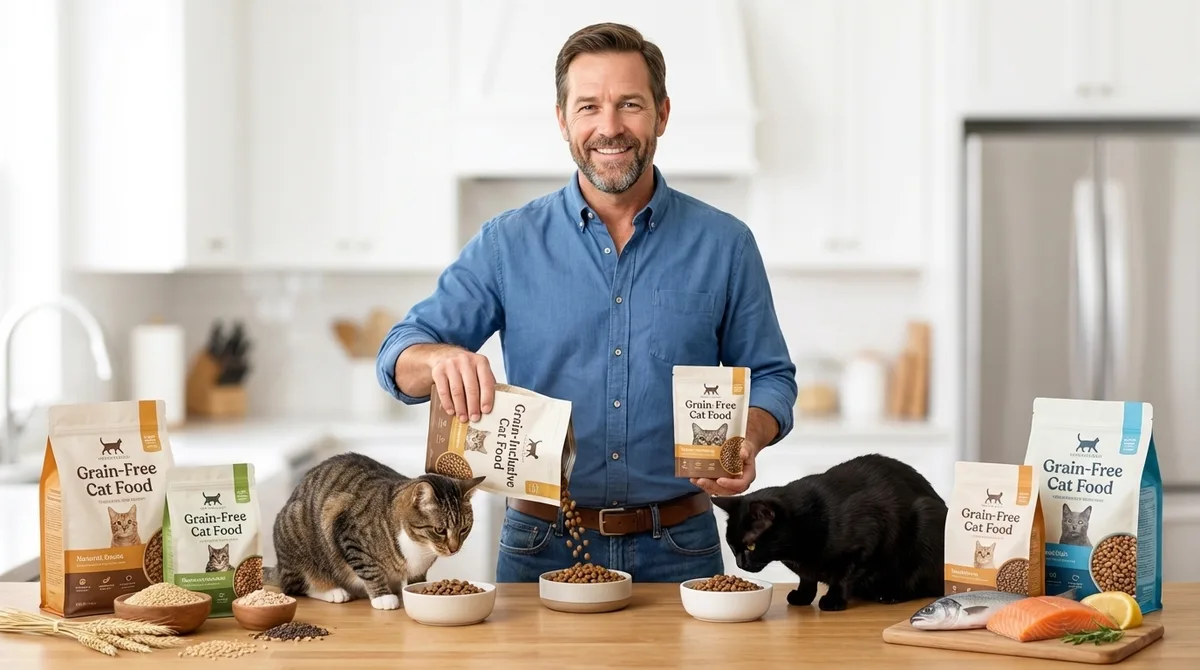
Quick Comparison
| Criterion | Grain-Free Cat Food | Grain-Inclusive Cat Food |
|---|---|---|
| Protein sources | Higher meat content (typically 40-50%); uses peas, lentils, potatoes as fillers | Moderate meat content (typically 30-40%); uses rice, oats, barley as carbohydrate sources |
| Best for | Cats with diagnosed grain allergies or sensitivities; specific medical conditions requiring grain avoidance | Healthy adult cats, kittens, seniors without food sensitivities; most cats in general |
| Cost | Premium pricing—usually 30-50% more expensive per pound | Standard to mid-range pricing; more budget-friendly options available |
| Digestibility | Highly digestible for cats with grain intolerance; legume fillers may cause gas in some cats | Easily digestible for most cats; whole grains provide fiber for healthy digestion |
| Veterinary consensus (2026) | Recommended only when medically necessary; potential DCM concerns with certain formulas | Recommended for most cats; aligns with feline nutritional research |
Nutritional Profile and Protein Content
The biggest difference between grain free vs grain inclusive cat food comes down to what manufacturers use as filler ingredients. Cats are obligate carnivores—meaning they need animal protein to survive—but even the best cat foods include some non-meat ingredients to provide calories, fiber, and certain nutrients.
Grain-free formulas typically replace grains with legumes (peas, chickpeas, lentils) and starchy vegetables (potatoes, sweet potatoes). You'll see ingredient panels listing things like "pea protein," "potato starch," or "tapioca." The trade-off is that grain-free foods often have higher protein percentages on the label—sometimes reaching 40-50% crude protein. Sounds great, right?
Here's the catch: not all that protein comes from meat. Pea protein and other plant proteins count toward the total protein percentage, but cats can't utilize plant proteins as efficiently as animal proteins. Your cat needs taurine, arachidonic acid, and other nutrients that only come from animal sources. A grain-free food with 45% protein might actually deliver less usable nutrition than a grain-inclusive food with 38% protein if more of that 38% comes from chicken, fish, or turkey.
Grain-inclusive formulas use ingredients like brown rice, oats, barley, or whole grain wheat. These provide carbohydrates and calories without pretending to be protein sources. The result is often a more straightforward ingredient panel where the meat content is clearly defined. For most healthy cats—kittens, adults, and seniors alike—this approach aligns better with what veterinary nutritionists recommend.
If you're trying to understand what your cat actually needs nutritionally, check out our guide on essential nutrients in cat food to see what obligate carnivores require.
Digestive Health and Food Sensitivities
I've seen this confusion a hundred times with dog owners, and it's the same story with cats: people assume grains are hard to digest or cause allergies. The reality is more nuanced.
True grain allergies in cats are extremely rare. According to veterinary dermatology research, the most common food allergens for cats are animal proteins—chicken, beef, and fish top the list. When cats do have food sensitivities, they're reacting to the protein source, not the rice or oats in their kibble. Grain allergies account for less than 5% of diagnosed food sensitivities in felines.
That said, some cats do have genuine grain intolerances. You might notice symptoms like chronic diarrhea, vomiting after meals, itchy skin, or excessive grooming in specific areas. If your vet has diagnosed a grain sensitivity through an elimination diet trial (the gold standard for identifying food allergies), then grain-free food makes complete sense.
For cats without sensitivities, grains actually support digestive health. Whole grains provide soluble and insoluble fiber, which helps regulate bowel movements and supports the beneficial bacteria in your cat's gut. Brown rice and oats are gentle on the stomach and rarely cause digestive upset in healthy cats.
The flip side: some grain-free foods use legumes that can cause gas and softer stools in cats who aren't used to them. If you're switching from grain-inclusive to grain-free, do it gradually over 7-10 days. Our complete cat food transition checklist walks you through the process step by step.
Cost Considerations and Budget Impact
Let's talk money, because this matters when you're feeding a cat for 15-20 years.
Grain-free cat food costs significantly more—typically 30-50% more per pound than comparable grain-inclusive options. A 12-pound bag of mid-range grain-inclusive dry food might run you around $30-40, while a similar-quality grain-free formula could easily hit $50-60 for the same amount.
Why the premium? Marketing plays a role (grain-free sounds fancy), but there are real production factors too. Higher meat content costs more, and alternative ingredients like pea protein and potato starch have become expensive as demand has increased. Grain-free formulas also tend to come from boutique or premium brands that price their products higher across the board.
Here's what I tell people: if your cat needs grain-free food for medical reasons, the cost is what it is—you do what's necessary. But if you're choosing grain-free because it seems healthier or more "natural," you're probably spending extra money for no real benefit to your cat.
For most households, grain-inclusive food offers better value. You can find quality grain-inclusive formulas with high meat content, named protein sources (like "chicken" rather than "poultry meal"), and AAFCO certification for much less money. Put those savings toward better vet care, dental treats, or a nicer cat tree—things that actually improve your cat's quality of life.
If you're feeding multiple cats, the cost difference adds up fast. A household with three cats could easily spend an extra $500-700 per year on grain-free food with no measurable health improvement.
Veterinary Recommendations and Health Research
The grain free vs grain inclusive cat food conversation changed significantly around 2018-2019 when the FDA started investigating a potential link between grain-free diets and dilated cardiomyopathy (DCM) in dogs. While the research focused primarily on canine cases, it raised questions about grain-free formulations for cats too.
As of 2026, the scientific consensus is this: grain-free diets aren't inherently dangerous, but they're not automatically better either. The FDA's investigation found that certain grain-free formulas—particularly those heavy in legumes and light on traditional meat sources—might interfere with taurine absorption in some animals. Cats are even more dependent on dietary taurine than dogs, making this a real concern.
Most veterinary nutritionists now recommend grain-inclusive diets for healthy cats unless there's a specific medical reason to avoid grains. The American Association of Feline Practitioners and veterinary schools across the country have shifted their guidance to emphasize named animal proteins, AAFCO certification, and companies with feeding trial data—not whether the food contains grains.
When you're choosing cat food, look for these markers of quality:
- AAFCO statement confirming the food is "complete and balanced" for your cat's life stage (kitten, adult, or senior)
- Named protein sources in the first 3-5 ingredients (chicken, turkey, salmon—not just "meat" or "poultry")
- Manufacturer transparency about where ingredients are sourced and how formulas are tested
- Feeding trial data rather than just formulation to meet nutritional profiles
Our guide on what is AAFCO certification explains why this matters and how to read those statements on the bag.
If you want to dive deeper into reading labels, check out how to read cat food labels for the full breakdown of what all those terms actually mean.
Who Should Choose Grain-Free Cat Food
Grain-free makes sense if your cat has a diagnosed grain allergy or sensitivity confirmed by your veterinarian through an elimination diet. This is the only medically sound reason to avoid grains entirely.
Some cats with chronic inflammatory bowel disease (IBD) or other digestive conditions do better on grain-free diets, but this should be determined by your vet, not guesswork. If your cat has ongoing vomiting, diarrhea, or poor coat quality despite eating a quality grain-inclusive food, it's worth discussing grain-free options with your veterinarian.
Cats with diabetes sometimes benefit from lower-carbohydrate diets, and some grain-free formulas fit that profile—but again, this is a medical decision to make with professional guidance, not a blanket recommendation.
Who Should Choose Grain-Inclusive Cat Food
If your cat is healthy—whether they're a kitten, adult, or senior—grain-inclusive food is the safer, more economical choice. This applies to the vast majority of cats.
Grain-inclusive diets are particularly good for multi-cat households where you're feeding several cats with different preferences and needs. The lower cost and wider availability make them practical for everyday feeding.
Senior cats often do well on grain-inclusive formulas because whole grains provide gentle fiber that supports aging digestive systems. If your older cat has slowed down and put on a bit of weight, the fiber in grain-inclusive food can help them feel full without overloading on calories.
Kittens benefit from the balanced nutrition in grain-inclusive foods, which typically have more consistent nutrient profiles and less reliance on newer ingredients like pea protein. Growing cats need reliable nutrition without experimentation.
For more specific recommendations on quality options, our guide to best dry cat food covers premium kibble choices for adult cats across both grain-free and grain-inclusive categories.
Frequently Asked Questions
Is grain-free cat food better for cats with allergies?
Grain-free cat food is only better if your cat specifically has a grain allergy, which is quite rare—true food allergies in cats are most commonly caused by animal proteins like chicken, beef, or fish, not grains. If your cat shows allergy symptoms such as itchy skin, chronic ear infections, or digestive upset, work with your veterinarian to conduct a proper elimination diet trial rather than assuming grains are the problem. Most cats with suspected "grain allergies" actually have sensitivities to specific proteins or environmental allergens unrelated to their food.
Do cats need grains in their diet to be healthy?
Cats don't nutritionally require grains because they're obligate carnivores who get essential nutrients from animal proteins and fats, but grains aren't harmful to healthy cats and can provide beneficial fiber, vitamins, and digestible energy. Whole grains like brown rice, oats, and barley support digestive health and help regulate blood sugar without causing problems for most cats. The focus should be on whether the food provides complete nutrition with high-quality animal proteins—whether that includes grains or not is secondary for cats without grain sensitivities.
Can I mix grain-free and grain-inclusive cat food together?
You can mix grain-free and grain-inclusive cat food together without causing harm, though it doesn't provide any particular nutritional advantage for healthy cats and may just increase your overall feeding costs. If you're transitioning between foods, mixing them gradually over 7-10 days helps prevent digestive upset—start with 75% old food and 25% new food, then gradually shift the ratio until you've fully transitioned. Some cat owners mix wet and dry foods for variety, which is fine, but mixing grain-free with grain-inclusive dry foods simply gives you a blended formulation that doesn't address any specific health need.
Bottom Line
The grain free vs grain inclusive cat food decision isn't about picking the "winning" formula—it's about matching food to your individual cat's needs. For most healthy cats at any life stage, grain-inclusive food delivers solid nutrition at a better price point, with decades of research supporting its safety and effectiveness.
Choose grain-free if your vet has diagnosed a grain sensitivity or specific medical condition that requires it. Otherwise, focus on what really matters: high-quality animal proteins, AAFCO certification, and a manufacturer you trust. Your cat doesn't care about marketing trends—they care about feeling good and enjoying their meals.
If you're still figuring out the right balance between wet and dry options, our comparison of wet vs dry cat food can help you decide what works best for your cat's preferences and health needs.