
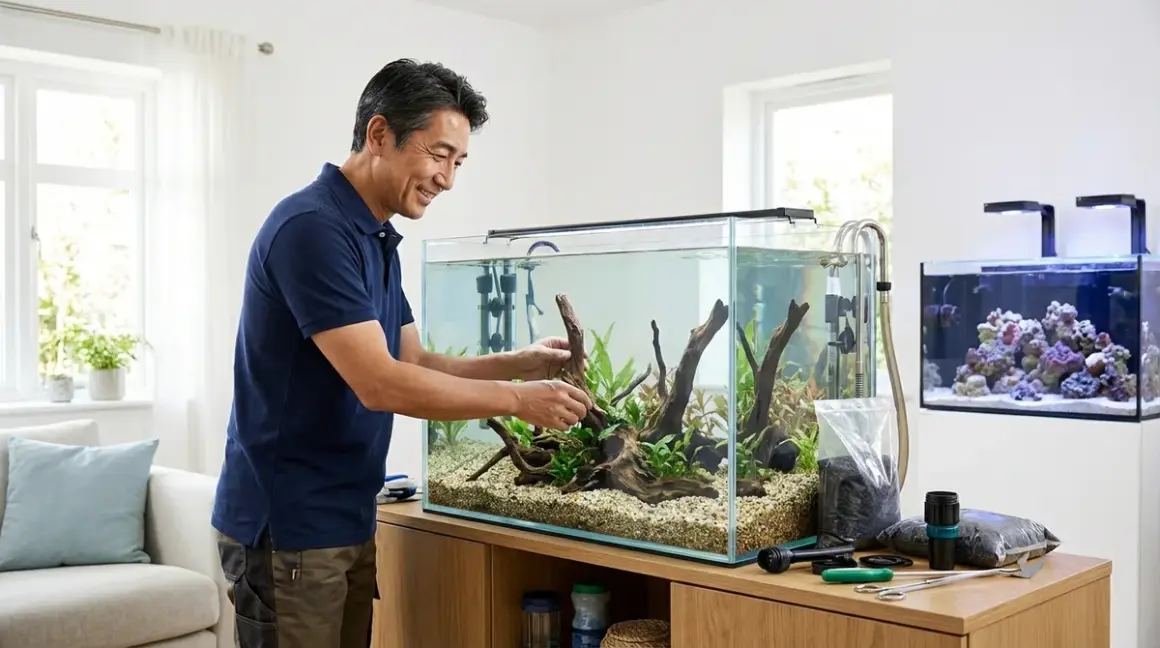

Setting up your first aquarium—or even your tenth—can feel like solving a puzzle where half the pieces look identical and the instructions are written in a language you're still learning. I've been there more times than I care to admit, staring at a pile of equipment and wondering if I'm about to create a thriving underwater ecosystem or an expensive mess. The good news? A proper aquarium setup doesn't require a marine biology degree, just a solid understanding of the essentials and a willingness to be patient during those critical first weeks.
What Is an Aquarium Setup?
When I talk about aquarium setup, I'm referring to the complete process of establishing a functioning aquatic environment—not just filling a glass box with water and tossing fish in (which, trust me, was basically my disastrous approach with that inherited 20-gallon tank fifteen years ago). A proper setup encompasses selecting the right equipment, establishing the biological filtration system, cycling the tank to build beneficial bacteria colonies, and then carefully choosing compatible species that match your water parameters and experience level.
The setup process varies significantly depending on whether you're working with freshwater or saltwater systems. Freshwater tanks are generally more forgiving and less expensive to maintain, which is why I always recommend them for beginners. Saltwater setups demand more precise water chemistry management, specialized equipment like protein skimmers and more powerful lighting for reef systems, and a deeper understanding of species requirements—plus they'll test your wallet more aggressively. But both types share fundamental principles: stable water parameters, adequate filtration, appropriate heating and lighting, and a fully cycled biological system before you introduce any living creatures.
What I've found through years of trial and error is that the setup phase is where you either set yourself up for success or guarantee yourself months of frustration. Skip the nitrogen cycle? You'll be dealing with ammonia spikes that can kill your fish within days. Undersize your filter? You'll be fighting cloudy water and stressed animals constantly. Choose incompatible species? You'll witness the aquatic equivalent of a bad roommate situation, except with actual casualties.
How an Aquarium Setup Works
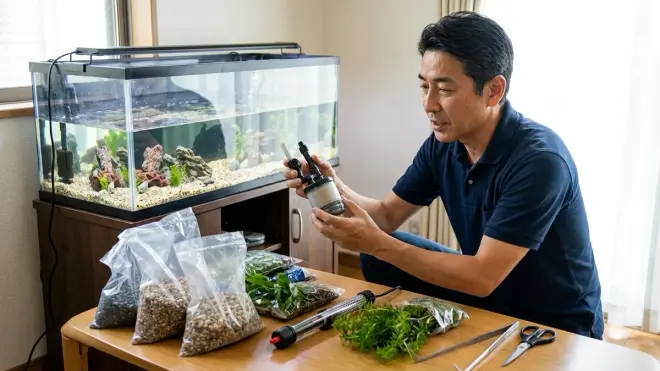
The heart of any successful aquarium setup is understanding that you're not just creating a decorative water feature—you're establishing a miniaturized ecosystem that relies on biological, chemical, and mechanical processes working in harmony. Let me walk you through how these systems function together, because once I finally grasped this, everything else clicked into place.
The Nitrogen Cycle is the foundation that makes everything else possible. When fish produce waste (through excretion and respiration), it breaks down into ammonia, which is highly toxic. In a newly set up tank, there aren't enough beneficial bacteria to process this ammonia, which is why establishing the nitrogen cycle before adding fish is absolutely critical. I learned this the hard way when I lost three beautiful neon tetras in my first week—a mistake I still feel guilty about. The cycle works like this: Nitrosomonas bacteria colonize your filter media, substrate, and tank surfaces, converting ammonia into nitrite (still toxic). Then Nitrobacter bacteria convert nitrite into nitrate (much less toxic), which you remove through regular water changes. This process takes 4-8 weeks in most freshwater setups, sometimes longer for saltwater systems.
Filtration operates on three levels simultaneously. Mechanical filtration physically removes debris and particles—fish waste, uneaten food, dead plant matter—keeping your water clear. Chemical filtration uses activated carbon or specialized resins to remove dissolved pollutants, medications, and discoloration. Biological filtration provides surface area for those crucial beneficial bacteria colonies to establish and thrive. In my experience, biological filtration is the most important of the three, which is why I always prioritize filter media surface area over fancy features when choosing equipment. Different filter types excel at different aspects: canister filters offer maximum media capacity for larger tanks, hang-on-back filters provide easy maintenance for smaller setups, and sponge filters are gentle enough for fry and shrimp tanks.
Temperature and lighting regulation might seem straightforward, but they directly impact your biological system's stability. Most tropical freshwater fish thrive at 75-80°F, while reef tanks often need 76-78°F. A quality submersible heater with a built-in thermostat maintains this range—I use one watt of heating power per gallon as a starting guideline, though this varies based on your room temperature. Lighting serves multiple purposes beyond letting you see your fish: it drives photosynthesis in live plants (if you have them), establishes day/night cycles that regulate fish behavior and stress levels, and in saltwater reef tanks, provides the specific spectrum corals need for zooxanthellae symbiosis. I run my lights on timers for 8-10 hours daily to prevent algae blooms while giving plants adequate energy.
Water chemistry management differs dramatically between freshwater and saltwater systems. Freshwater tanks need attention to pH (most community fish prefer 6.5-7.5), general hardness (GH), and carbonate hardness (KH). I test these parameters weekly during the first two months, then monthly once the tank stabilizes. Saltwater systems add several layers of complexity: salinity (measured in specific gravity, typically 1.020-1.025), calcium and alkalinity for reef systems, and magnesium levels all require regular monitoring and adjustment. According to NOAA research on marine aquarium chemistry, even small fluctuations in salinity can stress marine fish significantly, which is why a quality refractometer is essential for saltwater setups.
The physical setup process follows a logical sequence: position the empty tank on a level stand away from direct sunlight and heat sources, add rinsed substrate (gravel, sand, or specialized materials like aragonite for marine tanks), install equipment (filter, heater, lights), add hardscape elements (rocks, driftwood), fill with dechlorinated water, and then—this is where patience becomes crucial—run the system fishlessly for several weeks while the nitrogen cycle establishes.
Why Proper Aquarium Setup Matters
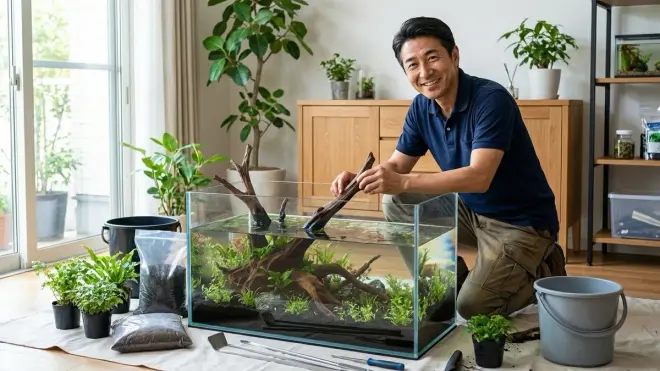
I can't overstate how much the initial setup determines your long-term success or frustration with fishkeeping. The difference between a thriving tank that requires minimal intervention and a constant headache that has you questioning your life choices usually comes down to those first critical weeks. When you establish proper biological filtration from the start, you create a stable environment where fish can actually thrive rather than merely survive.
The health implications for your aquatic pets are significant and immediate. Fish stressed by poor water quality become immunocompromised, developing conditions like ich, fin rot, or fungal infections that wouldn't affect them in a properly cycled tank. I've watched helpless as fish gasped at the surface in an improperly set up tank, poisoned by their own waste products because I didn't understand ammonia toxicity. That's not something I want anyone else to experience.
From a practical standpoint, doing the setup right the first time saves you substantial money and time over the tank's lifetime. Rushing the process and dealing with the inevitable problems—fish deaths, algae explosions, constant water changes trying to control ammonia—costs far more than the extra few weeks of patience. What I've found works is treating the fishless cycling period as a test run: monitor your equipment, verify everything works properly, make adjustments without the pressure of keeping living creatures alive. It's like a dress rehearsal where mistakes don't have consequences.
The ecological balance you establish during setup creates a self-regulating system that becomes easier to maintain as it matures. A well-cycled tank with established bacterial colonies processes waste efficiently, live plants (in planted tanks) consume nitrates and produce oxygen, and the microfauna that colonizes your substrate and decorations contributes to the overall biological filtration. This is when aquarium keeping becomes genuinely enjoyable rather than a source of stress—you're maintaining a balanced ecosystem, not fighting a constant battle against chemistry.
Essential Aquarium Setup Equipment and Variations
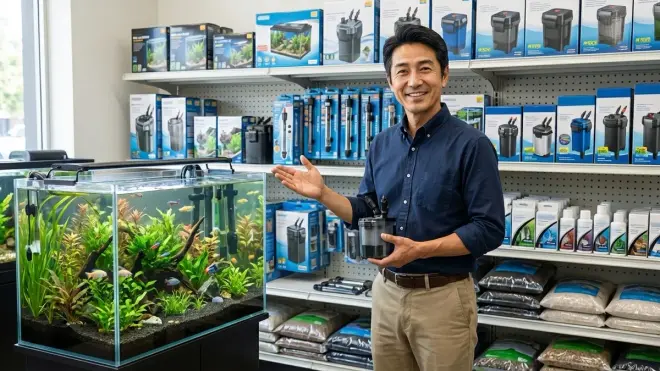
Let me break down the equipment you'll actually need versus what marketing departments want you to think you need. I've accumulated way too much gear over the years, and looking back, certain pieces were essential while others collect dust in my garage.
The Tank Itself forms the foundation of everything else. Glass tanks are more affordable, scratch-resistant, and offer better clarity, but they're heavy—my 75-gallon weighs close to 850 pounds when filled. Acrylic tanks are lighter and less prone to shattering, but they scratch easily (I learned this while cleaning algae too aggressively). For beginners, I always recommend starting with a 20-40 gallon tank—large enough that water chemistry remains stable, small enough that maintenance doesn't become overwhelming. Those adorable 5-gallon bowls you see marketed for bettas? They're far harder to keep stable than a larger volume of water, despite seeming more manageable.
Filtration Systems come in several configurations that suit different needs. For a standard freshwater community tank up to 55 gallons, a quality hang-on-back filter like the AquaClear Power Filter provides excellent mechanical and biological filtration in a compact, easy-to-maintain package—though I'll admit the intake tube can be a bit noisy if water level drops below optimal. Canister filters offer superior media capacity and work well for larger tanks or systems with higher bioload, running silently beneath the tank. For saltwater reef systems, you'll need additional equipment: a protein skimmer removes organic compounds before they break down into nitrates, and a sump provides extra water volume plus space for heaters and other equipment. I run a 20-gallon sump on my 90-gallon reef tank, and it's made maintenance dramatically easier.
Heating and Circulation requirements vary by system size and species. Most tropical setups need a reliable submersible heater—I prefer models with external temperature controllers for accuracy and safety. For tanks over 50 gallons, I use two smaller heaters rather than one large one, which provides redundancy if one fails. Powerheads or circulation pumps prevent dead spots where debris accumulates and ensure even temperature distribution throughout the tank. In reef systems, strong water movement is essential for coral health, mimicking natural ocean currents.
Lighting Options range from basic to elaborate depending on your goals. For a fish-only freshwater tank, simple LED fixtures provide adequate illumination without driving up your electric bill. Planted tanks need full-spectrum lighting with appropriate PAR (photosynthetically active radiation) values—I use medium-output LEDs on my planted community tank with excellent plant growth. Reef systems demand specialized lighting that provides the blue spectrum corals require for photosynthesis, and these fixtures represent a significant investment (often several hundred dollars for quality units). The good news is LED technology has made aquarium lighting far more energy-efficient and long-lasting than the fluorescent tubes I dealt with years ago.
Testing Equipment and Maintenance Tools are where you shouldn't cut corners. A liquid test kit (not strips—they're notoriously inaccurate) for ammonia, nitrite, nitrate, and pH is essential for monitoring your cycle and ongoing water quality. Saltwater setups need additional tests for salinity, calcium, alkalinity, and magnesium. I check parameters religiously during the first two months, then weekly once established. Other necessary tools include a quality gravel vacuum for water changes, a dechlorinator like Seachem Prime, separate buckets dedicated to aquarium use only, and a reliable thermometer.
For those just starting out, aquarium starter kits can provide good value by bundling tank, filter, heater, and lighting in one package—just be aware that the included equipment is often adequate but not exceptional, and you may want to upgrade certain components later. The kit I recommend most often for freshwater beginners includes everything needed to establish a stable 20-gallon community tank.
Selecting Species for Your Freshwater or Saltwater Setup
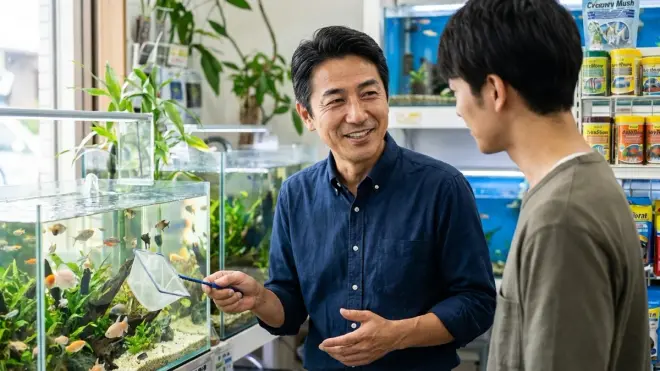
Choosing compatible fish and other inhabitants is where many aquarium setups fail despite having perfect water chemistry and equipment. I've made embarrassing mistakes here—like adding territorial cichlids to a peaceful community tank, which ended predictably—and I want to help you avoid similar disasters.
Freshwater Community Tank Species offer the widest margin for error and greatest variety for beginners. Hardy, peaceful fish like zebra danios, cherry barbs, corydoras catfish, and most tetras tolerate minor water chemistry fluctuations while getting along with tankmates. In my 40-gallon planted community tank, I maintain a school of 12 neon tetras, 6 corydoras, 5 cherry barbs, and a pair of honey gouramis—all coexisting peacefully with similar temperature and pH requirements. The key principle I follow is researching adult size, temperament, social needs (many species are schooling fish requiring groups of 6+), and environmental requirements before purchasing. That gorgeous rainbow shark at the store? It'll become aggressively territorial as it matures, harassing tankmates mercilessly in anything smaller than a 50-gallon setup.
Specialty Freshwater Setups open up fascinating options once you've mastered basic community tanks. Species-specific tanks for bettas, goldfish, or African cichlids let you tailor water parameters and decor to their exact needs. My 20-gallon long devoted to a single betta and a cleanup crew of nerite snails and amano shrimp is one of my most enjoyable tanks—low maintenance, beautiful to watch, and the betta has enough space to truly thrive. For those interested in more exotic freshwater species, axolotl tanks or betta setups require specific parameters but make rewarding projects.
Saltwater Fish-Only Systems (FOWLR—Fish Only With Live Rock) represent the entry point into marine keeping. Hardy species like clownfish, damselfish, and royal grammas tolerate the small parameter fluctuations that beginners inevitably experience while learning saltwater chemistry. I started my saltwater journey with a 30-gallon FOWLR tank stocked with two ocellaris clownfish, a yellow watchman goby, and a handful of hermit crabs and snails for cleanup duty. The live rock provides biological filtration and creates the aquascape—I use roughly 1-1.5 pounds per gallon. What surprised me most about marine fish was how much personality they display; that watchman goby had more character than most freshwater species I'd kept.
Reef Tanks add corals and invertebrates, dramatically increasing complexity but also visual impact. Beginner-friendly soft corals like mushroom corals, zoanthids, and green star polyps tolerate less-than-perfect conditions while you're learning reef chemistry. Stocking density in reef systems is considerably lower than freshwater—I follow the guideline of one inch of fish per 5-10 gallons depending on species, whereas freshwater community tanks can handle one inch per gallon once established. The bioload from corals and invertebrates, combined with the need for pristine water quality, means restraint in fish selection.
The Quarantine Tank Principle is something I wish I'd understood from the beginning. Every new fish, coral, or plant should spend 2-4 weeks in a separate quarantine tank before entering your display system. This simple practice prevents introducing diseases, parasites, or pests that can devastate an established ecosystem. I learned this lesson the expensive way when a single infected tetra introduced ich to my entire 75-gallon tank, requiring weeks of treatment and resulting in several losses. Now I maintain a 10-gallon quarantine setup permanently running, and it's saved me countless headaches.
Frequently Asked Questions
How long does it take to properly cycle a new aquarium setup before adding fish?
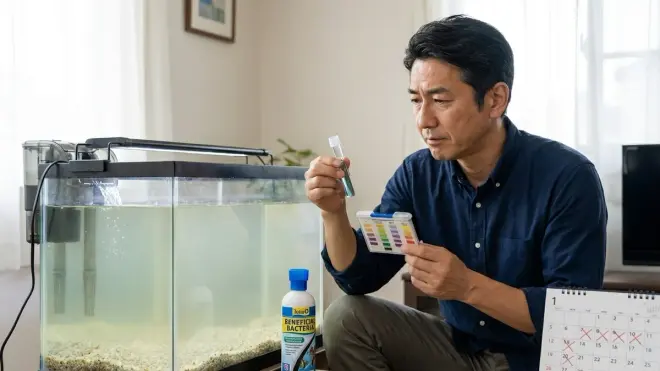
A proper nitrogen cycle typically takes four to eight weeks for freshwater systems and can extend to eight to twelve weeks for saltwater setups, though this timeline varies based on water temperature, bacterial starter products used, and whether you're doing a fishless cycle or using hardy fish to establish bacteria colonies—I always recommend the fishless approach using pure ammonia to reach 2-3 ppm, then monitoring until ammonia and nitrite both read zero and nitrate is present, which indicates the beneficial bacteria colonies have fully established.
What's the minimum tank size for beginners starting their first aquarium setup?
In my experience, a 20-gallon tank represents the ideal minimum for beginners because it provides enough water volume that chemistry remains relatively stable (smaller volumes experience rapid parameter swings), offers adequate swimming space for a small community of fish, and remains manageable for maintenance and water changes without being overwhelming or requiring excessive space in your home.
Can I use tap water directly from the faucet for my aquarium setup, or does it need treatment?
You absolutely must treat tap water before adding it to your aquarium setup because municipal water contains chlorine or chloramines that kill beneficial bacteria and harm fish—I use a quality water conditioner like Seachem Prime at every water change, which neutralizes chlorine/chloramines, detoxifies ammonia temporarily, and binds heavy metals, making tap water safe within minutes (though you should still match temperature before adding treated water to avoid shocking your fish with sudden temperature changes).
How much does a complete beginner aquarium setup typically cost including all necessary equipment?
A basic freshwater setup including a 20-30 gallon tank, stand, filter, heater, lighting, substrate, decorations, water conditioner, test kit, and initial supplies typically runs between $200-400 depending on equipment quality and whether you purchase a kit or individual components, while a comparable saltwater fish-only setup starts around $400-600 due to more expensive salt mix, live rock, protein skimmer, and additional testing equipment (full reef systems with advanced lighting can easily exceed $1000-2000 for the initial investment, which is why I always tell beginners to start with freshwater).
What's the most common mistake people make during their first aquarium setup that causes fish deaths?
The single most devastating mistake I see repeatedly—and one I made myself fifteen years ago—is adding fish before the nitrogen cycle completes, which exposes them to toxic ammonia and nitrite levels that cause ammonia burns to gill tissue, stress-induced disease, and often death within days to weeks, yet this mistake remains common because the desire to see fish swimming immediately overwhelms the patience required to properly cycle the tank fishlessly for 4-8 weeks before introducing any livestock.
Setting Yourself Up for Long-Term Success
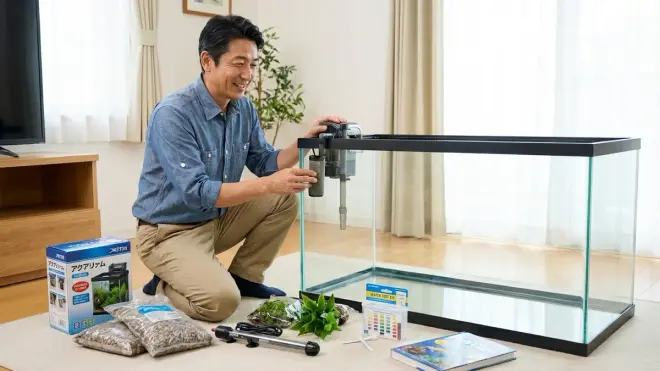
The aquarium setup process isn't just about following a checklist and calling it done—it's about establishing the foundation for a thriving ecosystem that becomes easier to maintain as it matures. What I've learned through countless setups over the years is that patience during those initial weeks pays dividends for years afterward. That fully cycled tank with established bacterial colonies, carefully selected compatible species, and properly sized equipment requires far less intervention than a rushed setup fighting constant chemistry battles.
Start with appropriate expectations for your experience level. If you're new to fishkeeping, that stunning reef tank you've been dreaming about will still be there after you've mastered freshwater community tanks first. I spent three years maintaining various freshwater systems before attempting saltwater, and that foundation prevented expensive mistakes with far more delicate marine species.
The beauty of this hobby is that there's always something new to learn, another species to keep, or a different biotope to recreate. My current fish room houses six running systems ranging from a 10-gallon planted shrimp tank to my 150-gallon African cichlid setup, and I'm still learning something new every week. But every one of those successful tanks started with the same fundamental principles: proper equipment, complete nitrogen cycle, compatible species selection, and enough patience to do things right the first time. That inherited 20-gallon disaster I started with taught me what happens when you skip those steps, and I wouldn't wish that learning experience on anyone else.