


I'll be honest—when I first started helping my sister train her rescue puppy about eight years ago, I approached it the same way I tackle fishkeeping: lots of research, a bit of trial and error, and a healthy respect for the right tools making all the difference. Just like you wouldn't cycle a new aquarium without a test kit, you shouldn't dive into dog training without understanding the dog training aids that can turn frustrating sessions into successful ones. These tools—ranging from simple clickers to sophisticated potty training sprays—aren't shortcuts or gimmicks when used properly. They're communication bridges that help dogs understand exactly what you're asking of them, and in my experience watching my sister work through everything from basic sit commands to housebreaking challenges, the right aid at the right time can compress weeks of confusion into days of progress.
What Are Dog Training Aids?
Dog training aids are physical tools, products, or devices designed to facilitate communication between you and your dog during training sessions, making it easier for them to understand desired behaviors and for you to reinforce those behaviors consistently. Think of them as translators—your dog doesn't speak English, and you don't speak dog, so these aids create a common language both of you can understand.

The category is surprisingly broad. It includes everything from basic equipment like leashes and collars that give you physical control and safety, to communication tools like clickers that mark precise moments of correct behavior, to consumable products like training treats that provide immediate positive reinforcement. There are also environmental aids like potty training pads and attractant sprays that guide instinctive behaviors, and even deterrent tools like bitter sprays that discourage unwanted actions without causing harm.
What I've found works best is understanding that these aren't magic solutions—they're amplifiers of good training technique. A clicker won't teach your dog to sit any more than an aquarium heater will automatically balance your water parameters, but when used as part of a thoughtful approach, it makes the teaching process clearer and faster. The American Kennel Club emphasizes that training aids work best when paired with positive reinforcement methods and consistency, which matches everything I've observed watching trainers work with dogs of different ages and temperaments.
The key distinction is between puppies (under 12 months) and adult dogs—puppies are learning everything from scratch and typically respond faster to positive reinforcement aids, while adult dogs might be learning new behaviors or unlearning established patterns, which sometimes requires different tools or more patience.
How Dog Training Aids Work

Most effective dog training aids operate on principles from behavioral science, specifically operant conditioning—the process where behaviors are modified through consequences. When my sister's puppy sat on command and immediately heard a click followed by a treat, she was creating what behaviorists call a "conditioned reinforcer." The click became associated with the reward, and the behavior that preceded it got strengthened.
Different aids work through different mechanisms, and understanding these helps you choose the right tool for your specific training goal:
Positive reinforcement tools like training treats, clickers, and praise markers work by adding something pleasant immediately after a desired behavior. The timing is critical—what I've learned from watching countless training sessions is that "immediately" means within 1-2 seconds. Any longer and the dog can't connect the reward to the action. This is where clickers shine—they create an audible marker that's faster than reaching for a treat, essentially buying you a few extra seconds while the dog still remembers what they just did. High-value treats (small, soft, strongly scented pieces of chicken, cheese, or commercial options) provide the actual reward, while the clicker provides the instant "yes, that's exactly right" signal.
Physical guidance aids like leashes, harnesses, and head collars work by giving you gentle control over your dog's body position and movement. A standard 6-foot leash prevents your puppy from practicing unwanted behaviors (like running away during recall training) while they're still learning. Front-clip harnesses redirect pulling dogs toward you rather than letting them pull forward, making loose-leash walking easier to teach. These tools don't force compliance—they simply make the correct behavior easier to choose than the incorrect one.
Environmental modification aids include potty training pads, attractant sprays, and barrier systems. Products like the NatureVet Potty Here Training Spray contain pheromone-like compounds that trigger a dog's instinct to eliminate in specific locations. In my experience, these work best for puppies under 6 months who are still developing bladder control and need extra encouragement to choose the right spot. You're essentially creating an olfactory road map—the spray says "this is the bathroom," while keeping that smell absent from other areas says "not here." For more details on specific products, check out our guide on what puppy training sprays are and how they work.
Communication aids bridge the gap between your intention and your dog's understanding. Clickers are the most common, but whistles work for distance commands, and even specific verbal markers like "yes!" or "good!" serve the same purpose if used consistently. The mechanism is simple: you create an association between the sound and something positive, then use that sound to mark the exact moment your dog does something right.
The real magic happens when you layer these aids appropriately. During my sister's housebreaking journey, she used potty pads with attractant spray (environmental), a clicker (communication), high-value treats (positive reinforcement), and a leash to guide the puppy to the pad area (physical guidance). No single tool did the work—the combination created a clear, consistent learning environment. Our complete puppy training aids checklist walks through how to combine tools for different training goals.
Why Dog Training Aids Matter

The practical difference between training with and without appropriate aids is measured in time, frustration, and success rate. When my sister tried teaching "come" without any aids—just calling her puppy's name repeatedly—it took nearly six weeks to get reliable recall in a fenced yard. When she started over with a different command word, a clicker, and tiny pieces of hot dog, the new recall was solid in about ten days.
Consistency is the biggest challenge in dog training, and aids help solve it. Your tone of voice changes throughout the day—you sound different when you're tired, stressed, or excited. A clicker sounds exactly the same every single time, which gives your dog a consistent marker to learn from. Training treats standardize the reward—your dog knows exactly what they're working for, rather than guessing whether your enthusiasm level means they did well or just okay.
For puppies specifically, training aids compress the learning window. Puppies have critical socialization and learning periods (roughly 3-14 weeks for socialization, continuing through about 6 months for basic obedience), and the right tools let you take full advantage of this naturally receptive stage. The faster a puppy learns appropriate behaviors, the less time they spend practicing inappropriate ones that become habits. If you're working with a young dog, our article on the best puppy training tools covers age-appropriate options for different developmental stages.
Adult dogs benefit differently but just as significantly. Many adult dogs in shelters or rescues come with unknown training histories—they might have learned the wrong responses to common cues, or never been trained at all. Training aids give you a fresh communication system that doesn't carry baggage from their past. A dog who learned to fear verbal corrections might respond beautifully to clicker training because the sound has no negative associations.
From a practical household management perspective, training aids often solve specific problems faster than training alone. Potty training pads placed strategically can save your floors while you work on outdoor training. Check out our detailed guide on dog potty training aids for specifics on different products and when to use them. Deterrent sprays on furniture can protect your belongings while you teach "off" and "leave it." These aren't replacements for training—they're supplements that reduce damage and frustration during the learning process.
What I've found most valuable is how training aids reduce the emotional friction in training. When you have clear tools that work predictably, you stay calmer and more positive, which your dog absolutely picks up on. That calm confidence makes you a better teacher, which makes your dog a faster learner—it's a positive feedback loop that aids facilitate.
Types and Categories of Dog Training Aids
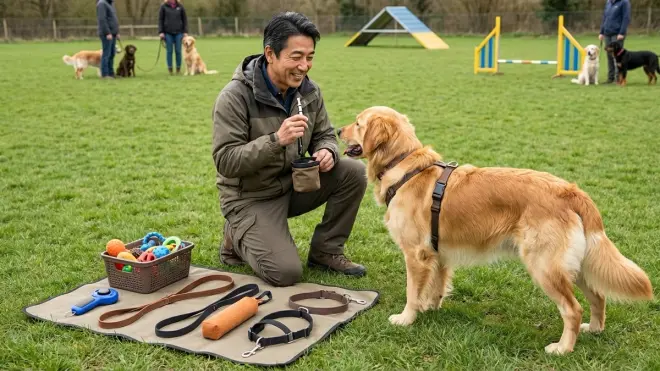
The landscape of dog training aids can feel overwhelming at first, but they break down into a few clear categories, each serving distinct purposes. What I've learned from watching my sister and several trainer friends work is that most successful training programs draw from multiple categories rather than relying on just one type.
Positive reinforcement tools form the foundation for most modern training approaches. Food rewards—specifically high-value training treats—remain the gold standard because they're universally motivating, especially for puppies. The best training treats are small (pea-sized or smaller), soft (so dogs can eat them quickly without chewing), and aromatic (so they maintain interest). Commercial options like freeze-dried liver, soft training biscuits, or meat-based treats work well, though many trainers prefer fresh options like tiny pieces of chicken, cheese, or hot dog. For puppies in active training, you'll use a lot of treats—check out how many treats you can safely give during training sessions to avoid overfeeding. Clickers and other marker systems (whistles, verbal markers) fall into this category too, as they mark the behavior that's about to be rewarded.
Physical control and guidance equipment includes leashes, collars, harnesses, and head halters. Standard 6-foot leashes give you control during training walks. Long training leads (15-30 feet) allow you to practice recall and distance commands while maintaining safety. Front-clip harnesses reduce pulling by redirecting your dog's forward momentum, making loose-leash walking easier to teach. For adult dogs with established pulling habits, these can be game-changers. Standard flat collars work for most dogs, while martingale collars provide gentle control for dogs who might slip out of regular collars. I should note that while these tools are widely used, they work best when paired with actual training—a harness doesn't teach a dog not to pull, it just makes pulling less effective while you teach them the behavior you want.
Housebreaking and potty training aids are particularly crucial for puppies and newly adopted adult dogs. Training pads provide an indoor elimination spot (useful for apartment dwellers or during bad weather), while attractant sprays like the Bodhi Dog Potty Training Spray encourage dogs to eliminate in specific locations through pheromone cues. Our guide on house training aids for puppies goes deep on complete setup strategies. These aids work particularly well for puppies under 4 months who lack full bladder control, though they're also valuable for senior dogs with incontinence issues or small breeds who struggle in extreme weather.
Deterrent and boundary aids help prevent unwanted behaviors without punishment. Bitter apple spray and similar taste deterrents discourage chewing on furniture, shoes, or other inappropriate items—you spray the object, not the dog. Pet gates and exercise pens create physical boundaries that prevent access to areas where you can't supervise. These are management tools more than training tools, but they're invaluable for preventing your dog from practicing behaviors you're trying to eliminate.
Specialty training equipment includes items for specific training goals: agility equipment for sport training, training vests that hold treats and supplies, target sticks for teaching positioning, training platforms for teaching "place" commands, and even training apps that help you track progress. Most pet parents won't need these immediately, but they become relevant as training advances beyond basics.
The category you'll need depends entirely on your training goals and your dog's age and history. Puppies typically need housebreaking aids plus basic positive reinforcement tools. Adult dogs with behavioral issues might benefit more from management tools (gates, deterrents) combined with clicker training. The common thread I've observed is that simpler usually beats more complicated—a clicker, good treats, and patience will get you further than a garage full of expensive equipment used inconsistently.
Frequently Asked Questions
What are the most essential dog training aids for a new puppy owner?
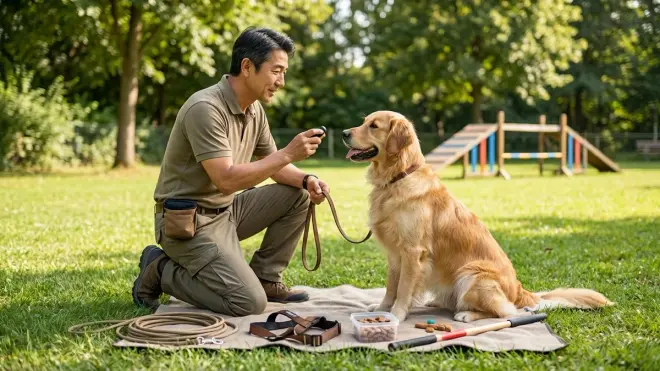
The most essential dog training aids for new puppy owners are high-value training treats (small, soft, and aromatic), a standard clicker or verbal marker for marking correct behaviors, a 6-foot training leash for control during learning, and potty training pads with attractant spray if you're housebreaking indoors. These four categories—positive reinforcement, communication, physical guidance, and housebreaking support—cover the foundation of puppy training and will get you through the first 90 days of teaching basic commands, house training, and leash manners. If you're just getting started, our complete puppy training aids checklist walks through exactly what you need and when you'll need it during those critical early months.
Can dog training aids work for adult dogs or only puppies?
Dog training aids absolutely work for adult dogs, though the approach and timeline may differ from puppy training. Adult dogs can learn new behaviors just as effectively as puppies—the myth that "you can't teach an old dog new tricks" has been thoroughly debunked by behavioral science. In my experience watching rescue dogs learn entirely new skills, the key difference is that adult dogs may have existing behavior patterns (good or bad) that you're working with or against, while puppies are starting fresh. Adult dogs often respond particularly well to clicker training because it offers a clear, neutral communication system that doesn't carry associations from their past experiences. Training aids like high-quality treats remain just as motivating for adults as for puppies, though you might need to experiment to find what motivates your specific dog most effectively.
How long does it typically take for dog training aids to show results?
Dog training aids typically show results within a few days to two weeks for basic behaviors when used consistently, though the timeline varies significantly based on the specific behavior you're teaching, your dog's age and temperament, whether they're learning something new or unlearning an established habit, and how consistently you're applying the training method. In my sister's experience, her puppy connected the clicker sound to treats within just 2-3 training sessions (about 15 minutes total), and started offering the "sit" behavior reliably within five days of consistent practice. Housebreaking with potty training aids typically takes 2-4 weeks for puppies to show significant improvement, though complete reliability usually takes 4-6 months as bladder control develops. More complex behaviors or behavior modification in adult dogs can take weeks to months, but you should see incremental progress much sooner—if you're not seeing any improvement after two weeks of consistent training, it's worth reassessing whether you're using the right aid for your specific goal or whether your timing and consistency need adjustment.
Are electronic training aids like shock collars considered dog training aids?
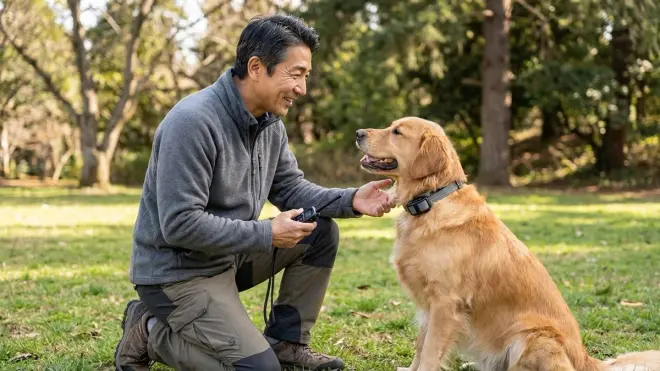
Electronic training aids including shock collars (also called e-collars or electronic collars) are technically categorized as dog training aids, but they're controversial and increasingly discouraged by veterinary behaviorists and professional training organizations. The American Veterinary Society of Animal Behavior has published position statements recommending against their use due to potential negative side effects including fear, anxiety, and aggression, as well as the risk of misuse creating more behavioral problems than they solve. In my observation of various training approaches, positive reinforcement methods using treats, clickers, and other reward-based aids consistently produce reliable results without the risks associated with aversive tools. Modern dog training has largely moved away from punishment-based methods toward positive reinforcement approaches, which is why this guide focuses on aids that support that methodology—tools that teach dogs what to do rather than punish them for what not to do.
Do I need different training aids for different dog breeds or sizes?
You need to adjust training aids based primarily on your dog's size and mouth size rather than breed specifically, though breed characteristics like energy level and trainability do influence which aids work best. For physical equipment, small dogs (under 20 pounds) need proportionally sized collars, harnesses, and leashes—a harness designed for a German Shepherd will simply fall off a Chihuahua. Training treat size should scale to your dog's mouth—what I've found works is treats roughly the size of a blueberry for large breeds, pea-sized for medium dogs, and even smaller (grain-of-rice size) for toy breeds. Beyond size, breed characteristics matter for selection but not necessity—high-energy working breeds like Border Collies or Belgian Malinois often need higher-value rewards and more mental stimulation during training than lower-energy breeds, while scent hounds might respond more strongly to aromatic treats than breeds with less developed prey drive. That said, the fundamental tools (clicker, treats, leash, potty aids) work across all breeds when sized appropriately—the basic science of how dogs learn doesn't change based on their ancestry.
Summary
Dog training aids bridge the communication gap between you and your dog, turning abstract concepts into clear, understandable signals that accelerate learning for both puppies and adult dogs. From the foundational trio of clickers, high-value treats, and proper leashes to specialized tools like potty training sprays and deterrent products, these aids work by applying behavioral science principles—primarily positive reinforcement and classical conditioning—to create consistent, predictable training environments. What I've learned watching dogs at various life stages is that the right aid at the right time doesn't replace good training technique, but it absolutely amplifies it, reducing the time from confusion to comprehension and minimizing frustration for both ends of the leash. The key is choosing tools appropriate to your specific training goal and your dog's age, then using them consistently as part of a patient, positive approach. Whether you're housebreaking a 10-week-old puppy or teaching a rescue adult dog their first reliable recall, the strategic use of training aids turns the abstract challenge of "teaching a dog" into a concrete process with measurable steps forward.