

Look, I'll be honest—I'm more of a guinea pig person than a dog person, and even I know that house training a puppy is one of those make-or-break early experiences that sets the tone for years to come. Whether you've just brought home an eight-week-old Lab mix or you're preparing for a new family member, having the right house training aid for puppies ready before your pup arrives makes everything smoother. This checklist walks you through every physical item, space consideration, and backup supply you'll need to set up a successful house training system from day one. We're covering placement strategies, cleaning essentials, training tools, and the often-overlooked items that save you frantic midnight store runs when accidents happen—because they will.
Essential Physical Training Aids
These are the core tools that communicate where your puppy should eliminate and help establish the habit through scent, texture, and consistency.
Potty training spray with pheromone attractants: Products like the NatureVet Potty Here Training Spray or Bodhi Dog Potty Training Spray contain natural enzymes and scent markers that signal "this is your bathroom spot" to puppies aged 8 weeks to 6 months—apply to designated outdoor areas or pee pads before each scheduled potty break. Learn more about specific formulations in our guide to dog potty training aids.
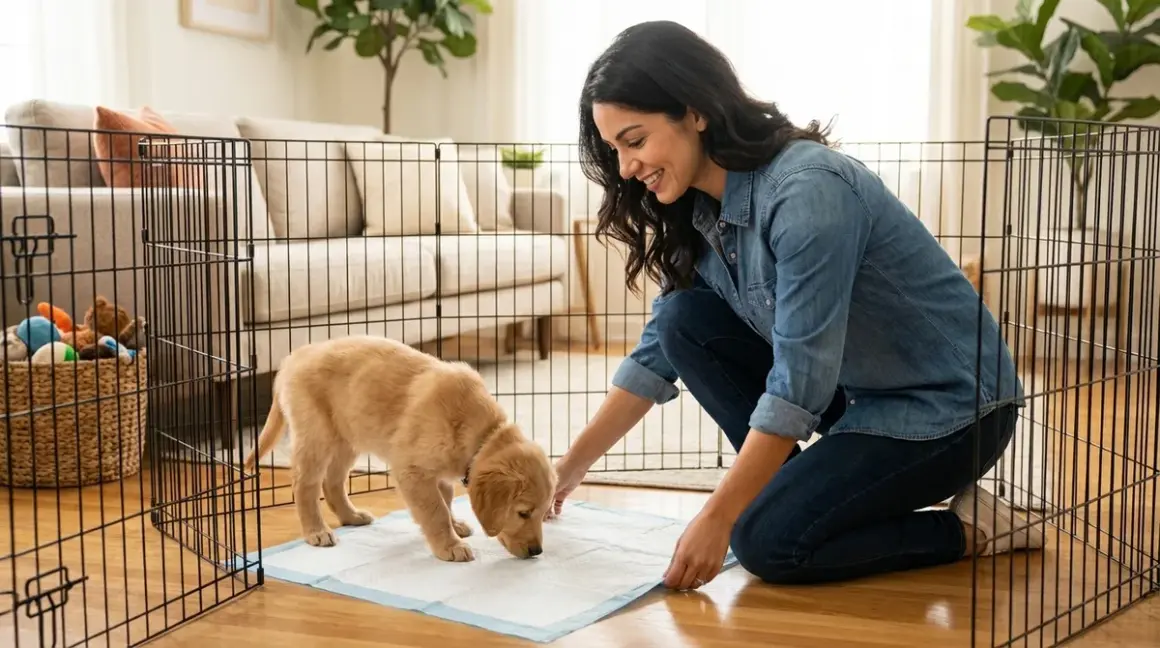
Washable or disposable puppy pads (minimum 30-count initially): For small-breed puppies under 10 pounds or apartment dwellers, pads with built-in attractant scents and leak-proof backing provide an indoor elimination option during the critical 8-12 week period when bladder control is still developing—I've learned from my guinea pig cleanup routine that having extras on hand beats running out at 2 AM.
Outdoor designated potty area marker: A small garden stake, decorative rock, or specific patch of mulch helps you consistently return to the same 3-foot-square zone, building scent association faster than randomly wandering your yard—puppies rely heavily on olfactory memory during weeks 8-16.
Bell or communication device for door training: A set of mounted jingle bells hung at puppy nose-height (typically 6-12 inches off the ground for most breeds) teaches your dog to signal when they need to go outside, creating a two-way communication system by 12-14 weeks if you're consistent.
Portable travel potty option for multi-story homes: Real grass patches like Fresh Patch Disposable Dog Potty or synthetic grass trays with drainage systems spare you from carrying a puppy down three flights of stairs six times daily during the first month—critical for toy breeds with tiny bladders that empty every 2-3 hours.
Crate-appropriate size for nighttime containment: A wire or plastic crate just large enough for your puppy to stand, turn around, and lie down (not roam) activates their natural den instinct to avoid soiling their sleeping space—adjustable divider panels let you expand as they grow from 8 weeks to 6 months without buying multiple crates.
Leash dedicated solely to potty trips (6-foot standard): Using the same leash exclusively for bathroom breaks creates a Pavlovian association between that specific leash and elimination, helping puppies understand this isn't playtime—keep it by the door separate from your walking leash.
Treat pouch or pocket container for immediate reinforcement: Rewarding within 3 seconds of successful elimination is crucial for 8-12 week old puppies whose short-term memory is still developing—fumbling with treat bags in your pocket breaks that critical timing window. Check out how to use treats for puppy training for reward timing strategies.
Cleaning and Odor Elimination Supplies
Here's something I learned the hard way with guinea pig cage accidents: if you can smell it, your pet can smell it a hundred times stronger, and they'll go right back to that spot.
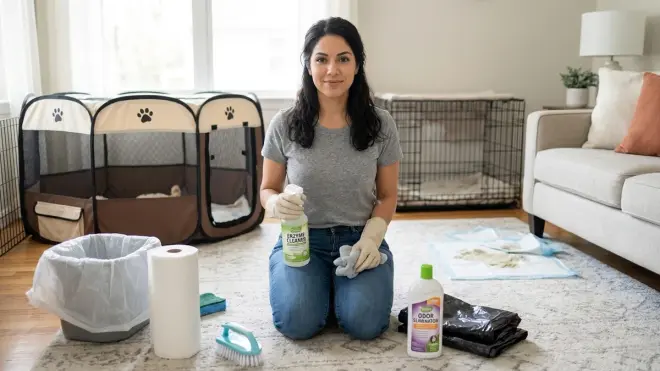
Enzymatic cleaner specifically formulated for pet urine (32 oz minimum): Products containing protease and amylase enzymes literally break down the uric acid crystals in urine that regular cleaners leave behind—these crystalline deposits are what draw puppies back to re-soil the same carpet spot, even after you've scrubbed it clean with conventional products.
Black light UV flashlight for detecting hidden accidents: Dried urine glows under UV light, revealing accidents on carpets, baseboards, and furniture that you missed by sight or smell—especially valuable in homes with previous pet owners or when your puppy sneaks off to a back bedroom.
Paper towel stockpile (at least 12 rolls): The first rule of accident cleanup is absorbing as much liquid as possible before any chemical treatment, and you'll go through paper towels faster than you'd think during weeks 8-12 when accidents happen 4-6 times daily even with diligent scheduling.
Rubber gloves and disinfecting wipes: Protecting your hands during cleanup and quickly sanitizing hard surfaces between enzymatic treatments prevents bacterial spread—particularly important with young puppies whose immune systems are still developing through their vaccination series.
Carpet spot cleaner machine (rental or purchase): For homes with wall-to-wall carpeting, a portable extractor that applies cleaning solution and immediately extracts it along with embedded urine saves your flooring during the 12-16 week house training period when accidents are frequent.
Baking soda in a shaker container: After enzymatic treatment, a light dusting of baking soda left for 4-6 hours absorbs lingering moisture and odors from carpet fibers before vacuuming—it's the same principle I use for my guinea pig fleece bedding, and it genuinely works.
Designated cleaning caddy or bucket: Keeping all accident-response supplies in one portable container means you can grab everything at once when you discover a puddle, rather than running between rooms gathering supplies while the stain sets.
Space Preparation and Confinement Tools
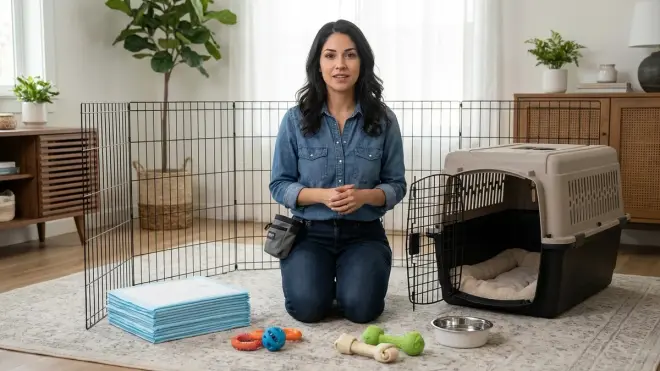
Setting up your physical environment is half the battle—you're essentially puppy-proofing while creating clear boundaries that make supervision possible.
Baby gates for sectioning off supervised zones (minimum 2): Confining your puppy to tile or vinyl flooring areas during the first 4-6 weeks makes accidents easier to clean and prevents them from wandering to carpeted rooms where mistakes become ingrained habits—I think of it like how I blocked off my guinea pigs' free-roam area before they were fully litter trained.
Exercise pen (x-pen) for extended containment periods: A 24-36 inch tall octagonal pen creates a larger confined space than a crate, allowing room for a bed on one side and pee pad on the other for times when you can't directly supervise—useful for puppies 8-12 weeks old who can't hold their bladder longer than 2-3 hours.
Waterproof rug or mat for high-traffic doorways: Placing a washable, waterproof runner in front of your primary exit door catches those "almost made it" accidents that happen when you're fumbling with the doorknob while your puppy is doing the pee dance.
Covered flooring in the designated puppy room: If you're confining your puppy to a laundry room or bathroom during unsupervised periods, roll-out vinyl flooring or washable rugs over concrete provide comfortable, non-absorbent surfaces that don't retain odor like carpet does.
Furniture blockers or closed doors: Physically preventing access to bedrooms, dining rooms, and other carpeted spaces during the first 8-12 weeks eliminates the possibility of hidden accidents in low-traffic areas you don't check regularly—out of sight means out of mind for supervision.
Training Schedule Tools and Monitoring Aids
These items help you track patterns, stay consistent, and actually see whether your house training aid for puppies strategy is working or needs adjustment.
Timer or phone alarm system: Setting 2-hour interval reminders (initially for 8-10 week old puppies) ensures you're taking them out before they need to go rather than reacting to accidents—consistency in timing builds bladder control faster than sporadic trips.
Puppy training journal or tracking app: Recording elimination times, locations, accidents, and food/water intake for the first 4-6 weeks reveals patterns like "always pees 15 minutes after eating" that help you predict bathroom needs—I kept a similar log when I was figuring out my guinea pigs' hay consumption patterns, and the data was surprisingly revealing.
Outdoor lighting for nighttime potty trips: A motion-activated LED spotlight or headlamp means you can actually see your puppy eliminating during 2 AM bathroom breaks, allowing you to reward immediately rather than guessing whether they went—critical for maintaining training consistency around the clock.
High-value training treats in small pieces (pea-sized): Rewards specifically reserved for successful potty completion create a powerful positive association—treats should be soft, aromatic (chicken, liver, cheese), and delivered within 3 seconds of elimination for puppies whose attention span at 8-12 weeks is roughly 5 seconds. Our article on low-calorie training treats for puppies explains portion control to prevent weight gain.
Water bowl with measured markers: Monitoring intake helps predict output—puppies typically need to eliminate 15-30 minutes after drinking, and knowing exactly how much they consumed helps you anticipate urgent bathroom needs.
Kitchen timer for crate training intervals: Gradually extending crated time by 15-minute increments teaches bladder control without overwhelming your puppy—start with 30 minutes at 8 weeks, adding time as they approach 12-16 weeks.
Final Check Before You Bring Your Puppy Home
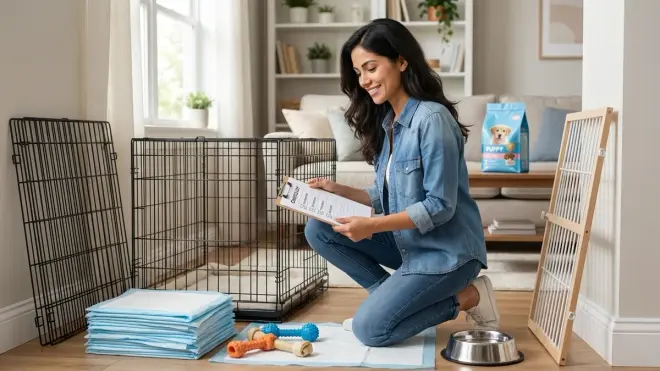
Run through this quick verification to confirm you're actually ready for day one—trust me, discovering you're missing something critical at 6 PM on a Sunday when stores are closed is not the time to improvise.
- House training spray positioned at designated outdoor spot
- 30+ pee pads stocked (if using indoor training)
- Enzymatic cleaner and paper towels within arm's reach of living areas
- Gates installed blocking carpeted rooms
- Crate set up with divider adjusted to appropriate size
- Bells hung at exit door at puppy nose height
- Training treats portioned into daily containers
- Potty trip alarms programmed into phone (every 2 hours initially)
- Journal or app downloaded for tracking
- Black light flashlight charged and accessible
- Outdoor lighting tested for nighttime visibility
- Backup cleaning supplies purchased (you'll need more than you think)
Frequently Asked Questions
What house training aid for puppies works fastest for toy breeds under 10 pounds?
Toy breed puppies under 10 pounds benefit most from a combination approach using pheromone attractant sprays on pee pads placed every 10-15 feet in their confined area, since their bladders empty every 1-2 hours at 8-10 weeks old and they can't physically make it to a distant door in time—pair pads with scheduled outdoor trips every 90 minutes and enzymatic cleaning of any carpet accidents to prevent location imprinting.
How many pee pads should I buy before bringing home an 8-week-old puppy?
Purchase at least 30-40 pads initially for the first two weeks with an 8-week-old puppy, as you'll use 4-6 pads daily during the highest-accident period—disposable pads cost less per unit in bulk packaging, while washable pads require owning 8-10 so you always have clean ones available while others are in the laundry cycle.
Can I use house training aids with crate training simultaneously?
Yes, crate training and potty training aids work synergistically—use the crate for overnight containment and unsupervised periods (relying on den instinct to prevent soiling), then immediately take your puppy to the pheromone-sprayed outdoor spot or pad upon release, rewarding successful elimination within 3 seconds to build the association between freedom from the crate and bathroom completion. For more on nighttime management, see our guide on how to crate train a dog to sleep through the night.
Final Thoughts
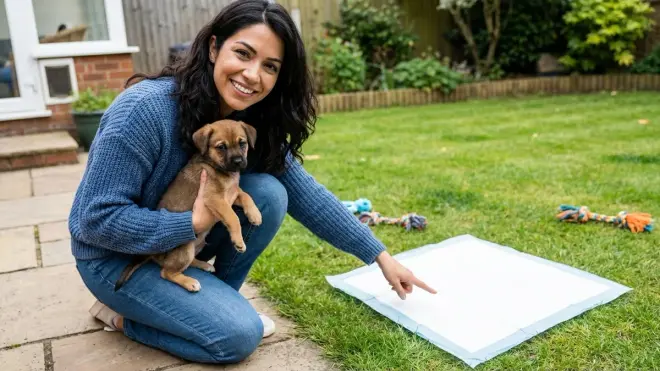
Setting up your house training system before your puppy arrives isn't just about buying supplies—it's about creating an environment where success is easier than failure. I've spent seven years making my apartment guinea-pig-friendly in a 600-square-foot space, and the same principle applies: when you've thought through the logistics, placed things strategically, and have backups for your backups, those chaotic first weeks become manageable. Your 8-week-old puppy isn't trying to make your life difficult; they're just working with a bladder the size of a walnut and zero understanding of your carpet investment. The right house training aid for puppies, combined with consistent timing and immediate cleanup of mistakes, sets both of you up for those incredibly satisfying moments when your pup rings the bell at the door for the first time completely on their own. That's when you know the system is working.