


If you're trying to decide between a dog show lead vs training leash, here's the short answer: show leads are designed for presentation and minimal visibility in the ring, while training leashes are built for communication, control, and teaching behaviors. I've spent two decades working with both, and they serve completely different purposes—using the wrong one for your situation makes your job harder than it needs to be.
This article breaks down the real differences between these two types of leads, who needs what, and how to choose the right one for your dog and your goals.

Quick Comparison
| Criterion | Dog Show Lead | Training Leash |
|---|---|---|
| Primary Purpose | Presentation and minimal visibility in the conformation ring | Communication, control, and behavior modification |
| Material & Construction | Thin nylon, leather, or snake chain (1/8″–1/4″ diameter) | Nylon webbing, biothane, leather, or rope (1/2″–1″ wide) |
| Length Options | Fixed 4–6 feet, designed for close handling | 4–6 feet standard, 15–30+ feet for long lines |
| Handle Design | Loop or no handle; minimal bulk | Padded handles, traffic handles, or multiple grip points |
| Best For | Conformation showing, breed presentation | Obedience training, leash manners, recall work |
Material and Construction Differences
Here's what usually works: show leads are all about disappearing. When you're stacking your dog for conformation showing, judges need to see your dog's natural lines and structure without a bulky leash interfering with the visual. That's why most show leads use extremely thin materials—I'm talking 1/8-inch to 1/4-inch diameter nylon cord, fine leather, or delicate snake chain that barely shows against your dog's coat.
Training leashes take the opposite approach. The typical training leash uses 1/2-inch to 1-inch wide nylon webbing, biothane (a coated waterproof material), or braided rope. Width matters for your hands, especially during extended training sessions. I've seen this a hundred times: someone tries training with a thin cord, and after twenty minutes of working on leash manners with a 70-pound adolescent dog, they've got rope burns on their palms.
Material durability is the trade-off. Show leads can use delicate materials because they're only handling a well-trained dog for brief ring appearances—maybe 5-10 minutes at a time. Training leashes need to withstand pulling, chewing (especially with puppies under 6 months), and daily use in all weather conditions. Biothane has become popular in training because it's waterproof and wipes clean, which matters when you're working through muddy recall drills or potty training.
One design flaw I see constantly with cheaper show leads: the tiny loop handles slip right off your fingers when you're trying to maintain light contact while gaiting. Quality show leads address this with a small but properly sized loop that sits securely on your hand without adding bulk.
Length and Handling Control
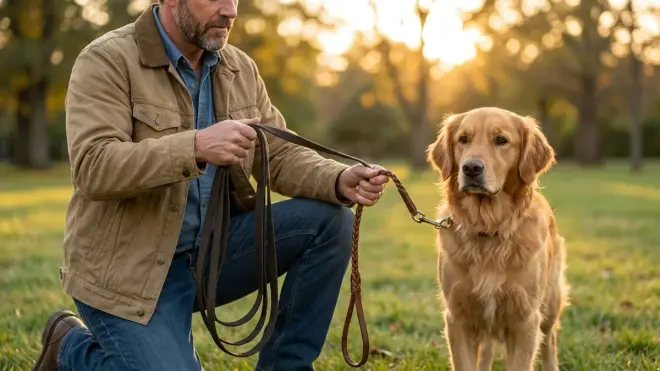
Show leads come in very specific lengths—typically 4 to 6 feet—because that's what works for dog conformation shows. You need your dog close enough to maintain proper positioning while gaiting around the ring, but with enough slack to show free, natural movement. Most dog show leads and leashes for conformation showing don't offer adjustable lengths because consistency in handling is what you're after.
Training leashes give you options. Standard 6-foot leashes work great for basic obedience and neighborhood walks. But here's what really matters for training: you need different lengths for different training goals. Teaching loose-leash walking? Six feet is perfect. Working on recall and distance commands? You'll want a 15-foot, 20-foot, or even 30-foot long line that gives your dog room to practice coming when called from a realistic distance.
The handle situation is completely different between these two. Show leads often have just a small loop, or in some cases no handle at all—just a slip knot that tightens gently when needed. Training leashes feature padded handles for comfort during extended sessions, and many include a "traffic handle" (a second handle close to the clip) that gives you close control when you need it—like when passing other dogs on a sidewalk.
I've worked with thousands of dogs using both types, and the handle design directly affects your communication. With a training leash, you can use slight pressure and release to communicate with your dog. Show leads don't work that way—they're meant to be nearly invisible, with minimal handler input once your dog knows the routine.
Visibility and Presentation
Here's the thing about visibility: in the show ring, you want the judge looking at your dog, not your equipment. That's why show leads are designed to blend in. Handlers choose colors that match their dog's coat—a black snake chain for a black poodle, tan leather for a golden retriever. The entire point is making the lead visually disappear so judges can assess your dog's conformation without distraction.
Training leashes don't care about invisibility. In fact, bright colors can be an advantage during training. I often recommend high-visibility orange or yellow leashes for outdoor recall work because you (and your dog) can easily see where the leash is, which helps with spatial awareness during training exercises. When you're using canine training aids in various environments, being able to track your equipment matters.
The way these leads interact with your dog's coat tells you a lot about their purpose. Show leads for long-coated breeds like Yorkshire Terriers or Maltese use extremely fine materials that won't mat or tangle coat. Show handlers working with breeds that require extensive grooming before ring time—covered in detail in how to groom your dog for a conformation show—can't risk a heavy leash messing up hours of preparation work.
Training leashes can be heavier and more substantial because you're not worried about presentation during a Tuesday morning training session. The clip hardware on training leashes is typically larger and more robust (often 2-3 times the size of show lead clips) because it needs to handle the forces from a dog learning impulse control around distractions.
Functional Design and Training Application
Show leads serve one main function: controlled presentation. The slip-style design that's standard on most show leads—where the collar portion tightens when tension is applied—gives handlers precise control over head position during gaiting and stacking. This isn't about correction; it's about positioning. When you're learning how to stack your dog for conformation showing, that subtle control over head height makes the difference between showing your dog's structure properly and losing points.
Training leashes need to support a dozen different applications. Here's what I mean by that: you'll use the same 6-foot training leash for teaching loose-leash walking, practicing sit-stays, working through door manners, and managing your dog during vet visits. It needs to clip securely to whatever collar or harness you're using—whether that's a flat collar, martingale, or front-clip harness for dogs that pull.
The clip mechanisms tell you everything about intended use. Show leads use small, lightweight swivel clips or split rings that add minimal weight and bulk. Many show leads are actually one continuous piece—a slip lead with no separate collar at all. Training leashes feature larger bolt snaps or trigger clips that can handle 200-300+ pounds of pull force, because even a 40-pound dog can generate significant force when they suddenly lunge after a squirrel.
One thing I've learned over twenty years: dogs behave differently on different equipment. A dog that's been conditioned to work on a show lead knows that's "show time"—calm, focused, minimal handler communication needed. That same dog on a training leash might still be learning impulse control and leash manners. Understanding this difference is part of understanding modern dog training equipment and using each tool appropriately.
The durability gap is real. I've used the same training leashes for 3-5 years of regular work with multiple dogs. Show leads might last longer in terms of years, but they're meant for occasional use in controlled environments, not daily training sessions.
Who Should Choose a Dog Show Lead
You need a show lead if you're competing in conformation events—period. Everything about show leads is optimized for breed presentation under dog conformation show rules and judging standards. If you're preparing your dog show equipment checklist for your first event, a proper show lead matched to your breed and coat color is essential, not optional.
Show leads also make sense if you're a professional handler or serious hobby breeder who regularly presents dogs. When you're working through your dog show preparation checklist the night before an event, having breed-appropriate show leads ready is part of the routine.
I've also seen junior handlers learning showmanship benefit from starting with proper show leads early. It teaches them the handling skills they'll need in the ring—how to maintain light contact, control gaiting speed, and position their dog—rather than relying on bulky training equipment as a crutch.
Who Should Choose a Training Leash

If your dog is still learning basic manners, you need a training leash. This includes all puppies under 12 months, newly adopted adult dogs working through the 3-3-3 rule adjustment period, and any dog with leash reactivity, pulling issues, or recall problems. The dog show lead vs training leash decision here isn't even close—training equipment is what you need.
Most pet owners whose dogs never step into a show ring should stick with training leashes exclusively. Your neighborhood walks, vet visits, and basic obedience work all require the durability and functionality of proper training equipment. When you're working through first-week foundation commands with a new dog, that 6-foot training leash becomes your primary communication tool.
Senior dogs often do better with training leashes too, even if they once competed in conformation. A geriatric dog dealing with vision or hearing loss needs clear, consistent handling, and the substantial feel of a proper training leash provides that communication better than a barely-there show lead.
Anyone using other training aids like treat pouches, clickers, or long lines for recall work should build their setup around training leashes. These tools work together as a system, and show leads don't fit that system.
Frequently Asked Questions
Can I use a show lead for everyday walks with my dog?
You can, but it's not a great idea for most dogs. Show leads are designed for well-trained dogs in controlled environments, not for everyday walks where you might encounter distractions like squirrels, other dogs, or sudden noises. The thin materials don't give you the grip or control you need if your dog pulls unexpectedly, and they can be uncomfortable to hold for extended periods. Training leashes are built for daily use and give you much better control and comfort during regular walks.
Are show leads harder for dogs to pull against than training leashes?
Not inherently. Both show leads and training leashes can use slip-style designs that tighten when pulled, but that's not really the point of either tool. Show leads assume you already have a dog that doesn't pull—they're for presentation, not teaching leash manners. If you're dealing with a dog that pulls, you need a proper training leash combined with consistent leash manners training, not a show lead that's too thin to hold comfortably when there's tension on it.
Can I train my puppy with a show lead to get them ready for conformation showing?

Start with a training leash for basic obedience and leash manners, then transition to a show lead once your puppy has solid foundation skills. Puppies under 6 months need to learn not to pull, to walk politely on leash, and to focus on their handler—all skills you teach with a durable training leash. Once those basics are solid (usually around 8-12 months, depending on the breed and individual dog), you can introduce show lead handling as a separate skill, but don't skip the foundation work with proper training equipment.
Bottom Line
The dog show lead vs training leash question comes down to what you're actually doing with your dog. Show leads are specialized tools for breed presentation—they minimize visibility, maximize elegance, and assume your dog already knows the job. Training leashes are everyday workhorses built for communication, control, and teaching dogs new behaviors in the real world.
Most dog owners need a quality training leash, period. If you're preparing for conformation shows and need proper ring equipment, add a breed-appropriate show lead to your gear—but don't replace your training leash with it. These are different tools for different purposes, and trying to use one for the other's job just makes both you and your dog work harder than necessary.
Here's what I tell clients: buy the equipment that matches the work you're actually doing today, not what you think might happen someday. If you're working through basic obedience with a six-month-old puppy, that training leash is your best friend. If you're headed to Westminster next month, you already know exactly which show lead you need.