
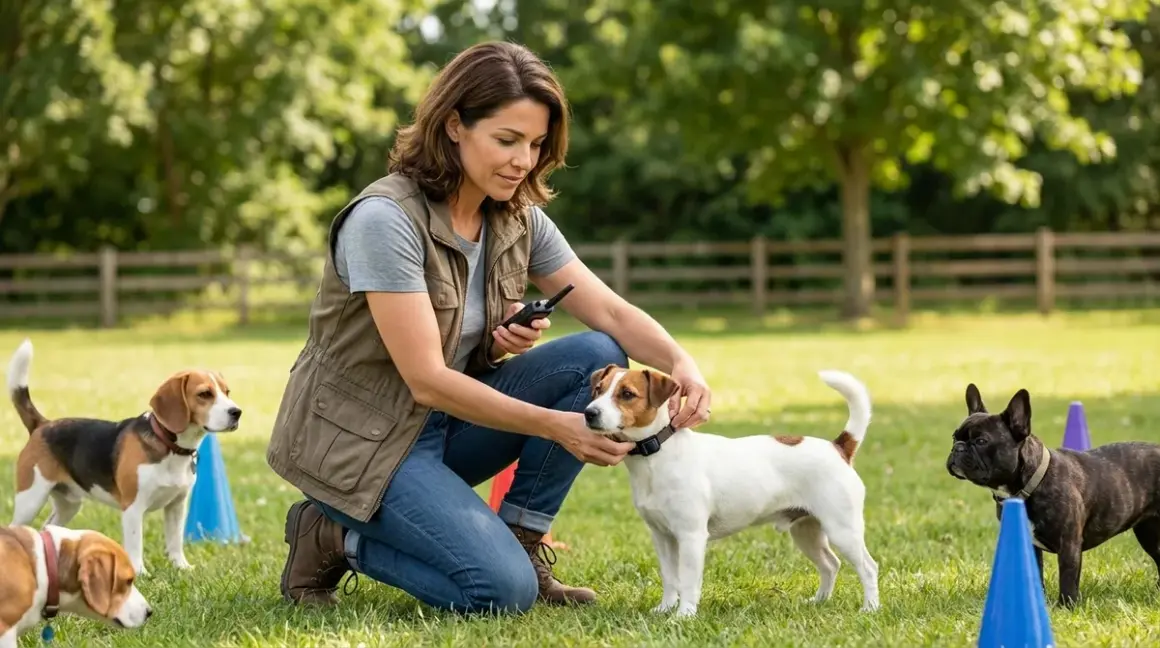

I've been grooming dogs for nearly a decade, and I've seen firsthand what happens when training equipment doesn't fit properly. A training collar that's too heavy or delivers stimulation levels meant for a German Shepherd can genuinely harm a Chihuahua or Maltese. If you're considering shock collars for little dogs—properly called e-collars or electronic training collars—you need to understand the specific requirements for dogs under 25 pounds. This checklist walks you through every sizing, weight, and stimulation consideration to keep your small dog safe while training effectively.
I'm writing this from both the grooming table and my living room. My smallest rescue, a 12-pound terrier mix named Pickle, taught me that "small dog" equipment isn't just scaled-down versions of standard gear—the engineering requirements are completely different.

Physical Size and Fit Requirements
Getting the physical fit right isn't just about comfort—it's about whether the collar can actually deliver consistent, safe contact with your dog's skin through their coat. Small dogs present unique challenges here.
Neck circumference measurement: Measure your dog's neck at the widest point (usually right behind the ears) with a soft measuring tape, then add one inch for proper fit—most small dogs range from 8-14 inches, but toy breeds like Yorkies may be as small as 6 inches.
Contact point length: The metal contact points (the prongs that touch your dog's skin) should be short-propped for small dogs, typically 5/8 inch or less—standard contact points designed for Labs or Shepherds can be 1 inch or longer and will never reach the skin through a small dog's coat, or worse, press too deeply.
Receiver box dimensions: The actual electronic unit should be no larger than 1.5 inches square and weigh under 1.5 ounces for dogs under 10 pounds—I've seen trainers try to strap a 3-ounce receiver meant for hunting dogs onto a Papillon, and the dog spent the entire session tilted sideways from the weight.
Strap width and material: Look for straps 3/4 inch wide or narrower made from coated nylon or biothane that won't mat the coat—wider straps designed for larger dogs will cover too much of a small dog's neck and create pressure points.
Adjustable strap range: The collar strap should adjust down to at least 8 inches and have enough holes or adjustment points that you can position the receiver box at the top or side of the neck, not hanging underneath where it'll swing—my terrier's collar has 12 adjustment positions in a 4-inch range, which sounds excessive until you're trying to center that receiver box precisely.
Quick-release buckle accessibility: Standard snap buckles can be difficult to operate on wiggly small dogs—look for magnetic or snap-away safety releases that you can operate one-handed while holding your dog still with the other.
Coat thickness consideration: Long-haired small breeds (Maltese, Shih Tzu, Pomeranian) need longer contact points than short-haired breeds of the same weight—a smooth-coated Min Pin might need 3/8-inch points while a Yorkie needs 5/8-inch points to reach through that silky coat.
Waterproofing and durability: Small dog collars should carry at least IPX7 waterproofing ratings since many small breeds are lower to the ground and more likely to get wet bellies, chests, and necks during walks—I've replaced more small dog e-collars damaged by puddle splashing than I care to count.
Weight and Comfort Parameters
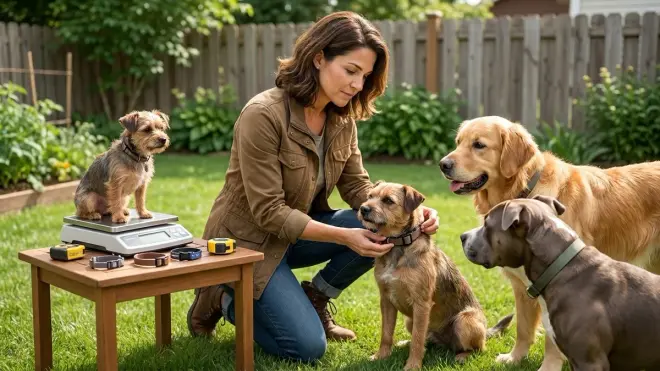
The weight ratio between collar and dog matters far more than most people realize. A collar that represents 2% of a Labrador's body weight might be 8-10% of a toy breed's weight—imagine wearing a 15-pound necklace all day.
Total system weight maximum: For dogs under 10 pounds, the complete collar system (receiver, strap, and battery) should weigh no more than 1.2 ounces—for dogs 10-25 pounds, keep it under 2.5 ounces.
Weight distribution design: The receiver box should sit slightly off-center on the neck (at the 11 o'clock or 1 o'clock position) rather than directly on top, which prevents the collar from rotating and keeps weight from pulling straight down on the windpipe.
Battery type and replacement weight: Rechargeable lithium batteries weigh less than replaceable coin cells—a small dog collar using a CR2032 battery might weigh 0.3 ounces more than an identical model with a rechargeable cell, which matters when your dog weighs 7 pounds.
Strap material weight: Biothane and coated nylon weigh roughly the same, but genuine leather straps can weigh 0.5-0.8 ounces more in small sizes—that's significant when you're trying to stay under a 1.2-ounce total budget.
Wear duration limits: Even properly weighted collars shouldn't stay on small dogs for more than 8-10 hours per day—the pressure points are more concentrated on smaller necks, and I've seen contact dermatitis develop after just a week of 24/7 wear.
Tracheal collapse considerations: Breeds prone to tracheal issues (Chihuahuas, Pomeranians, Yorkshire Terriers, Toy Poodles) need collars under 1 ounce and should never have any downward-pulling weight—some veterinarians recommend harness-based systems instead, though those create their own training complications.
Stimulation Level and Intensity Settings
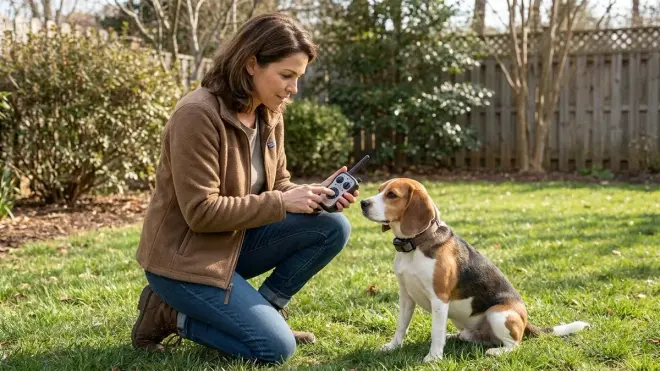
This is where shock collars for little dogs differ most dramatically from standard models. The stimulation levels that barely register to a 70-pound Labrador can be intensely aversive—even harmful—to an 8-pound Maltese.
Minimum starting level: The collar must offer stimulation levels starting at 1-3 on a scale where the dog shows no physical reaction (no muscle twitch, no head turn)—many standard collars start at levels far too high for sensitive small breeds.
Total number of levels: Look for collars with at least 20-30 individual stimulation levels rather than 10 or fewer—the finer gradation lets you find that precise "working level" where your dog notices but doesn't react with fear or stress.
Progressive intensity spacing: The jump between level 1 and level 2 should be barely perceptible—I test this by trying collars on my own forearm (yes, really), and good small-dog models increase by such small increments that I can't clearly distinguish between consecutive levels.
Maximum output limitation: Small dog collars should cap maximum output at significantly lower levels than standard models—while I can't cite specific voltage or milliamp numbers (manufacturers rarely publish them), a collar marketed for dogs 5-100 pounds is almost certainly not appropriately capped for the small end of that range.
Vibration-only mode: Every e-collar for small dogs should include a vibration mode (no stimulation) as an alternative attention-getter—I've worked with several toy breed owners who never moved beyond vibration training because it was sufficient for their dog's temperament.
Tone-only warning option: An audible beep that precedes stimulation lets dogs learn to respond to the warning instead of needing the correction—this matters more for small dogs because you have less room for error in training protocols.
Consistent output across battery levels: Cheaper collars deliver inconsistent stimulation as batteries drain—small dogs are more sensitive to this variation, so look for models with regulated output that maintains the same level 1 intensity whether the battery is at 100% or 20%.
If you're comparing different correction methods, the article on Shock Collars vs Vibration Collars vs Spray Collars: Training Effectiveness Compared breaks down how these different stimulation types work across dog sizes—small dogs often respond better to vibration alone than larger breeds do.
Safety Features and Fail-Safes
Small dogs have less margin for error. A system malfunction or user error that would be uncomfortable for a Labrador could genuinely injure a 6-pound Yorkie.
Auto-shutoff timers: The collar should automatically stop stimulation after 8-10 seconds maximum, even if you're still holding the button—this prevents accidental continuous stimulation if you drop the remote or it gets triggered in your pocket.
Accidental activation prevention: Look for remote controls with recessed buttons, safety locks, or two-button activation requirements—I've seen too many collars go off in purses or pockets, and with small dogs there's no room for "oops" moments.
Low battery warnings: Both the collar receiver and remote should give clear advance warning (48+ hours) before batteries die—stimulation levels can fluctuate dangerously as batteries drain if the system doesn't regulate output.
Range limitations appropriate to use case: For small dog training, you rarely need more than 300-400 yards of range—shorter-range systems (under 500 yards) often have more reliable signal quality and fewer accidental activations than half-mile+ systems.
Contact point metal composition: Stainless steel or surgical-grade contact points resist corrosion better than plated metals—small dogs have more sensitive skin and are more prone to contact reactions from corroded metal.
Skin contact sensors: Premium small-dog collars include sensors that detect whether the contact points are actually touching skin—if they're not, the collar won't deliver stimulation, preventing wasted corrections and confusion.
Multiple dog discrimination: If you're training more than one small dog, your system needs reliable individual dog targeting—I've heard horror stories of owners correcting the wrong dog because their dual-collar remote didn't clearly indicate which button controlled which collar.
Temperature operating ranges: Small dogs spend more time in climate-controlled environments and are more susceptible to temperature extremes—verify the collar operates reliably in the temperature ranges where you'll actually use it, not just "manufacturer recommended" ranges.
The Dog Training Collar Safety Checklist: Veterinary Guidelines for Proper Fit and Usage covers additional safety protocols that apply across all dog sizes, including skin contact checks and proper introduction methods.
Training-Specific Considerations
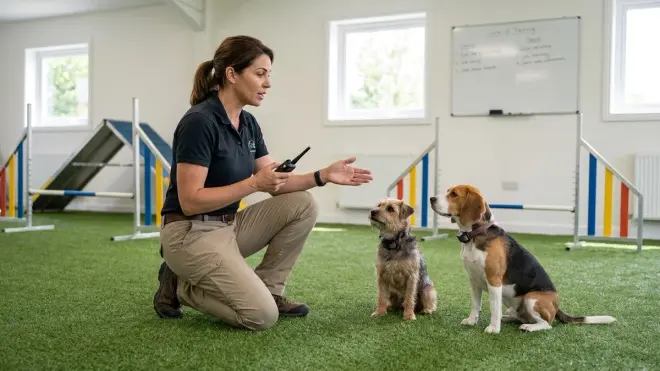
The technical specs matter, but how you'll actually use shock collars for little dogs in real training scenarios determines what features you truly need.
Single vs. multi-function buttons: Small dog training typically requires more precision than large dog training—look for remotes where each function (tone, vibration, stimulation) has a dedicated button rather than cycling through modes, which wastes critical seconds.
Stimulation duration per activation: Each button press should deliver a brief pulse (under 2 seconds) rather than continuous stimulation—small dogs learn faster from short, precise corrections than sustained pressure.
Reaction time considerations: Small dogs often move faster and more erratically than large breeds—your remote needs to activate the collar within 0.3 seconds of pressing the button, or you'll miss the behavioral moment you're trying to address.
Remote size and grip: Remotes designed for hunting or field work are often too large for one-handed operation while holding a small dog's leash—I prefer remotes under 4 inches long that fit completely in my palm.
Visual feedback on activation: The remote should clearly indicate (LED, vibration, or screen confirmation) when it has successfully activated the collar—you need to know immediately whether your correction was delivered or if you had a signal failure.
Pre-programmed intensity locks: Some collars let you lock the stimulation to a specific level so you can't accidentally dial it up during training sessions—this is invaluable for small dogs where one level too high can create setbacks.
Training mode memory: The collar should remember your last-used settings (stimulation level, mode) when you power it on—having to reconfigure every time you put it on your dog creates opportunities for mistakes.
When introducing any training collar to a small dog, the process matters as much as the equipment. The article How to Introduce a Training Collar to Your Dog Without Causing Fear or Stress walks through conditioning protocols that work especially well for nervous or sensitive small breeds.
Final Check Before You Go
Run through this quick verification before purchasing or using any e-collar on your small dog:
✓ Collar weighs under 1.2 oz (dogs under 10 lbs) or 2.5 oz (dogs 10-25 lbs)
✓ Contact points are 5/8 inch or shorter for your dog's coat type
✓ Stimulation levels start at imperceptible intensity with 20+ incremental levels
✓ Receiver box is under 1.5 inches and positioned to prevent rotation
✓ Strap adjusts to fit your dog's exact neck measurement plus one inch
✓ Auto-shutoff engages after 8-10 seconds maximum
✓ Remote includes accidental activation prevention
✓ Battery warning provides 48+ hours advance notice
✓ Vibration and tone modes available as alternatives
✓ Contact points are stainless steel or surgical-grade metal
✓ Waterproofing rated IPX7 or higher
✓ Remote activates collar within 0.3 seconds of button press
Frequently Asked Questions
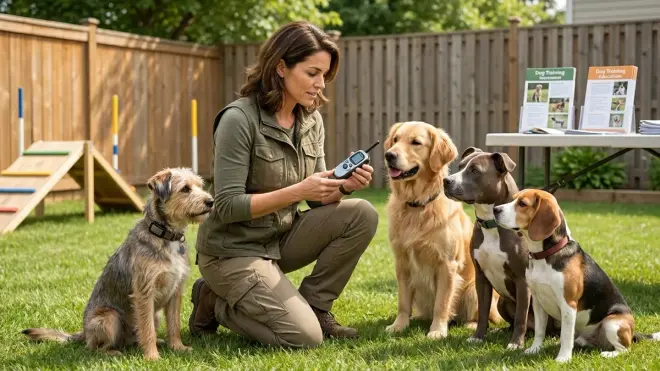
What size e-collar do I need for a 10-pound dog?
For a 10-pound dog, you need an e-collar system that weighs no more than 1.5-2 ounces total, uses contact points 5/8 inch or shorter, and offers stimulation levels starting at barely perceptible intensity with at least 20 incremental settings—the receiver box should be no larger than 1.5 inches square, and the strap should adjust down to accommodate your dog's neck measurement plus one inch for proper fit.
Can shock collars hurt small dogs?
Yes, shock collars can hurt small dogs if they're improperly sized, set to stimulation levels too high for the dog's weight and sensitivity, or used incorrectly—small dogs require collars specifically designed for their size with lower maximum output, shorter contact points, and finer stimulation gradations than standard collars, and even then they should only be used under guidance from a professional trainer familiar with positive-reinforcement-first methods that incorporate e-collars as a communication tool rather than punishment.
At what age can I use a training collar on a small breed puppy?
Most veterinary behaviorists and professional trainers recommend waiting until small breed puppies are at least 6 months old and have reached close to adult weight before introducing e-collar training, as their nervous systems and skin sensitivity are still developing—before that age, focus on positive reinforcement methods using treats and toys, which the article on How to Use Treats for Puppy Training: A Step-by-Step Guide That Actually Works covers extensively for building foundation behaviors without correction-based tools.
Final Thoughts
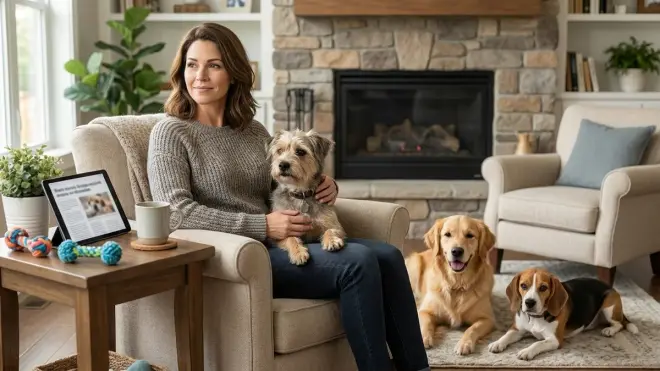
I test every collar recommendation against a simple standard: would I put this on Pickle? My 12-pound terrier is reactive, sensitive, and has taught me more about training equipment than any certification course ever did. The shock collars for little dogs that meet these checklist requirements aren't the cheapest options, and they're not the ones marketed with photos of Labradors and German Shepherds. They're purpose-built for dogs who weigh less than a Thanksgiving turkey.
The right collar becomes invisible during training—your dog responds to your cues, not because they're afraid of the equipment, but because you've built a clear communication system. The wrong collar creates fear, ruins your relationship, and sets training back by months.
From my grooming table, I can tell within thirty seconds whether a small dog has been trained with appropriately sized equipment or forced into gear meant for dogs three times their size. The ones wearing proper equipment hold their heads naturally, don't flinch when I touch their necks, and trust their owners. That's what this checklist is really about—trust, built on equipment that fits your actual dog, not the marketing department's idea of "one size fits all."
For broader context on when and how training collars fit into modern dog training, Dog Training Collars: Complete Guide to Types, Safety, and Effective Use covers the behavioral science and ethical considerations alongside the technical specifications.