


I'll be honest—when I first started researching dog show equipment, I felt like a guinea pig person wandering into an entirely new world. The precision, the terminology, the sheer variety of dog show lead leash options available... it was overwhelming in a way that reminded me of my early days figuring out proper cavy nutrition. But here's what I've learned after diving deep into conformation showing gear: the right lead isn't just about looks. It's about showcasing your dog's natural gait, maintaining control without distraction, and presenting a polished partnership in the ring. Quick verdict: You need a lead that disappears into the background while keeping your dog perfectly positioned—think lightweight materials, precise length for your dog's size, and colors that complement (never compete with) your dog's coat.
What to Look For in Dog Show Lead Leash
Material Composition and Weight Distribution
The material your show lead is made from directly impacts how your dog moves in the ring. Leather leads offer traditional elegance and develop a beautiful patina over time, but they're heavier—which matters when you're working with toy breeds or dogs with delicate necks. I've watched handlers struggle with thick leather on Papillons, and it's like trying to use a heavy chain on one of my guinea pigs (not that I would, but you get the mental image). Nylon show leads are lighter and come in an incredible color range, making them perfect for matching your dog's coat. Braided nylon adds durability without bulk. Chain show leads (specifically snake chain or choke chain styles) offer precision control for larger breeds, though they require careful sizing to avoid hair damage or discomfort.

The weight needs to be proportional to your dog's size. A Great Dane can handle a substantial leather or chain lead without breaking stride, but that same lead on a Maltese would throw off their entire gait presentation.
Length and Size Proportions
Show leads come in specific lengths, typically ranging from 36 inches for small breeds up to 72 inches for large breeds, and this isn't arbitrary. The length determines how much space you have between you and your dog during gaiting patterns—too short and you'll hunch over (terrible for presentation), too long and you lose control precision. Most handlers use the "elbow rule": when your dog is stacked, the lead should allow your arm to hang naturally at your side with a slight bend at the elbow.
For toy breeds (under 10 pounds), look for leads around 36-42 inches. Small to medium breeds (10-50 pounds) work best with 48-54 inch leads. Large and giant breeds (over 50 pounds) need 60-72 inches. Some leads offer adjustable lengths through sliding mechanisms, which I appreciate—it's like having cage dividers you can reconfigure as your guinea pigs grow, except for dogs.
Color Matching and Coat Complementarity
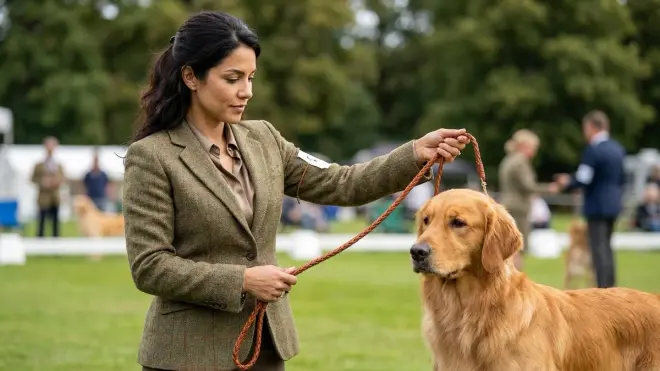
This is where the visual artistry comes in, and it reminds me of choosing hideaway colors that won't clash with my piggies' fur patterns. The cardinal rule: your lead should blend with your dog's coat or create subtle contrast that draws the eye to the dog's outline, never to the equipment. For black dogs, use black leads. For golden or tan dogs, choose tan, brown, or bronze. For white or light-colored dogs, opt for white, cream, or very pale colors. Multicolored dogs get trickier—go with the dominant coat color or choose a neutral that doesn't fight with any shade.
Some exhibitors use contrasting colors intentionally to emphasize a dog's topline or neck length, but this is advanced strategy territory. If you're starting out, matching is the safer bet. And here's something I learned: metallic chain leads photograph differently under ring lighting than they appear in person, creating flash that can distract judges.
Hardware Design and Functionality
The slip mechanism is the most critical hardware component. Most show leads use a martingale-style slip that tightens when the dog pulls but releases immediately when pressure stops—this is essential for maintaining a natural head carriage without constant choking. The ring size needs to slide smoothly but not so loosely that it shifts during presentation. I've seen handlers fumbling with sticky rings mid-gait, and it breaks the illusion of effortless control.
O-ring versus D-ring slips: O-rings slide more smoothly and are gentler on delicate coats, while D-rings offer more positive stops for strong pullers. Some leads include stop beads that prevent the slip from tightening too much—particularly important for brachycephalic breeds or dogs with tracheal sensitivity.
The handle construction matters more than you'd think. Braided loops distribute pressure across your palm during extended showing days (think multiple classes, multiple days). Leather-wrapped handles prevent rope burn. Some handlers prefer no handle at all, just a knot, which gives them more precise fingertip control for subtle corrections.
Cleaning and Maintenance Requirements
Show leads get dirty fast—think ring dust, grass stains, drool, and the mysterious grime that accumulates during travel. Nylon leads wash easily (cold water, air dry), which reminds me of spot-cleaning fleece cage liners. Leather requires conditioning after cleaning to prevent cracking and maintain suppleness—you're looking at leather cleaners and conditioners designed for tack equipment. Chain leads need occasional polishing to prevent tarnish, especially if you're showing in humid climates.
Some materials hold odors more than others. Untreated leather can develop that distinctive "wet dog" smell over time, while coated nylon resists odor absorption. If you're showing multiple dogs, dedicated leads per dog prevent cross-contamination of scents that might distract your dog in the ring.
Our Top Picks
Resco USA-Made Show Lead
The Resco American Made Dog Show Lead🛒 Amazon is the workhorse of the conformation world, and for good reason. This braided nylon lead comes in over 20 colors, features a smooth-sliding O-ring, and is manufactured entirely in the USA with quality control that shows in every detail. The 1/8-inch diameter works beautifully for toy and small breeds, while the 3/16-inch handles medium dogs with ease.
Pros:
- Exceptional color range for precise coat matching
- Braided construction resists fraying even with daily use
- O-ring slides like butter—no catching or sticking mid-gait
- Made in the USA with consistent quality control
- Machine washable and air dries quickly
- Available in multiple lengths from 36 to 72 inches
Cons:
- The braiding can collect fine undercoat during shedding season
- No padding on the handle—extended use can cause hand fatigue
- Some lighter colors show dirt immediately (learned this the hard way with their white lead)
Mendota British Show Slip Lead
The Mendota British Show Slip Lead🛒 Amazon brings that classic UK-style elegance with its tightly braided construction and refined finish. The 1/8-inch profile practically disappears against your dog's neck, and the British-style slip sits higher on the neck than American-style leads, giving you excellent head control for proper stacking.
Pros:
- Ultra-slim 1/8-inch diameter virtually invisible in photos
- British slip positioning perfect for breeds requiring high head carriage
- Premium braided nylon that softens beautifully with use
- Excellent color saturation that doesn't fade with washing
- Leather-wrapped handle option available for comfort
- Made in the USA despite the "British" styling
Cons:
- The narrow diameter can dig into your hand during sustained control with strong pullers
- British slip takes practice to adjust if you're used to American-style leads
- Limited length options compared to adjustable leads
Coastal Pet Show Lead with Comfort Grip
The Coastal Pet Show Lead with Comfort Grip🛒 Amazon addresses the hand fatigue issue head-on with a cushioned grip section that actually makes a difference during all-day shows. Available in both nylon and leather versions, this lead gives you professional appearance with amateur-friendly ergonomics.
Pros:
- Cushioned grip dramatically reduces hand strain during long show days
- Available in leather or nylon to match your aesthetic preference
- Color variety adequate for most coat matching needs
- Durable construction holds up to weekly training and monthly showing
- Reasonably priced for entry-level handlers
- Slip mechanism releases cleanly without hair catching
Cons:
- The cushioned grip adds visual bulk that some judges might notice
- Leather version requires regular conditioning to prevent the grip section from cracking
- At 54 inches, the standard length doesn't work well for very tall or very short handlers
PetEgo Fashion Show Martingale Lead
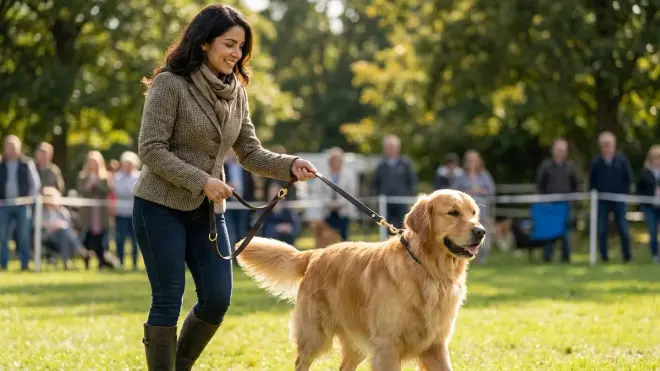
The PetEgo Fashion Show Martingale Lead🛒 Amazon combines show functionality with everyday versatility through its martingale design that works both in the ring and during training sessions. The reflective stitching is subtle enough for showing but adds safety during early-morning practice sessions.
Pros:
- Dual-purpose design transitions from show ring to training seamlessly
- Martingale action gentle on tracheas while maintaining control
- Reflective elements useful for pre-dawn practice walks
- Machine washable without color bleeding
- Affordable option for handlers showing multiple dogs
- Quick-adjust slide for different handler heights
Cons:
- The martingale hardware is slightly heavier than pure slip leads
- Reflective stitching can catch light in ways that distract in heavily-lit indoor shows
- Limited premium color options (mostly primaries rather than breed-specific shades)
Top Dog English Show Slip Lead
The Top Dog English Show Slip Lead🛒 Amazon features kangaroo leather construction that combines the elegance of leather with surprising lightness. This is the lead I'd reach for if I were showing toy breeds or dogs with delicate necks—it's got the visual weight of traditional leather without the physical heft.
Pros:
- Kangaroo leather is 30% lighter than cowhide while being more durable
- Develops a rich patina that looks better with age
- Incredibly supple feel that won't irritate sensitive skin
- Thin profile (4mm) works perfectly for small to medium breeds
- Natural leather colors complement most coat shades
- Handmade quality with careful attention to stitching details
Cons:
- Premium pricing reflects the exotic leather sourcing
- Requires regular leather conditioning to maintain suppleness
- The thin profile doesn't provide enough grip surface for giant breed control
- Limited color options since you're working with natural leather tones
Alvalley Show Lead with Stop Bead
The Alvalley Show Lead with Stop Bead🛒 Amazon includes an adjustable stop bead that prevents over-tightening—a feature I wish more leads incorporated. This is particularly valuable for brachycephalic breeds or any dog with respiratory sensitivity where precise slip control matters for safety.
Pros:
- Adjustable stop bead prevents accidental over-tightening
- Available in both nylon and leather versions
- Wide color selection including metallics for special presentation needs
- Professional appearance meets safety functionality
- Durable construction from a brand trusted by professional handlers
- The stop mechanism doesn't interfere with natural slip action during gaiting
Cons:
- The stop bead adds a small visual element some purist judges might notice
- Adjusting the bead position requires tools (needle-nose pliers) for permanent changes
- Slightly higher price point than basic slip leads without stop features
Frequently Asked Questions
What's the difference between a show lead and a regular training leash?
A dog show lead leash is specifically designed to be minimally visible while providing precise control during conformation showing, whereas training leashes prioritize durability and handler comfort for everyday use. Show leads are typically much thinner (1/8 to 3/16 inch diameter compared to 1/2 inch or wider for training leashes), made from materials that blend with coat colors, and feature slip mechanisms that sit high on the neck to showcase proper head carriage. Training leashes often include clips, swivel attachments, and padded handles—all elements that would distract from a dog's natural outline in the show ring. The American Kennel Club conformation standards emphasize minimal equipment interference, which is why show leads are designed to essentially disappear while maintaining control. If you're curious about the detailed differences, check out our comparison guide on dog show leads versus training leashes.
Can I use the same show lead for different sized dogs?
You technically can, but you absolutely shouldn't if you're serious about proper presentation. Each dog needs a lead proportioned to their size, neck circumference, and gait characteristics—using your Great Dane's 72-inch leather lead on a Yorkshire Terrier would be like trying to use adult-sized grooming equipment on a puppy. The length needs to allow proper handler positioning (arm at a natural angle, not hunched or overstretched), and the diameter must be proportional to the dog's neck to avoid looking bulky or causing discomfort. Small breed leads (36-42 inches, 1/8 inch diameter) would give you inadequate control on a large dog, while large breed leads (60-72 inches, 3/16+ inch diameter) would overwhelm a toy dog's presentation. Most professional handlers I've researched maintain separate lead collections organized by dog size, and many color-code them to specific dogs to ensure they grab the right one in the chaos of show day prep.
How do I determine the right color for my dog's show lead?
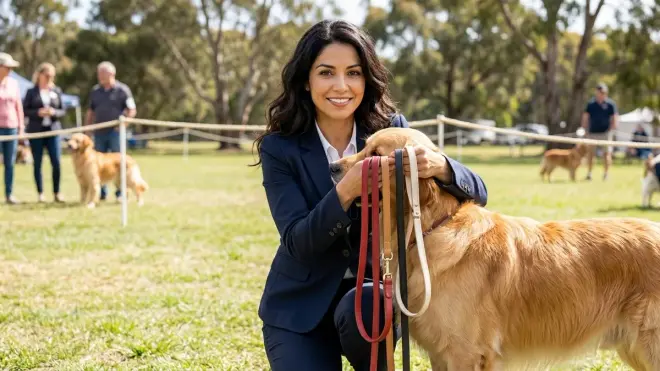
The goal is to choose a color that complements your dog's coat without creating visual distraction—think of it like choosing backdrop colors that make your subject pop in photography. For solid-colored dogs, match the lead to the coat color as closely as possible: black dogs get black leads, golden dogs get tan or bronze, white dogs get white or cream. For multicolored or patterned dogs (like merles, brindles, or parti-colors), select the dominant color or the color that runs along the topline where the lead sits. There's an advanced technique some handlers use where they choose a contrasting color to emphasize a dog's strengths—a darker lead on a light-colored dog with an exceptional topline draws the eye to that outline—but this requires understanding ring presentation at a level that takes years to develop. When in doubt, visit a dog show and observe what experienced handlers use on dogs similar to yours, or consult with your breed mentor about traditional color choices for your specific breed.
How tight should a show lead be during presentation?
The show lead should sit high on the neck just behind the ears and jaw, maintaining enough tension to support proper head carriage without choking or restricting your dog's breathing—it's a delicate balance that feels completely different from how you'd use a regular collar. During stacking (standing presentation), the lead should have just enough slack that your dog can breathe comfortably but not so much that they can drop their head below breed-standard position. During gaiting, you want minimal tension—just enough contact to feel your dog's movement and provide subtle directional guidance. I've learned that the slip mechanism should tighten momentarily if your dog surges forward, then immediately release when they return to proper position—this is why smooth-sliding hardware matters so much. If you're seeing any signs of respiratory distress (heavy panting, gasping, tongue color changes), you're way too tight. Professional handlers practice this at home extensively, using mirrors to observe how much visible tension shows in the lead and adjusting accordingly. The article on how to stack your dog for conformation showing covers proper lead tension during static presentation in detail.
Can I make my own dog show lead or should I buy one?
While you can technically make your own show lead from paracord or climbing rope (there are plenty of tutorials online), buying a professionally manufactured lead is the better choice for actual competition unless you have significant experience with both equipment crafting and show ring requirements. Homemade leads often have inconsistent diameters (which affects how they photograph), irregular slip mechanisms (which can catch at inopportune moments), or material choices that don't hold up to the specific stresses of showing. I've seen the DIY approach work beautifully for practice and training—it's similar to how I've crafted custom enrichment items for my guinea pigs—but ring presentation demands equipment that performs flawlessly under judge scrutiny. The cost difference isn't substantial enough to justify the risk: quality manufactured show leads run anywhere from around $15 to $50 depending on materials, while making your own might save you $5-10 but potentially cost you points if the equipment looks or performs amateurishly. If you want to explore DIY options, start by making practice leads for training sessions, then invest in professional leads for actual shows once you understand exactly what characteristics matter for your specific dog and breed standards.
The Verdict
Choosing the right dog show lead leash comes down to matching material, weight, and color to your specific dog's size, coat, and breed requirements—there's no universal "best" option, just the best option for your partnership in the ring. If you're showing toy or small breeds, the Resco USA-Made Show Lead or Top Dog English Show Slip Lead offer the lightweight precision you need. For medium to large breeds, the Mendota British Show Slip Lead or Coastal Pet Show Lead with Comfort Grip balance control with comfort during extended showing. And if you're working with brachycephalic breeds or dogs with respiratory sensitivity, the Alvalley Show Lead with Stop Bead provides that extra safety margin. Remember to check out our complete guide to dog show supplies and pre-show preparation checklist to ensure you have everything you need for successful ring presentation. The lead might be small, but in conformation showing, these details make the difference between blending into the background and standing out for all the wrong reasons.