
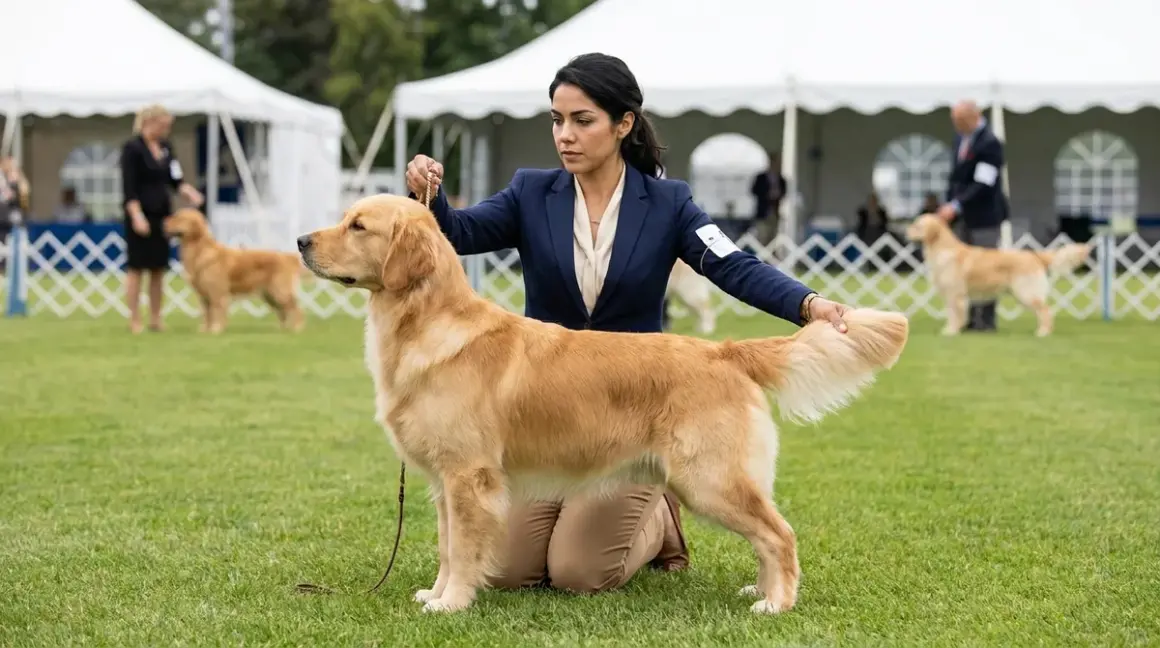

I'll be honest with you—when I first heard about "stacking" in the dog show world, I pictured something involving pancakes. My expertise is guinea pigs, where the closest thing to conformation showing is bragging about whose cavy has the fluffiest rosettes. But after diving into how to stack a dog for show (and consulting with my handler friends who've spent years perfecting this art), I've come to appreciate the precision and patience this skill requires. It's not unlike coaxing a nervous guinea pig into a proper weigh-in position, just...significantly larger.
In this guide, you'll learn the fundamentals of stacking—positioning your dog in a balanced, breed-standard pose that showcases their structure to judges. Whether you're preparing for your first dog conformation show or refining your technique, we'll cover both free-stacking (where your dog positions themselves) and hand-stacking (where you physically place each foot). Expect to invest 4-8 weeks of daily 10-15 minute practice sessions to develop muscle memory in both you and your dog. This is an intermediate skill that assumes basic obedience training.
What You'll Need
Before you start learning how to stack your dog for show, gather these essentials:
- Training treats: Small, high-value rewards (think pea-sized pieces of chicken or cheese—check out our guide on how to use treats for puppy training for sizing tips)
- Show lead: A thin, breed-appropriate dog show lead that won't obscure your dog's neck and topline
- Non-slip surface: Rubber matting, grooming table with textured surface, or outdoor grass (avoid slippery tile or hardwood during initial training)
- Full-length mirror or video recording device to check positioning from the judge's perspective
- Grooming table (optional but helpful for small-to-medium breeds—see our dog show grooming table guide)
- Treat pouch or pocket worn at waist level for quick access
- Breed standard reference: Official AKC or UKC breed standard document specific to your dog's breed
- Patient mindset: Honestly, this might be the most important item on the list
Step 1: Teach the "Stand" Foundation Command
Before you can stack your dog, they need to understand that "stand" means hold completely still—not the wiggling, happy-to-see-you stance most pet dogs default to.
Start with your dog in a sitting position beside you. Hold a treat at nose level and slowly move it forward and slightly up, encouraging them to rise into a standing position. The moment all four feet are on the ground, mark with "yes!" and reward. Don't worry about perfect positioning yet; you're just building the association between the verbal cue and the stationary standing position.
Practice this 5-6 times per session, twice daily. The trick (and I learned this watching handlers work with notoriously wiggly terriers) is keeping the reward high enough that your dog reaches slightly upward, which naturally lifts their head and neck into a more alert posture. If your dog tries to walk forward toward the treat, you're moving your hand too far or too fast.
Common mistake here: treating too soon. Your dog needs to hold the stand for at least 3-5 seconds before the reward, gradually building duration. Think of it like teaching a guinea pig to sit still for nail trims—you reward calm stillness, not just the initial cooperation.
For breeds with specific head carriage requirements (like Afghan Hounds with their regal upward gaze or Pointers with their slightly forward focus), adjust treat height accordingly. Check your breed standard from the American Kennel Club to understand the ideal head and neck position you're aiming for.
Step 2: Introduce Front Leg Positioning (Hand-Stacking Method)
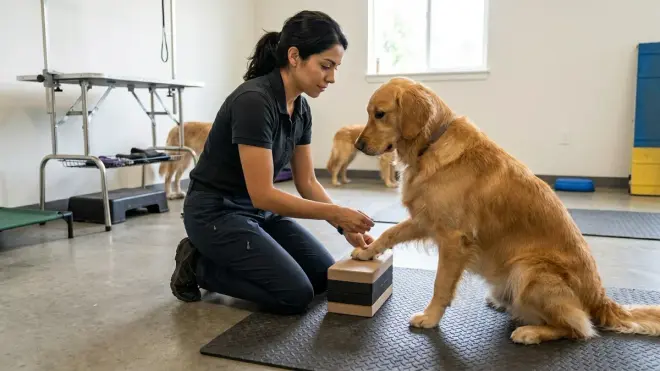
This is where it gets hands-on—literally. How to stack a dog for show requires you to physically guide each foot into position, and front legs are typically easier to start with than rear legs.
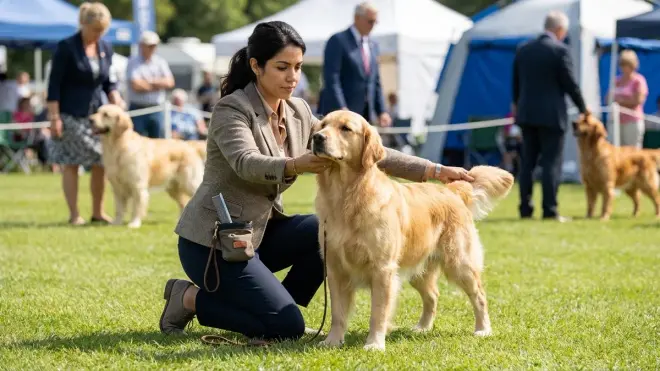
With your dog standing, crouch beside them and gently lift one front paw by supporting the elbow joint (never yank from the foot itself—that's uncomfortable and creates resistance). Place the paw directly under the shoulder joint, perpendicular to the ground, with toes pointing forward. The leg should form a straight column from shoulder to ground.
Hold the position for 2-3 seconds while offering verbal praise ("good stand," "steady," whatever cue you choose). Then release, reward, and repeat with the other front leg. Most dogs will immediately shift their feet out of position—that's normal. You're building tolerance for having their feet handled before expecting them to hold the stack independently.
I've watched handlers work with everything from tiny Papillons to massive Mastiffs, and the principle remains the same: support the joint, move slowly, and make the touch predictable. For dogs who've never experienced this kind of handling (much like guinea pigs who've never been groomed), start with simple paw touches during regular petting sessions days before actual stacking practice.
Front leg width varies by breed. Terriers typically stack with front legs parallel and close together. Bulldogs and other broad-chested breeds need wider placement to showcase their chest. Your breed standard is your bible here—study photographs of winning dogs in your breed to internalize the ideal front assembly.
Step 3: Master Rear Leg Positioning
Rear leg placement separates novice stackers from experienced ones. This is the trickiest part of how to stack your dog for show because rear angulation determines how balanced and powerful your dog appears.
For most breeds, rear legs should be positioned perpendicular to the ground when viewed from the side, with the hock (the backwards-bending joint that looks like a backward knee) forming a straight line down to the foot. From behind, the legs should be parallel, not cow-hocked (turning inward) or barrel-hocked (bowing outward).
Crouch behind or beside your dog. Gently grasp the hock joint and lift the leg slightly, then place the foot in the desired position—typically slightly behind the point of the dog's rear. The exact placement depends on your breed's natural angulation. German Shepherds and other breeds with extreme rear angulation need the hock further back to showcase that sweep. Breeds with moderate angulation (like many working breeds) stack with a more upright rear stance.
This takes practice. Your dog will probably pull their leg away, sit down, or walk forward approximately eight thousand times before they tolerate this calmly. (Remember when I said patience was on the supply list? Yeah.) Work on one rear leg at a time, rewarding heavily for tolerance, before attempting to position both rears while maintaining the front stack.
I've seen handlers use a training technique borrowed from canine training aids work: touch-training with a target stick to teach dogs to move individual legs on command. It's slower than manual stacking but creates more confident, independent stackers long-term.
Step 4: Practice the Complete Hand-Stack Sequence
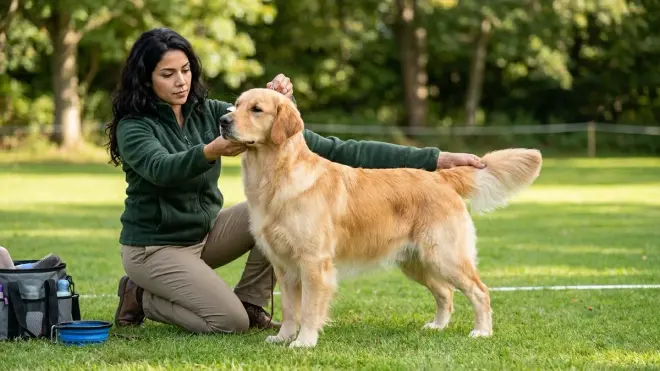
Now you're combining everything: front legs, rear legs, head position, and tail carriage into one fluid setup. This is the full hand-stack that you'll use for young dogs, nervous dogs, or breeds that traditionally hand-stack in the ring.
Start with your dog in a stand position. Working from front to rear, place front left leg, front right leg, rear left leg, rear right leg—always in the same sequence so your dog learns to anticipate the pattern. The entire process should take 8-12 seconds when you're proficient. Slower is fine during training, but judges wait for no one, and you need efficiency.
While stacking, maintain constant but gentle contact with your dog's body. Many handlers keep one hand under the chin or throat latch to guide head position while stacking legs with the other hand. For breeds requiring tail sets (like terriers with erect tails or breeds with tails carried over the back), you'll position the tail last, after all four feet are set.
Your dog's topline (the line from withers to tail set) should reflect breed standard—level for breeds like Pointers, slightly sloping for German Shepherds, or roached for Whippets. Body position affects topline, so sometimes you need to shift a rear leg slightly forward or backward to achieve the correct silhouette.
Practice in front of your mirror or recording device. You cannot see what the judge sees from your crouched position beside your dog. Those video playbacks will reveal a world of wonky angles and feet placements you didn't notice in real-time. It's humbling—kind of like the first time I photographed my guinea pig setup and realized the cage looked nothing like the Pinterest-perfect vision in my head.
Step 5: Develop Free-Stacking Skills
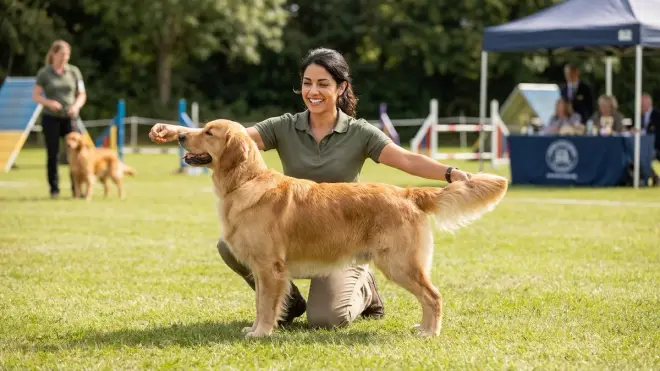
Free-stacking is where your dog positions themselves on command, with minimal or no physical guidance from you. It's faster, shows off your dog's training, and is required for some breed presentations. Learning how to stack a dog for show includes mastering both methods.
Start from your perfected hand-stack position. With your dog properly positioned, take one small step backward and use your treat to lure your dog's head up and forward into an alert expression. Say "stand" or "stack" (pick one verbal cue and stick with it). Hold the treat steady at the level that creates your desired head carriage, about 12-18 inches away from your dog's nose.
Your dog will probably walk toward the treat. That's expected. Guide them back into position and try again. The breakthrough moment comes when your dog realizes that holding still in the correct position earns the treat, while breaking position delays it.
Use a table for small breeds when teaching free-stacking—it contains their movement and makes it easier for them to understand spatial boundaries. For larger breeds, practice against a wall or fence so they can only move forward (where you can block them) rather than in all directions.
Some handlers use dog show supplies like bait bags worn at exactly the right height to encourage proper head position during free-stacking. The dog learns to orient toward the bait bag location, naturally lifting into the correct carriage. It's a bit like clicker training—you're creating a physical landmark that triggers the desired behavior.
Free-stacking shines for breeds like Terriers, Toy breeds, and sporting breeds that are expected to look animated and alert. For giant breeds or breeds with extreme angulation, hand-stacking often produces better results because precise leg placement matters more than animation.
Step 6: Add Duration and Distraction Tolerance
A perfect stack means nothing if your dog breaks position the moment another dog walks by or a judge approaches. Show ring conditions are chaotic—barking dogs, unfamiliar people, weird surfaces, camera flashes, loudspeaker announcements. Your training environment needs to reflect that reality.
Start by gradually increasing how long you ask your dog to hold their stack. Begin with 5-10 seconds, reward, and release. Build to 30-45 seconds, which is typically the maximum time you'll need to hold a stack while a judge examines your dog and walks around them for different angles.
Introduce distractions systematically: have a family member walk past, bounce a ball nearby, play dog barking sounds from your phone, or practice at a park where other dogs are present. Each time you add a new distraction, reduce your duration expectation temporarily, then build it back up as your dog acclimates.
The judge examination is its own skill set. Your dog needs to tolerate a stranger touching their head, opening their mouth to check teeth, running hands down their back and legs, and sometimes lifting their tail or checking under males for intact testicles. Practice this regularly with friends your dog doesn't know well—always following the same pattern a judge would use. Pair each touch with treats and praise.
For senior dogs learning to stack later in life, or dogs with mobility issues, adjust expectations around duration and precision. A veteran champion might need accommodations that a young dog doesn't, and that's okay. Work within your individual dog's physical capabilities.
Step 7: Perfect Breed-Specific Nuances
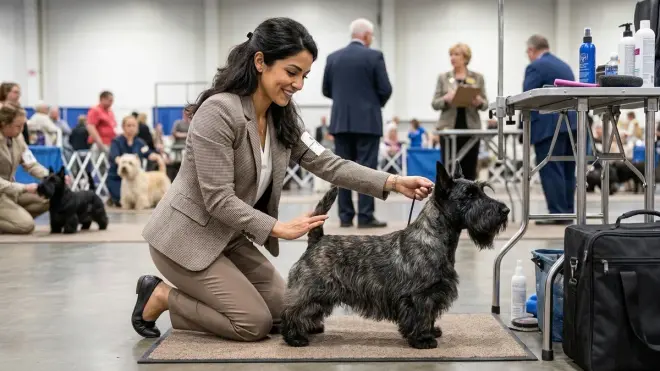
Every breed has subtle stacking variations that can make or break your presentation. This is where studying your specific breed becomes critical—generic stacking knowledge only gets you so far.
Head and ear carriage: Some breeds (Dobermans, Great Danes) require ears cropped and standing erect. Others (Cocker Spaniels) have dropped ears that should frame the face symmetrically. Handlers often use grooming techniques to position ears before stacking. Breeds like German Shepherds should show alert, forward-facing ears, while hound breeds often present with a softer, more relaxed ear set.
Tail position: Tails tell the judge about temperament and breed type. Beagles carry tails up in a cheerful curve. Bulldogs have screw tails that need no manipulation. Terriers often have docked, erect tails that point skyward. Some handlers use slight upward pressure on the tail base to encourage proper carriage without appearing to manually hold it up (which is sometimes penalized depending on breed and judge preference).
Foot positioning specifics: Some breeds (like Pembroke Welsh Corgis) actually stack better with slightly turned-out front feet to showcase chest breadth. Others require precise parallel placement. The only way to know is studying breed standards and ringside observation at actual shows.
Expression and bait technique: How you present bait affects expression dramatically. Some breeds should look intense and focused (terriers, working breeds). Others should appear calm and dignified (like Mastiffs). Match your bait presentation to the desired expression—quick movements and high-pitched encouragement for animated breeds, slow movements and low tones for dignified ones.
Attend dog conformation shows in person—not just for your breed, but for multiple breeds. You'll see these nuances in action far better than any written description can convey. I learned more about guinea pig behavior in one hour at a cavy show than I did in months of reading, and the same principle applies here.
Step 8: Simulate Ring Conditions and Build Ring-Ready Confidence
Practice doesn't make perfect—perfect practice makes perfect. And perfect practice means replicating actual show conditions as closely as possible.
Set up a mock ring in your yard or garage. Mark off a rectangular space approximately 15x15 feet (typical for smaller breed rings, larger for working/herding groups). Practice your full routine: entering the ring, stacking your dog, holding the stack while imagining a judge's examination, gaiting (moving your dog in the required pattern), and returning to stack for a final presentation.
Enlist friends to play judge and other exhibitors. Have them approach your dog during the stack, handle your dog, and stand nearby with their own dogs. Your dog needs to learn that other dogs in proximity don't warrant investigation—they warrant ignoring.
Practice on different surfaces: grass, rubber matting, concrete, carpet. Many show buildings have slick floors that challenge dogs accustomed to training on textured surfaces. Your dog's stance might shift on slippery footing, and you need to adjust your stacking technique accordingly.
Dress in show-appropriate clothing during practice sessions. If you're stacking in sneakers and sweatpants but showing in dress shoes and a skirt, your movement patterns will differ and your dog will notice. Similarly, practice with your actual show lead rather than training equipment—show leads are thinner and handle differently.
Consider attending handling classes or fun matches before entering a real show. These low-pressure events let you practice with real judges offering feedback, actual competition, and a genuine show atmosphere. Think of them like practice shows—you'll discover gaps in your training that backyard practice didn't reveal. When I took my guinea pigs to their first show, I discovered my supposedly calm cavy turned into a popcorning maniac the moment we entered the exhibit hall. Live experience teaches what simulation can't.
Pro Tips & Common Mistakes
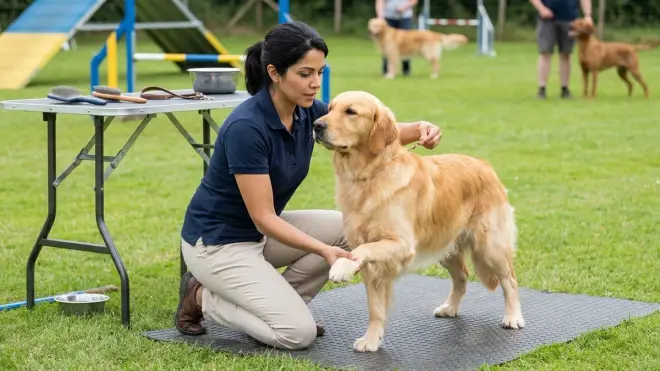
The biggest mistake beginners make: rushing the training timeline. You cannot teach a dog how to stack for show in a weekend crash course. This is muscle memory, both for you and your dog. Expect 6-8 weeks minimum for basic competency, longer for show-ready polish. I've seen enthusiastic first-time exhibitors push too hard, too fast, creating dogs who associate stacking with stress rather than treats and praise.
Pro tip for wiggly dogs: Use a training technique called "stack and jackpot." When your dog holds a perfect stack unprompted (even for 2 seconds), immediately dump 5-6 treats rapid-fire while maintaining position. This creates a powerful positive association. Gradually require longer duration before the jackpot, but keep that occasional massive reward surprising and exciting.
Common mistake with treat delivery: Holding treats too far forward or too low. Your treat hand determines head position and expression. For most breeds, you want the treat at your dog's eye level when you're standing, creating an upward focus that lifts the neck and creates an alert expression. Too low, and your dog drops their head, ruining topline presentation.
Pro tip for rear leg positioning: If your dog constantly pulls their rear legs back under themselves (refusing to extend backward into proper angulation), the issue is often discomfort or uncertainty about weight distribution. Practice having them stand with rear feet on a slightly elevated surface (a 2-inch board works well) so they learn to trust their rear legs in an extended position. This builds the muscle awareness needed for proper stacking.
Avoid these handling mistakes: Blocking the judge's view of your dog with your body (crouch low and to the side), gripping the lead too tightly (creates tension that transfers to your dog's posture), and constantly adjusting and readjusting (minor imperfections are less distracting than frantic fiddling).
Use proper equipment from the start. Training with a standard leash, then switching to a delicate show lead creates confusion. Your dog feels the weight and tension difference and may respond differently. Invest in breed-appropriate show equipment early—check our complete guide to dog show supplies for specifics.
Frequently Asked Questions
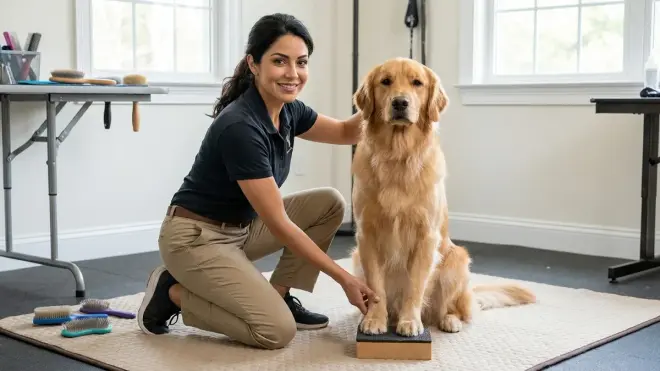
How long does it take to teach a dog to stack for conformation showing?
Most dogs need 6-8 weeks of daily 10-15 minute training sessions to learn reliable hand-stacking, and 10-12 weeks to develop confident free-stacking with good duration and distraction tolerance. Puppies generally learn faster than adult dogs encountering this training for the first time, though adult dogs with solid obedience foundations often progress quickly once they understand what's expected. Senior dogs or those with physical limitations may require longer timelines and modified expectations. Consistency matters more than session length—daily brief practice beats sporadic marathon sessions.
What's the difference between free-stacking and hand-stacking a dog?
Hand-stacking means you physically position each of your dog's four feet, manually adjusting leg placement, head position, and sometimes tail carriage to achieve the ideal breed-standard pose. Free-stacking means your dog positions themselves into the correct stance on command with minimal or no physical guidance from you, typically using bait to encourage proper head carriage and self-placement. Hand-stacking offers more control and precision, making it ideal for breeds with extreme angulation or young dogs still learning. Free-stacking appears more natural, shows off training, and works beautifully for breeds expected to look animated and alert like terriers and sporting breeds.
Can you stack a dog on a slippery floor or does it need to be textured?
Dogs can learn to stack on slippery surfaces, but it's significantly harder and shouldn't be your starting point. Slick floors (tile, polished concrete, certain event center flooring) challenge your dog's confidence and balance, making it difficult for them to hold position and often causing them to shift their feet constantly trying to find purchase. Start training on textured, non-slip surfaces like rubber matting, grass, or grooming tables with textured tops. Once your dog confidently holds their stack on secure footing, gradually introduce practice on slightly slippery surfaces so they're prepared for various show venue floors. Many experienced handlers bring portable non-slip mats to shows for warm-up stacking practice.
At what age should you start teaching a puppy to stack for shows?
You can begin introducing basic stacking concepts around 10-12 weeks of age, focusing on gentle handling tolerance, stand-stay commands, and positive associations with having feet touched and positioned. Keep sessions extremely short (3-5 minutes) and play-based at this age—you're building foundations, not demanding precision. Serious stacking training typically begins around 5-6 months when puppies have better body awareness, attention spans, and physical coordination. Before that age, prioritize socialization, basic obedience, and creating positive associations with show environments. Pushing too hard too early creates stressed puppies who dislike showing, while patient foundation-building creates confident, happy show dogs.
Summary
Learning how to stack your dog for show transforms you both into a polished team ready for the conformation ring. Whether you're hand-stacking with precise foot placement or free-stacking with treat-lured positioning, the fundamentals remain the same: patience, consistency, and breed-specific knowledge.
Start with foundation stand-stay commands, master front and rear leg positioning separately before combining them, and gradually build duration and distraction tolerance. Don't skip the breed-specific research—those subtle nuances in head carriage, tail position, and stance width separate good stacking from great stacking.
The timeline stretches longer than most beginners expect (those 8-12 weeks of daily practice aren't optional), but the payoff is a confident dog who presents themselves beautifully regardless of ring chaos. Practice in realistic conditions, use proper equipment from the beginning, and remember that every champion started exactly where you are now—learning to place one foot at a time.
Now get out there and stack. Your dog's ring debut awaits.