
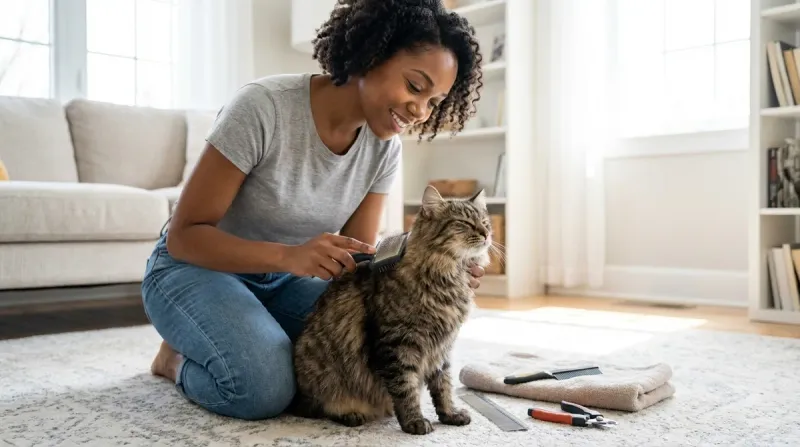

I'll be honest—most of my professional grooming career has been spent with dogs on my table. But over the years, I've handled enough cats (and learned enough hard lessons) to know that learning how to groom a cat at home is a completely different skill set. Cats don't operate on the same trust-building timeline as dogs, and they won't tolerate fumbling or forced handling. If you've ever tried to brush a resistant cat or trim nails on a feline that suddenly transformed into a ball of claws, you know exactly what I mean. This guide will walk you through the entire process—from building trust to handling coat care, nail trimming, and even the occasional bath—so you can make home grooming a calm, bonding experience instead of a battle.
What Is Cat Grooming at Home?
Cat grooming at home refers to the full spectrum of coat maintenance, hygiene care, and physical upkeep you perform yourself rather than outsourcing to a professional groomer. It includes brushing to manage shedding and prevent mats, nail trimming to protect furniture and skin, ear cleaning to prevent wax buildup and infection, dental care to reduce tartar and bad breath, and occasional bathing when medically necessary or after a mess.
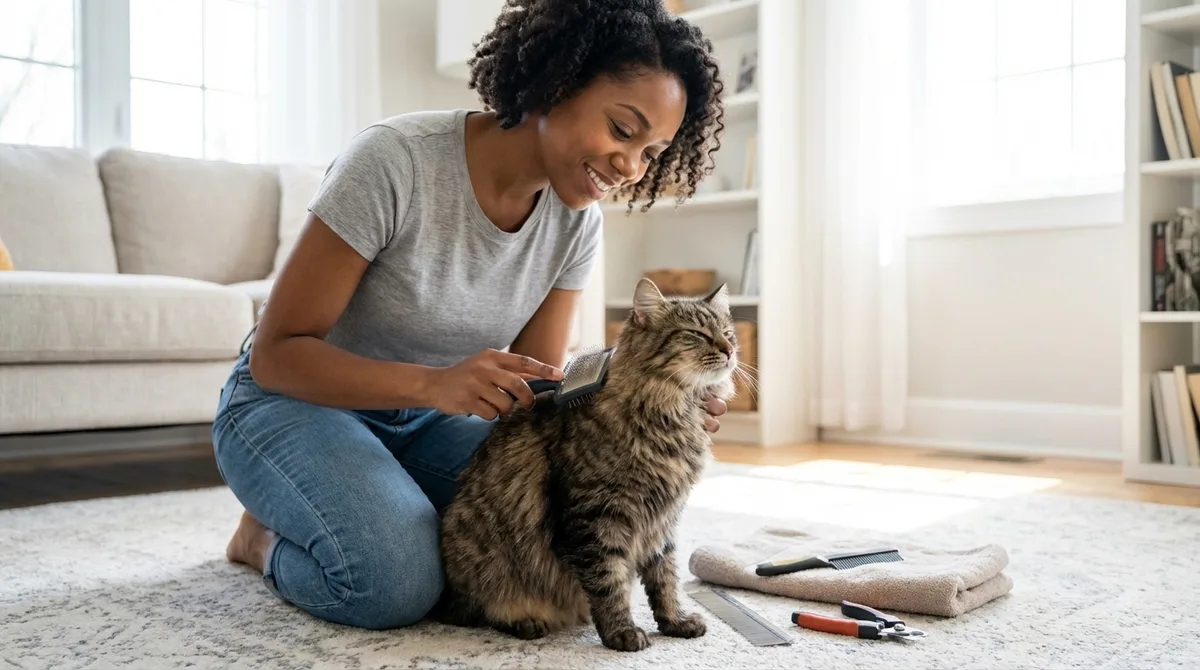
Unlike dogs, most cats are fastidious self-groomers—they spend 30-50% of their waking hours licking and cleaning themselves, according to feline behavior research. But self-grooming has limits. Long-haired breeds like Persians and Maine Coons develop mats their tongues can't reach. Senior cats with arthritis lose flexibility and can't groom their hindquarters effectively. Overweight cats physically can't twist to clean themselves properly. And every cat, regardless of coat length or age, needs nail maintenance and occasional hands-on help.
When I talk about how to groom a cat at home, I'm not suggesting you recreate a full grooming salon experience. I'm talking about regular, low-stress maintenance sessions that keep your cat comfortable, healthy, and mat-free. This is preventive care disguised as bonding time—each grooming session gives you a chance to check for lumps, skin changes, or early signs of illness while building positive handling associations.
How Cat Grooming Works: The Process Breakdown
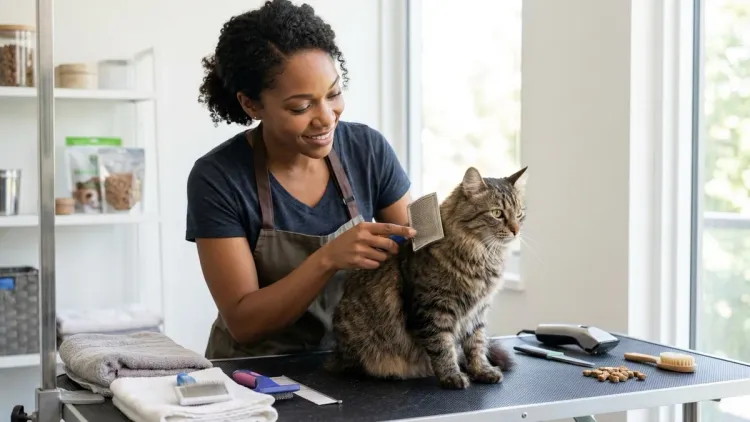
The mechanics of grooming a cat revolve around working with their nervous system, not against it. Cats are ambush predators wired to avoid restraint—being held down triggers a fight-or-flight response. So effective home grooming isn't about control; it's about creating an environment where your cat chooses to tolerate (or even enjoy) the process.
Desensitization is the foundation. Before you ever attempt a full grooming session, spend days or weeks touching your cat's paws, ears, and face while offering treats or affection. Press gently on their paw pads to extend the nails, then immediately release and reward. Touch the base of their ears, stroke their tail, run your hands along their belly. Make handling predictable and positive. If your cat is already head-shy or paw-sensitive, this foundation work isn't optional—it's the difference between a workable grooming routine and years of wrestling matches.
Brushing technique depends entirely on coat type. Short-haired cats (domestic shorthairs, Siamese, Burmese) typically need brushing once or twice a week using a rubber curry brush or fine-toothed comb to remove loose hair. Work in the direction of hair growth, using gentle strokes. Long-haired cats (Persians, Ragdolls, Norwegian Forest Cats) need daily attention with a combination of tools: a wide-toothed comb to work through the undercoat, a slicker brush for the top coat, and a steel comb to check for hidden mats near the armpits, belly, and behind the ears. For recommendations on effective tools, check out our guide to the best cat grooming brush for shedding.
Mat removal requires patience, not force. Small mats can be gently worked apart with your fingers or a mat splitter tool—never pull or yank. For larger mats close to the skin, you'll need to carefully cut them out with blunt-tip scissors, slipping a comb between the mat and skin as a protective barrier. If your cat has extensive matting (common in neglected long-haired cats or senior cats with mobility issues), consider a professional groomer for a full shave-down rather than risking skin tears or overwhelming your cat with extended restraint.
Nail trimming is all about positioning and speed. Hold your cat in your lap or on a stable surface. Gently press the paw pad to extend the nail and identify the quick—the pink tissue inside the nail that contains blood vessels and nerves. Clip only the clear, curved tip, staying at least 2mm away from the quick. Use cat-specific clippers (guillotine-style or scissor-style) that create a clean cut without crushing. Work quickly—clip one or two nails, release, reward, and end the session if your cat shows stress. You don't need to trim all four paws in one sitting. For detailed techniques on making this process easier, our article on how to trim cat nails without getting scratched offers vet-approved methods.
Bathing is rarely necessary but occasionally unavoidable—after a litter box accident, if your cat gets into something toxic or sticky, or for certain skin conditions as directed by your vet. Use a cat-specific shampoo (never dog shampoo, which can contain permethrin that's toxic to cats), lukewarm water, and a non-slip mat in the sink or tub. Wet the coat thoroughly, apply a small amount of shampoo, work it through gently, and rinse completely—leftover soap residue causes skin irritation. Towel dry and keep your cat in a warm room until fully dry. If you're wondering about frequency, our guide on how often should you bathe a cat provides evidence-based recommendations.
Why Cat Grooming at Home Matters
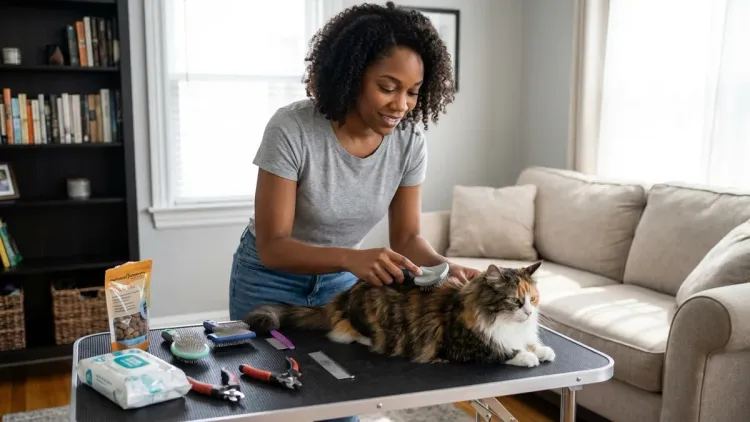
Grooming is preventive health care. Every brushing session is an opportunity to spot problems early—lumps under the skin, flea dirt, bald patches, wounds, or signs of over-grooming (which often signals stress, allergies, or pain). I can't count how many times a routine grooming check has revealed an abscess, a tick embedded near the ear, or a fatty tumor that needed veterinary attention. Regular nail trims prevent nails from overgrowing into paw pads—a painful condition I've seen in senior cats whose owners assumed cats "naturally" wear down their nails.
It strengthens your bond through positive handling. Cats that are regularly groomed from kittenhood (or gradually desensitized as adults) become more tolerant of touch, which makes veterinary exams, medication administration, and injury treatment dramatically easier. This isn't just about convenience—it's about reducing stress for your cat during unavoidable medical interventions. A cat that trusts you to handle their paws and ears is a cat that won't panic when a vet tech does the same.
You'll save money compared to professional grooming. Professional cat grooming typically costs anywhere from $50-$100+ per session depending on coat condition and behavior. Difficult or severely matted cats often require sedation, adding veterinary costs. By maintaining your cat's coat at home, you avoid the emergency shave-downs and can reserve professional grooming for true necessities (like anal gland expression or severe matting in rescue situations).
It reduces stress for anxiety-prone cats. Some cats find car rides and unfamiliar environments so overwhelming that professional grooming causes days of behavioral fallout—hiding, refusing food, litter box avoidance. For these cats, learning how to groom a cat at home in a familiar environment with trusted humans is the only humane option. You set the pace, you read their body language, and you can stop before reaching their threshold.
Types of Grooming by Coat Type and Life Stage
Short-haired adult cats (1-10 years old) are the most forgiving category. Weekly brushing with a rubber curry brush or bristle brush controls shedding and distributes skin oils. Nail trims every 2-3 weeks keep claws dull. These cats rarely need baths unless they get into something messy. Focus grooming sessions on positive association—brush during relaxed moments, reward with treats or play.
Long-haired adult cats require daily brushing to prevent mats, especially during seasonal shedding periods (spring and fall). Pay special attention to friction zones—armpits, groin, behind the ears, and the "skirt" area on the belly and hindquarters. Use a layered approach: start with a wide-toothed comb to work through the undercoat, follow with a slicker brush for the top coat, and finish with a fine steel comb to check for hidden tangles. Even with daily maintenance, most long-haired cats benefit from a professional grooming every 6-12 months to address areas you can't safely reach at home.
Kittens (8 weeks to 6 months) need grooming primarily for training and desensitization. Their coats don't typically mat yet, and their nails are small. But this is the critical window for building positive grooming associations. Handle their paws daily, gently extend their claws, touch their ears, stroke their tail. Use a soft brush for short sessions (1-2 minutes) and pair it with play or treats. If you're using treats for training, our guide on how to use treats for puppy training offers principles that translate well to kitten reward-based desensitization.
Senior cats (10+ years) often struggle with self-grooming due to arthritis, dental pain, or reduced flexibility. You'll notice matting in areas they can no longer reach—usually the lower back, hindquarters, and tail base. Increase brushing frequency to compensate, and be gentle around arthritic joints (the hips and spine especially). Senior cats may also develop greasy coat syndrome from reduced grooming, which requires occasional bathing with a degreasing cat shampoo. Nail overgrowth is common in older cats with reduced activity, so check nails monthly and trim as needed.
Hairless and Rex breeds (Sphynx, Devon Rex, Cornish Rex) have unique needs. Sphynx cats produce normal skin oils but have no fur to absorb it, so they need weekly baths to prevent oil buildup and skin infections. Rex breeds have delicate, curly coats that break easily—use ultra-soft brushes and minimal grooming to avoid damaging the coat texture. These breeds also need regular ear cleaning, as they produce more ear wax than typical cats.
Building a Home Grooming Routine That Actually Works
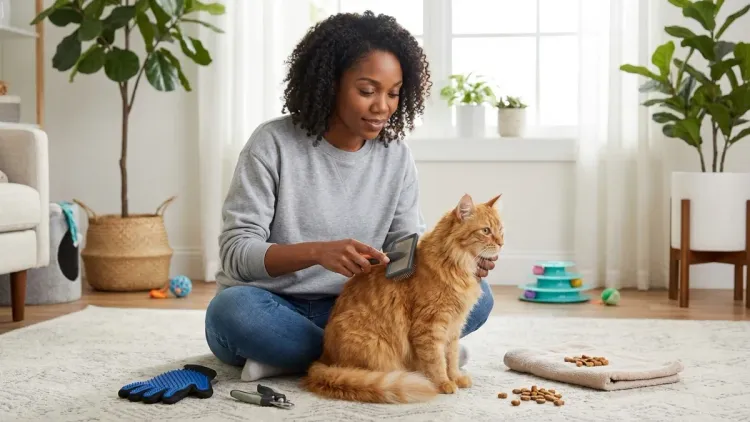
Start with timing and environment. Never attempt grooming when your cat is hungry, hyper, or freshly startled. Choose a moment when they're naturally relaxed—after a meal, during their usual nap window, or following a play session that burned off excess energy. Pick a quiet room with good lighting and minimal distractions. I groom cats on a non-slip mat on a table or counter (easier on my back), but some cats prefer being held in your lap or placed on a towel on the floor. Let your cat's comfort dictate the setup.
Assemble your tools in advance. Fumbling around mid-session breaks the rhythm and gives your cat time to escalate anxiety. For a basic grooming kit, you'll need:
- Brushes appropriate to coat type: rubber curry or bristle brush for short coats; slicker brush, wide-toothed comb, and steel comb for long coats
- Cat nail clippers: guillotine-style or scissor-style (see best cat nail clippers for beginners for specific recommendations)
- Styptic powder: to stop bleeding if you accidentally quick a nail
- Cat-specific ear cleaner and cotton balls (never Q-tips, which push debris deeper)
- Blunt-tip scissors for emergency mat removal
- High-value treats for positive reinforcement
- Towel or grooming restraint bag for cats that need gentle containment (use only if your cat tolerates it—forcing a terrified cat into a bag destroys trust)
Work in short sessions with clear endpoints. This is where most people fail at how to groom a cat at home—they try to complete an entire grooming routine in one sitting, pushing past their cat's tolerance threshold. A stressed cat learns that grooming equals discomfort, and you're stuck in an escalating cycle of resistance. Instead, aim for 5-10 minute sessions focused on one task: brushing the back and sides one day, checking ears the next, trimming front paws another day. End every session before your cat shows serious stress signals (ear flattening, tail lashing, growling, attempts to escape). Always finish on a positive note—a favorite treat, a few minutes of play, or simply releasing them to walk away.
Read body language like a map. Cats broadcast their comfort level constantly. Relaxed signals include slow blinks, purring, kneading, a loosely curved tail, and forward-facing ears. Early stress signals include ears rotating backward or sideways, a still or low-held tail, dilated pupils, and skin rippling along the back. High stress or fear shows as flattened ears, a puffed tail, hissing, growling, or a crouched body position. If you see early stress signals, slow down, switch to a less-sensitive area, or end the session. If you push through to high stress, you're teaching your cat that grooming is something to fear, and you'll pay for it in every future session.
Use treats strategically, not as bribes. Offer a high-value treat (freeze-dried chicken, tuna flakes, squeeze-up treats) during the grooming task, not just after. This creates a positive association in real time—"brushing happens, good things appear." For cats that won't eat during grooming, use play as the reward. Keep a feather wand nearby and offer a quick play session the moment you finish brushing. Some cats respond better to verbal praise and petting than food, especially if they're not food-motivated.
Troubleshooting Common Grooming Challenges
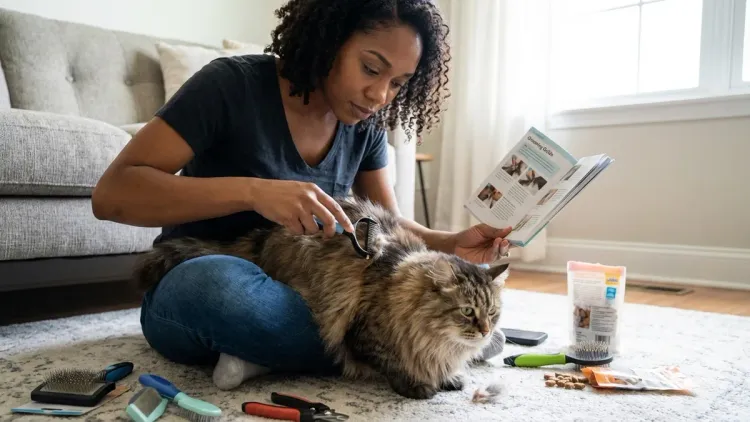
The paw-sensitive cat. Many cats hate having their paws touched—it's a vulnerable area tied to survival instincts. If your cat pulls away or swats when you try to trim nails, back up to basic desensitization. Spend a week just touching their paws for 1-2 seconds while giving treats. Progress to gently pressing the paw pad to extend a nail, then immediately releasing and rewarding. Once your cat tolerates extension without pulling away, clip a single nail and stop. You don't need to finish all four paws in one day. Some of my clients trim one nail per day for two weeks, and that's perfectly fine—you're building trust, not racing to completion.
The matted long-haired cat. If your cat already has significant matting, you're facing a choice: attempt careful at-home removal or book a professional groomer. Small, superficial mats can be worked out with a mat splitter tool or your fingers—apply a little cornstarch or mat detangling spray to reduce friction, then gently pull the mat apart in the direction of hair growth. For mats close to the skin or extensive matting, I strongly recommend a professional groomer. Trying to cut out mats yourself carries real risk of cutting skin (cat skin is incredibly thin and loose), and the extended restraint required will likely damage your cat's trust.
The bath-hating cat. Most cats will never love baths, but you can reduce the trauma. Use a sink or plastic tub rather than a full bathtub—smaller spaces feel less overwhelming. Place a rubber mat or towel on the bottom for traction. Fill the sink with 2-3 inches of lukewarm water before bringing your cat in (the sound of running water increases anxiety). Wet the coat with a cup or handheld sprayer set to gentle flow, avoiding the face entirely. Work quickly but calmly, speaking in a low, soothing voice. Have a helper if possible—one person to gently stabilize the cat, one to wash. Towel dry thoroughly and keep your cat in a warm room afterward. Some cats tolerate waterless shampoos or grooming wipes as a lower-stress alternative for minor cleaning.
The aggressive or terrified cat. If your cat becomes truly aggressive during grooming—biting with intent to injure, attacking rather than warning, or showing extreme fear responses (loss of bladder or bowel control, severe panting)—do not push forward. This level of reaction indicates either a serious negative association from past trauma or an underlying medical issue (pain from arthritis, dental disease, or injury). Consult your veterinarian first to rule out medical causes, then consider working with a veterinary behaviorist or certified cat behavior consultant to develop a desensitization plan. Some cats genuinely need sedation or gabapentin (a mild anti-anxiety medication) for grooming, administered by or prescribed by your vet.
Maintaining Tools and Building Consistency
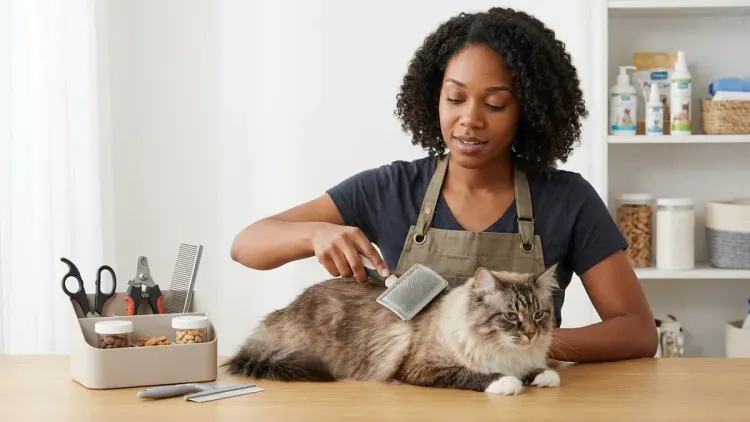
Clean your grooming tools after every use. Hair buildup in brushes reduces effectiveness and can harbor bacteria or fungal spores. Remove trapped hair from slicker brushes and combs, then wash with warm soapy water and dry thoroughly. Disinfect nail clippers monthly with rubbing alcohol, especially if you trim nails on multiple cats (to prevent spreading any potential fungal infections). Replace brushes when bristles become bent or worn, and sharpen or replace nail clippers when they start crushing nails instead of cutting cleanly.
Track your cat's grooming needs seasonally. Cats shed heavily in spring and fall as they adjust to temperature changes—daylight length triggers hormonal shifts that promote shedding, according to feline biology research. Increase brushing frequency during these periods, sometimes daily even for short-haired cats, to prevent hairballs and reduce environmental shedding. Long-haired cats may need professional grooming timed before peak shedding season (a spring shave-down can prevent summer matting in hot climates).
Schedule grooming sessions like appointments. Consistency builds tolerance. If you groom sporadically—once every few months when you finally notice matting—your cat never adapts to the routine. Instead, set a regular schedule: brush short-haired cats once or twice weekly, long-haired cats daily, nails every 2-3 weeks, ears monthly. Put it on your calendar. This predictability helps your cat anticipate and accept grooming as part of normal life rather than a random stressful event.
When to Call in a Professional Groomer
You should seek professional help when:
- Your cat has extensive matting that can't be safely removed at home
- Your cat shows signs of skin infection (redness, scabbing, odor, hair loss) that needs addressing before grooming
- Your cat becomes aggressive or extremely fearful despite gradual desensitization attempts
- You're physically unable to safely restrain or position your cat (common with senior or disabled owners grooming large, resistant cats)
- Your cat needs a specific breed clip (like a lion cut for a severely matted Persian)
- You suspect fleas, ear mites, or other parasites that require professional cleaning and treatment
Professional groomers who specialize in cats work differently than dog groomers—we use shorter sessions, quieter tools, and often work with cats in enclosed spaces rather than open tables to reduce stress. Many offer house-call grooming for cats that can't tolerate car rides. Don't see professional grooming as a failure; see it as specialized care for situations beyond the scope of routine home maintenance.
Grooming Across the Cat's Lifespan: Age-Specific Considerations
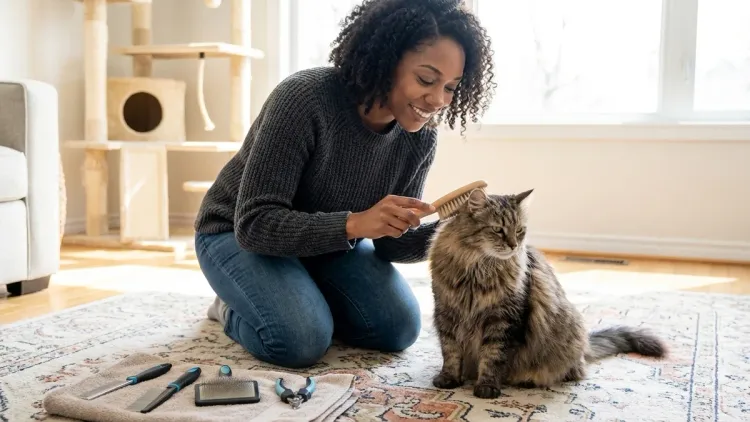
Kittens (8 weeks to 6 months) should be introduced to grooming as early as possible, ideally starting the week you bring them home. Use the softest brushes available and keep sessions under 5 minutes. Focus on positive association over actual coat maintenance—your goal is a cat that tolerates handling, not a perfectly brushed kitten. Touch their ears, paws, tail, and belly daily. Gently press their paw pads to extend claws, then immediately reward. You can start trimming nails around 10-12 weeks if the kitten tolerates paw handling, but don't force it—some kittens need a few more weeks of desensitization.
Adult cats (1-10 years) are generally the easiest to groom, assuming they were properly desensitized as kittens. If you adopt an adult cat with no grooming history, apply the same gradual desensitization process you'd use with a kitten, just expect it to take longer—weeks or months instead of days. Adult cats are more set in their preferences and less adaptable than kittens, so patience matters even more. For food-motivated adults, treats work wonders. For play-motivated cats, use interactive toys as rewards.
Senior cats (10+ years) require the most thoughtful grooming approach. Arthritis makes certain positions painful—avoid hyperextending joints or bending stiff hips and shoulders. If your senior cat can no longer groom their hindquarters, increase brushing in that area and watch for fecal matting around the anus (common in long-haired seniors with soft stools). Senior cats often develop dental disease that makes head handling painful, so be extra gentle around the face and jaw. If your senior cat suddenly resists grooming they previously tolerated, consult your vet—pain is the most common cause of behavior changes in older cats.
Geriatric cats (15+ years) may need adjustments to your entire grooming routine. Cognitive decline (feline cognitive dysfunction) can make them confused or irritable during grooming. Work in the same location every time to reduce disorientation. Use shorter sessions—5 minutes maximum—and watch for fatigue. Some very old cats need spot cleaning rather than full brushing sessions: clean the face with a warm damp cloth, trim mats as they appear, and handle only what's necessary for hygiene and comfort. Quality of life matters more than a perfectly groomed coat.
Creating a Multi-Cat Grooming System
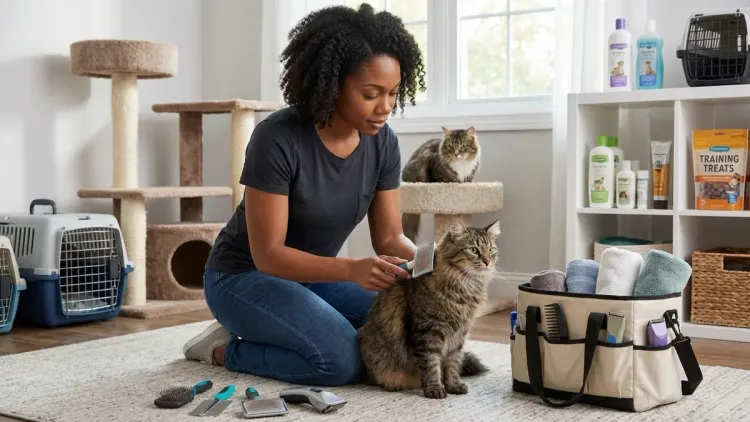
If you live with multiple cats, you'll quickly discover that each cat has a completely different grooming tolerance level. I've worked with households where one cat falls asleep during brushing and another requires two people and a burrito wrap to trim a single nail. Don't expect consistency across cats—tailor your approach to each individual.
Groom cats separately to avoid triggering redirected aggression or territorial stress. Many cats become agitated watching another cat being restrained or handled, even if they're bonded companions. Use separate rooms or groom at different times of day. If one cat is significantly more tolerant than the other, start your grooming sessions with the easy cat—it builds your confidence and puts you in a calm mindset before tackling the difficult one.
Never share grooming tools between cats without cleaning them first, especially if one cat has skin issues, ear infections, or parasites. You can cross-contaminate fungal infections (ringworm), ear mites, or bacterial infections through shared brushes and combs. I keep color-coded tools (one set per cat) in multi-cat households to eliminate any risk of cross-contamination.
Build individual routines that match each cat's personality. Your shy cat might groom best in a quiet bedroom in the evening. Your social cat might prefer being groomed on the couch while you watch TV. Your food-motivated cat responds to treats; your play-driven cat needs a wand toy reward. Forcing all your cats into the same grooming routine because it's "easier" actually makes the process harder—you'll face more resistance and build negative associations.
Frequently Asked Questions
How often should I groom my cat at home?
Short-haired cats need brushing once or twice weekly, while long-haired cats require daily brushing to prevent mats. Nail trims should happen every 2-3 weeks for indoor cats, and ear checks monthly. Bathing is rarely necessary—most cats only need baths if they get into something messy or develop a medical skin condition requiring medicated shampoo. Senior cats or those with mobility issues may need more frequent grooming assistance, sometimes daily spot-cleaning of areas they can't reach themselves.
Can I use dog grooming tools on my cat?
Some dog grooming tools work fine on cats, but you need to be selective based on size and coat type. Slicker brushes and steel combs often work across species. However, dog nail clippers are usually too large for cat nails and create crushing pressure instead of clean cuts—stick with cat-specific guillotine or scissor-style clippers. Never use dog shampoo on cats, as many contain permethrin or other ingredients that are toxic to felines. When in doubt, choose cat-specific tools sized appropriately for smaller bodies and more delicate coats.
What should I do if my cat won't let me groom them?
Start with desensitization instead of forcing the grooming session. Spend 1-2 weeks just touching the areas you need to groom—paws, ears, tail, belly—while offering high-value treats or affection, then release your cat without attempting any actual grooming. Once your cat tolerates brief touches without pulling away, add one grooming element (like extending a nail or running a brush down their back once) and immediately reward. Build duration gradually over weeks. If your cat remains aggressive or terrified despite slow desensitization, consult your veterinarian to rule out pain-related causes and consider working with a certified cat behavior consultant.
How do I know if my cat's matting requires professional grooming?
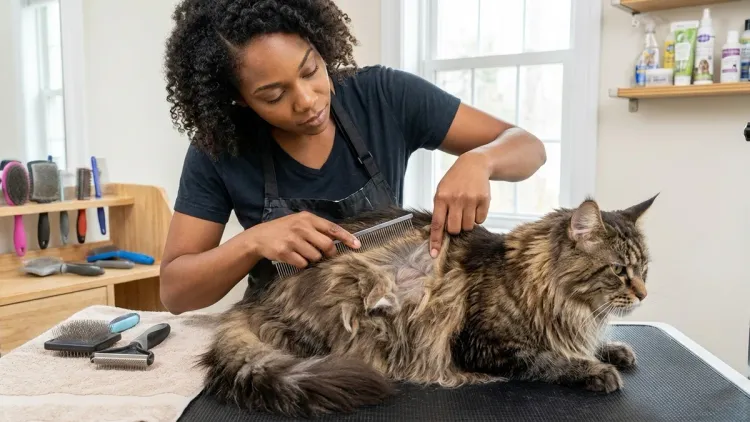
If you can't easily slip a comb between the mat and your cat's skin, or if the matting covers more than a few small patches, seek professional help. Large mats that are tight against the skin carry high risk of accidental cuts during home removal, and the extended restraint required will likely overwhelm your cat's tolerance. Professional groomers use specialized tools and techniques (sometimes including mild sedation for severe cases) to safely remove extensive matting. As a general rule, if a mat is larger than a quarter or you can't clearly see where the mat ends and the skin begins, don't attempt removal yourself.
Is it normal for cats to hate being groomed?
Most cats tolerate grooming rather than actively enjoy it, and that's completely normal. Cats are control-oriented animals that dislike restraint, so even well-socialized cats may show mild resistance (trying to walk away, flicking their tail, slight ear rotation). The goal isn't a cat that loves grooming—it's a cat that accepts it without escalating to aggression or extreme fear. If your cat remains calm enough to stay in position, doesn't bite or scratch with intent to injure, and recovers quickly after the session ends (resumes normal behavior within minutes), you've achieved success even if they weren't purring through the process.
Making Grooming Part of Your Cat Care Foundation
Learning how to groom a cat at home isn't about becoming a professional groomer or achieving show-cat perfection. It's about integrating regular, low-stress handling into your relationship so you can catch health problems early, prevent painful matting, and make necessary veterinary care less traumatic for your cat.
The cats I see who tolerate grooming best aren't necessarily the friendliest or most social—they're the ones whose owners started early, worked patiently through desensitization, and respected their cat's communication signals. They're the cats who learned that human hands touching their paws meant treats appeared, that brushing sessions ended before they got overwhelming, and that struggling wasn't necessary because nothing bad ever happened.
Your cat won't transform overnight. If you're starting with an adult cat who has never been groomed, expect weeks or months of slow progress. But every small win—a paw held for three seconds instead of one, a full back brushing without attempted escape, a single nail trimmed without drama—builds the foundation for a lifetime of manageable grooming. That's worth far more than any single grooming session could ever accomplish.