
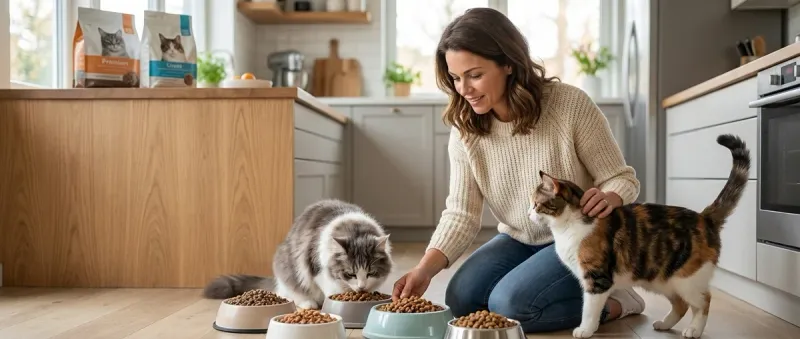

I'll be honest—I'm a dog groomer through and through, but I've spent enough time around the cats in my clients' homes (and dodged enough swipes while trying to trim a few adventurous felines) to know that cat nutrition is a whole different ball game. My grooming shop neighbor runs a cat-only rescue, and our lunch conversations always circle back to the best dry cat food for her adult fosters. Unlike my four dogs who'll happily inhale anything remotely edible, cats are obligate carnivores with specific protein needs and a knack for being maddeningly picky. After digging into veterinary recommendations, ingredient labels, and real-world feedback from her rescue operation, I've identified the premium kibble options that actually deliver on quality nutrition for adult cats without the marketing fluff.
Quick verdict: The best dry cat food for adult cats prioritizes animal-based protein as the first ingredient, meets AAFCO nutritional standards, and balances convenience with the carnivorous requirements cats evolved to need.
What to Look For in the Best Dry Cat Food
Shopping for cat kibble feels like navigating a minefield of marketing claims and confusing labels. Here's what actually matters when you're choosing quality dry food for adult cats.
High-Quality Animal Protein as the First Ingredient
Cats are obligate carnivores—their bodies literally require nutrients found only in animal tissue. Unlike dogs (who can technically survive on a more varied diet), cats need taurine, arachidonic acid, and vitamin A from meat sources. The first ingredient on any quality cat kibble should be a named animal protein: chicken, turkey, salmon, or another specific meat, not "poultry meal" or generic "meat by-products." I've watched my neighbor's rescue cats transform from dull-coated, lethargic arrivals to glossy, energetic animals within weeks of switching to protein-forward formulas. The difference is visible from across the room, the same way I can spot a well-nourished dog's coat on my grooming table before they even step up.
Look for formulas with at least 30-40% crude protein on the guaranteed analysis panel. That percentage tells you what's actually available after moisture is removed. Some premium brands push closer to 45%, which aligns better with what cats would consume hunting prey in the wild (small rodents and birds are roughly 40-50% protein on a dry matter basis).
AAFCO Certification and Life Stage Appropriateness
The Association of American Feed Control Officials sets the nutritional standards that separate legitimate cat food from overpriced filler. Any bag worth buying will state on the label: "formulated to meet the nutritional levels established by the AAFCO Cat Food Nutrient Profiles for adult maintenance" (or similar wording). This isn't just bureaucratic box-checking—it means the formula contains minimum levels of essential nutrients like taurine, arginine, and niacin that cats can't produce on their own.
For more detail on what these standards actually mean, check out What Is AAFCO Certification and Why It Matters for Cat Food.
Adult cats have different needs than kittens or seniors. Kittens need higher protein and fat for growth, while senior cats often benefit from adjusted mineral levels to support aging kidneys. An "all life stages" formula can work, but I prefer adult-specific formulas that dial in the exact nutritional balance for cats in their prime (roughly 1-7 years old, depending on the cat).
Limited Carbohydrates and Plant Fillers
Here's where dry cat food gets tricky. Kibble requires some amount of carbohydrate to bind into those crunchy nuggets—unlike wet food, which can be pure meat. But cats have almost no biological need for carbohydrates. Their systems aren't designed to process large amounts of grains, potatoes, or peas the way dogs or humans do.
Look for formulas that keep carbohydrates under 20-30% of the total composition (you'll need to calculate this yourself: 100% minus the protein, fat, moisture, and ash percentages listed on the guaranteed analysis). Ingredients like corn, wheat, soy, and even "grain-free" substitutes like potatoes and tapioca should appear well down the ingredient list, not in the first five positions. I've seen too many cats develop digestive issues or unexplained weight gain on high-carb kibbles—it's the equivalent of feeding your carnivore a diet of bread and pasta.
That said, grain-free isn't automatically better. Some cats do fine with small amounts of rice or oats. For a deeper dive into this debate, see Grain-Free vs Grain-Inclusive Cat Food: Which Should You Choose?.
Named Fats and Omega Fatty Acids
Fat isn't the enemy—it's a crucial energy source and carries fat-soluble vitamins A, D, E, and K. Quality cat food uses named animal fats (chicken fat, salmon oil) rather than generic "animal fat" or "poultry fat." These specific sources ensure consistency and traceability.
Look for formulas with omega-3 fatty acids (EPA and DHA) from fish oil or other marine sources. These support everything from coat condition to joint health and brain function. I can always tell when a cat is getting adequate omega-3s—their coat has this sleek, light-reflective quality that no amount of brushing can fake. It's the same shine I see on my senior shepherd when I keep him on his joint supplement with fish oil.
Palatability and Kibble Size
The best cat food in the world is useless if your cat won't eat it. Cats are notoriously finicky, and their preferences can be maddeningly specific. Some prefer fish-based flavors, others chicken or poultry. Texture matters too—small, crunchy kibbles versus larger, softer ones.
Most premium brands offer kibble sizes around 8-12mm, small enough for comfortable chewing but large enough to encourage some dental scraping action. Irregular shapes or textured surfaces can help reduce plaque buildup, though kibble alone won't replace professional dental care (just like how regular brushing helps my dogs' teeth but doesn't eliminate the need for vet cleanings).
Pay attention to whether formulas add palatants or flavor enhancers. Some use natural options like freeze-dried meat coatings, which cats find irresistible. Others rely on less-natural additives. If your cat is healthy and eating enthusiastically, some palatant is fine—but if you're dealing with a cat who's lost interest in food, you might need to rotate flavors or try a different protein source entirely.
Our Top Picks for the Best Dry Cat Food
Orijen Original Cat Food
The Orijen Original Dry Cat Food🛒 Amazon is the gold standard if you want kibble that closely mimics a cat's natural prey diet. This Canadian-made formula lists fresh chicken, turkey, and multiple fish sources in the first five ingredients, with a whopping 40% crude protein and 20% fat on the guaranteed analysis. It's what my rescue neighbor feeds her healthiest adult fosters—cats that come in from outdoor colonies and need nutrient-dense food to recover.
Orijen uses whole prey ratios, meaning they include organ meats, cartilage, and bone in the recipe, not just muscle meat. This provides natural sources of vitamins and minerals cats would consume eating whole prey animals. The kibble is small and dense, about 10mm across, with an irregular shape that cats seem to find satisfying to crunch.
Pros:
- 40% protein from multiple fresh meat sources (chicken, turkey, fish)
- Whole prey ingredients including organ meats and cartilage
- Low carbohydrate content (under 20% calculated)
- No potato, tapioca, or grain fillers—uses minimal lentils for binding
- Made in North America with traceable ingredient sourcing
Cons:
- Premium pricing—usually around $60-80 for an 8-10 lb bag
- Very rich formula can cause digestive upset during transition if switched too quickly
- Some cats find the fish content too strong-flavored
Wellness CORE Grain-Free Indoor Formula
The Wellness CORE Grain-Free Indoor Formula🛒 Amazon strikes a balance between premium quality and manageable cost for everyday feeding. It's formulated specifically for indoor adult cats, with slightly lower fat (12% minimum) to account for their typically lower activity levels compared to outdoor cats. The first ingredient is deboned turkey, followed by turkey meal (a concentrated protein source), chicken meal, and peas.
I appreciate that Wellness includes added probiotics and fiber from ground flaxseed and chicory root extract to support digestive health. Indoor cats deal with more hairballs than their outdoor counterparts, and the fiber content here helps move ingested fur through the system. The kibble is uniformly sized at about 9mm with a rounded triangular shape.
Pros:
- 38% protein with turkey as the primary source
- Indoor-specific formula with controlled fat for lower activity cats
- Added probiotics and fiber to reduce hairballs
- No corn, soy, wheat, or meat by-products
- Glucosamine and chondroitin for joint support
Cons:
- Uses peas and potatoes as primary binders (higher carb than Orijen)
- Some cats develop picky eating habits and refuse it after a few weeks
- Kibble can be slightly dusty at the bottom of the bag
Taste of the Wild Rocky Mountain Feline Formula
The Taste of the Wild Rocky Mountain Grain-Free Dry Cat Food🛒 Amazon brings a unique protein profile with roasted venison and smoked salmon as the lead ingredients. This is an excellent option for cats with chicken or poultry sensitivities, which I see more often than you'd expect (my neighbor's rescue had a beautiful tabby who broke out in chin acne every time he ate chicken-based formulas—switched to this venison kibble and cleared up within two weeks).
The formula includes species-specific probiotics (Lactobacillus and Bacillus strains) that survive the kibble manufacturing process to support gut health. At 42% protein and 18% fat, it's a nutrient-dense option suitable for moderately active adult cats. The kibble is slightly larger at about 11mm with a flower-like shape.
Pros:
- Novel protein sources (venison, salmon) good for food sensitivities
- 42% protein with minimal plant-based protein boosters
- Probiotics and antioxidant-rich fruits like blueberries
- No grains, corn, wheat, or artificial colors/preservatives
- Family-owned company with transparent sourcing
Cons:
- Pea protein and pea flour appear high on the ingredient list (plant-based protein)
- Not ideal for cats requiring very low carbohydrate formulas
- Some batches have inconsistent kibble size and texture
Blue Buffalo Wilderness High Protein Adult Cat Food
The Blue Buffalo Wilderness Grain-Free Chicken Recipe Dry Cat Food🛒 Amazon is widely available and offers solid nutrition at a mid-tier price point. Deboned chicken is the first ingredient, followed by chicken meal and fish meal, delivering 40% crude protein. Blue Buffalo includes their "LifeSource Bits"—small, dark kibble pieces mixed in with the regular kibble that contain concentrated antioxidants, vitamins, and minerals.
I'm skeptical of gimmicky mix-ins, but the base formula here is sound. The chicken-forward flavor profile is a safe bet for most cats, and the kibble size (about 9mm, small ovals) works well for average adult cats. My neighbor uses this as her "transition food" when bringing in new rescues because most cats accept it readily.
Pros:
- 40% protein from chicken and fish sources
- Widely available in most pet stores and online
- Added taurine, glucosamine, and omega fatty acids
- LifeSource Bits provide concentrated vitamins (if you value that)
- Generally well-tolerated by picky eaters
Cons:
- Contains peas, pea starch, and tapioca (moderate-to-high carb content)
- Some cats pick around the LifeSource Bits and leave them uneaten
- Quality consistency varies—occasional batches have palatability issues
Farmina N&D Ancestral Grain Chicken & Pomegranate
The Farmina N&D Ancestral Grain Chicken & Pomegranate Adult Cat Food🛒 Amazon is an Italian-made formula that challenges the "grain-free is always better" narrative. It includes ancient grains like spelt and oats in moderate amounts, which some veterinary nutritionists argue are easier for cats to digest than the legume-heavy binders used in many grain-free formulas. Fresh chicken (30%) is the first ingredient, with dehydrated chicken protein following close behind.
This is the formula I'd choose for a cat with suspected grain sensitivity who still needs some carbohydrate variety beyond peas and potatoes. The pomegranate extract provides natural antioxidants, and the formula is preserved with tocopherols (vitamin E) rather than synthetic preservatives. Kibble size is about 10mm, slightly irregular ovals.
Pros:
- 40% protein with fresh and dehydrated chicken
- Ancestral grains may be easier to digest than legumes for some cats
- Low-glycemic carbohydrate sources
- Natural preservation with vitamin E
- Includes prebiotic fiber (inulin) for gut health
Cons:
- Limited availability—usually online-only in the US
- Premium pricing comparable to Orijen
- Not suitable for cats with confirmed grain allergies
Natural Balance Limited Ingredient Diet Green Pea & Duck Formula
The Natural Balance L.I.D. Limited Ingredient Diets Green Pea & Duck Formula Dry Cat Food🛒 Amazon is my top recommendation for cats with suspected food allergies or inflammatory bowel issues. This formula uses a single animal protein source (duck) paired with a single primary carbohydrate (green peas), making it easy to identify and eliminate potential allergens.
At 32% protein and 16% fat, it's slightly lower in both macros than the ultra-premium options, but that's intentional—limited ingredient formulas prioritize digestibility over maximum nutrient density. The kibble is small (about 8mm) and uniformly shaped. One of my neighbor's chronic-diarrhea fosters stabilized completely on this formula after months of trial and error with other brands.
Pros:
- Single animal protein source (duck) for allergy elimination trials
- Simple ingredient list with no common allergens
- Added taurine and vitamins to compensate for limited variety
- Small, easily digestible kibble
- Consistent quality and palatability
Cons:
- Lower protein than other premium options (32% vs. 38-42%)
- Peas are a high-glycemic carbohydrate source
- Not ideal for long-term feeding in healthy cats (limited nutritional variety)
Frequently Asked Questions
Is dry cat food bad for cats compared to wet food?
Dry cat food isn't inherently bad for adult cats, but it does have limitations compared to wet food. The biggest concern is hydration—cats evolved as desert animals with a low thirst drive, getting most of their water from prey. Kibble contains only about 10% moisture compared to 75-80% in wet food, so cats eating exclusively dry food may not drink enough water to compensate, potentially increasing the risk of urinary tract issues and kidney disease over time. That said, high-quality dry food offers convenience, dental benefits from chewing, and complete nutrition if formulated properly. Many veterinarians recommend a combination approach: primarily wet food for hydration, with some dry food for dental scraping and convenience. If you feed exclusively dry, make sure your cat has constant access to fresh water and monitor their water intake—you can add a cat water fountain to encourage drinking. For a detailed comparison, see Wet vs Dry Cat Food: Which Is Better for Your Cat's Health?.
How much dry cat food should I feed my adult cat daily?
The amount varies based on your cat's weight, activity level, and the caloric density of the specific formula. Most adult cats need around 20-30 calories per pound of body weight per day to maintain their current weight. A 10-pound moderately active indoor cat would need roughly 200-250 calories daily. Check the feeding guidelines on your chosen cat food bag—they'll list recommended portions based on weight. For example, a typical premium dry food with about 380-420 calories per cup might recommend ¼ to ⅓ cup twice daily for a 10-pound cat. Always start with the manufacturer's guidelines and adjust based on your individual cat's body condition. If you can't easily feel their ribs or they're developing a hanging belly pouch (beyond the normal primordial pouch cats have), reduce portions slightly. If they're losing weight or acting constantly hungry, increase portions. I always tell my grooming clients: the bag guidelines are starting points, not gospel—your individual animal is the final authority.
Can I mix different brands or flavors of dry cat food?
Yes, you can mix different brands or flavors of dry cat food, and it can actually be beneficial for some cats. Rotating proteins and formulas helps prevent nutritional deficiencies that might exist in any single recipe and can reduce the likelihood of developing food sensitivities over time. It also keeps picky eaters engaged—cats can get bored eating the same formula for years. That said, introduce any new food gradually over 7-10 days to avoid digestive upset. Start with 75% old food and 25% new, then gradually shift the ratio over a week until you've completely transitioned (or reached your desired mix ratio). Some cats have iron stomachs and can handle abrupt changes, but most benefit from slow transitions. I keep two or three formulas in rotation for my neighbor's rescue cats, mixing them in the same bowl—it prevents them from imprinting on a single formula and becoming impossible to feed if that brand gets discontinued or reformulated.
What ingredients should I avoid in dry cat food?
Avoid formulas where the first ingredient is a grain, vegetable, or unnamed protein source like "meat meal" or "poultry by-product meal." Specific red flags include: corn gluten meal or soy protein concentrate (cheap plant-based protein boosters that don't provide complete amino acid profiles for cats), generic animal fat (no way to verify source or quality), artificial colors like Blue 2 or Red 40 (purely cosmetic—cats don't care what color their food is), and chemical preservatives like BHA, BHT, or ethoxyquin (potential health concerns with long-term exposure). "By-products" aren't automatically evil—they can include nutritious organ meats—but "by-product meal" from unnamed sources is a quality red flag. Also watch for excessive plant matter in the first five ingredients: peas, pea protein, potatoes, tapioca, or multiple grain sources suggest the formula is padding protein numbers with plant ingredients rather than meat. For a comprehensive breakdown, see How to Read Cat Food Labels: Understanding Ingredients and Nutritional Information.
How do I transition my cat to a new dry food without causing stomach upset?
Transition slowly over 7-10 days minimum, mixing increasing amounts of the new food with decreasing amounts of the old food. Start with about 25% new food mixed with 75% old food for 2-3 days. If your cat's stools remain normal and they're eating enthusiastically, shift to 50/50 for another 2-3 days. Then move to 75% new and 25% old, and finally 100% new food. Cats with sensitive stomachs may need an even slower transition—sometimes 14 days or longer. Monitor for signs of digestive upset: loose stools, vomiting, decreased appetite, or increased gas. If any appear, slow down the transition and hold at the current ratio for a few extra days before progressing. Some cats adapt quickly and can handle a faster switch, but there's no harm in going slow. One trick I learned from my rescue neighbor: mix the foods thoroughly rather than leaving them in separate piles—some cats will pick out only the familiar or tastier option and avoid the new food entirely. For a complete step-by-step approach, check out Complete Cat Food Transition Checklist: Switching Foods Safely.
The Verdict
The best dry cat food for adult cats delivers animal-based protein as the primary ingredient, meets AAFCO nutritional standards, and keeps carbohydrates in check—all while being something your individual cat will actually eat. Orijen Original tops my list for cats who need maximum protein and whose owners can manage the premium pricing, while Wellness CORE Indoor offers excellent everyday nutrition at a more accessible price point. For cats with food sensitivities, Natural Balance Limited Ingredient Diet provides a clean slate to identify problem ingredients.
No single formula works for every cat—I've learned that much watching my neighbor cycle through options for her rescue fosters. Pay attention to your cat's coat condition, energy levels, litter box output, and body condition over the first month on any new food. Those indicators tell you more than any ingredient list ever will. And remember: even the best kibble benefits from being paired with wet food for hydration, especially as cats age. Your cat's individual needs should always trump brand loyalty or marketing claims.