
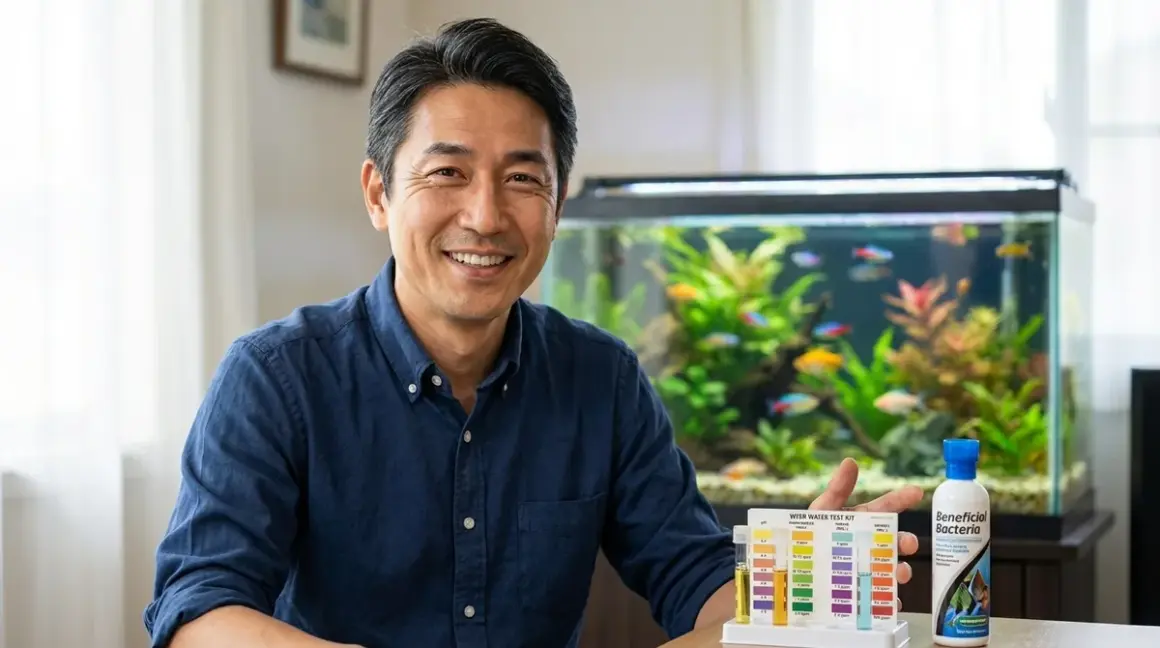

When I inherited that first 20-gallon tank fifteen years ago, I killed more fish in the first month than I care to admit. The water looked crystal clear, I'd read that fish produce waste, and I figured frequent water changes would fix everything. What I didn't understand—what nobody had explained to me—was the aquarium nitrogen cycle, the invisible biological process that quite literally determines whether your fish live or die. Every single aquarium, whether it's a modest 10-gallon betta setup or a sprawling 150-gallon reef system, depends on establishing this cycle before it's truly safe for fish.
What Is the Aquarium Nitrogen Cycle?
The aquarium nitrogen cycle is a naturally occurring biological process where beneficial bacteria colonies convert toxic fish waste into progressively less harmful compounds. In my experience, it's easier to think of it as your tank's built-in waste treatment plant—except instead of machinery and chemicals, you're cultivating microscopic workers that eat toxins and excrete safer byproducts.

Here's the basic sequence: fish produce ammonia through respiration and waste (primarily urine and decomposing food). Ammonia is incredibly toxic—even tiny concentrations burn fish gills and cause tissue damage. The first type of beneficial bacteria, Nitrosomonas species, colonize surfaces in your tank and consume this ammonia, converting it to nitrite. Nitrite is still toxic, though slightly less so than ammonia. Then a second group of bacteria, primarily Nitrobacter and Nitrospira species, convert nitrite into nitrate, which is far less toxic and only becomes problematic at high concentrations.
What I've found fascinating over the years is that this isn't something you add to your tank once and forget—it's a living ecosystem that requires time to establish, proper environmental conditions to thrive, and ongoing maintenance to keep functioning. The bacteria need oxygen, surfaces to colonize (filter media, substrate, decorations), and a steady food source (the ammonia from fish waste). When hobbyists talk about "cycling" a tank, they're referring to the 4-8 week process of establishing these bacterial colonies from scratch before adding fish. I rushed this process with my first tank, and I paid for it with dead neon tetras and cloudy, foul-smelling water.
How the Aquarium Nitrogen Cycle Works
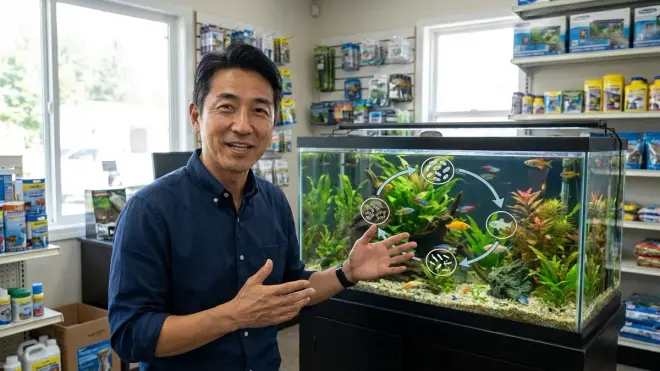
The mechanics of the nitrogen cycle involve three distinct chemical conversions, each handled by different bacterial species that colonize various surfaces throughout your aquarium. Let me walk you through what's actually happening at each stage, because understanding this process helped me troubleshoot problems in my own tanks countless times.
Stage One: Ammonia Production and Consumption
Fish constantly produce ammonia (NH₃/NH₄⁺) through their gills as a waste product of protein metabolism, through urine, and through the decomposition of uneaten food and decaying plant matter. In an uncycled tank, ammonia concentrations climb rapidly—I've seen readings spike to 4-8 ppm within days in a new setup with fish added too early. Even 0.5 ppm can cause stress, gill damage, and suppressed immune function.
Once Nitrosomonas bacteria establish colonies (primarily in your biological filter media, but also on substrate, decorations, and even the tank glass), they begin oxidizing ammonia into nitrite (NO₂⁻). This is an aerobic process, meaning these bacteria need dissolved oxygen to function—one reason why proper water circulation and surface agitation matter so much. In my planted tanks, I've noticed this stage typically takes 10-14 days to show measurable progress when cycling fishlessly, though it can vary based on temperature (warmer water speeds bacterial reproduction) and pH (bacteria struggle below 6.5 pH).
Stage Two: Nitrite Conversion
As ammonia levels drop, nitrite levels begin climbing. Nitrite is often called "the silent killer" because it binds to fish hemoglobin, preventing oxygen transport—essentially suffocating fish from the inside even in well-oxygenated water. I learned this the hard way when I lost a beautiful pearl gourami during my second cycling attempt; the water tested fine for ammonia, but I hadn't yet discovered nitrite testing.
Nitrobacter and Nitrospira bacteria colonize the same surfaces as the ammonia-oxidizers, consuming nitrite and converting it to nitrate (NO₃⁻). These bacteria reproduce more slowly than Nitrosomonas, which is why the nitrite spike often appears 2-3 weeks into the cycling process and can persist for another 2-4 weeks. What I've found works during this stage is patience—there's no rushing it, though bacterial starter products can help slightly.
Stage Three: Nitrate Accumulation and Management
Nitrate is the end product of the nitrogen cycle, and while it's far less toxic than ammonia or nitrite, it still accumulates over time. Most fish tolerate 20-40 ppm without obvious issues, though I keep my community tanks below 20 ppm and my saltwater reef well under 10 ppm (corals are more sensitive). Some research from the American Veterinary Medical Association suggests chronic exposure to elevated nitrates above 50 ppm can suppress immune function and stunt growth in fish, particularly in juveniles.
Unlike ammonia and nitrite, there aren't common bacteria in typical aquariums that convert nitrate into harmless nitrogen gas (though anaerobic bacteria in deep substrate can accomplish this in specialized setups). This means nitrate removal requires either water changes (replacing 20-30% weekly in most community tanks), live plants that consume nitrate as fertilizer, or specialized filtration like denitrators. In my heavily planted 75-gallon, I've actually had to dose nitrates occasionally because the plants consume it faster than the fish produce it—a weird but welcome problem.
Why the Aquarium Nitrogen Cycle Matters
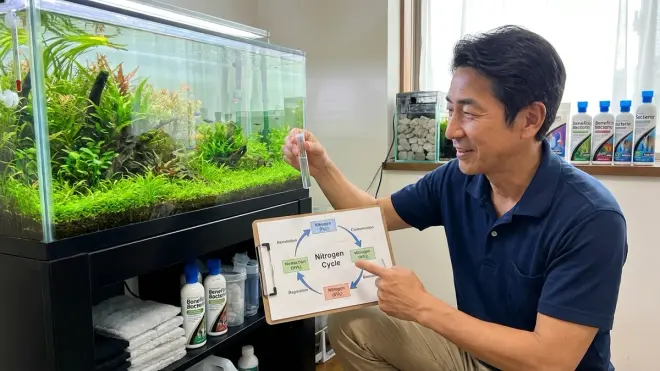
I can't overstate how critical understanding this cycle is for anyone keeping fish. The aquarium nitrogen cycle is quite literally the difference between a thriving aquarium and a death tank—there's no middle ground. Without established beneficial bacteria, every fish you add is swimming in a gradually intensifying toxic soup, and no amount of water changes can fully compensate once the cycle is disrupted or never established.
From a practical standpoint, knowing where you are in the cycling process tells you when it's actually safe to add livestock. When I set up a new tank now, I test ammonia and nitrite every other day during the cycling process. I'm looking for a specific pattern: ammonia spikes first, then drops to zero as nitrite spikes, then nitrite drops to zero as nitrate begins accumulating. Only when both ammonia and nitrite test at 0 ppm consistently for at least three days, with rising nitrate levels, do I consider the tank cycled. I've rushed this timeline exactly once—never again.
The cycle also explains seemingly mysterious fish deaths that plague new hobbyists. When someone tells me their fish died after a week in a brand-new tank despite "perfect" water, I immediately suspect an uncycled tank. The fish might have looked healthy initially, then suddenly showed labored breathing, lethargy, red gills, or erratic swimming—all classic ammonia or nitrite poisoning symptoms. Understanding the nitrogen cycle would have prevented those deaths through proper cycling before adding livestock.
For those interested in setting up their first aquarium properly from the start, I'd recommend checking out the Complete Aquarium Setup Guide: Equipment, Cycles, and Species Selection for Freshwater and Saltwater Tanks, which walks through cycling alongside all the other equipment decisions.
Types & Variations of Aquarium Cycling Methods
Over the years, I've cycled tanks using three main approaches, each with distinct advantages and situations where they work best. The method you choose mostly depends on your timeline, patience level, and whether you have access to established tanks.
Fishless Cycling is what I recommend to anyone starting fresh. You set up your complete tank with filter, heater, and substrate, then add a pure ammonia source (household ammonia without surfactants or scents, typically dosed to 2-4 ppm) to feed the developing bacterial colonies. Products like Fritz Aquatics Fishless Fuel provide pre-measured ammonia specifically for this purpose. You test daily, adding more ammonia as it's consumed, until the bacteria can process a full dose to 0 ppm ammonia and 0 ppm nitrite within 24 hours. This takes 4-8 weeks but means you never risk fish during the process. I used this method when setting up my 40-gallon breeder for fancy goldfish, and it worked perfectly—no fish stress, no deaths, just patience and testing.
Fish-In Cycling involves adding extremely hardy fish (traditionally zebra danios or white cloud mountain minnows) to a new tank in very small numbers, allowing their waste to provide ammonia for bacterial development. This method requires daily testing and frequent partial water changes to keep toxins below lethal levels—I'm talking 25-50% water changes daily during ammonia spikes. I did this with my first tank unintentionally (I didn't know better), and while the fish survived, I don't recommend it anymore. It's stressful for the fish and labor-intensive for you. If you absolutely must do a fish-in cycle, keep stocking to 20% of planned capacity maximum and be prepared for significant time investment.
Seeded Cycling uses established filter media, substrate, or decorations from a cycled tank to jump-start bacterial colonies in a new setup. When I set up my 20-gallon planted tank last year, I squeezed out one of my canister filter sponges from my established 75-gallon into the new tank's filter and transferred a handful of substrate. The tank cycled in about 10 days instead of 6 weeks. You can also use bottled bacterial starters like Seachem Stability or API Quick Start, though in my experience these work best when combined with a small amount of actual established media—the bottled products alone take nearly as long as fishless cycling from scratch.
Frequently Asked Questions
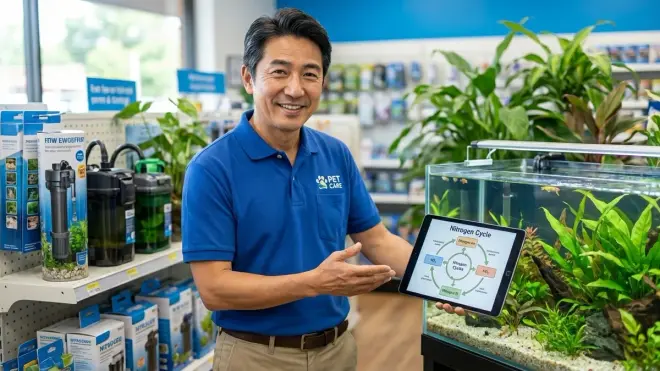
How long does it take for the aquarium nitrogen cycle to complete?
A complete aquarium nitrogen cycle typically takes between four and eight weeks when starting from scratch with fishless cycling methods, though I've seen variations from as short as two weeks with heavy bacterial seeding from established tanks to as long as ten weeks in tanks with very low temperatures or alkaline-buffered water that maintains high pH. The timeline depends on water temperature (warmer accelerates bacterial reproduction), pH (bacteria struggle below 6.5 and thrive between 7.0-8.0), oxygen levels, and whether you're using any bacterial starter products or seeded media from established tanks.
Can I add fish before my tank finishes cycling?
You technically can add extremely hardy fish species in very small numbers during a fish-in cycle, but I strongly advise against it based on both ethical considerations and practical experience—the fish will experience stress from ammonia and nitrite exposure even if they survive, their immune systems become suppressed making them vulnerable to diseases like ich or fin rot, and you'll need to perform daily water testing and frequent large water changes (often 30-50% daily) to keep toxin levels from reaching lethal concentrations. If you're setting up a betta tank specifically, the How to Set Up a Betta Fish Tank: Equipment, Water Conditions, and Habitat Requirements guide covers species-appropriate cycling approaches.
What should ammonia, nitrite, and nitrate levels be in a cycled tank?
In a fully cycled and healthy aquarium, ammonia should always test at 0 ppm, nitrite should always test at 0 ppm, and nitrate typically ranges from 5-40 ppm depending on stocking levels, feeding habits, and time since the last water change, though I personally aim to keep nitrate below 20 ppm in freshwater community tanks and below 10 ppm in reef systems since research suggests chronic exposure above 50 ppm can suppress fish immune function. Any detectable ammonia or nitrite reading in an established tank indicates a problem—either the biological filter has crashed due to medication use, filter cleaning with chlorinated water, or overstocking, or you're dealing with a sudden ammonia spike from overfeeding or a dead fish decomposing somewhere hidden.
Do I need to cycle a new aquarium filter when I replace it?
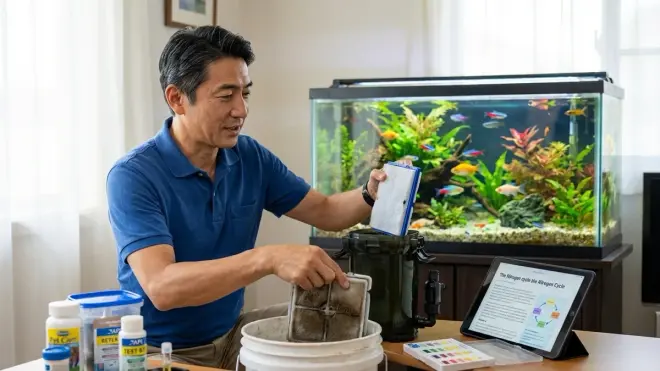
This is a common misconception that's killed countless fish—you should never replace all your filter media at once because you'll throw away the established bacterial colonies and crash your cycle. What I've found works is replacing filter media in stages: if you have multiple filter cartridges or sponges, replace only one at a time with at least 4-6 weeks between replacements, allowing bacteria to colonize the new media before removing the next old piece. Better yet, switch to reusable media like ceramic rings, bio balls, or foam sponges that you simply rinse in old tank water during maintenance rather than replacing. When I upgraded the filter on my 55-gallon, I ran both filters simultaneously for six weeks before removing the old one, ensuring zero disruption to the nitrogen cycle.
Can I speed up the aquarium nitrogen cycle with products or techniques?
You can moderately accelerate cycling by maintaining optimal conditions and using bacterial starter products, though you can't bypass the fundamental biology involved—bacteria still need time to reproduce and colonize surfaces regardless of what you add. What I've found actually works includes keeping water temperature between 78-82°F (bacteria reproduce faster in warmth), ensuring strong water circulation and surface agitation for dissolved oxygen, maintaining pH between 7.0-8.0, using a quality bacterial starter product like Seachem Stability or Fritz TurboStart (though these only shave off a week or two in my experience), and ideally seeding with established filter media from a healthy, disease-free tank which is by far the most effective method I've used. What doesn't work despite common myths: adding fish food to decompose (creates uncontrolled ammonia spikes), adding live plants (they consume minimal ammonia compared to bacterial needs), or "cycling" for just a few days then adding fish (bacterial colonies simply can't establish that quickly).
Understanding Your Tank's Living Filter
The aquarium nitrogen cycle isn't something you set up once and forget—it's a living biological system that requires ongoing attention and respect. After fifteen years of keeping tanks, I still test my water weekly in established aquariums and any time I notice behavioral changes in my fish. I've learned that understanding this cycle means understanding the invisible foundation that everything else in your aquarium depends on.
What surprised me most about the nitrogen cycle over the years is how resilient it becomes once established, yet how quickly it can crash if you're careless. I once accidentally cleaned my canister filter with straight tap water (chlorine disaster), crashed my cycle completely, and spent three weeks doing daily water changes while it re-established. I've also seen cycled tanks handle gradual stocking increases, temporary power outages, and moderate overfeeding without issue because those bacterial colonies adapt to changing ammonia loads.
If you're setting up your first tank, take the cycling process seriously—it's not an optional step or something to rush through. Whether you choose fishless cycling with pure ammonia, seeded cycling with borrowed media, or even careful fish-in cycling with daily testing, commit to doing it properly. The reward is a stable, healthy aquarium where your fish actually thrive instead of just barely survive. For comprehensive equipment recommendations to support your cycling process, the Aquarium Equipment Checklist: Everything You Need for a Successful Tank Setup covers filters, test kits, and other essentials that make cycling and maintenance much more manageable.