
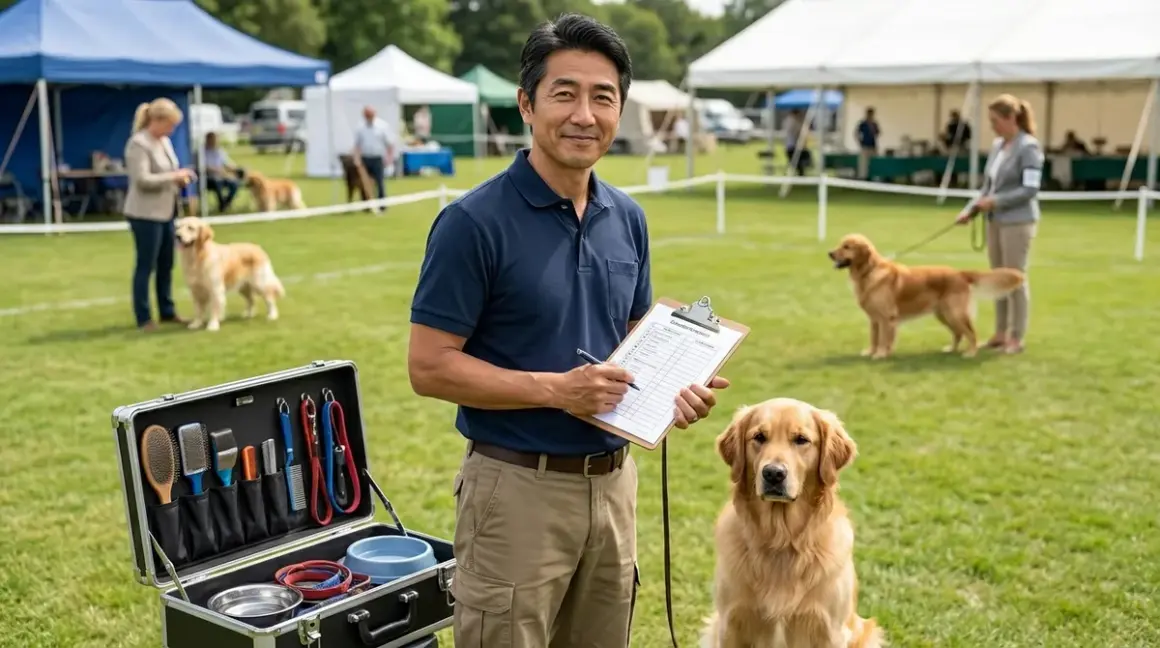

I'll be honest—I've never shown a dog in conformation myself. My world revolves around water parameters and reef chemistry, not ring presence and stacking. But over the past year, I've watched my neighbor prepare for dozens of shows with her gorgeous Golden Retriever, and the parallels to my own hobby are striking. Just like a successful aquarium setup depends on having the right equipment dialed in before you add fish, a successful show day depends on having your dog show equipment checklist completely sorted before you step into that ring. This comprehensive dog show equipment checklist covers everything from grooming essentials to ring-side necessities, organized by category so you can pack methodically rather than frantically stuffing items into your bag the night before.
Grooming and Presentation Equipment
Your dog's appearance is everything in conformation, and that means having the right tools to maintain their coat and overall presentation throughout the day. I've learned from watching countless pre-show grooming sessions that even the most beautifully bred dog needs proper equipment to look their best under those bright arena lights.
Breed-specific grooming tools (slicker brushes, pin brushes, stripping knives, or thinning shears depending on coat type): Different coat textures require completely different approaches—what works for a Poodle's curly coat will damage a Yorkshire Terrier's silky hair, so match your tools to your breed standard.
Finishing spray or coat conditioner: A light misting product designed to add shine and reduce static without leaving residue that judges can feel; look for formulas labeled as show-safe that won't attract dirt or create buildup.
Portable grooming table with non-slip surface: A stable, height-appropriate workspace prevents back strain during extended grooming sessions and keeps your dog safely elevated; tables should support at least 150 pounds and feature rubberized tops for secure footing. For detailed guidance on table features and setup, check out our article on understanding dog show grooming tables.
Grooming arm with adjustable clamp: This attaches to your table and holds a restraint loop at the correct height to keep your dog positioned safely while you work; adjustability matters because you'll want different heights for different grooming tasks.
Chalk or whitening powder (for light-colored breeds): Breed-specific products that enhance white or light coat areas without violating AKC rules; these must be completely brushed out before entering the ring, as residue is grounds for disqualification.
Towels in multiple sizes: Pack at least three—one for initial drying if your dog gets wet, one for wiping paws between the grooming area and ring, and one clean towel for last-minute touch-ups.
Extension cord and power strip: Most show venues have limited outlets in grooming areas, and you'll likely need power for clippers, dryers, or heated styling tools; bring a 25-foot cord minimum to reach distant outlets.
Spray bottle with clean water: For dampening coat sections during grooming or cooling your dog down between classes; refill with venue water rather than traveling with full bottles to save space.
The grooming process itself varies dramatically by breed—what I've observed is that successful exhibitors have practiced their grooming routine dozens of times before show day so they know exactly which products and tools they need and in what order.
Ring Equipment and Handling Supplies
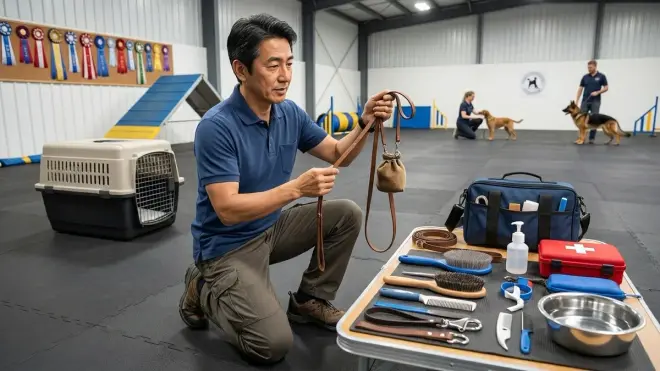
Once you're actually in the ring, you need specific equipment that meets AKC regulations and presents your dog properly to the judge. This category is where I've seen the most variation based on experience level and breed requirements.
Show lead appropriate for your breed: A thin, discreet lead for breeds where minimal equipment is preferred, or a more substantial lead for large breeds requiring control; material matters too—nylon, leather, or chain depending on coat color and breed tradition. Our guide to dog show leads and leashes breaks down the specific options by breed size and coat type.
Backup show lead in a different style or material: Leads can break, get stepped on, or simply not photograph well against your dog's coat under certain lighting—having a second option prevents last-minute panic.
Liver or high-value training treats in a sealed container: Small, soft treats that won't crumble in your pocket and can be delivered quickly to maintain your dog's attention; beef liver, freeze-dried lung, or commercial training treats work well. The key is using something your dog genuinely wants, which I cover in more detail when discussing treat usage during training.
Bait bag that stays open and accessible: A pouch specifically designed to clip to your waistband and remain open so you can grab treats quickly without fumbling; spring-loaded openings work better than drawstring closures in the ring.
Grooming spray for last-second touch-ups: A small travel-size bottle of the same finishing spray you used during grooming, for smoothing any wayward hairs right before your class is called.
Ring clip or number holder: If your show provides armband numbers, you'll need a way to secure them that doesn't interfere with your dog's movement or your handling; magnetic clips work better than safety pins for repeated daily use.
What I've noticed watching handlers is that the difference between a show lead and a regular training leash isn't just aesthetic—the handling dynamics change completely, and what works for everyday walks creates problems in the ring.
Health, Safety, and Comfort Items
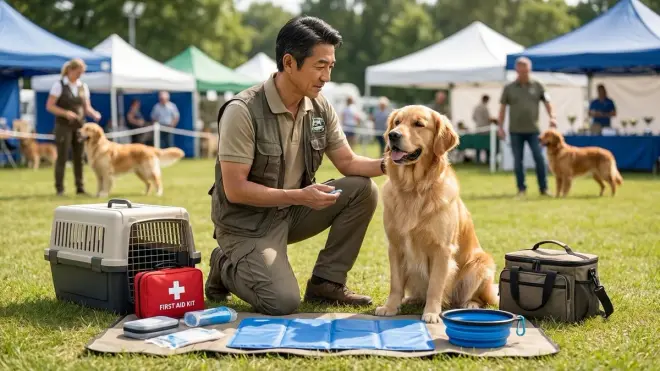
Show days are long, often starting before dawn and extending into evening hours. Your dog's physical wellbeing between classes matters just as much as their performance in the ring, and this is where preparation separates stressed, uncomfortable dogs from those who maintain enthusiasm all day.
Collapsible water bowl and fresh water: Hydration is critical, especially in warm venues or during multi-day shows; bring your own water from home if your dog has a sensitive stomach, as sudden water changes can cause digestive upset.
Familiar food in pre-portioned containers: Pack your dog's regular diet rather than switching to convenience options that might cause stomach issues; bringing pre-measured portions prevents overfeeding from stress or boredom. For dogs who tend to get anxious about feeding schedules, our article on automatic dog feeders discusses how consistent timing impacts digestive health.
Exercise pen or crate with secure latching: A safe containment area for rest periods between classes; crates should be large enough for your dog to stand, turn around, and lie down comfortably, with excellent ventilation on multiple sides.
Bedding or mat for the crate: Something familiar from home that provides cushioning and comfort; washable materials are essential since show environments expose your dog to more dirt and potential contaminants than usual.
First aid supplies: Styptic powder for nail bleeding, sterile gauze pads, veterinary wrap, tweezers for splinter or tick removal, and a digital thermometer; dogs can injure themselves in unfamiliar environments, and basic supplies prevent small problems from becoming show-ending emergencies.
Waste bags and cleaning supplies: You're responsible for cleaning up after your dog in grooming areas, exercise zones, and anywhere on show grounds; bring more bags than you think you'll need.
Current health records and vaccination certificates: Required for AKC entry and often checked at venue gates; keep copies in a waterproof sleeve or folder that stays with your show supplies.
Any required medications with dosing schedule: If your dog takes supplements, joint support for senior dogs, or prescription medications, maintain their normal schedule—missing doses can affect performance and wellbeing.
The biggest mistake I've seen newer exhibitors make is focusing entirely on presentation equipment while neglecting comfort items, then wondering why their dog loses enthusiasm after the first class of the day.
Documentation and Show Essentials
The administrative side of showing requires its own category of supplies—items that have nothing to do with your dog's appearance but everything to do with actually being allowed to compete and staying organized throughout the event.
Show confirmation and entry paperwork: Printed copies of your entry confirmations, armband assignment if pre-assigned, and any special class information; don't rely solely on phone access since connectivity can be spotty in some venues.
AKC registration papers or copies: Required for verification, particularly if there are questions about your dog's registration status or if you're entering multiple classes.
Breed standard copy for reference: A printed version of the official AKC breed standard helps you verify you're emphasizing the correct attributes during grooming and stacking; having it physically available lets you reference it quickly between classes.
Ring schedule and venue map: Show schedules change, rings get reassigned, and last-minute amendments happen—having your own marked-up copy with your classes highlighted and ring locations noted saves time.
Pen and notepad for notes: Recording judge feedback, noting things that worked well or poorly in your handling, and keeping track of other exhibitors with dogs you want to watch.
Cash for vendor purchases and entry fees: Not all vendors accept cards, and some show-day entries or catalog purchases require cash; bring small bills and quarters for parking meters or hospitality tips.
The shows I've observed ran most smoothly for exhibitors who treated the administrative requirements as seriously as the grooming process—having a dedicated folder that stays with your equipment year-round means nothing gets forgotten.
Final Check Before You Go
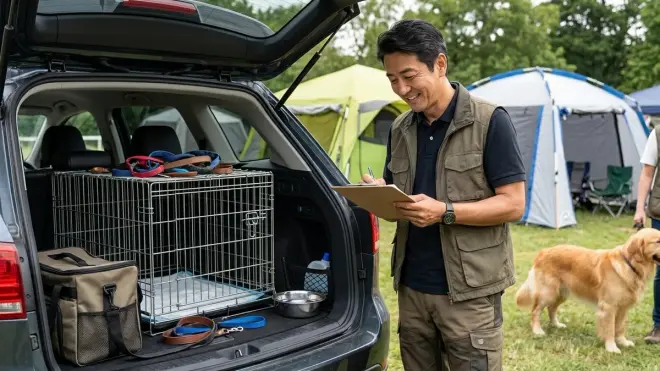
The night before your show, run through this condensed checklist to verify you have the major categories covered. In my experience with aquarium events and equipment-heavy hobbies, a final systematic check catches 90% of potential problems:
- Grooming equipment: Table, arm, breed-specific tools, finishing products, power supplies
- Ring supplies: Show lead (plus backup), treats, bait bag, number holder
- Dog comfort: Water, food, bowls, crate/pen, bedding, first aid kit
- Documentation: Entry confirmations, registration papers, breed standard, cash
- Personal items: Comfortable shoes for long days on concrete, weather-appropriate clothing that won't shed onto your dog, chair if you'll be waiting between classes
For a more detailed timeline-based approach to preparation, our pre-show prep checklist covers the entire week leading up to the event.
Frequently Asked Questions
What's the most commonly forgotten item on a dog show equipment checklist?
The most commonly forgotten item is a backup show lead—exhibitors pack their favorite lead but don't bring a spare, then panic when it breaks or gets lost between classes, forcing them to borrow an ill-fitting alternative or scratch from their class entirely.
Do I need different equipment for puppy classes versus adult conformation classes?
You'll use the same basic categories of equipment for puppies and adults, but puppies often require smaller, lighter show leads, gentler grooming tools appropriate for developing coats, and more frequent treats to maintain attention since they have shorter focus spans than experienced adult show dogs.
How should I organize my dog show equipment for easy access during the event?
Organize equipment in clear bins or bags by category—one container for grooming supplies, one for ring equipment, one for health and comfort items—then create a "ring-side bag" containing only what you need within 10 minutes of your class being called: show lead, treats, bait bag, grooming spray, and armband, so you're not digging through your full setup when the ring steward calls your number.
Final Thoughts
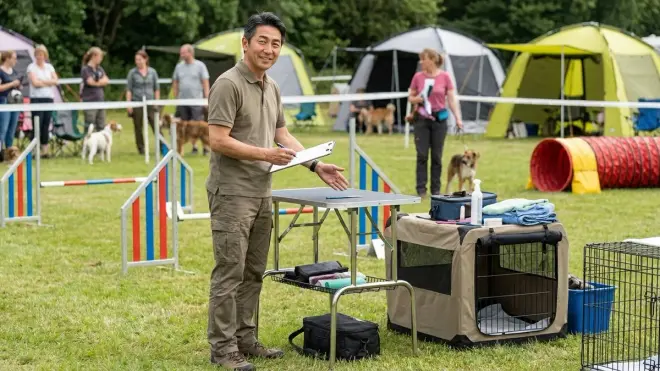
What strikes me most about the dog show equipment checklist is how it mirrors any specialized hobby that demands both skill and proper preparation. In fishkeeping, you can have the most expensive equipment in the world, but if you haven't cycled your tank properly or you've forgotten to dechlorinate your water, the whole system fails. The same principle applies to conformation showing—all the grooming talent and beautiful breeding in the world won't overcome showing up without the right lead or forgetting your entry paperwork.
The exhibitors I've watched succeed consistently are the ones who've refined their personal version of this checklist through experience, adding breed-specific items and removing things they've learned they don't actually need. Your first few shows will teach you what works for your dog, your breed, and your handling style. Start with this comprehensive dog show equipment checklist, then adjust it based on what you actually use versus what just takes up space in your grooming bag. The key is developing a system you can execute even when you're running on four hours of sleep and your third cup of coffee—because that's what show mornings often look like.
If you're just getting started in conformation, our complete guide to dog show supplies provides broader context about how all these pieces fit together within the larger showing process.