
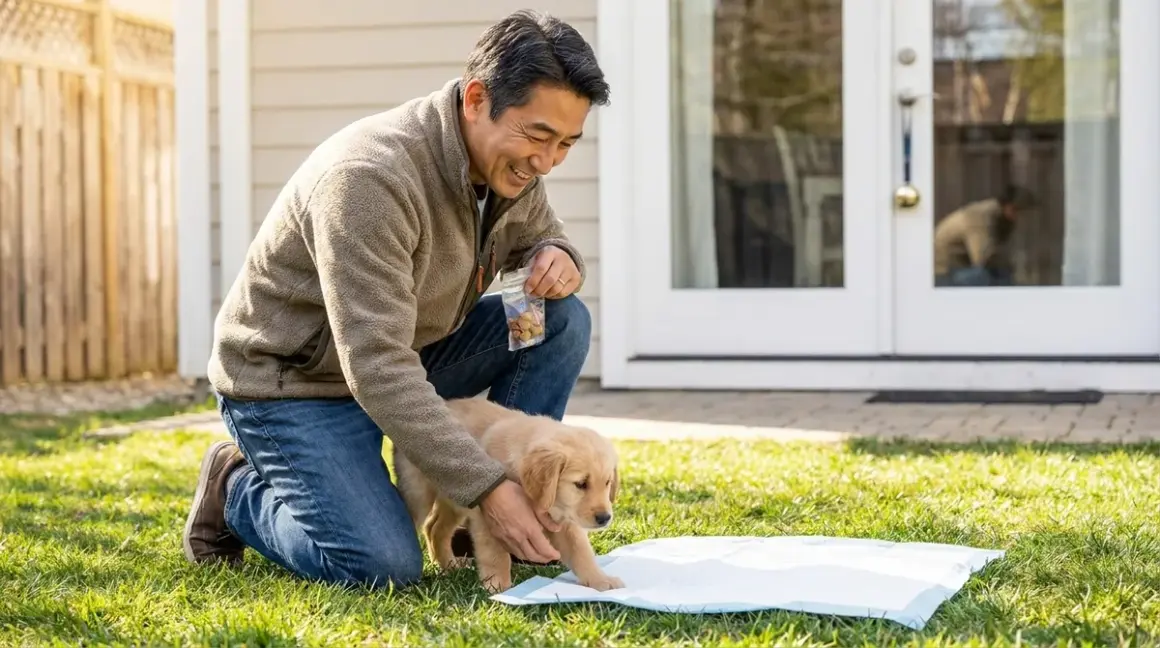

I'm going to be honest with you upfront—I've spent fifteen years figuring out how to keep fish alive in glass boxes, not raising puppies. But when my neighbor asked me to help with her new German Shepherd pup last year while she dealt with a family emergency, I got a crash course in puppy potty training schedule management that reminded me a lot of cycling a new aquarium: you can't rush the biological processes, consistency matters more than intensity, and accidents are just part of the learning curve. What I found works is treating potty training like I treat establishing beneficial bacteria colonies—you follow the timeline the organism needs, not the timeline you want. This checklist breaks down exactly what to expect and when, from those chaotic 8-week-old bladder limitations all the way through to reliable adult control around 6-8 months.
8-10 Weeks Old: The Foundation Phase
Expect bathroom breaks every 1-2 hours during this stage—puppies this young have virtually no bladder control, similar to how a newly hatched fry can't regulate its swim bladder yet; the muscles and neurological connections just aren't fully developed.

Take your puppy out immediately after waking up from any nap: In my experience with my neighbor's pup, this was non-negotiable—within 60 seconds of those eyes opening, we were heading outside, because waiting even three minutes resulted in a puddle.
Schedule potty breaks within 5-10 minutes after every meal or drink: Puppies at this age have what veterinary behaviorists call a gastrocolic reflex that's incredibly predictable—food goes in, waste comes out, usually within that narrow window.
Monitor during play sessions and take them out every 20-30 minutes: Active play stimulates the bladder faster than rest, much like how increased water flow in a tank accelerates the nitrogen cycle—the system processes faster under activity.
Carry them to the designated potty spot rather than letting them walk: This prevents the "distraction accidents" where they start to go halfway there; what I found works is creating a direct association between that specific outdoor location and elimination.
Use a consistent verbal cue like "go potty" every single time: Repetition at this stage builds the foundation—I watched my neighbor use the same phrase probably 200 times in the first week, and by day nine, the puppy clearly understood what was expected.
Expect 2-3 accidents per day minimum even with perfect supervision: This isn't failure—it's biology, and getting frustrated is like getting mad at a new tank for having an ammonia spike during cycling; the system needs time to stabilize.
Keep nighttime bathroom breaks realistic (every 3-4 hours): Most 8-10 week puppies can't hold it through a full 8-hour night yet, which means you're looking at setting an alarm for a midnight potty trip—exhausting, but temporary.
During this phase, I recommend having everything you need for initial setup already organized before your puppy comes home, because those first few days move fast and you won't have time to run to the store. If you're using indoor training pads as a backup (which, honestly, created some confusion for my neighbor's pup about where was "acceptable"), check out the comparison between crate training vs puppy pads to understand the trade-offs.
10-14 Weeks Old: Building Consistency
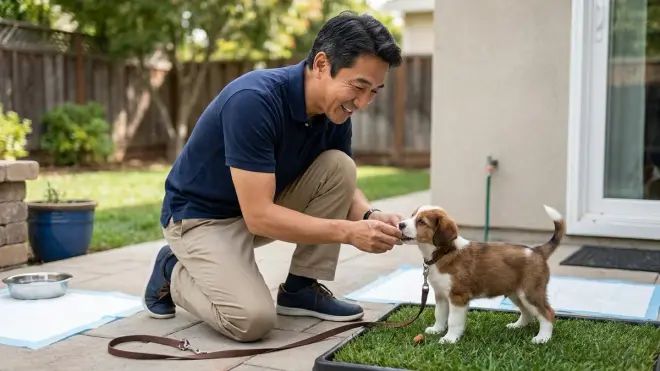
The bladder control window extends to 2-3 hours between breaks during this period, and you'll start seeing the first signs of your puppy "holding it" deliberately rather than just emptying reflexively.
Establish a fixed morning routine starting the moment you wake up: What I found works is the same sequence every single day—crate door opens, immediate carry outside, successful elimination, then breakfast—this predictability helps puppies anticipate the pattern.
Create a written schedule for the whole household to follow: In my experience helping out, the biggest setback came when my neighbor's teenage son took over for an evening and didn't follow the same timing—one missed cycle and we had three accidents that night, breaking a five-day clean streak.
Start introducing a verbal marker for successful elimination: The American Kennel Club recommends capturing the exact moment with a calm "good potty" (not excited praise yet, which can interrupt them mid-stream), followed by a small treat within three seconds.
Track patterns in a simple log for one week: I had my neighbor note every potty break—time, location, type (urine/bowel)—and we spotted that her pup needed to defecate exactly 15 minutes after breakfast and 25 minutes after dinner, allowing us to be proactive instead of reactive.
Extend the space they have access to very gradually: Adding one additional room per week once they've had zero accidents in the current space for seven consecutive days prevents them from sneaking off to corners you're not watching.
Watch for circling, sniffing, or suddenly leaving the room as potty signals: These pre-elimination behaviors become more obvious during this phase—I learned to recognize that specific tight-circle walk the pup did, which gave us maybe 15-20 seconds to get outside.
Begin phasing out nighttime bathroom breaks if your puppy stays dry in the crate for 5-6 hours: Not all puppies reach this milestone at the same age, just like not all aquarium species mature at the same rate, but most medium-to-large breed puppies can start consolidating sleep by 12-13 weeks.
This is the phase where understanding why your puppy is having accidents becomes critical, because you need to distinguish between insufficient training, medical issues, or just normal developmental limitations. What worked for me (well, for my neighbor) was assuming every accident was our failure to read signals rather than the puppy's failure to perform—that mindset shift reduced frustration significantly.
14-20 Weeks Old: Increasing Independence
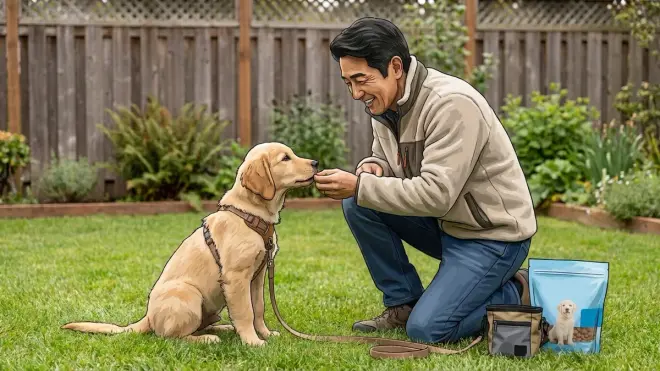
Most puppies can hold their bladder for 3-4 hours consistently by this stage, though bowel control might still lag behind by a week or two—similar to how different beneficial bacteria colonize at different rates during the nitrogen cycle.
Start testing the puppy's ability to signal they need to go out: What I've found works is positioning yourself where you can observe but aren't actively prompting them, giving them the opportunity to come find you or use whatever signal system you're teaching (bell, scratch at door, etc.).
Introduce a potty bell or designated alert method: The Caldwell's Potty Bells for Dog Training hang on the doorknob and can be nose-nudged or paw-tapped—my neighbor's pup took to this within three days, though we had to actively ring it with her paw for the first 20-30 successful trips to create the association.
Gradually reduce treat rewards to intermittent reinforcement (every 3rd success): This prevents dependency on food motivation and starts transitioning to intrinsic habit, though I'd keep verbal praise consistent for every successful outdoor elimination.
Add complexity to the potty routine by varying which door you exit from: This teaches flexibility—your puppy needs to understand that "outside" is the concept, not just "through the back sliding door specifically," because life happens and sometimes you'll need to use the front door.
Begin short supervised periods of freedom (15-20 minutes) in previously restricted areas: Watch them like you'd watch ammonia levels in a newly cycled tank—constantly and carefully—expanding their space only when they demonstrate reliability.
Continue scheduled breaks but start adding "bonus opportunities": I had my neighbor add one optional trip between scheduled times to see if the pup would eliminate even when not at maximum urgency, teaching them it's acceptable to go before the bladder is completely full.
Address any stubborn resistance with targeted troubleshooting: If you're hitting a wall during this phase, the strategies in how to potty train a stubborn puppy can break through those frustrating plateaus where progress seems to stall.
The challenge during this phase is that puppies start testing boundaries deliberately, which is completely different from the reflexive accidents of younger pups. When my neighbor's shepherd started sneaking behind the couch to pee, it wasn't because she couldn't hold it—it was because we'd gotten complacent about supervision. Adjusting our response (back to tighter management for a week) solved it immediately.
20 Weeks to 6 Months: Refinement and Testing
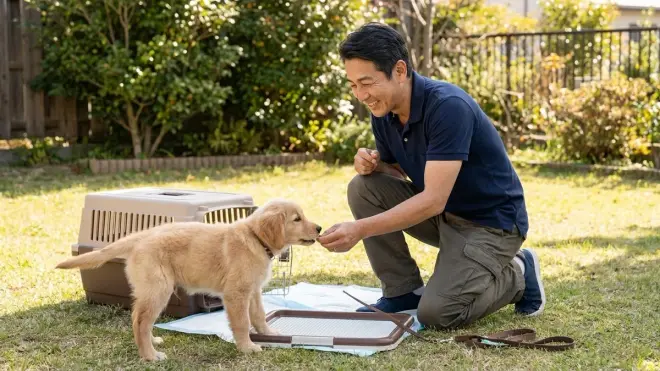
By five months, most puppies can hold their bladder for 5-6 hours during the day, though expecting them to go a full workday alone is still pushing it—this is more about consolidating the habits than achieving total independence yet.
Transition to a 4-times-daily schedule for most puppies: Morning upon waking, midday (around lunch), late afternoon, and right before bed covers the biological needs without over-scheduling, similar to maintaining a mature aquarium where you shift from daily testing to weekly once parameters stabilize.
Test reliability by giving 10-minute delays before scheduled potty breaks: If your puppy is rock-solid on a 7am/12pm/5pm/10pm schedule, occasionally waiting until 7:10 or 12:15 teaches them to handle minor variations—real life isn't perfectly timed.
Introduce different weather conditions and surfaces deliberately: A puppy trained only on sunny days might refuse to eliminate in rain; one trained only on grass might struggle when visiting a friend with gravel—variety during this phase prevents surface or weather aversion later.
Expect occasional regression during teething or growth spurts: Just like how established tanks can have minor parameter swings during seasonal changes, puppies going through developmental milestones sometimes backslide for a week or two before stabilizing again.
Phase out active supervision to passive monitoring in most rooms: You're no longer following them from room to room but you're staying aware of where they are, checking in every few minutes rather than maintaining line-of-sight.
Begin the transition to new dog food during this period if needed: Dietary changes can temporarily affect elimination patterns, so if you're switching formulas, follow the guidelines in how to transition your dog to new dog food to minimize digestive disruption during this already-sensitive training window.
Address any lingering issues with targeted training aids: If you're still seeing frequent indoor mistakes at five months, something's off—either a medical issue (consult your vet), insufficient reinforcement of the outdoor habit, or environmental factors, which is where dog potty training aids can provide the extra support to overcome the plateau.
What I noticed helping my neighbor during this phase was that her confidence mattered as much as the puppy's ability—once she trusted the dog could hold it for four hours, she stopped hovering, which actually reduced the puppy's anxiety about elimination and improved reliability. It's similar to how new aquarists who constantly adjust parameters create less stable tanks than those who make measured, infrequent changes.
6-8 Months: Approaching Adult Reliability
Most puppies achieve something close to adult bladder and bowel control between 6-8 months, though small breeds may take until 8-10 months and very large breeds sometimes solidify habits earlier due to physical development differences.
Settle into a long-term 3-4 times daily schedule: Adult dogs typically need morning, midday or early afternoon, evening, and before bed—this becomes your maintenance routine for the next decade-plus.
Proof the training against major distractions (visitors, loud noises, exciting events): A puppy who's reliable during normal routine but has accidents when guests visit or during thunderstorms needs specific practice with those scenarios during this phase.
Begin trusting them alone for 4-6 hour stretches if needed: This is when most people can return to normal work schedules without arranging midday dog walkers, though if you're regularly gone longer, an automatic dog feeder for meals doesn't help with potty breaks—you still need someone to let them out.
Verify they can signal reliably across different contexts: Can they tell you they need out when you're on a phone call? While you're cooking dinner? When there's a delivery at the door? Testing these scenarios prevents the "I tried to tell you" accidents.
Celebrate the first 30-day accident-free streak: This milestone means the neural pathways are solidified—your puppy has genuinely formed the habit rather than just complying with heavy supervision.
Understanding the broader behavioral changes during this period helps contextualize potty training progress—check out understanding dog behavior in the first 30 days if you adopted your puppy recently, because general adjustment and potty training success are deeply intertwined. What I've learned from both fishkeeping and watching my neighbor's puppy mature is that patience during the development timeline prevents long-term problems—rushing either process creates instability you'll be fixing for months or years afterward.
Final Check Before You Go
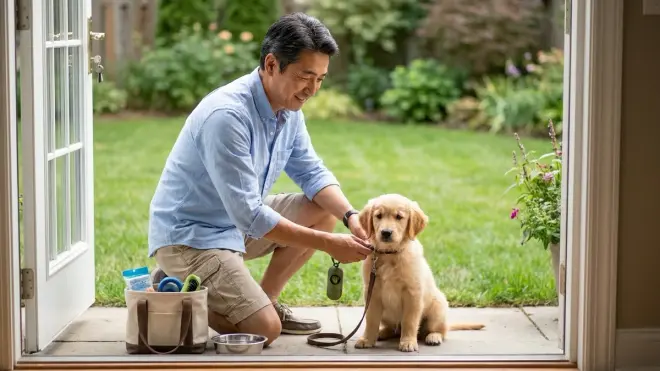
Before you start implementing your puppy potty training schedule, verify you have these fundamentals covered:
- Veterinary confirmation that your puppy is healthy with no urinary tract issues or parasites that could interfere with normal elimination patterns
- A designated outdoor potty spot that's consistently accessible and won't change (moving the location mid-training confuses the association)
- A written schedule posted where everyone in the household can see it with specific times and assigned responsibilities
- High-value training treats cut into tiny pieces (pea-sized or smaller) specifically for potty training rewards—separate from regular treats
- Enzymatic cleaner (not just regular household cleaner) to completely eliminate odor from any accidents, preventing the puppy from being drawn back to previous spots
- Realistic expectations for your puppy's specific age—an 8-week-old German Shepherd has different capabilities than a 20-week-old Chihuahua
- A backup plan for sick days, late work nights, or emergencies when the normal schedule gets disrupted
- The complete guide to how to potty train a puppy as your reference for day-to-day troubleshooting beyond this timeline
Frequently Asked Questions
How long does it take to fully potty train a puppy using this schedule? Most puppies achieve reliable daytime control by 5-6 months when you follow a consistent puppy potty training schedule, though complete reliability including signaling and handling unusual situations typically solidifies around 7-8 months, with small breeds sometimes taking until 8-10 months due to their smaller bladder capacity and slower physical development.
Can I speed up potty training by taking my puppy out more frequently than the schedule suggests? Taking your puppy out more frequently than their developmental stage requires doesn't accelerate learning and can actually prevent them from building bladder capacity—if you take an 8-week-old puppy out every 30 minutes, they never develop the muscle control to hold it for two hours, similar to how constantly topping off a fish tank prevents you from learning its actual evaporation rate.
What if my puppy is having more accidents than the schedule indicates is normal for their age? If your puppy consistently exceeds the expected accident frequency for their age (more than 2-3 daily at 8-10 weeks, more than one daily at 14+ weeks), first rule out medical issues with your veterinarian, then evaluate whether you're truly maintaining the schedule consistently or if you're missing their pre-elimination signals—most "stubborn" puppies are actually undertrained or have humans who aren't reading their communication attempts.
Final Thoughts

Here's what I took away from my unexpected crash course in puppy potty training schedules: the timeline matters more than the intensity of your effort. You can be the most dedicated, consistent owner in the world, but you can't force an 8-week-old puppy's bladder muscles to mature faster than their biology allows—just like I learned years ago that I couldn't speed up the nitrogen cycle in a new aquarium no matter how much beneficial bacteria supplement I dumped in. What I found works is matching your expectations and schedule to your puppy's actual developmental stage, staying consistent during the messy early weeks, and trusting that the accidents will decrease naturally as their physical control catches up to their cognitive understanding. My neighbor's shepherd is now fifteen months old and has been completely reliable for seven months—those exhausting 3am potty breaks and daily carpet cleanings feel like ancient history now. Your puppy will get there too, as long as you give them the timeline their body needs rather than demanding the timeline your schedule wants.