
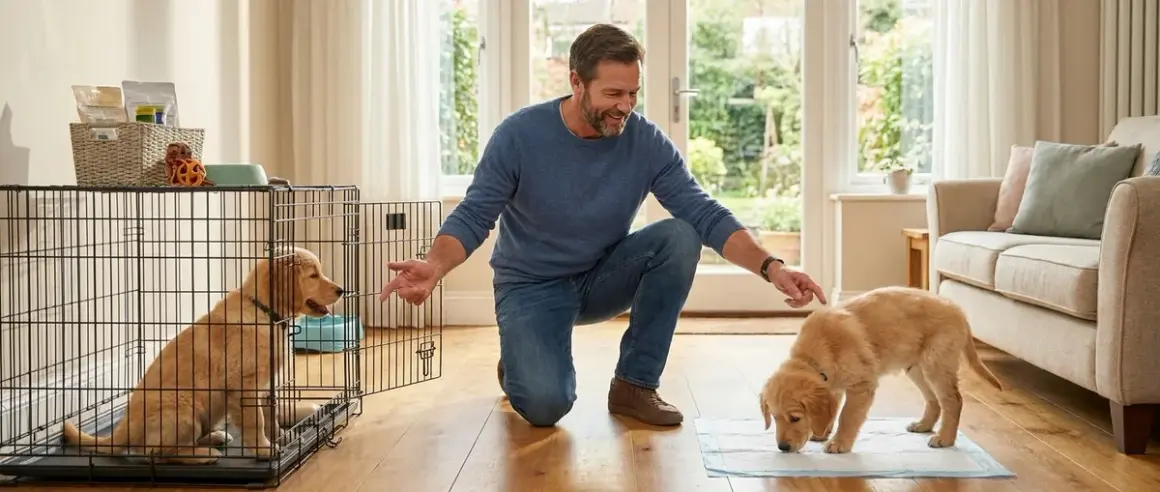

Crate training is better for most puppies because it builds long-term outdoor potty habits faster, but puppy pads work well for apartment dwellers, small breeds, and owners with limited mobility. I've spent two decades helping dog owners navigate the crate training vs puppy pads debate, and here's what you need to know: your choice depends on your living situation, schedule, breed size, and long-term goals. This article breaks down both methods so you can pick the one that'll actually work for you and your pup.
Quick Comparison
| Criteria | Crate Training | Puppy Pads |
|---|---|---|
| Training Timeline | 4-6 months to full reliability | 6-12+ months, some dogs never fully transition outdoors |
| Best Living Situations | Houses with yard access, standard work schedules | High-rise apartments, limited outdoor access, mobility challenges |
| Long-Term Goal | Outdoor elimination only | Indoor backup option or permanent indoor potty |
| Ideal Breeds | All sizes, especially medium-large breeds | Toy breeds (under 10 lbs), senior dogs, small apartments |
| Daily Commitment | High initially (every 2-3 hours), decreases rapidly | Moderate ongoing (pad changes 2-3x daily indefinitely) |
| Monthly Cost | $50-80 initial setup (crate, bedding), minimal ongoing | $30-60+ monthly for disposable pads or $100-200 for washable systems |
Training Timeline and Success Rates
Here's what usually works: crate training gets most puppies reliably housetrained in four to six months, sometimes faster with small breeds that have smaller bladders but faster metabolisms. I've seen this a hundred times—puppies learn outdoor potty habits quickly when they're motivated to keep their sleeping space clean.
Puppy pads extend the timeline significantly. You're essentially teaching two behaviors: "go inside on this pad" first, then later "actually, go outside instead." That's confusing for a lot of dogs. Some puppies—especially toy breeds like Yorkies, Chihuahuas, and Maltese—do fine with pads their whole lives, but medium to large breeds often struggle with the transition. I've worked with families whose one-year-old Labs still preferred peeing on the kitchen mat because it felt like the pads they'd used for eight months.
The biological reality matters here. Puppies naturally want to keep their den clean, which is why crate training works so well—the crate becomes their den. Pads contradict that instinct by teaching them it's okay to eliminate indoors. That's not wrong, but it's definitely a longer path if your end goal is outdoor-only potty habits.
If you're looking for a complete roadmap, check out our puppy potty training schedule that breaks down expectations by age. The crate method aligns perfectly with those developmental milestones, while pads can blur the timeline.
Daily Schedule and Lifestyle Fit
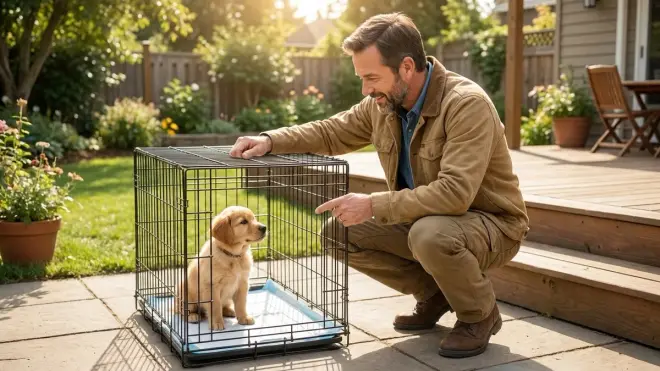
Your schedule determines which method you can actually stick with. Crate training demands intensive supervision for the first six to eight weeks—you're taking your puppy outside every two to three hours during the day, immediately after meals, after play sessions, and first thing in the morning. Miss a window, and you're cleaning up accidents.
I live in Oregon, and let me tell you, taking a puppy out at 2 AM in January rain isn't fun. But it works. The consistency pays off fast. By week eight or ten, most puppies are clearly signaling when they need to go, and you're stretching those intervals to four or five hours.
Puppy pads let you sleep a bit longer and skip those freezing midnight trips, but you're committing to daily pad maintenance indefinitely. Quality disposable pads like PETMAKER Puppy Training Pads🛒 Amazon need changing two to three times daily—more if you've got a larger dog or multiple puppies. Washable pads save money long-term but add laundry to your routine. Either way, you're dealing with indoor pee cleanup every single day.
Who has time for crate training? People with flexible schedules, work-from-home setups, or family members who can rotate puppy duty. It's also perfect if you're already planning to take time off after bringing your puppy home—that first month of intensive supervision sets you up for years of easy outdoor potty habits.
Who needs puppy pads? Anyone on the 15th floor of a building with one slow elevator. Owners with mobility issues who can't manage multiple daily outdoor trips. People with toy breeds that genuinely struggle in extreme weather. And frankly, anyone who knows they can't maintain the crate training schedule—a pad system done consistently beats a half-hearted crate attempt every time.
Living Space and Breed Considerations
Your home layout and your dog's size make certain methods more practical. Crate training works beautifully when you have direct outdoor access—a yard, a patio door, or quick elevator access to a grassy area. You're reinforcing "outside is the potty spot" every single time, and the repetition builds the habit fast.
High-rise apartments change the equation. I've worked with owners in downtown Portland condos where getting outside means leashing up, waiting for an elevator, crossing a lobby, and walking two blocks to the nearest grass patch. That's a ten-minute trip minimum, and puppies can't hold it that long in the beginning. Pads become a practical necessity, not a preference.
Breed size matters enormously. Toy breeds under ten pounds—your Pomeranians, toy Poodles, Papillons—often do great with pads permanently. Their small bladders mean more frequent potty breaks, but smaller volumes make pad cleanup manageable. Plus, these tiny dogs genuinely struggle in harsh weather. A Chihuahua in a Minnesota winter is miserable, and expecting outdoor potty trips in subzero temps isn't realistic.
Medium to large breeds—anything over 25 pounds—create logistical problems with pads. A Golden Retriever puppy produces a lot of urine, which means larger, more expensive pads and more frequent changes. By the time that pup hits 50 pounds, you're changing pads three or four times daily just to keep up. Crate training makes way more sense for bigger dogs because the outdoor space can handle the volume without any cleanup on your end.
If you're dealing with a particularly stubborn pup regardless of method, our guide on how to potty train a stubborn puppy covers troubleshooting techniques that work with both approaches.
Long-Term Goals and Habit Formation
Think about where you want to be in two years. Crate training builds toward complete outdoor elimination—your dog signals when they need to go, you let them out, they do their business, everyone's happy. Once that habit's solid, it's solid for life. You're not buying supplies, you're not cleaning indoor messes, and you can travel knowing your dog will adapt to new outdoor potty spots.
Puppy pads create a permanent indoor option, which sounds convenient until you realize it means permanent pad purchases and daily cleanup. Some owners love having that backup—if you're sick, if the weather's dangerous, if you're running late, the pad's there. That flexibility matters for certain lifestyles.
But here's the downside I see all the time: dogs trained on pads often generalize the "soft indoor surface" concept to things you didn't intend. Bath mats, area rugs, that nice rug in the guest bedroom—they all feel similar to a dog. I've worked with countless families frustrated that their pad-trained dog keeps peeing on the bathroom rug, even though they're using their designated pad too. The dog isn't being bad; they just learned that indoor soft spots are acceptable potty locations.
Crate training avoids that confusion entirely by establishing a clear rule: indoors is not for potty, outdoors is. The boundary is simple, and dogs understand it quickly. For more foundational guidance, our complete article on how to potty train a puppy walks through the core principles that make crate training so effective.
One more consideration: if you're planning to move, travel frequently, or have your dog spend time at other people's homes, crate training creates a portable skill. Your dog will potty outside anywhere. Pad training ties you to maintaining that indoor setup wherever you go, which gets complicated fast.
Cost Analysis and Supplies Needed
Let's talk money. Crate training has a higher upfront cost but almost nothing ongoing. You need a properly sized crate (24-inch for small breeds around $40-60, 36-inch for medium breeds around $60-80, 42-inch for large breeds around $80-120), crate bedding or a mat ($20-40), and enzymatic cleaner for accidents ($15-25). You're looking at $75-165 total to get started, then basically nothing except occasional bedding replacement.
The crate size matters—puppies need enough room to stand, turn around, and lie down comfortably, but not so much space that they can pee in one corner and sleep in another. That defeats the "keep the den clean" instinct. Many owners buy a large crate with a divider panel and expand the space as their puppy grows, which saves money long-term.
Puppy pads run $30-60 monthly for disposable options, more if you have a larger dog or need heavy-absorbency pads. Quality matters—cheap pads leak, don't control odor, and often lead to dogs tearing them up. That's $360-720 annually, every year, for as long as you're using pads. Washable pad systems like Klean Paws Washable Pee Pads🛒 Amazon cost $100-200 upfront but you'll need three to five pads to rotate through the laundry, plus the water and detergent costs.
You'll also want a pad holder or tray to keep pads in place, adding another $20-40. And honestly, most pad users eventually buy training sprays to attract puppies to the right spot, which is another $10-20 every few months.
The real cost difference shows up over time. Two years of crate training costs maybe $200 total. Two years of puppy pads costs $720-1,440. That's a significant difference, especially when you're also dealing with the ongoing time commitment of pad changes and cleanup. For a complete supply breakdown, see our puppy potty training supplies checklist that covers both methods.
Who Should Choose Crate Training
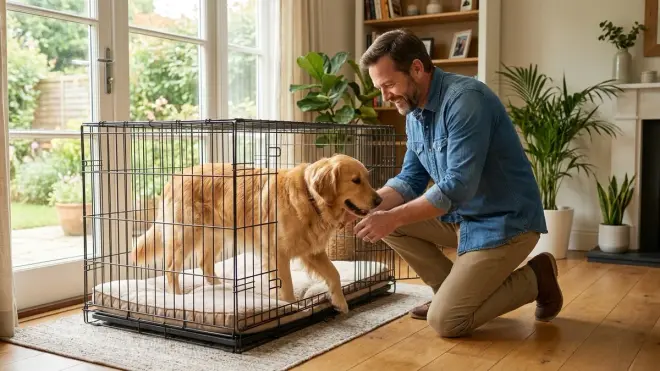
You're a great fit for crate training if you have direct outdoor access and a flexible schedule for those first few months. This method works beautifully for families where someone's usually home, remote workers, and anyone planning to take puppy leave. The time investment is intense up front but drops off quickly as your puppy develops bladder control.
Choose crate training if you're getting a medium to large breed puppy—anything expected to reach 25 pounds or more as an adult. The method scales perfectly with bigger dogs, while pads become impractical with volume. It's also ideal if your long-term goal is outdoor-only elimination with no indoor backup option. You want clean floors and no daily pad purchases? This is your path.
Finally, crate training makes sense if you value long-term simplicity over short-term convenience. You'll work harder in months one through three, but by month six you're done. Your dog's reliably housetrained, the crate becomes a cozy den they love, and you're free.
Who Should Choose Puppy Pads
Puppy pads are your solution if you live in a high-rise apartment or have limited mobility. Anyone who can't physically manage four to six daily outdoor trips—whether due to stairs, distance to outdoor space, or health limitations—will find pads genuinely helpful. They're also perfect for extreme weather climates where taking a tiny puppy outside in dangerous heat or cold isn't safe.
You should consider pads if you're getting a toy breed puppy under ten pounds. These small dogs often do great with permanent indoor potty options, and many toy breed owners appreciate having a backup for bad weather, late nights, or days when outdoor access isn't convenient.
Pads also work well if you're committed to the ongoing maintenance and understand you're potentially creating a permanent indoor potty habit. Some owners genuinely prefer that flexibility—having an indoor option means never worrying about making it home in time or finding outdoor space when traveling. If that backup is worth the cost and daily maintenance to you, pads are a solid choice. Just go in with realistic expectations about training timelines and the challenges of transitioning to outdoor elimination later if you change your mind.
Frequently Asked Questions
Can I use both crate training and puppy pads together?
You can, but it usually slows down the overall training process because you're teaching two different potty locations instead of one clear rule. If you need pads for overnight or times when you absolutely can't get outside fast enough, place them in a specific spot far from your puppy's crate and only use them when necessary, not as a general option. The clearer your rules, the faster your puppy learns—mixing methods works best only if you're committed to a longer training timeline and can accept some confusion along the way.
How long does it take to fully potty train a puppy with each method?
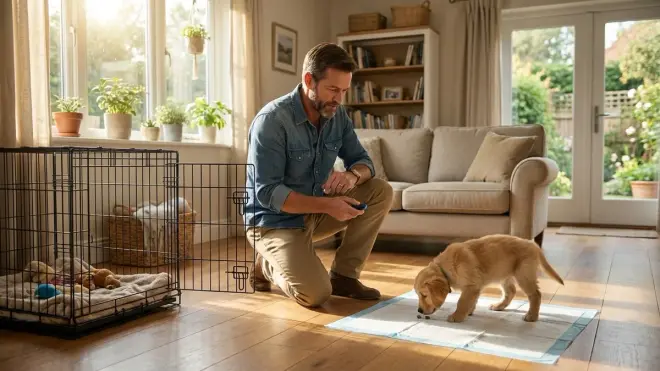
Crate training typically achieves reliable daytime control in four to six months, with nighttime control often coming even sooner since puppies naturally hold it longer while sleeping. Puppy pad training takes six to twelve months or longer if you're planning to transition outdoors later, because you're teaching the pad habit first and then retraining for outdoor elimination—essentially two complete training processes back-to-back.
What if I start with puppy pads and want to switch to outdoor training later?
Switching is definitely possible but requires patience and a systematic approach—you'll need to gradually move the pads closer to your door over several weeks, then outside, then eventually eliminate them while reinforcing outdoor potty breaks with high-value treats and consistent scheduling. Expect the transition to take two to four months depending on your puppy's age and how ingrained the pad habit is, and be prepared for some accidents during the adjustment period as your dog figures out the new rules.
Bottom Line
Crate training wins for most puppies because it builds outdoor potty habits faster, costs less long-term, and eliminates the confusion of indoor versus outdoor elimination. It requires serious time commitment up front, but that investment pays off with a reliably housetrained dog by six months old. If you've got yard access, a flexible schedule for those first few months, and any breed medium-sized or larger, crate training is your best bet.
Puppy pads make sense for specific situations—high-rise living, toy breeds, mobility limitations, or when you genuinely want a permanent indoor potty option. Just know you're signing up for ongoing costs and daily maintenance, possibly for your dog's entire life. Neither method is wrong; they're tools for different situations.
Pick the one that matches your actual lifestyle, not the one that sounds easier on paper. Consistency with whatever method you choose beats a perfect plan you can't stick to.