
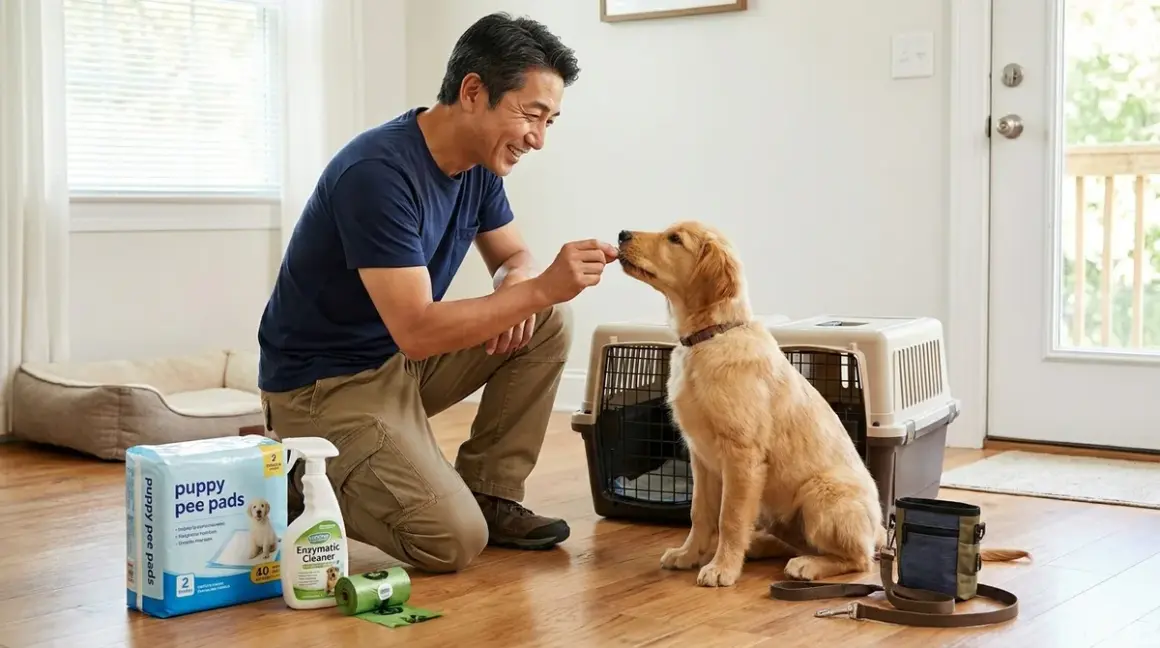

I'll be honest with you—when I first got into the aquarium hobby, I learned the hard way that starting without the right equipment is a recipe for frustration. Same principle applies to puppy potty training supplies, except the stakes involve your carpet instead of water chemistry. My sister brought home a golden retriever puppy last year and called me in a panic after three days of accidents everywhere, asking if I knew anything about dogs (spoiler: I didn't, but I know a thing or two about preparation). After helping her figure out what she actually needed versus what the pet store clerk pushed on her, I realized how much overlap there is between setting up a successful system—whether it's a reef tank or a potty training routine. This checklist covers everything you need to set up your puppy for house training success, organized by category so you're not wandering the pet store aisles wondering what's essential and what's marketing fluff.
Essential Indoor Potty Training Supplies
These are your foundation items—the stuff that does the actual work of teaching your puppy where to go. In my experience watching my sister navigate this, skimping on quality here just means you'll be buying replacements in two weeks anyway.
Absorbent puppy training pads with leak-proof backing and attractant scent built in—these are your primary training surface for puppies under 12 weeks or apartment dwellers without immediate outdoor access, and you'll want the thickest ones you can find because cheap pads leak through to your floor within seconds.
Puppy attractant spray like NatureVet Potty Here Training Aid Spray that contains pheromones or scent markers to guide your puppy to the designated spot—what I've found works best is applying this to pads or outdoor spots about 10 minutes before you expect the puppy to need to go, giving the scent time to settle.
Enzymatic cleaner specifically formulated to break down uric acid crystals in dog urine (regular household cleaners just mask the smell temporarily while the puppy can still detect it and will return to the same spot)—look for products containing protease and amylase enzymes on the ingredient label.
Waterproof floor mat or tray that's at least 2 inches larger than your training pads on all sides to catch overshoots and edge leaks, ideally with raised edges that contain spills rather than letting them run under furniture.
Disposable waste bags or a dedicated trash receptacle with odor-sealing lid for used pads—I can't stress this enough, leaving soiled pads in your regular kitchen trash will make your whole house smell like a kennel within hours.
Washable reusable pads as a backup option or for eco-conscious owners willing to do extra laundry—these need to be washed separately from your regular clothes in hot water with unscented detergent, and you'll need at least 6-8 to rotate while others are in the wash.
For more context on choosing between different potty training methods, the reusable versus disposable debate comes down to your tolerance for laundry versus ongoing supply costs.
Outdoor Potty Training Essentials
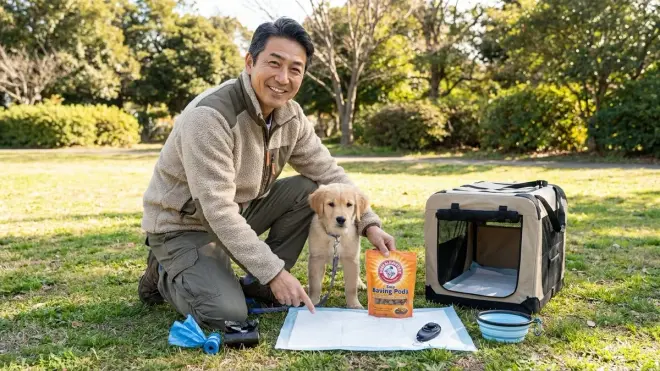
If you're training your puppy to eliminate outside exclusively (which most veterinarians recommend for dogs who'll have regular outdoor access as adults), you need a different set of tools. The American Kennel Club emphasizes consistency in location and routine, which is where these supplies come in.
High-visibility training leash in a bright color that's 4-6 feet long specifically for potty breaks—shorter than your walking leash so the puppy has limited range to sniff and explore, keeping them focused on the task instead of treating every trip outside like an adventure.
Outdoor potty area markers like small flags, decorative rocks, or landscape edging that designate the specific spot you want your puppy to use—this visual boundary helps you guide them to the same location every time, which speeds up the association between "this specific grass patch" and "time to go."
Weather-appropriate gear including a puppy raincoat for wet climates and booties for areas with ice melt or hot pavement (puppies are more likely to hold it and develop bad habits if going outside is physically uncomfortable)—look for adjustable velcro closures since puppies grow fast and you'll need to resize frequently.
Outdoor waste bag dispenser that clips to your leash handle so you're never caught without bags at 6 AM when your puppy finally goes and you're standing there in your pajamas.
Headlamp or clip-on leash light for early morning and late evening potty breaks, because trying to see if your puppy actually eliminated in the dark leads to false celebrations and confusion about whether they "finished" or not.
Potty training bells that hang from your door handle at puppy nose height—you teach the puppy to nose or paw the bells before going out, eventually giving them a way to communicate the need to you, though this works better for puppies over 12 weeks who've already grasped basic cause-and-effect.
The complete guide to outdoor potty training walks through the full process, but having these supplies ready before you start eliminates the scrambling that derails consistency.
Timing and Monitoring Tools
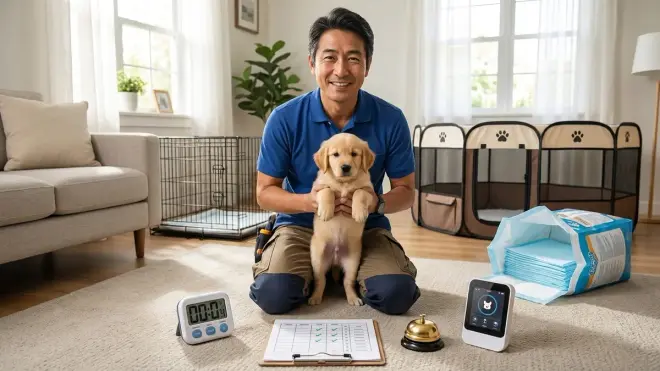
This category surprised me when I was helping my sister—I assumed you just... watched the puppy? Turns out there's a whole science to predicting elimination timing, especially for puppies under 16 weeks who have tiny bladders and almost no control. Understanding why puppies have accidents in the first place helps you see why these monitoring tools matter.
Kitchen timer or smartphone alarm set for intervals based on your puppy's age in months plus one (so a 2-month-old puppy needs to go out every 3 hours during the day)—this removes the guesswork and prevents the "oh no, I forgot and now there's a puddle" scenario.
Training log or chart where you record every successful elimination, accident, feeding time, and water intake for the first 4-6 weeks—I know this sounds obsessive, but patterns emerge fast when you're tracking data, like "always goes 20 minutes after eating" or "accidents cluster between 2-4 PM."
Baby monitor or pet camera with two-way audio for rooms where you're leaving the puppy unsupervised for short periods, letting you hear the "pre-potty" behaviors like circling or whining before they turn into accidents.
Puppy playpen or exercise pen with waterproof flooring that contains the puppy to a small area when you can't directly supervise—puppies naturally avoid soiling their sleeping area, so a properly sized pen (just big enough for a bed, water bowl, and potty pad) encourages them to use the pad section.
The detailed potty training schedule breaks down age-specific timing, but these tools help you actually implement that schedule instead of just reading about it and hoping for the best.
Rewards and Positive Reinforcement Supplies
Here's where puppy potty training supplies overlap with general training equipment. What I've found works, both in aquarium keeping and apparently in dog training, is that immediate positive feedback creates faster associations than delayed consequences. You need rewards ready to go the instant your puppy succeeds.
High-value training treats that are soft, small (pea-sized), and distinctly different from regular meals—look for single-ingredient options like freeze-dried liver or chicken that you can break into tiny pieces, avoiding grain-heavy biscuits that fill the puppy up and dilute the reward's impact.
Treat pouch that clips to your belt or waistband so rewards are accessible within 2-3 seconds of successful elimination (the critical window for puppies to connect action and reward)—fumbling with bags or running inside to grab treats from the kitchen means you've missed the moment.
Clicker or verbal marker word like "yes!" that you pair with treats to mark the exact second the puppy finishes eliminating in the right spot—this precision matters more than you'd think, especially when you're trying to differentiate between "good job going outside" and "good job coming back inside afterward."
Low-calorie treat alternatives for puppies prone to weight gain or breeds with sensitive stomachs, since you'll be dispensing a lot of rewards during intensive training—plain cooked chicken breast, green beans, or blueberries work surprisingly well and won't throw off your puppy's daily nutritional balance.
Check out the detailed guide on using treats effectively for timing and frequency guidelines, because it's entirely possible to accidentally reinforce the wrong behavior if you're not paying attention to what you're clicking and treating.
Cleaning and Odor Control Equipment
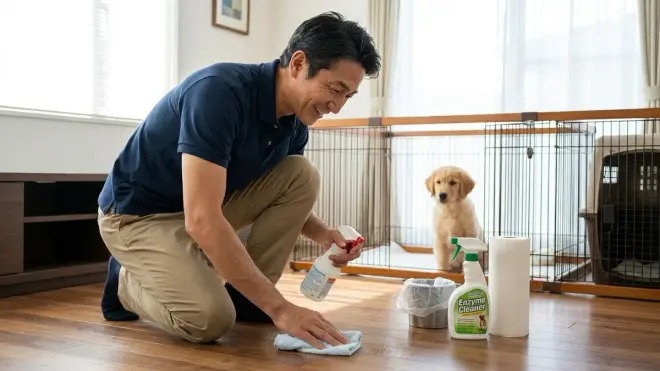
This is the category nobody gets excited about but everyone needs desperately. Puppies have accidents—that's not an if, it's a when—and how you clean those accidents directly impacts whether they happen in the same spot repeatedly. The enzymatic breakdown process is similar to the biological filtration in my aquariums, where specific bacteria consume waste compounds rather than just covering them up.
Blacklight flashlight for finding old accident spots you didn't know existed—dried urine glows under UV light, revealing the full crime scene on carpets and furniture that look clean under normal light.
Carpet spot cleaner machine (not just spray bottles) that extracts liquid and cleaner from deep in carpet padding—surface cleaning leaves uric acid crystals embedded in the padding where they continue to smell and attract the puppy back to that location.
Multiple bottles of enzymatic cleaner because you'll go through this faster than you expect—I recommend buying the gallon concentrate versions and diluting as needed rather than paying for water in pre-mixed spray bottles.
Rubber gloves and scrub brushes dedicated exclusively to accident cleanup, stored separately from your regular cleaning supplies, because cross-contamination is gross and also because enzyme cleaners can damage some surfaces if you don't contain them properly.
Washable floor rugs to replace irreplaceable items during the training period—my sister rolled up her nice living room rug and substituted cheap washable ones from the discount store for the first four months, which saved her a lot of stress when accidents happened.
Odor-neutralizing spray for fabrics and furniture you can't fully saturate with liquid cleaner—look for products containing zinc ricinoleate or activated charcoal rather than perfume-based air fresheners that just add floral scent to urine smell.
Containment and Management Gear
These supplies don't directly teach potty training, but they create the structure that makes training possible. Think of this like the tank stand and hood for an aquarium—not the exciting part, but absolutely necessary for the system to function. Understanding early puppy behavior patterns helps you see why containment matters during this phase.
Properly sized crate where your puppy can stand, turn around, and lie down comfortably but doesn't have enough extra space to create a bathroom corner—for growing breeds, get a crate with a divider panel you can reposition as the puppy grows rather than buying multiple crates.
Crate mat or bedding that's waterproof underneath or completely washable for inevitable early accidents—avoid fancy orthopedic beds during training, those come later when your dog is reliable.
Baby gates to block off rooms with carpet or areas you can't supervise, funneling the puppy into tile or linoleum spaces where accidents are easier to clean during the learning phase.
Tether or leash anchor that attaches to your belt loop or furniture leg, keeping the puppy within 6 feet of you during "umbilical cord training" where constant proximity lets you catch pre-potty behaviors immediately.
ID tag and collar even if your puppy isn't going on walks yet—house training failures sometimes happen because the puppy slipped out during a potty break and you had to chase them, breaking their focus and creating a negative outdoor association.
Final Check Before You Go
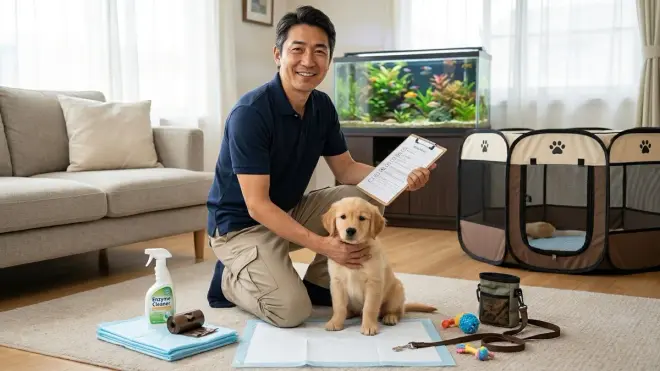
Here's your condensed shopping list of puppy potty training supplies organized by priority. Print this or save it to your phone before heading to the pet store:
Absolute must-haves (start training immediately):
- Training pads (50+ count) or designated outdoor potty area
- Enzymatic cleaner (gallon size)
- Attractant spray
- Waterproof floor protection
- Training treats and treat pouch
- Properly sized crate with divider
High priority (get within first week):
- Training log or chart
- Timer/alarm system
- Waste bags and dispenser
- Blacklight flashlight
- Weather gear for outdoor training
- Training leash (4-6 feet)
Nice to have (improves success rate):
- Pet camera or monitor
- Carpet cleaning machine
- Reusable backup pads
- Playpen or exercise pen
- Potty training bells
- Odor neutralizer spray
Breed-specific additions:
- Large breed puppies: Bigger crate with divider, outdoor potty area markers
- Small/toy breeds: Extra small training pads, indoor grass systems
- Long-haired breeds: Sanitary trim scissors, more frequent cleaning supplies
For comprehensive guidance beyond just supplies, the complete new puppy preparation guide covers environmental setup alongside equipment.
Frequently Asked Questions
How many puppy training pads should I buy to start potty training?
For the first month of training a puppy under 12 weeks old, plan on 6-8 pads per day (changed after each use to maintain clean scent association), which means a 50-count package lasts about one week—most successful trainers keep at least 150-200 pads on hand initially to avoid running out during critical early training when consistency matters most.
Do I really need enzymatic cleaner or will regular carpet cleaner work for puppy accidents?
You absolutely need enzymatic cleaner because regular carpet cleaners (including steam cleaners with standard detergent) only remove visible stains and mask odor to human noses, while enzymatic formulas break down the uric acid crystals that puppies can still smell and will return to repeatedly—using regular cleaner creates invisible accident hot spots that sabotage your training efforts.
What's the most important supply to invest in for outdoor potty training success?
The single most critical supply is a dedicated training leash that's 4-6 feet long and used exclusively for potty breaks (not walks or play), because this consistent visual and physical cue helps puppies differentiate between "we're outside to eliminate right now" and "we're outside to explore and have fun"—puppies learn context faster when environmental cues stay consistent.
Final Thoughts
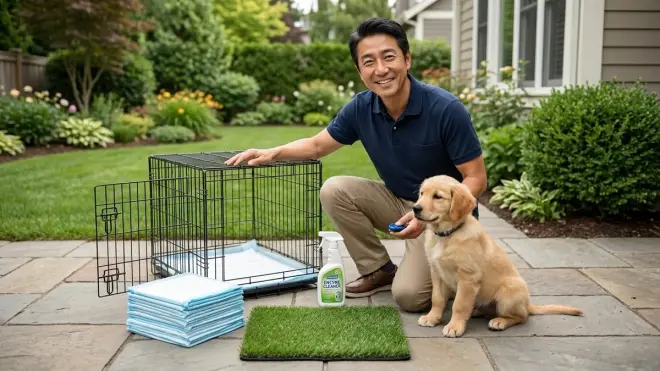
After watching my sister go from panicked first-week chaos to a reliably house-trained golden retriever by month four, the biggest lesson was this: having the right puppy potty training supplies ready before you need them matters more than any specific training technique. Same way I learned with aquariums—you can read all the forum posts about nitrogen cycles you want, but if you start without a test kit and dechlorinator, you're going to lose fish. The supplies on this checklist aren't about buying more stuff for the sake of it; they're about removing the friction points that cause people to give up on consistency when training gets frustrating around week three.
Start with the absolute must-haves, add the high-priority items within your first week, and fill in the nice-to-haves as you identify specific challenges with your individual puppy. Some puppies respond perfectly to basic pads and a schedule; others need the full arsenal including cameras, bells, and multiple containment zones. What I've found works is treating this like building any other successful system—get your foundation solid, then iterate based on what you're actually experiencing rather than what you thought would happen. Your puppy will tell you what's working, usually by having fewer accidents and showing clearer pre-potty signals, and that feedback loop is worth more than any checklist could ever be.