


I've spent almost a decade at the grooming table working with dogs whose behavior ranges from anxious and reactive to perfectly calm, and I can tell you that the right training foundation makes all the difference—not just for the dog, but for everyone who handles them. Finding the best dog training collar isn't about shortcuts or quick fixes; it's about choosing a tool that fits your specific dog's size, temperament, and your training goals. Whether you're working with a stubborn terrier who needs gentle redirection or a large-breed adolescent who pulls on leash, the collar you choose becomes part of your communication system with your dog.
My own pack of four rescues has taught me that what works brilliantly for my high-energy terrier mix would be completely wrong for my senior shepherd. One collar doesn't rule them all, and that's exactly why I'm walking you through the options that actually perform in real-world situations—not just on the product page.
What to Look For in the Best Dog Training Collar
Collar Type and Training Method
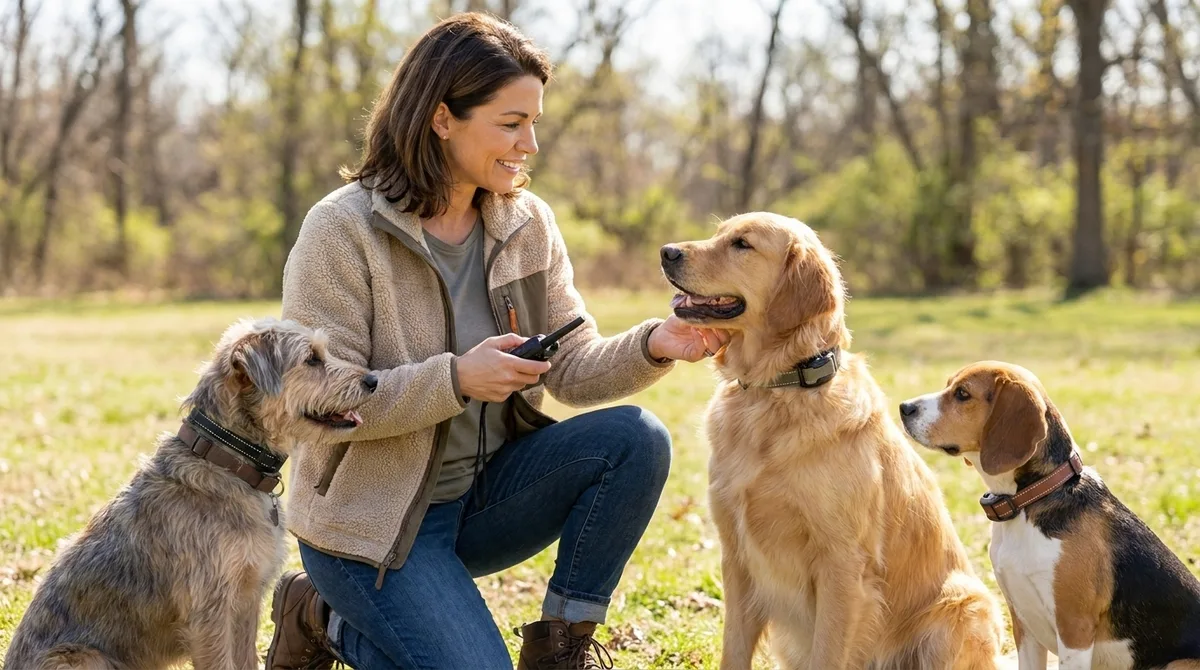
The first decision you'll make is which training approach aligns with your philosophy and your dog's temperament. Remote training collars (also called e-collars) use adjustable static stimulation, vibration, or tone to communicate with your dog at a distance. Shock collars have evolved significantly from their harsh predecessors—modern versions offer stimulation levels so gentle they feel like a smartphone vibration, with most dogs responding to levels far below anything uncomfortable.
Spray collars release a burst of citronella or unscented air when triggered, either by barking or remote control. They work well for scent-sensitive dogs but can be less effective outdoors in windy conditions where the spray dissipates quickly.
Vibration-only collars provide tactile feedback without any aversive element. I've seen these work beautifully with deaf dogs or anxious dogs who respond poorly to any form of correction, but they require more repetition to establish clear communication.
If you're working specifically on nuisance barking issues, bark-activated collars are a subcategory worth considering, though they address symptoms rather than underlying behavioral causes.
Size and Fit Requirements
This is where I see the most mistakes at the grooming salon. A collar designed for a German Shepherd will slide around uselessly on a Chihuahua's neck, while a toy-breed collar won't even buckle around a Mastiff. Neck circumference is your starting measurement—measure snugly around the widest part of your dog's neck, then check the manufacturer's adjustable range.
Weight matters too. The receiver box that houses the technology shouldn't weigh down a small dog's neck or cause discomfort during extended wear. For dogs under 15 pounds, look for models specifically engineered with lightweight receivers (typically under 2 ounces). For giant breeds over 100 pounds, you'll need reinforced collar straps and larger contact points that actually reach through thick coat to make skin contact.
The contact points—the metal prongs that deliver stimulation in e-collars—come in different lengths. Short-coated breeds like Boxers or Pit Bulls work fine with standard 5/8-inch points, but double-coated breeds like Huskies or Golden Retrievers need longer points (3/4-inch to 1-inch) to penetrate the undercoat. I've groomed too many fluffy dogs wearing training collars that literally couldn't reach their skin through all that fur.
Stimulation Levels and Customization
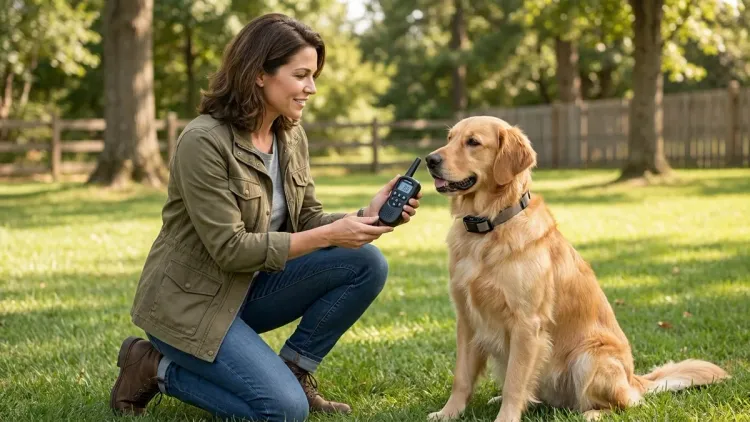
The ability to fine-tune your collar's output separates effective tools from frustrating ones. Look for at least 10 adjustable levels of stimulation—ideally 15 or more. This granular control lets you find the precise threshold where your dog notices and responds without overcorrecting.
Most dogs respond to stimulation levels far lower than owners expect. I always recommend starting at the absolute lowest setting and working up slowly until you see your dog's ear twitch or head tilt slightly—that's your working level. Collars with 100+ levels might seem excessive, but they're genuinely helpful when you need to make micro-adjustments for different training contexts.
Multiple mode options add versatility. The best training collars offer tone (audible beep), vibration, and stimulation modes that you can use independently or in combination. This lets you build a communication ladder: tone for basic reminders, vibration for moderate distraction, stimulation reserved for safety-critical commands when your dog is fixated or at distance.
Range and Battery Life
If you're training basic obedience in your backyard, a 300-yard range works fine. But if you're working on off-leash reliability in open spaces or preparing for hunting or field work, you'll want 500 yards minimum—ideally 1000+ yards. Understand that manufacturer range claims assume flat, unobstructed terrain. Hills, dense foliage, and buildings all reduce effective range significantly.
Waterproofing isn't negotiable if you train outdoors. Look for IPX7 rating minimum, which means submersion up to 1 meter for 30 minutes. My terrier mix loves puddles and muddy ditches, so anything less than fully waterproof would be dead within a week.
Battery life impacts your training consistency. Rechargeable lithium-ion batteries are standard now, typically lasting 40-80 hours per charge depending on usage intensity. Some systems still use replaceable coin-cell batteries that last 3-6 months—convenient if you don't want to remember charging, but more expensive over time. The transmitter (remote) battery matters too, especially if you train multiple dogs in one session.
Safety Features and Certifications
Reputable manufacturers incorporate automatic safety shut-offs that prevent continuous stimulation beyond 8-10 seconds, protecting against accidental button presses or remote malfunctions. This is crucial—continuous stimulation can cause skin irritation or worse.
Some collars include lock-out modes that prevent accidental activation when the remote is in your pocket or bag. As someone who's accidentally triggered plenty of equipment while leaning over a grooming table, I appreciate this feature deeply.
While there's no universal certification body for dog training collars, products that comply with Electronic Collar Manufacturers Association guidelines or European Union regulations typically meet higher safety standards. Look for brands that publish technical specifications transparently and offer detailed fitting instructions rather than vague marketing language.
Our Top Picks
SportDOG Brand 425X Remote Trainer
The SportDOG Brand 425X Remote Trainer🛒 Amazon has been my recommendation for medium to large dogs (15+ pounds) who need reliable distance training for over three years now. This system delivers 21 levels of static stimulation plus vibration and tone modes, all controlled by a compact transmitter with a 500-yard range that actually performs in wooded areas, not just on the manufacturer's test field.
Pros:
- Expandable to three dogs with additional collars using one remote
- Fully waterproof and submersible (both collar and remote)
- DryTek technology protects electronics in wet conditions
- Long battery life (50-70 hours) with quick-charge capability
- Contact points sized appropriately for medium coats
Cons:
- The remote buttons are small and similar in texture, making them difficult to distinguish by feel alone when wearing gloves
- Collar receiver is too bulky for dogs under 20 pounds despite the 15-pound minimum weight claim
- The vibration mode is noticeably stronger than most competing models, which can startle sensitive dogs initially
Garmin Delta XC Bundle
For serious distance work and multi-terrain training, the Garmin Delta XC Bundle🛒 Amazon offers a 3/4-mile range with 18 stimulation levels, tone, and vibration. What sets this system apart is the BarkLimiter feature that specifically addresses nuisance barking without requiring you to trigger corrections manually—useful when you're working on impulse control in distracting environments.
Pros:
- Exceptional range tested reliably to 800+ yards in real conditions
- Rechargeable lithium-ion batteries in both collar and handheld
- LED beacon lights on the collar for low-light visibility
- Slim profile receiver works better on smaller dogs than SportDOG's bulk
- Integration with Garmin GPS tracking devices if you expand to that system later
Cons:
- The charging contacts corrode faster than competitors if you don't rinse and dry them after wet training sessions
- Significantly higher price point than basic remote trainers
- The remote interface requires more initial learning—not as intuitive for first-time e-collar users
PetSafe Remote Spray Trainer
If you prefer citronella-based training or have a dog who responds poorly to any form of static correction, the PetSafe Remote Spray Trainer🛒 Amazon offers an aversive-free option that works through scent disruption. I've used this successfully with anxious rescue dogs who shut down completely with vibration or stimulation but respond well to the surprise of the spray burst.
Pros:
- No static stimulation, vibration, or physical discomfort
- Effective up to 300 yards for basic recall and boundary training
- Tone-only option lets you phase out spray corrections once behavior is established
- Lightweight receiver suitable for dogs 8 pounds and up
- Refillable with standard citronella spray or unscented compressed air
Cons:
- Wind renders the spray almost useless outdoors—this is fundamentally an indoor or calm-day tool
- Refill cartridges run out quickly if you're doing intensive training sessions
- The spray mechanism clogs occasionally and requires cleaning more than electronic systems
- Less effective on dogs with poor scent sensitivity or those who habituate to the citronella smell
Educator E-Collar Remote Dog Training Collar
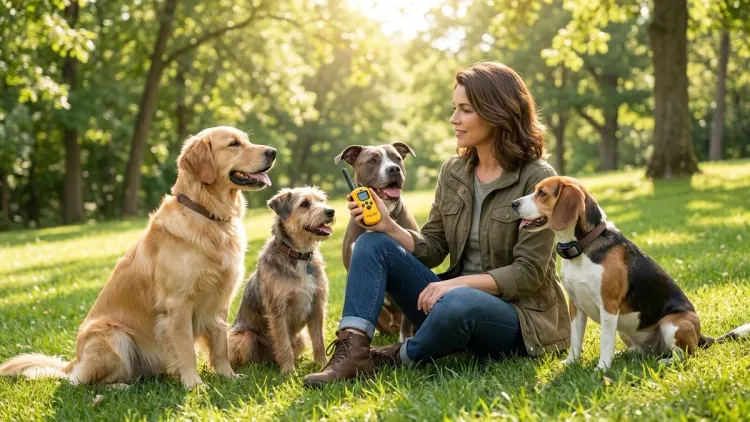
The Educator E-Collar Remote Dog Training Collar🛒 Amazon is what I recommend when someone needs ultra-precise control and is committed to positive reinforcement methods that use the collar for communication rather than punishment. With 100 stimulation levels using "blunt" stimulation technology (which feels less sharp than traditional static), this system gives you unmatched ability to customize intensity.
Pros:
- 100 levels of adjustment let you find the exact threshold for your individual dog
- "Blunt" stimulation feels smoother and more tappable than traditional static pulse
- Half-mile range suitable for field training and hunting work
- Compact receiver available in mini version for dogs down to 5 pounds
- Excellent customer support and detailed training resources from manufacturer
Cons:
- The complex interface with so many levels can be overwhelming for novice trainers who just want simple, clear options
- Battery life is shorter than competitors (20-30 hours) when using higher stimulation levels frequently
- The remote lacks a belt clip, forcing you to pocket-carry or add an aftermarket attachment
PATPET P-Collar 330 Rechargeable Dog Training Collar
For budget-conscious owners training small to medium dogs (10-60 pounds), the PATPET P-Collar 330 Rechargeable Dog Training Collar🛒 Amazon delivers functional performance without premium pricing. This collar includes the standard trio of beep, vibration, and static modes across 16 levels, with a 1000-foot range that's adequate for backyard and park training.
Pros:
- Significantly lower price than premium brands while maintaining core functionality
- Receiver is genuinely small enough for toy breeds and small terriers
- Security lock prevents accidental activation
- Rechargeable with 15-day standby time between charges
- Supports up to two dogs with separate channel control
Cons:
- The waterproofing is IPX5 rated (splash-resistant) rather than fully submersible—don't let your dog swim while wearing it
- Build quality feels noticeably cheaper with plastic components that may crack with rough handling
- The vibration strength isn't adjustable, only on/off, limiting fine-tuning
- Range degrades noticeably beyond 600 feet in anything but wide-open fields
PetSafe Elite Little Dog Remote Trainer
Small-breed owners face unique challenges finding training collars that don't overwhelm their dogs physically or emotionally. The PetSafe Elite Little Dog Remote Trainer🛒 Amazon is specifically engineered for dogs 5-40 pounds, with a lightweight receiver (1.5 ounces) and reduced stimulation range appropriate for sensitive small dogs.
Pros:
- Designed specifically for small necks and lower stimulation thresholds
- 15 static levels plus vibration and tone options
- 3/4-mile range exceeds what most small-dog owners need
- Waterproof and submersible to handle all weather training
- Comes with both short and long contact points for different coat types
Cons:
- The collar strap is thin and can be difficult to thread through the keeper loop with cold or wet hands
- Static levels may still be too strong for extremely sensitive toy breeds—start at absolute minimum
- The remote is the same size as their standard models, making it bulky relative to what you're controlling
- Price is identical to full-size models despite reduced functionality needs
Frequently Asked Questions
Are training collars safe for puppies and young dogs?
Training collars—especially those using static stimulation or vibration—should only be used on dogs who have completed basic growth and have mature bone structure, typically 6 months old minimum for most breeds. Large and giant breeds may need to wait until 8-12 months. Before that age, puppies are still developing physically and psychologically, and their response to corrections is unpredictable at best.
That said, puppy training aids like positive reinforcement clickers and treat-based systems work far better for establishing foundational behaviors anyway. Save remote training collars for specific challenges that emerge after basic obedience is solid—things like distance recall, boundary training, or addressing behavior problems that didn't respond to reward-based methods. If you're introducing a collar to a younger dog, start with tone-only mode and work with a certified trainer to ensure you're using appropriate timing and intensity levels.
How tight should a training collar fit on my dog's neck?
The collar should sit high on your dog's neck, just behind the ears and under the jawline—not down where a regular flat collar rests. This positioning ensures the contact points make consistent skin contact and prevents the receiver box from sliding around to the underside of the neck. You should be able to fit one or two fingers (depending on your dog's size) between the collar strap and your dog's neck when buckled.
For the contact points specifically, they need to touch skin directly through the coat. I've seen countless owners at the salon whose training collars sit uselessly on top of thick fur, making the whole system ineffective. If you have a double-coated breed, you may need to trim a small contact area where the prongs sit, or invest in longer contact points. Check the fit every few weeks, especially with growing dogs or breeds prone to weight fluctuation—what fit correctly in winter may be too loose after spring coat blow-out.
Can I use a training collar on a dog with anxiety or fear issues?

This requires careful consideration and honestly, professional guidance. Dogs with genuine anxiety disorders or fear-based reactivity can respond unpredictably to aversive stimuli, and poorly timed corrections can worsen the underlying condition significantly. I've worked with enough anxious rescues to know that what looks like stubbornness or disobedience is often a dog who's too stressed to process information clearly.
If your dog shows signs of anxiety—excessive panting, trembling, avoidance behaviors, stress yawning—focus first on counter-conditioning and desensitization protocols with a veterinary behaviorist or certified trainer specializing in fearful dogs. Some anxious dogs respond beautifully to vibration-only collars or spray collars as communication tools, but static stimulation frequently backfires by creating new fear associations. The exception is when you're using an e-collar at very low levels purely as a communication bridge with a deaf or hearing-impaired dog, which is a completely different training context than behavior modification for anxiety.
How do I transition from using a training collar to collar-free obedience?
The goal of any training tool should be to eventually eliminate dependence on that tool. Start by establishing strong verbal and hand signal commands while using the collar as backup—your dog should respond to "come" before you use the collar reminder, not because of it. Once reliability reaches about 80% in low-distraction environments, begin intermittent reinforcement: sometimes back up your command with collar activation, sometimes don't, keeping your dog uncertain about whether you'll follow through.
Gradually increase the challenge level by adding distractions, distance, and duration while maintaining intermittent collar use. The training process works best when you layer in other reinforcement tools simultaneously—high-value treats, enthusiastic praise, play rewards—so your dog has multiple motivations beyond avoiding collar corrections. Eventually you'll reach a point where the collar is only needed in highest-distraction situations or emergency scenarios, and many dogs will perform reliably even when you've "forgotten" to put it on. That said, I keep training collars accessible long-term for my own dogs as insurance during situations with safety implications, like training near roads or in areas with wildlife.
What's the difference between a training collar and an anti-bark collar?
While both use similar technology (vibration, static stimulation, or spray), they differ fundamentally in activation method and training purpose. Anti-bark collars activate automatically in response to your dog's vocalization, using vibration sensors or sound detection to trigger corrections without human involvement. They're designed to address one specific behavior—barking—through consistent, immediate consequences.
Training collars require manual activation via remote control, giving you precise timing control to address multiple behaviors: recall failure, boundary crossing, jumping, leash pulling, or whatever you're actively teaching. This human-in-the-loop approach lets you account for context (barking at a legitimate threat vs. nuisance barking) and adjust your response accordingly. Some hybrid systems like the Garmin Delta include both remote-activated training functions and automatic bark-limiter modes, but they operate independently. For most dogs, a remote training collar offers more versatility, while bark-specific collars work when the primary issue is excessive vocalization and you want a set-it-and-forget-it solution.
The Verdict
After nearly ten years working with dogs whose behavior ranges from angelic to challenging, I've learned that the best dog training collar is whichever one you'll actually use correctly and consistently—not whichever has the most features or the highest price tag. For most owners training medium to large dogs in typical suburban or rural environments, the SportDOG 425X hits the sweet spot of reliability, range, and adjustability without overwhelming complexity. Small-dog owners should skip the standard models entirely and invest in the PetSafe Elite Little Dog version engineered for their size class.
If you're philosophically opposed to static stimulation or working with an anxious dog, the PetSafe Remote Spray Trainer gives you remote control communication without the controversy, though it genuinely won't work in windy conditions. And for owners committed to the finest control and willing to invest time learning a more sophisticated system, the Educator E-Collar with 100 levels represents the current peak of precision training technology.
Remember that canine training aids are tools that amplify your communication with your dog—they don't replace clear expectations, consistent follow-through, and the relationship-building work that happens during every training session. The collar on your dog's neck matters far less than the knowledge in your head and the bond between you.