
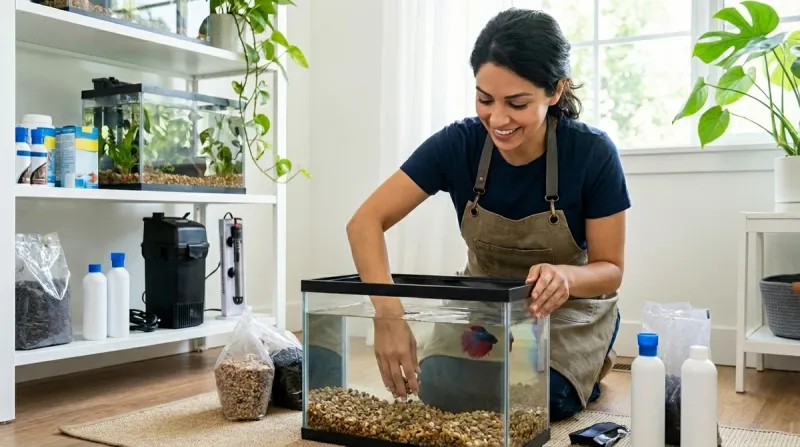

I'll be honest—I spent years focusing on guinea pigs and their hay-strewn habitats before I ever considered the underwater world of betta fish. But when a friend asked me to help her set up her first betta fish tank setup in her cramped studio apartment, I realized we small-space pet parents face surprisingly similar challenges whether we're working with terrestrial or aquatic companions. The key difference? Get the water wrong, and your betta suffers immediately. There's no room for the "I'll figure it out as I go" approach I took with my first guinea pig cage.
Quick verdict: A proper betta fish tank setup requires a minimum 5-gallon tank, an adjustable heater maintaining 76-82°F, gentle filtration (bettas hate strong currents), and consistent water parameters. Skip the tiny bowls—they're a recipe for stress and disease.
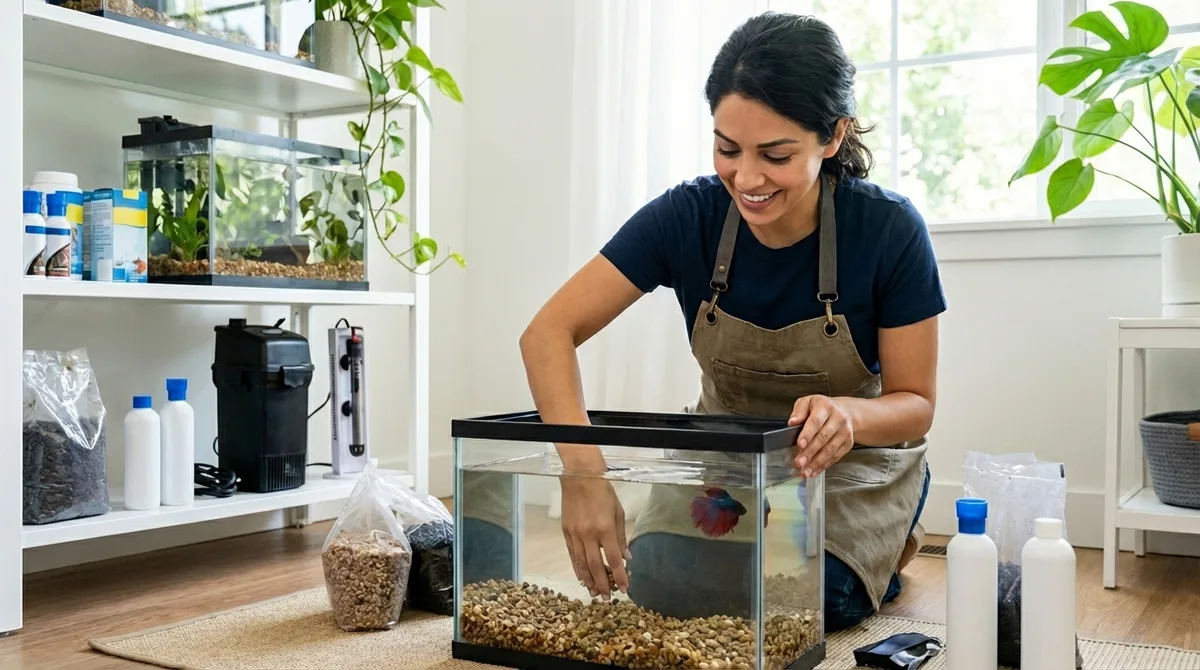
What to Look For in Betta Fish Tank Setup Equipment
Setting up a betta tank feels deceptively simple until you're standing in the aquarium aisle overwhelmed by filter types and heater wattages. Here's what actually matters for your fish's health and longevity.
Tank Size and Shape
The "bettas can live in a cup" myth needs to die already. While bettas survive in tiny containers at pet stores, they thrive in tanks of 5 gallons or larger. I learned from my compact-living experience with guinea pigs that space isn't just about physical room—it's about environmental stability. Larger water volumes maintain stable temperature and water chemistry, which means fewer sudden changes that stress your fish.
Look for tanks that prioritize horizontal swimming space over height. Bettas are labyrinth fish—they breathe atmospheric air from the surface and prefer to patrol their territory horizontally rather than vertically. A long, shallow 10-gallon tank beats a tall, narrow 10-gallon every time. The Complete Aquarium Setup Guide covers general tank principles, but bettas have specific needs that differ from community fish setups.
Filtration Systems
Here's where betta keeping diverges from standard aquarium practice: strong filtration can actually harm your fish. Those flowing fins that make bettas so gorgeous also make them terrible swimmers in heavy currents. I've watched a friend's betta get pushed around his tank like a leaf in a storm because she installed a filter meant for more active fish.
Sponge filters are your friend here. They provide gentle biological filtration without creating the powerful current that hang-on-back filters generate. If you prefer a different filter type for aesthetic reasons, look for adjustable flow rates or plan to baffle the output with aquarium-safe materials. The Aquarium Filter Types Explained article breaks down the mechanical differences, but for bettas specifically, gentler always wins.
Heating and Temperature Control
This is non-negotiable: bettas are tropical fish that require consistent warmth. Room temperature isn't enough, even if you keep your apartment toasty. You need an adjustable aquarium heater rated for your tank size (typically 5 watts per gallon) and a reliable thermometer to monitor actual water temperature.
I'm particular about temperature control after years of managing climate for my temperature-sensitive guinea pigs, and the same principle applies underwater. Bettas become lethargic, stop eating, and develop weakened immune systems when water drops below 76°F. According to research on Siamese fighting fish care, their optimal range is 76-82°F with minimal fluctuation. Get a heater with a protective guard if possible—bettas occasionally rest against warm surfaces and can burn delicate fins on exposed heating elements.
Water Chemistry and Cycling
The Aquarium Nitrogen Cycle Explained article covers this in technical detail, but here's the practical version: you cannot put a betta in a brand-new tank full of fresh tap water and expect good results. New tanks need 4-6 weeks to establish beneficial bacteria colonies that convert toxic ammonia (from fish waste) into less harmful compounds.
This cycling period tests every ounce of patience you possess. Trust me, I understand the impulse to speed things up—I tried rushing my guinea pigs' habitat setup too. But with aquatic environments, shortcuts lead to "new tank syndrome," where toxic ammonia and nitrite spikes kill fish quickly. You'll need a water testing kit that measures ammonia, nitrite, nitrate, and pH. Bettas prefer slightly acidic to neutral water (pH 6.5-7.5) with minimal ammonia and nitrite (ideally 0 ppm) and nitrates under 20 ppm.
Our Top Picks for Betta Fish Tank Setup
Fluval Flex 9 Gallon Aquarium Kit
The Fluval Flex 9 Gallon Aquarium Kit🛒 Amazon combines sleek design with betta-appropriate features in a footprint that works in apartment settings. This kit includes integrated filtration with adjustable flow, powerful LED lighting on a day/night timer, and a contemporary curved front that looks genuinely attractive on a desk or counter.
Pros:
- Integrated 3-stage filtration is quiet and easily modified for gentler flow
- LED lighting promotes live plant growth (crucial for water quality)
- Modern aesthetic doesn't scream "fish tank" in small spaces
- 9-gallon volume provides excellent parameter stability
- Includes filter media and maintenance tools
Cons:
- The integrated design makes equipment replacement slightly trickier than modular setups
- Top opening is smaller than the full tank footprint, making aquascaping more challenging
- No heater included despite being marketed as a complete kit
- The powerful light can promote algae growth if you're not diligent about photoperiod management
Aqueon Adjustable Heater (50W)
The Aqueon Adjustable Heater 50 Watt🛒 Amazon is the reliable workhorse heater that won't fail your betta during a cold snap. It features clear temperature markings, shatter-resistant construction, and an indicator light that shows when it's actively heating—a small detail that provides surprising peace of mind.
Pros:
- Accurate temperature control within 1-2 degrees
- Appropriate wattage for 5-15 gallon tanks
- Built-in overheating protection prevents equipment failure disasters
- Fully submersible design allows flexible placement
- Usually around $20-25, making it accessible for new betta keepers
Cons:
- The suction cups weaken over time and need replacement
- Indicator light is bright enough to be distracting in bedroom setups
- Requires manual adjustment if you want to change temperature (no digital controls)
- Glass construction demands careful handling during water changes
Hikari Aquatic Turtle Pellets Sponge Filter
The Hikari Bacto-Surge High Density Foam Filter🛒 Amazon provides gentle biological filtration perfect for bettas without the industrial hum of powered filters. This sponge filter runs on an air pump (sold separately) and creates minimal current while housing beneficial bacteria colonies.
Pros:
- Incredibly gentle flow won't exhaust your betta's fins
- Biological filtration rivals more expensive systems once established
- Easy maintenance—just squeeze out debris during water changes
- Intake won't suck in betta fins like some mechanical filters
- Affordable and nearly impossible to break
Cons:
- Requires a separate air pump and tubing (added cost and setup complexity)
- Air pump noise can be audible in quiet rooms despite "silent" claims
- The aesthetic is decidedly utilitarian—it looks like a sponge on a stick
- Needs weekly cleaning in smaller tanks to prevent clogging
API Freshwater Master Test Kit
The API Freshwater Master Test Kit🛒 Amazon is the gold standard for monitoring water chemistry in betta tanks. This liquid test kit measures ammonia, nitrite, nitrate, pH, and high-range pH with accuracy that test strips simply cannot match.
Pros:
- Liquid reagent tests provide reliable, precise readings
- Contains approximately 800 tests—years of use for most betta keepers
- Includes all critical parameters for cycling and ongoing maintenance
- Color charts are clear and easy to interpret
- More economical long-term than constantly buying test strips
Cons:
- Initial cost runs around $30-35, which feels steep for new keepers
- Test tubes are glass and breakable (ask me about the time I knocked one into my guinea pigs' water bowl)
- Testing takes 5-10 minutes versus the instant gratification of strips
- Reagent bottles eventually expire, though this takes several years
Marina Aquarium Heater Guide with Thermometer
The Marina Floating Thermometer with Suction Cup🛒 Amazon solves the persistent challenge of accurately monitoring water temperature. This simple glass thermometer stays at the waterline, making it easy to check temperature at a glance without disturbing your betta.
Pros:
- Floating design naturally stays in your line of sight
- Clear temperature markings in both Fahrenheit and Celsius
- No batteries or calibration required
- Usually around $5, making it absurdly affordable
- Accurate within one degree when properly placed
Cons:
- Glass construction breaks if you're clumsy during maintenance (guilty)
- Can get trapped behind decorations or stuck in corners
- The floating design occasionally flips upside-down
- Suction cup attachment option doesn't work well on textured tank backgrounds
Seachem Prime Water Conditioner
The Seachem Prime Fresh and Saltwater Conditioner🛒 Amazon is the water conditioner that removes chlorine, chloramine, and heavy metals while temporarily detoxifying ammonia and nitrite. It's concentrated, effective, and trusted by aquarists managing everything from bettas to full reef systems.
Pros:
- Extremely concentrated formula (5 mL treats 50 gallons) makes it economical
- Detoxifies ammonia and nitrite for 48 hours during cycling or emergencies
- Works in both freshwater and saltwater applications
- Doesn't alter pH significantly like some conditioners
- Small bottle lasts months even with weekly water changes
Cons:
- The sulfur smell is genuinely unpleasant—like rotten eggs in liquid form
- Overdosing is possible with the concentrated formula if you're not careful
- Cap design makes precise dosing challenging without a separate dropper
- No instant indicator showing that it's worked (unlike clarifiers that you can see)
Frequently Asked Questions
How long does a betta fish tank need to cycle before adding fish?
A betta tank needs 4-6 weeks to complete the nitrogen cycle before it's safe for fish, though this timeline varies based on cycling method. During this period, beneficial bacteria colonies establish themselves and convert toxic ammonia into less harmful nitrate. You can speed this process with bottled bacteria products like Tetra SafeStart or Fritz Turbo Start, which can reduce cycling time to 1-2 weeks when combined with an ammonia source and consistent monitoring. Some experienced keepers use "fish-in cycling" with daily water changes, but this is stressful for bettas and risky if you miss a day. The patient approach always produces healthier long-term results—think of it like the aquarium nitrogen cycle's requirement for bacterial colonization, which simply cannot be rushed beyond certain biological limits.
What size tank do I really need for one betta fish?
A minimum of 5 gallons is necessary for a single betta fish, though 10 gallons is better if you have the space. I know you've seen bettas in tiny cups and bowls—they survive there, but they don't thrive. Smaller volumes experience rapid temperature fluctuations and parameter swings that stress bettas and shorten their lifespan. Bigger tanks are actually easier to maintain because water chemistry remains more stable with greater volume. If you're truly space-limited like I am with my apartment guinea pig setup, a well-maintained 5-gallon tank can work, but you'll need to be more vigilant about testing and water changes. The Best Aquarium Starter Kits article covers complete systems if you want a ready-made solution, though bettas need gentler filtration than most kits provide.
Do betta fish need a heater and filter?
Yes, bettas absolutely need both a heater and filter, despite persistent myths suggesting otherwise. Bettas are tropical fish native to Southeast Asian rice paddies and slow-moving streams where water temperatures stay consistently warm. Room temperature in most homes (68-72°F) is too cold for bettas, leading to lethargy, suppressed immune function, and shortened lifespan. A quality adjustable heater maintaining 76-82°F is essential year-round, not just in winter. Filters are equally important—they establish beneficial bacteria that process waste products and prevent toxic ammonia buildup. The key is choosing gentle filtration that won't create strong currents, since those flowing fins make bettas poor swimmers in turbulent water. A properly sized sponge filter or baffled hang-on-back filter maintains water quality without exhausting your fish.
How often should I change water in a betta tank?
Change 25-30% of your betta tank water weekly in established tanks of 5 gallons or larger, or 50% twice weekly in smaller containers under 3 gallons (which, again, I don't recommend). During cycling, you may need daily or every-other-day changes to keep ammonia and nitrite below toxic levels. Use a gravel vacuum to remove waste from the substrate while siphoning out old water, then replace it with temperature-matched, conditioned water. Never change 100% of the water at once—this removes beneficial bacteria and causes parameter swings that shock your betta. I'm religious about maintenance schedules with my guinea pigs' habitats, and the same consistency matters for aquatic pets. Test your water parameters weekly initially, then every other week once your tank is stable, adjusting your change schedule based on nitrate accumulation.
Can I use tap water for my betta fish tank?
Yes, you can use tap water for a betta tank, but only after treating it with water conditioner to remove chlorine, chloramine, and heavy metals that municipal water treatment adds. Never add untreated tap water directly to your tank—chlorine burns fish gills and chloramine is toxic even in small amounts. Let replacement water sit for 15-20 minutes to reach room temperature, then match it to your tank temperature by adding small amounts of warmer water (I heat water in a clean container, testing with a thermometer as I go). Some tap water has problematic pH or hardness levels for bettas, in which case you might need reverse osmosis water remineralized for aquarium use, though most municipal supplies work fine after conditioning. If your tap water contains heavy metals or has inconsistent parameters, bottled spring water (not distilled) can work, though it's more expensive long-term than treating tap water properly.
The Verdict
Setting up a proper betta fish tank setup demands more attention than those marketing photos of bettas in decorative vases would suggest, but the actual requirements are straightforward: adequate space, stable warmth, gentle filtration, and patient cycling. Start with at least a 5-gallon tank, invest in a reliable heater and appropriate filter, and resist the temptation to rush the nitrogen cycle just because you're excited to bring your betta home.
The equipment investment runs around $100-150 for quality components that will serve your betta well for years, which honestly isn't much different from what I spent establishing proper housing for my guinea pigs. Your betta will reward proper setup with vibrant colors, active personality, and a lifespan of 3-5 years rather than the few months that poorly kept bettas typically survive. Take the time to do it right from the beginning—your future self will thank you when you're enjoying a healthy, thriving fish instead of troubleshooting emergency water quality problems at midnight.