
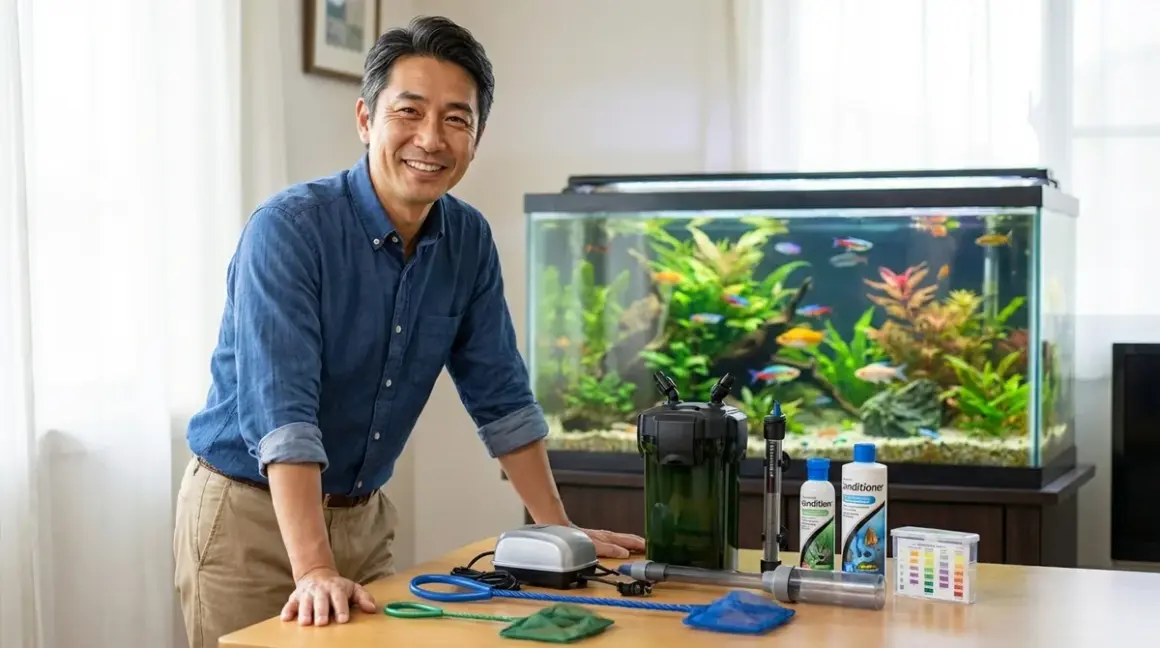

When I inherited that neglected 20-gallon tank fifteen years ago, I had no idea what equipment I actually needed—and I spent way too much money on things that didn't matter while skipping essentials that nearly crashed my tank within the first month. This aquarium equipment checklist is designed to save you from making those same expensive mistakes, whether you're setting up your first 10-gallon betta tank or planning a 75-gallon community setup. I've organized everything by priority and function, with specific guidance on what actually matters based on years of hands-on experience with both freshwater and saltwater systems.
This isn't just a shopping list—it's a practical guide that explains why each piece of equipment matters and what happens when you skip it or cheap out on the wrong things.
Essential Life Support Equipment
These are the non-negotiables, the equipment that keeps your fish alive. I learned this the hard way when I thought I could get by with bargain-basement versions of these items in my first tank—spoiler alert, I couldn't.
Filtration system (sized appropriately for your tank volume)—Your filter needs to cycle your entire tank volume at least 4-5 times per hour, so a 20-gallon tank needs a filter rated for at least 80-100 gallons per hour. I've found that slightly oversizing your filter gives you breathing room when bioload increases, and trust me, it will. The Fluval 407 Performance Canister Filter handles tanks up to 100 gallons and includes all the media you need to get started, though the priming mechanism can be finicky until you learn the technique. For a deeper comparison of filter types and when to use each one, check out our guide on aquarium filter types explained.
Aquarium heater with adjustable thermostat—Fish are ectothermic, which means their body temperature matches the water, so temperature stability isn't optional. I use the 2-3 watts per gallon rule as a starting point: a 20-gallon tank needs roughly a 50-75 watt heater, but if your home runs cold or the tank is near a window, bump up to the higher end. The Eheim Jager Aquarium Thermostat Heater has been bulletproof across multiple tanks in my experience, though the suction cups eventually lose grip and need replacing after about two years.
Reliable thermometer (digital or glass)—You need to verify what your heater is actually doing, not just trust the dial. I keep a digital thermometer on one end of the tank and a glass alcohol thermometer on the other end to catch temperature gradients, which absolutely happen in tanks over 40 gallons if your circulation isn't great.
Lighting system appropriate for your setup type—If you're keeping fish-only, almost any LED fixture with a timer will work fine—fish don't care about spectrum, they care about a consistent day/night cycle. If you're planning planted tanks, you need lights that specify PAR values (photosynthetically active radiation) of at least 30-50 for low-light plants, 50-100 for medium-demand species. I've successfully grown Anubias, Java fern, and Amazon swords under basic LED strip lights, but carpeting plants need the good stuff.
Air pump and airstone (especially for smaller tanks or high bioload)—Modern filters provide some surface agitation, but in my experience, an air pump is cheap insurance against oxygen depletion, especially during summer when warm water holds less dissolved oxygen. I run a small air pump on all my tanks under 30 gallons and consider it optional but wise on larger, well-circulated systems.
Water conditioner that neutralizes chlorine, chloramine, and heavy metals—Municipal water treatment has gotten more aggressive in recent years, and straight tap water will absolutely kill your beneficial bacteria and stress your fish. The Seachem Prime has become my go-to because it also temporarily detoxifies ammonia and nitrite, which is helpful during cycling and water changes. One 500ml bottle treats around 5,000 gallons, so it lasts forever even with weekly water changes.
Test kit for ammonia, nitrite, nitrate, and pH—Liquid test kits are more accurate than strips in my testing, and the API Freshwater Master Test Kit covers the critical parameters. You'll use this constantly during the first month while the nitrogen cycle establishes, then weekly for maintenance. Understanding the aquarium nitrogen cycle is absolutely fundamental to keeping fish alive, and you can't manage what you don't measure.
Tank Infrastructure and Setup Components
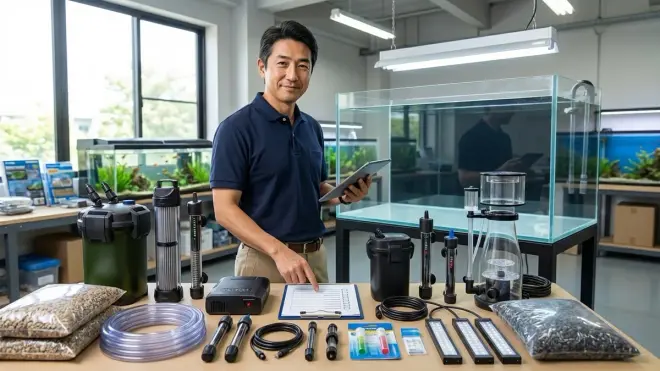
These items don't keep fish alive minute-to-minute like the equipment above, but they create the environment where everything else functions properly. I learned the importance of this category when I tried to skip the substrate in my first tank and couldn't figure out why my beneficial bacteria colony stayed weak—turns out they need surface area to colonize.
Aquarium substrate appropriate for your fish and plants—Gravel works for most community fish, sand is necessary for bottom-dwellers like Corydoras catfish that sift through substrate, and specialized planted tank substrates like Fluval Stratum provide nutrients for root-feeding plants. Depth matters: 1-2 inches is enough for gravel in fish-only tanks, but planted tanks benefit from 2-3 inches to allow root development. I've kept thriving planted tanks with plain gravel topped with root tabs, so don't let anyone tell you that expensive aquasoil is required unless you're doing a high-tech setup.
Background (optional but highly recommended)—A solid black or dark blue background makes fish colors pop and hides equipment behind the tank. I use black poster board taped to the back of my tanks because it's cheap and easily replaceable, but the adhesive vinyl backgrounds look more polished if you take the time to apply them smoothly without bubbles.
Aquarium-safe decorations (driftwood, rocks, caves, or artificial décor)—Fish need visual barriers and hiding spots to feel secure, which directly reduces stress-related disease. Real driftwood looks better in my opinion and provides surfaces for beneficial bacteria and biofilm that many fish graze on, but it needs to be properly cured or it'll leach tannins that turn your water the color of tea. Test rocks with white vinegar first—if they fizz, they contain calcium carbonate and will raise your pH and hardness, which matters for soft-water species.
Aquarium lid or glass canopy—This prevents evaporation, reduces heat loss, keeps fish from jumping out (looking at you, Rainbowfish and Bettas), and stops curious cats from fishing. I've lost fish to both jumping and cat incidents, and both are completely preventable with a proper lid.
Protein skimmer (saltwater tanks only)—Saltwater produces dissolved organic compounds that freshwater filtration doesn't handle efficiently. A protein skimmer mechanically removes these compounds before they break down into nitrates. For nano reef tanks under 30 gallons, hang-on-back skimmers work fine; larger systems benefit from sump-based skimmers, though they add significant cost and complexity.
Powerhead or circulation pump (larger tanks and saltwater)—Stagnant areas develop dead zones where waste accumulates and oxygen drops. In tanks over 50 gallons, I add a small powerhead aimed across the tank at an angle to create gentle circulation without creating a current too strong for the fish. Saltwater tanks need much stronger flow—typically 10-20 times tank volume per hour—to simulate natural reef conditions and keep detritus suspended where filters can catch it.
Water Quality Management and Maintenance Tools
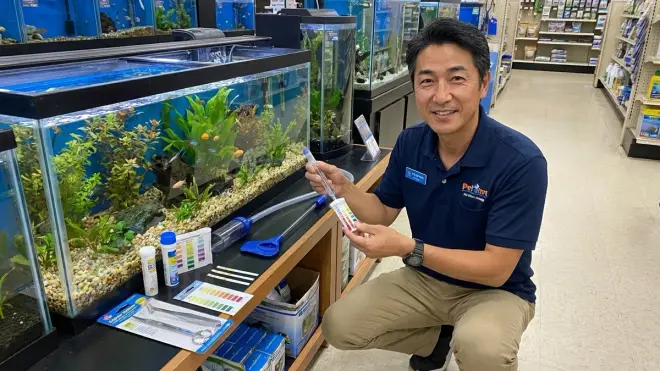
This is the category where beginners try to save money and regret it within a month. Quality water management equipment makes the difference between enjoying your tank and dreading maintenance day, and it directly impacts whether your fish thrive or just survive.
Gravel vacuum with siphon tube—The Python No Spill Clean and Fill system fundamentally changed my maintenance routine by eliminating buckets entirely, but the basic gravel vacuum with a manual siphon works perfectly fine for smaller tanks. I prefer models with a squeeze bulb to start the siphon rather than mouth-siphoning tank water, which is both disgusting and potentially dangerous if you've been treating for diseases.
Buckets dedicated exclusively to aquarium use (at least two)—Soap residue kills fish, so once a bucket touches fish tank water, it never touches cleaning chemicals again. I mark mine with permanent marker so nobody uses them for mopping the floor. You need at least two: one for dirty water removal and one for mixing fresh water with conditioner before adding it to the tank.
Algae scraper or magnetic cleaner—Glass tanks can use any scraper, but acrylic tanks scratch easily and need specific acrylic-safe scrubbers. Magnetic cleaners work brilliantly for routine maintenance, but you'll still need a manual scraper for the corners and stubborn spots. The magnets lose strength over time and need replacing every year or so—when your internal magnet drops and falls into the substrate for the third time in one session, it's time for new ones.
Fish net (at least two, different sizes)—Chasing a fish with one net is stressful for everyone involved. Using two nets—one to guide and one to catch—makes the process vastly easier and less traumatic for the fish. Get a net small enough for your smallest fish but also a larger net for community tank maintenance.
Extra airline tubing, check valves, and filter media—These are maintenance consumables that you'll need to replace periodically, and having spares means you're not scrambling to the fish store when your air pump suddenly goes quiet at 9 PM on a Sunday because the check valve stuck. I keep a complete spare set of filter media on hand and alternate them during maintenance so I never replace all the media at once and crash my beneficial bacteria colony.
Water change container or automatic water changer—For tanks under 20 gallons, buckets work fine. For larger systems, the investment in a Python or Aqueon water changer pays for itself in time and back strain within months. I resisted buying one for years out of some misguided sense that "real aquarists" did things the hard way, and I wish I'd gotten over myself sooner.
TDS meter and refractometer (saltwater) or KH/GH test kit (freshwater)—Total dissolved solids, carbonate hardness, and general hardness affect buffering capacity and species compatibility. I track these parameters monthly in established tanks and during any troubleshooting. For saltwater tanks, a refractometer is vastly more accurate than hydrometers for measuring salinity—the swing-arm hydrometers are notoriously unreliable.
Species-Specific and Optional Enhancement Equipment
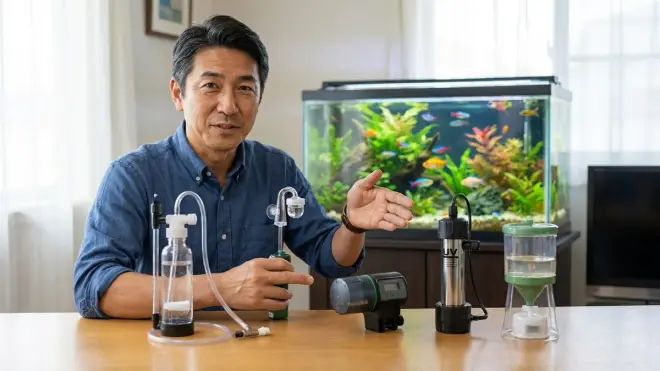
These items aren't required for basic fish survival, but they dramatically improve outcomes for specific species or tank types. I've added most of these to my systems over time as I've specialized into particular niches or upgraded existing tanks.
UV sterilizer (optional but valuable for disease prevention)—UV sterilizers kill free-floating pathogens, algae spores, and parasites as water passes through, which reduces disease pressure in high-bioload or quarantine tanks. I added one to my main community tank after a persistent case of ich kept cycling through despite treatment, and I haven't had a disease outbreak since. They don't replace proper maintenance but add a layer of protection.
Automatic feeder for vacation coverage—Even the most reliable fish-sitter tends to overfeed, and automatic feeders solve this problem completely. I've used several models, and the key feature is a feeding drum that seals moisture-proof—high humidity turns pellets into a clumped mess that jams the mechanism. Test the feeder for at least a week before you actually leave town to verify portion sizes and timing.
Wave maker (advanced saltwater setups)—Reef tanks benefit from randomized flow patterns that simulate natural surge and tidal movement, which improves coral health and nutrient distribution. These are completely unnecessary for fish-only saltwater tanks or any freshwater system, but they're standard equipment once you start keeping photosynthetic corals.
CO2 injection system (high-tech planted tanks)—Plants grow fine without supplemental CO2 if you keep your expectations realistic and stick with low-to-moderate light and hardy species like Anubias, Java fern, and Cryptocoryne. But if you want lush, fast growth and carpeting plants, CO2 makes a dramatic difference. The entry cost is significant—regulator, diffuser, drop checker, and CO2 tank—and adds complexity to maintenance, so I only recommend this for aquarists who've already succeeded with low-tech planted tanks. For detailed guidance on equipment selection and cycling for planted setups, our complete aquarium setup guide covers both low-tech and high-tech approaches.
Hospital/quarantine tank equipment (separate small tank, heater, sponge filter)—A 10-gallon quarantine tank with basic equipment lets you isolate new fish for observation before introducing them to your main tank, and gives you a treatment space if disease strikes. I didn't set one up until after I lost half my community tank to a disease that hitchhiked in on new fish, and that was an expensive lesson I only needed to learn once.
Aquarium chiller (for coldwater species or warm climates)—Goldfish, White Cloud Mountain minnows, and other temperate species need water temperatures in the 65-72°F range, which is colder than most homes maintain. Chillers are expensive and increase electricity costs, but they're non-negotiable if you live in a hot climate and want to keep coldwater species. I don't run chillers currently because I stick with tropical species that thrive at room temperature plus a heater.
Breeding equipment (breeding box, spawning mop, fry-specific foods)—Most community tank fish will spawn occasionally, but if you want to actually raise the fry, you need dedicated equipment. Breeding boxes protect fry from being eaten, spawning mops give egg-layers a place to deposit eggs, and specialized fry foods provide appropriate nutrition for tiny mouths. I've raised accidental batches of Platy and Guppy fry in a simple breeding box, but serious breeding requires more sophisticated isolation and feeding protocols.
Final Check Before You Go
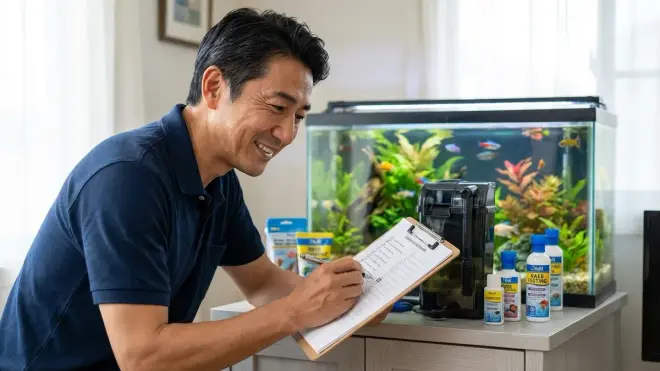
Before you start cycling your tank, verify you have everything on this condensed aquarium equipment checklist ready to go:
- Tank, stand, and lid in place and level
- Filtration system properly sized and assembled with media installed
- Heater and thermometer tested and holding target temperature
- Lighting on a timer for consistent photoperiod (8-10 hours for fish-only, 6-8 hours for planted tanks during cycling)
- Substrate rinsed and added to appropriate depth
- Decorations arranged with hiding spots and visual barriers
- Water conditioner and full test kit for ammonia, nitrite, nitrate, pH
- Maintenance tools (gravel vacuum, nets, buckets, algae scraper) accessible
- Backup equipment (extra airline tubing, spare heater, additional filter media)
Don't rush to add fish the day you fill the tank—the nitrogen cycle takes 4-6 weeks to establish fully, and that waiting period is when you verify all your equipment works correctly and learn your system's baseline parameters. I know it's tempting to skip the fishless cycle and add fish immediately, but nothing crashes tanks faster than spiking ammonia in an uncycled system.
Frequently Asked Questions
What is the most important piece of aquarium equipment to invest in? The filtration system is the most important piece of aquarium equipment because it's responsible for mechanical, biological, and chemical water treatment that keeps ammonia and nitrite at zero—without adequate filtration, even the best maintenance routine can't prevent toxic buildup that stresses or kills fish.
How much should I budget for a complete aquarium equipment setup? For a basic 20-gallon freshwater community tank, budget around $300-400 for quality equipment including tank, filter, heater, light, substrate, and test kit, while a similar-sized saltwater setup typically costs $600-800 due to additional requirements like protein skimmers, higher-output lighting, and saltwater-specific test kits and supplements.
Can I use the same equipment checklist for both freshwater and saltwater tanks? The core life support equipment is similar for both freshwater and saltwater tanks—filtration, heating, lighting, testing—but saltwater systems require additional specialized equipment including protein skimmers, refractometers for salinity measurement, reef-appropriate lighting if keeping corals, and often supplemental circulation pumps to achieve the higher flow rates that marine species need.
Final Thoughts
The aquarium equipment checklist I've laid out here represents fifteen years of learning what actually matters versus what's marketing hype. I've wasted money on gadgets that seemed essential but collected dust, and I've penny-pinched on critical equipment that failed and cost me more in livestock losses than I saved on the purchase price.
What I've found works is buying quality equipment for life support systems—your filter, heater, and testing supplies shouldn't be where you cut corners—and then adding enhancement equipment gradually as your experience grows and your goals clarify. My first tank had a basic hang-on-back filter and a preset heater, and I kept healthy fish for years with that simple setup. The planted tanks, reef systems, and breeding projects came later, after I understood the fundamentals well enough to know what additional equipment would actually benefit my specific situation.
Start with the essentials on this checklist, cycle your tank properly, and resist the urge to complicate things until you've successfully maintained stable water parameters for at least three months. The fancy equipment will still be there when you're ready for it, but your fish need a stable, properly cycled tank from day one—and that comes from good equipment used correctly, not from having the most expensive version of everything. If you're specifically interested in setting up a betta tank with minimal equipment, our guide on how to set up a betta fish tank covers species-specific requirements in detail, while beginners who want a plug-and-play option might prefer our review of the best aquarium starter kits that bundle compatible equipment.