
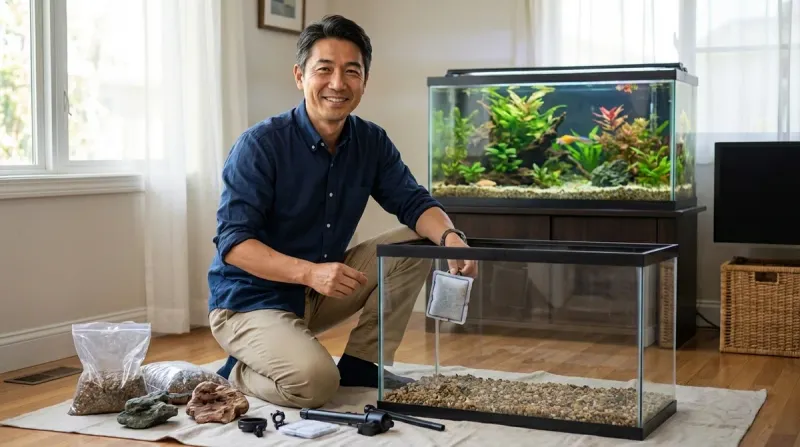

I still remember staring at that neglected 20-gallon tank fifteen years ago, completely overwhelmed by the idea of getting it running again. What filter did I need? What about a heater? And how the heck was I supposed to know which light was right? If I'd known then that best aquarium starter kits existed—complete systems with everything matched and ready to go—I would've saved myself weeks of second-guessing and at least three expensive trips back to the fish store for parts I didn't know I needed. Whether you're setting up your first freshwater community tank or finally taking the plunge into the hobby, a quality starter kit eliminates the guesswork and gets you to the fun part (actually keeping fish) much faster than piecing together components yourself.
Quick verdict: The best aquarium starter kits include a properly-sized filter for the tank volume, adjustable heating if needed, adequate lighting for your intended setup (low-light plants or fish-only), and a hood or lid to prevent jumpers—and they should cost less than buying those components separately while actually matching in quality.
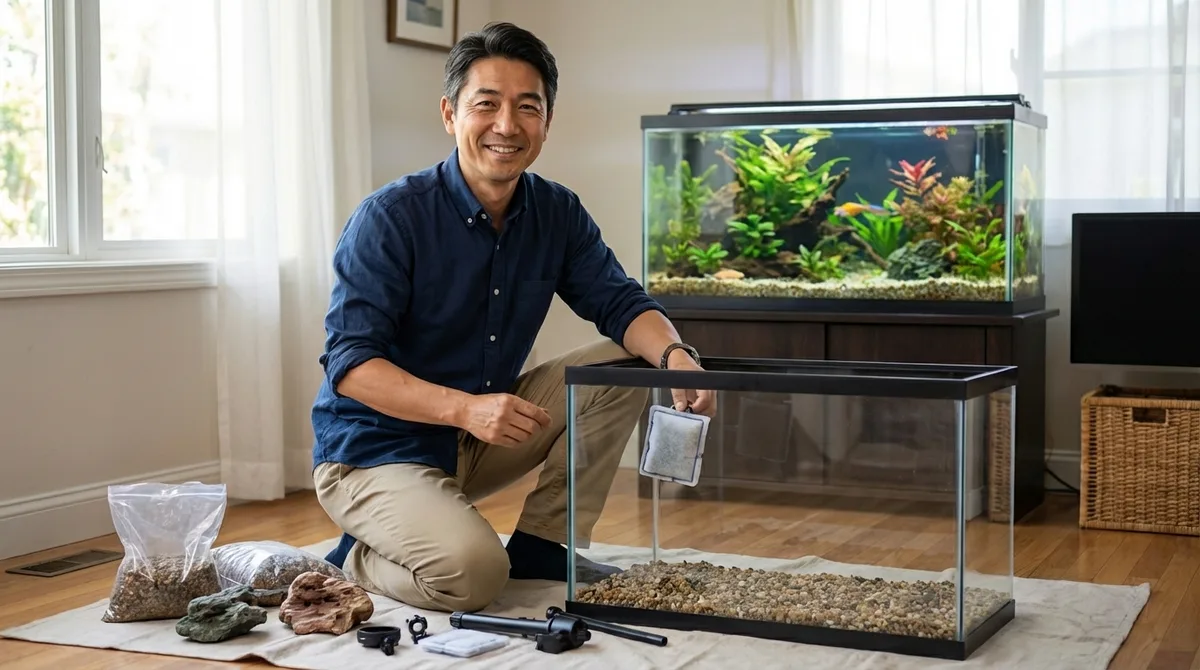
What to Look For in the Best Aquarium Starter Kits
Tank Size and Footprint
In my experience, bigger is genuinely easier when you're starting out, which sounds counterintuitive but makes perfect sense once you understand water chemistry. A 20-gallon tank dilutes waste, buffers pH swings, and forgives beginner mistakes far better than a 5-gallon nano setup. I learned this the hard way with that first inherited tank—parameters stayed stable for days even when I messed up, giving me time to correct course.
Look for kits in the 10 to 30-gallon range for your first setup. Anything smaller becomes a chemistry nightmare (especially for beginners still learning about the nitrogen cycle), and anything larger gets heavy, expensive, and intimidating. Also consider the physical footprint: a standard 20-gallon "long" (30" × 12" × 12") fits more furniture than a 20-gallon "high" (24" × 12" × 16") and gives you better surface area for gas exchange, which matters more than most people realize.
Filtration Quality and Turnover Rate
The filter is the heart of your aquarium—literally the most important component—and this is where cheap starter kits cut corners. You want a filter rated for at least your tank volume, but ideally 1.5 to 2 times your actual gallons to handle bioload effectively. Most kits include hang-on-back (HOB) filters, which work fine for beginners, though I've come to prefer internal filters or small canisters for their flexibility.
Check what's included for media: you need mechanical filtration (sponge or floss to catch debris), biological filtration (ceramic rings or bio-balls for beneficial bacteria), and ideally chemical filtration (activated carbon for removing dissolved organics). Some budget kits only include a single cartridge that you're supposed to replace monthly, which gets expensive and crashes your cycle every time. Better kits use modular media you can rinse and reuse. I've written more about the differences in aquarium filter types if you want to dive deeper into that rabbit hole.
Heating and Temperature Control
If you're planning to keep tropical fish—which most beginners do, since community fish like tetras, guppies, and corydoras are tropical—you absolutely need a heater. Some kits include one; many don't, which is frustrating because you'll need to buy one separately anyway. A quality submersible heater with an adjustable thermostat (not just preset) gives you control as you learn what temperature different species prefer.
For a 20-gallon tank, you're typically looking at a 100-watt heater, following the guideline of roughly 5 watts per gallon for average room temperatures. I've found that heaters with external temperature displays are worth the slight upcharge—you can see at a glance if something's wrong without sticking a separate thermometer in the tank. And please, learn from my mistakes: always unplug the heater before doing large water changes, or you'll burn out the element when it's exposed to air (ask me how I know).
Lighting: Adequate but Not Overkill
The lighting included in starter kits ranges from "barely functional" to "surprisingly decent," and what you need depends entirely on your plans. For a fish-only tank or low-light plants like java fern and anubias, basic LED hoods work perfectly fine. I ran my first successful planted tank under the stock LEDs that came with the kit for nearly two years before upgrading, growing everything from Amazon swords to crypts without issue.
If you're planning a heavily-planted tank or want to eventually try carpeting plants, you'll outgrow basic kit lighting quickly and need supplemental fixtures. But honestly? Start simple. Get comfortable with the complete aquarium setup process and keeping water parameters stable before worrying about PAR values and light spectrum. You can always upgrade lighting later—it's one of the easiest components to swap.
Hood, Lid, and What's Actually Included
Pay close attention to what's in the box versus what the marketing implies is included. Some "complete" kits don't include substrate (gravel or sand), water conditioner, or a net—basic stuff you'll need immediately. The best starter kits include at minimum: the tank, filter with media, heater (if applicable), lighting, and a hood or glass lid.
The hood matters more than you'd think, especially if you're keeping jumpers like bettas or certain barbs. I once lost a beautiful pearl gourami overnight because I'd removed the lid temporarily for a photo and forgotten to replace it. Beyond safety, hoods reduce evaporation (which concentrates dissolved solids and messes with parameters) and keep dust and pet hair out of the tank. Look for hoods with hinged feeding doors so you don't have to remove the entire thing twice a day.
Our Top Picks
Aqueon Aquarium Starter Kit with LED Lighting (20-Gallon)
The Aqueon Aquarium Starter Kit with LED Lighting 20 Gallon🛒 Amazon has been my default recommendation for absolute beginners for years now, and it's held up remarkably well as the industry standard. This kit includes a 20-gallon glass tank (the "long" version, which I prefer for the footprint), a QuietFlow LED PRO filter rated for up to 30 gallons, a preset 100-watt heater, full LED hood with feeding door, water conditioner sample, fish food sample, net, and a thermometer—pretty much everything except substrate and decorations.
Pros:
- Filter is oversized for the tank, providing excellent turnover (around 150 gallons per hour)
- LED lighting runs cool and draws minimal power, adequate for low-light plants
- Glass construction is thick and well-sealed (I've never had one leak)
- Hood design allows easy access without removing the entire lid
- Filter uses replaceable cartridges plus has space for additional media customization
Cons:
- The included heater is preset to 78°F, not adjustable—fine for most tropical fish but limiting if you want flexibility
- Filter cartridges are proprietary and get expensive over time (though you can retrofit with sponge and bio-media)
- The filter can be slightly loud if the water level drops below the intake
Marineland Portrait Glass LED Aquarium Kit (5-Gallon)
For those absolutely set on starting small—maybe for a single betta or a carefully-planned betta habitat—the Marineland Portrait Glass LED Aquarium Kit 5 Gallon🛒 Amazon is the best compact option I've tested. The portrait orientation (tall rather than wide) gives you surprising visual depth, and the hidden filtration in the back compartment keeps equipment out of sight. The included LED lighting has three settings: bright white, color-enhancing, and moonlight blue.
Pros:
- Genuinely beautiful design that looks intentional in living spaces
- Hidden 3-stage filtration includes mechanical, chemical, and biological media
- LED rail provides better lighting than most nano kits
- Glass construction throughout, no plastic panels
- Sliding glass canopy reduces evaporation while allowing easy feeding access
Cons:
- Five gallons is genuinely challenging for maintaining stable parameters—not recommended as your very first tank
- The rear filtration chamber is tight for maintenance and difficult to retrofit with a heater
- No heater included, and you'll need a specific small form-factor heater to fit the back chamber
- Taller tanks have less surface area for gas exchange relative to volume
Fluval Flex Aquarium Kit (15-Gallon)
The Fluval Flex Aquarium Kit 15 Gallon🛒 Amazon represents the next step up in quality and design, with a contemporary curved glass front, powerful 3-stage filtration tucked into the back compartment, and dual-output circulation for creating natural water flow. What I've found works really well here is the filter design—it's quiet, effective, and easy to customize with your own media once you understand what you're doing. The included LED lighting has multiple color options controlled by a remote, which sounds gimmicky but actually lets you highlight different fish colors beautifully.
Pros:
- Unique curved-front design creates impressive visual depth
- Dual-output nozzles give you control over water flow patterns (great for certain species)
- Filter compartment is large enough to customize with various media types
- LED remote control lets you adjust color temperature and intensity
- Includes quality biological and chemical filter media from the start
Cons:
- The curved glass front creates slight distortion at certain viewing angles
- Remote control feels a bit fragile and the waterproofing is questionable long-term
- At 15 gallons, you're in an awkward middle ground—not quite beginner-easy but not quite the stability of 20+ gallons
- No heater included despite being clearly marketed toward tropical setups
Penn-Plax Curved Corner Glass Aquarium Kit (10-Gallon)
For space-constrained situations, the Penn-Plax Curved Corner Glass Aquarium Kit 10 Gallon🛒 Amazon solves a specific problem: utilizing corner space that's otherwise wasted. I set one of these up in my office corner a few years back and was genuinely impressed by how stable it proved to be despite the compact footprint. The kit includes the curved corner tank, Cascade internal filter, LED lighting built into the hood, and all the basics. The 10-gallon volume is small but manageable if you're diligent about maintenance.
Pros:
- Makes use of corner space that standard rectangular tanks can't
- Internal filter is surprisingly quiet and effective for the size
- Curved glass front creates interesting viewing angles from multiple positions
- LED hood is low-profile and doesn't look bulky in the corner
- Glass construction throughout, properly sealed corners
Cons:
- The curved front makes it nearly impossible to use magnetic algae scrapers effectively
- Corner placement means you can't easily access the back for maintenance without moving furniture
- At 10 gallons, you'll need to stay on top of water changes (weekly minimum) to maintain stability
- No heater included, and fitting one inside without it being visible is tricky
Tetra ColorFusion Aquarium Kit (20-Gallon)
The Tetra ColorFusion Aquarium Kit 20 Gallon🛒 Amazon is what I recommend when budget is the primary concern and you need something complete right out of the box. It includes the 20-gallon glass tank, Tetra Whisper filter, LED lighting with color-changing options, artificial plants (which honestly look better than they used to), and a full-coverage hood. It's not fancy, but I've seen beginners have excellent success with this kit because it includes literally everything to get started except substrate and fish.
Pros:
- Very competitive pricing for a true 20-gallon complete setup
- Whisper filter lives up to its name—genuinely quiet operation
- Color-changing LEDs let you experiment with different looks (fun when starting out)
- Includes decorative plants so the tank doesn't look barren while cycling
- Good stock of replacement parts and filter media readily available
Cons:
- The artificial plants included look obviously fake under bright light
- LED lighting is adequate but fairly dim—you won't grow real plants beyond the easiest species
- Filter uses disposable cartridges that need frequent replacement (gets expensive)
- The hood feels slightly flimsy compared to Aqueon or Marineland equivalents
Aqueon Betta Falls Aquarium Kit (Unique 3-Compartment)
Okay, this is a bit of a wild card, but the Aqueon Betta Falls Aquarium Kit🛒 Amazon deserves mention for anyone specifically interested in keeping multiple bettas. This unusual kit divides the tank into three separate 0.8-gallon compartments with a cascading waterfall design connecting them. Each compartment has its own filter and LED lighting. I was skeptical when I first saw this, but after setting one up for a friend, I can say it actually works—though it's definitely more advanced than it looks.
Pros:
- Lets you safely keep three male bettas in one compact unit
- The cascading design is genuinely attractive and conversation-starting
- Individual filtration for each compartment maintains separation
- Takes up minimal space compared to three separate tanks
- LED lighting highlights the waterfall effect nicely
Cons:
- Each compartment is less than a gallon—extremely small and unforgiving
- You'll need to top off water almost daily due to evaporation from the waterfall
- No heater included, and keeping temperature stable in such small volumes is challenging
- Not suitable for first-time betta keepers despite being marketed that way
Frequently Asked Questions
What size aquarium starter kit is best for a beginner?
A 20-gallon aquarium starter kit is the ideal size for most beginners because it provides enough water volume to maintain stable parameters (pH, ammonia, nitrite, nitrate) while remaining manageable for weekly maintenance and affordable for initial setup costs. In my experience, tanks smaller than 10 gallons create frustrating chemistry challenges for new hobbyists still learning about the nitrogen cycle, while tanks larger than 30 gallons become intimidating and expensive to stock properly. The 20-gallon size gives you room to create a diverse community with fish at different water levels—schooling tetras in the midwater, corydoras on the bottom, maybe a centerpiece gourami—without feeling overwhelming or requiring constant intervention to keep things balanced.
Do aquarium starter kits include everything I need?
Most aquarium starter kits include the tank, filter, lighting, and hood, but rarely include substrate, decorations, water conditioner, or a heater, so read the product specifications carefully before purchasing. What I've found through helping dozens of people set up their first tanks is that even "complete" kits usually require you to separately buy gravel or sand, some kind of water dechlorinator, a heater if you're keeping tropical fish, and obviously the fish themselves plus their food. Better kits like the Aqueon models include samples of conditioner and food to get you started, but you'll need full-size versions within the first week. I always recommend creating an aquarium equipment checklist before you start shopping so you know what gaps you'll need to fill after getting the kit home.
Can I keep tropical fish in any starter kit?
You can keep tropical fish in any starter kit as long as you add a properly-sized aquarium heater to maintain temperatures between 75-80°F, which many kits don't include despite being necessary for species like tetras, guppies, bettas, and corydoras. The challenge I see repeatedly is beginners buying a kit without checking if a heater's included, bringing home fish from the store, and then discovering the next morning that their tank temperature has dropped to match room temperature (often low 70s or even 60s), stressing the fish immediately. For a 10-gallon tank you'll need about a 50-watt heater, for 20 gallons around 100 watts, following the guideline of roughly 5 watts per gallon. If you're interested in coldwater species instead—like goldfish or white cloud mountain minnows—you can skip the heater entirely, though those fish have different filtration needs due to their waste production.
How long should I wait before adding fish to a new starter kit?
You should wait a minimum of 3 to 4 weeks after setting up a new aquarium starter kit before adding fish, allowing time for beneficial bacteria to establish and complete the nitrogen cycle. This waiting period—called "cycling" the tank—is the single most important step that impatient beginners skip, leading to "new tank syndrome" where ammonia and nitrite spike and kill fish within days. What I did with my first tank (because I didn't know better) was add fish immediately, and I spent the next month doing emergency water changes every other day trying to keep them alive. Now I know to set up the tank with everything running, add a source of ammonia (either pure ammonia solution or fish food to decompose), test water parameters every few days with a liquid test kit, and wait until I see ammonia and nitrite both drop to zero while nitrate appears. Some people use starter bacteria products to speed things up, and while I'm still somewhat skeptical, modern formulations like Seachem Stability seem to work better than the older versions. The nitrogen cycle explanation on our site walks through this process step-by-step if you want more detail.
Are expensive starter kits worth the money compared to budget options?
Mid-range starter kits in the $150-250 range (for a 20-gallon setup) typically offer significantly better filtration, lighting, and build quality compared to budget kits under $100, making them worth the investment if you're committed to the hobby long-term. What I've learned through both cheap and expensive setups is that budget kits cut corners in ways that cost you more over time—proprietary filter cartridges that need monthly replacement, undersized filters that don't maintain water quality, dim lighting that won't support even basic plants, and flimsy hoods that crack or warp within a year. Mid-range kits from manufacturers like Aqueon, Marineland, or Fluval include components you won't need to immediately upgrade and use more standard parts that are easier and cheaper to replace when something eventually breaks. The ultra-premium kits (over $300 for a starter setup) usually aren't worth it unless you specifically want the aesthetic design, since you're paying mostly for appearance rather than functional improvements at that point.
The Verdict
After fifteen years of maintaining everything from 5-gallon betta tanks to 150-gallon reef systems, I keep coming back to one truth: the best aquarium starter kits are the ones that get you successfully to your first stable, thriving tank without frustration or dead fish. For most beginners, that means a 20-gallon setup like the Aqueon kit with quality filtration, adequate lighting for your goals, and enough volume to forgive the inevitable learning-curve mistakes we all make.
Start with a properly-sized system, take the time to cycle it correctly, and resist the urge to rush fish into the tank before it's ready. The hobby gets so much more enjoyable once you're past those first few months and can actually watch fish behave naturally in stable water rather than constantly troubleshooting chemistry problems. Your future self will thank you for starting with decent equipment rather than the cheapest option that looked good in the store.