
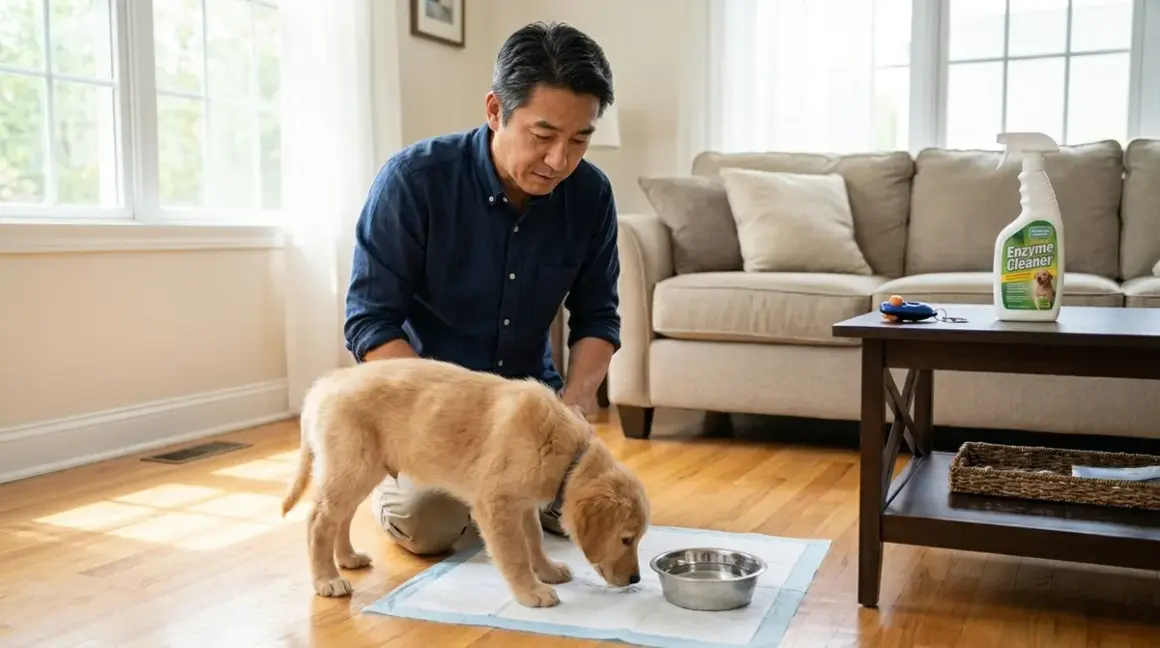

I'll be the first to admit—I'm a fish guy, not a dog trainer. But when my sister brought home an eight-week-old golden retriever last year and kept asking me "why is my puppy having accidents in the house," I realized potty training a puppy has a surprising amount in common with cycling a new aquarium. Both require patience, consistency, and understanding that you're working with biology, not programming a machine. Just like beneficial bacteria need time to colonize a filter media, puppies need time to develop bladder control and learn the communication skills to tell you when they need to go. If you're dealing with puddles and frustration, you're not alone—and more importantly, there's usually a logical explanation.
What Is a Puppy Potty Training Accident?
When we talk about potty training accidents, we're referring to any elimination—urination or defecation—that happens inside your home when you'd prefer it to happen outside (or on designated puppy training pads, if that's your approach). The key word here is "accident," which implies the puppy isn't being deliberately defiant. In my experience with problem-solving in aquariums, when something goes wrong, it's almost never because the fish are being stubborn—there's an environmental factor I missed. The same principle applies to puppies.
Puppies between 8 and 16 weeks old are in a critical developmental window where they're physiologically capable of learning where to eliminate, but they haven't mastered it yet. According to the American Kennel Club, young puppies can typically hold their bladder for about one hour per month of age—so a three-month-old puppy can manage roughly three hours, though that's pushing it. Until they reach around four to six months, their bladder sphincter muscles simply aren't fully developed, which means physical limitations play a huge role in accidents.
What I've found interesting is that "accidents" can also include marking behavior, submissive urination, or excitement peeing—these aren't strictly potty training failures but behavioral responses that look similar to the untrained eye. Understanding the difference matters because each has a different solution, much like how treating ammonia poisoning requires different steps than addressing a pH crash in a tank.
How Puppy Potty Training Accidents Happen: The Biology and Behavior
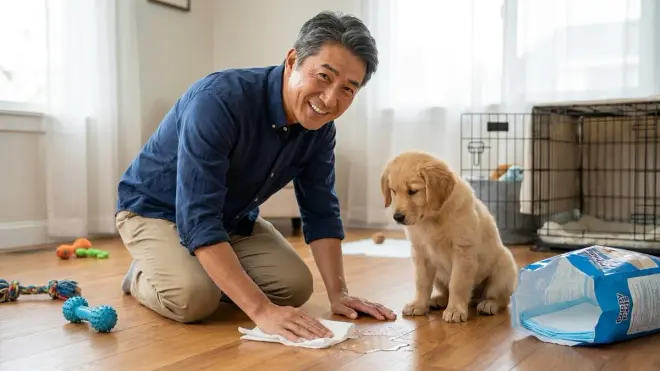
Let's walk through what's actually happening when why is my puppy having accidents becomes your daily question. Physiologically, young puppies lack full bladder and bowel control. Their sphincter muscles—the ones that "hold it in"—are still developing. Between 8 and 12 weeks, most puppies need to eliminate every 1-2 hours during waking periods. They also need to go immediately after waking up, after eating or drinking, and after play sessions. This predictable pattern is your friend, just like knowing the nitrogen cycle gives you a predictable timeline for when ammonia will spike in a new tank.
But biology is only half the story. Behavioral factors matter just as much. Puppies don't instinctively know that your living room rug isn't an acceptable bathroom spot. In the wild, canine pups eliminate in the den area until they're mobile enough to follow adults away from the sleeping space—usually around three to four weeks old. Domestic puppies need us to teach them that "inside = den" and "outside = bathroom." This learning process involves recognizing physical cues (sniffing, circling, whining) and building associations between location and elimination.
Here's where it gets tricky: cognitive development also plays a role. Puppies younger than 12 weeks have very short attention spans and limited impulse control. Even if they've successfully gone outside ten times, they might still squat in the kitchen on the eleventh because they got distracted by a toy and forgot they needed to pee. It's not disobedience—their prefrontal cortex (the part of the brain that manages impulse control) is still under construction. I saw the same thing watching my nephew at that age; he'd get so absorbed in playing that he'd have accidents even though he was technically potty trained.
Environmental triggers can override even good training. Stress from loud noises, new people, or changes in routine can cause regression. Puppies may also have accidents in areas where previous accidents occurred because the scent residue (detectable to their noses even after cleaning) signals "this is a bathroom spot." That's why enzymatic cleaners specifically formulated to break down urine proteins are essential—standard household cleaners mask the smell to us but not to them.
Medical issues can also be culprits. Urinary tract infections, intestinal parasites, and gastrointestinal upset from dietary changes can cause increased urgency or frequency that overwhelms even a partially trained puppy. If your puppy suddenly starts having significantly more accidents after a period of improvement, or if you notice straining, blood in urine, or diarrhea, that's a veterinary issue, not a training one. I learned this the hard way in my early fishkeeping days—I spent weeks adjusting water parameters for a sick betta before realizing it had a bacterial infection that no amount of water changes would fix.
Why Understanding Accident Causes Matters for Your Training Success
Figuring out why is my puppy having accidents isn't just about reducing cleanup frustration—it directly impacts how effective your training will be. If you're addressing the wrong cause, you're wasting time and potentially making things worse. For example, punishing a puppy for an accident caused by a UTI doesn't teach potty training; it just creates fear and stress, which can lead to submissive urination and make the problem worse.
When I was troubleshooting chronic algae in one of my planted tanks, I initially blamed overfeeding and cut back drastically. Turns out the real culprit was a phosphate imbalance from my tap water. No amount of feeding adjustments would've solved it because I was treating the wrong variable. The same principle applies here: if your puppy is having accidents because they physically can't hold it for the six hours you're at work, no amount of correction-based training will solve the problem—you need to adjust your schedule or provide interim solutions like puppy pads or a dog walker.
Understanding the root cause also helps you set realistic expectations. A 10-week-old puppy having three accidents per day isn't a training failure—it's developmentally normal. But a six-month-old puppy suddenly having frequent accidents after months of success suggests something changed: stress, illness, inadequate access to outdoor breaks, or insufficient reinforcement of good habits. Recognizing the difference between "this is a puppy being a puppy" and "something needs to change" prevents unnecessary frustration and helps you intervene appropriately.
For specific guidance on age-appropriate expectations, check out our complete puppy potty training schedule, which breaks down realistic timelines by age and helps you spot when your puppy might be falling outside normal developmental ranges.
Common Types of Potty Training Accidents and What They Mean
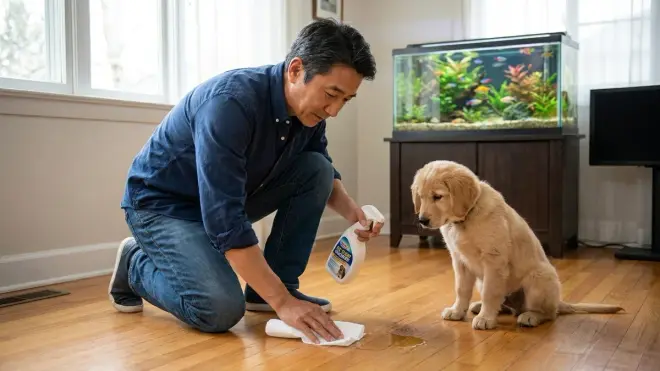
Not all accidents are created equal, and recognizing the patterns helps you diagnose the cause. Frequent small puddles throughout the day, especially if your puppy seems to empty their bladder completely during scheduled outdoor breaks, might indicate a medical issue like a UTI or simply that you're waiting too long between potty breaks. Puppies have tiny bladders relative to their fluid intake, especially if they're drinking more due to warm weather or active play.
Accidents immediately after coming inside are incredibly frustrating but usually point to incomplete elimination during outdoor breaks or insufficient positive reinforcement. I see this parallel in aquarium behavior—if you don't wait long enough after adding dechlorinator before adding fish, you're setting them up for stress even though you technically "did the thing." With puppies, if you bring them inside the second they pee, they might not have fully emptied and will need to go again five minutes later. The solution is staying outside longer and making sure you're enthusiastically praising the moment they finish, so they understand that completing the behavior outside is what earns the reward.
Submissive urination—usually small dribbles when greeting people, during scolding, or when the puppy is showing appeasement behaviors like belly exposure—isn't a potty training issue at all. It's an emotional response related to anxiety or overexcitement and typically resolves as puppies mature and gain confidence. Punishment makes it dramatically worse. The solution involves building confidence through positive training methods and keeping greetings calm.
Marking behavior, where a puppy (usually male but sometimes female) lifts their leg and deposits small amounts of urine on vertical surfaces, is about communication and territory, not about needing to empty their bladder. This usually doesn't appear until adolescence (4-6 months or later) and may indicate the puppy is reaching sexual maturity or responding to other dogs' scent in the environment.
Accidents in the crate are particularly concerning because dogs instinctively avoid soiling their sleeping area. If this happens regularly, the crate might be too large (providing a "bedroom" and separate "bathroom" space), the puppy might have been left too long given their age and bladder capacity, or there could be a medical issue. Some puppies from pet stores or puppy mills were raised in conditions where they had no choice but to eliminate in their confined space, breaking that natural instinct—retraining these puppies requires extra patience and often professional guidance.
Frequently Asked Questions
Why is my 12-week-old puppy still having accidents after two weeks of training?
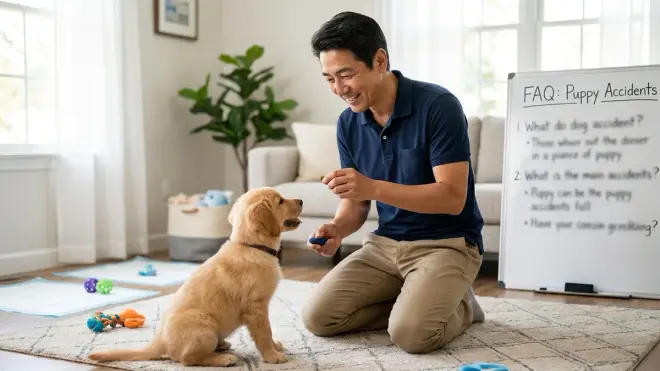
Twelve weeks is still very young, and two weeks isn't long enough to establish reliable potty habits in most puppies—you're right on schedule with normal development, even though it's frustrating. At this age, puppies can typically hold their bladder for about three hours maximum and still lack the impulse control to consistently signal when they need to go. Continue with a consistent schedule, taking your puppy out every 1-2 hours, immediately after meals, water, sleep, and play, and provide lots of positive reinforcement when they eliminate outside. Most puppies show significant improvement between 14 and 20 weeks as bladder control develops, but accidents are completely normal until around six months old.
Could my puppy's accidents be caused by the food I'm feeding?
Yes, diet can definitely contribute to potty training challenges. Foods that are difficult to digest, contain low-quality ingredients, or have sudden formula changes can cause loose stools and increased urgency, making accidents more likely because your puppy physically can't hold it as long. Foods high in fillers like corn and wheat may also lead to larger stool volumes and more frequent elimination. If you recently switched your puppy's food, that transition itself can temporarily disrupt digestion—you should always transition gradually over 7-10 days by mixing increasing amounts of the new food with decreasing amounts of the old. Additionally, if you're feeding large breed puppy formulas to smaller breeds (or vice versa), the caloric density might not match your puppy's needs, affecting digestion frequency.
How do I know if my puppy's accidents are medical rather than behavioral?
Watch for these red flags that suggest a veterinary visit is needed: sudden increase in accident frequency after a period of improvement, straining to urinate or defecate, blood in urine or stool, excessive water drinking paired with frequent urination, diarrhea lasting more than 24 hours, signs of discomfort when eliminating (whimpering, hunched posture), or accidents that happen while the puppy is sleeping or lying down (suggesting loss of sphincter control). Urinary tract infections are surprisingly common in puppies and cause urgency that makes it impossible for them to hold it long enough to get outside. Intestinal parasites like giardia or roundworms can cause loose stools and increased frequency. If you see any of these signs, schedule a veterinary checkup before assuming it's just a training issue—medical problems won't improve with behavioral training alone.
Why does my puppy only have accidents when I'm not watching?
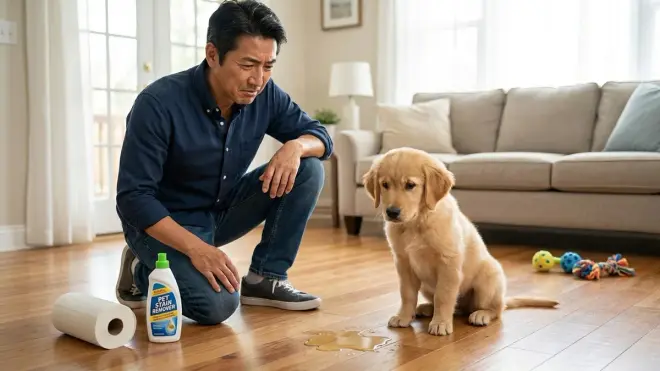
This usually indicates your puppy hasn't fully generalized that "inside = no elimination" and is taking advantage of unsupervised moments to relieve themselves when the urge hits, especially if they've found a preferred spot (often absorbent surfaces like rugs or carpets that feel similar to grass). The solution is to dramatically reduce unsupervised freedom during the training phase—use a crate, playpen, or tether your puppy to you with a leash so you can watch for warning signs like sniffing and circling, which precede elimination. Every accident that happens unsupervised reinforces the habit and sets back training because your puppy doesn't receive correction or redirection in the moment. Think of it like the first 30 days with a new dog in your home—management is just as important as training during this foundation period.
My puppy goes outside but then has an accident inside ten minutes later—what's wrong?
This usually means your puppy didn't fully empty their bladder or bowels during the outdoor session, either because they got distracted, you brought them inside too quickly, or they were so focused on playing that they forgot to finish the job. Puppies, especially young ones, have very short attention spans—squirrels, leaves, interesting smells, or just the excitement of being outside can interrupt the elimination process. The fix is to stay outside for at least 10-15 minutes after the initial elimination, walk around to encourage complete emptying, and only provide play or exploration after they've fully finished. Use a consistent verbal cue like "go potty" while they're eliminating to help them connect the behavior with your command, and when they finish, give immediate enthusiastic praise and a small training treat before heading back inside.
Summary
When you're asking yourself why is my puppy having accidents, remember that you're usually dealing with a combination of developmental immaturity, incomplete training, environmental factors, or occasionally medical issues—not a stubborn or defiant puppy. Young puppies physically lack full bladder and bowel control until around four to six months old, and their short attention spans mean they'll sometimes forget they need to eliminate until it's too late. The most common causes are inadequate bathroom break frequency, insufficient positive reinforcement of outdoor elimination, confusion about where the bathroom is located, stress or routine changes, and medical issues like UTIs or parasites. By identifying the specific pattern of accidents your puppy is showing and addressing the root cause—whether that's adjusting your schedule, improving supervision, using enzymatic cleaners on previous accident sites, or scheduling a vet visit—you'll make significantly faster progress than just generically "trying harder" at training. What I've learned from fifteen years of troubleshooting aquarium problems applies perfectly here: when something isn't working, step back, observe the patterns, test your assumptions about the cause, and adjust your approach based on what the evidence actually tells you rather than what you assumed was happening.