
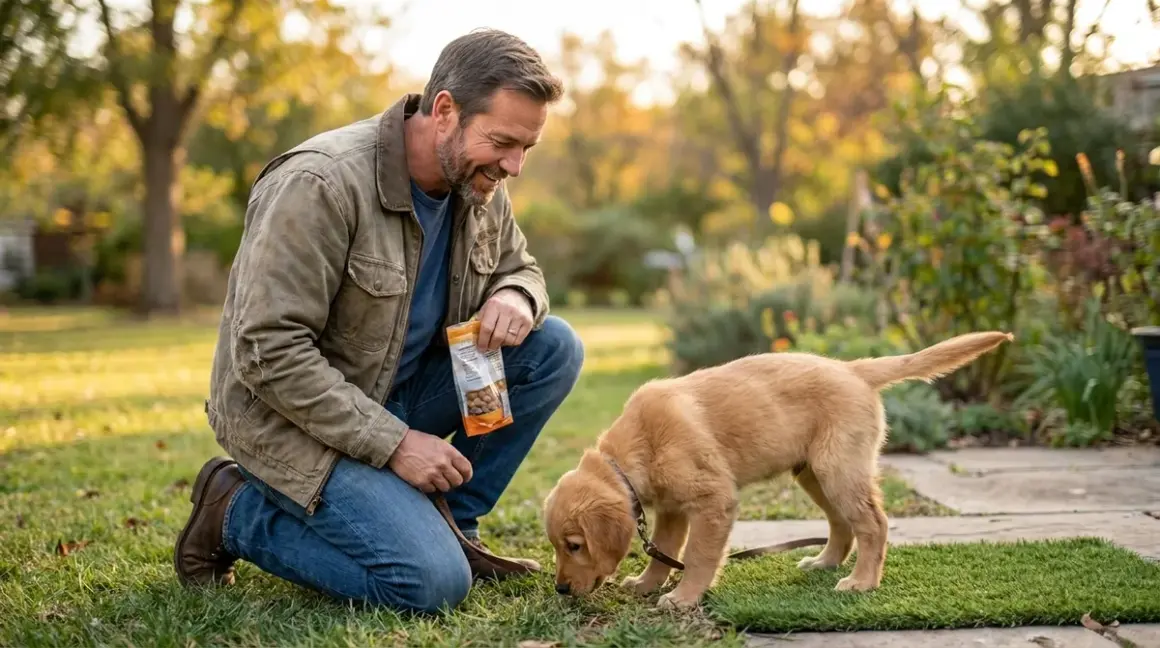

Bringing home a new puppy is exciting, but let's be honest—cleaning up accidents isn't. Learning how to potty train a puppy is the first real challenge most new dog owners face, and it can feel overwhelming when you're standing in your living room with a paper towel at 3 AM. I've helped thousands of families through this exact situation over the past two decades, and here's what I want you to know: potty training doesn't have to be complicated. You need a clear plan, realistic expectations, and consistency. That's it. This guide walks you through everything from understanding how your puppy's bladder actually works to dealing with those inevitable setbacks that make you question if your dog will ever figure this out.
What Is Puppy Potty Training?
Potty training is the process of teaching your puppy where it's appropriate to eliminate—outside, on a pad, or in a designated area—and building the habit of holding it until they can get to that spot. It's not about punishment or complicated behavior modification. It's about creating a routine that works with your puppy's natural instincts and physical development.
Here's what most people don't realize: puppies aren't born knowing that your carpet is different from grass. In their mind, they just need to go when nature calls, and any surface will do. Your job is to show them which surface earns praise and treats, and to get them there often enough that they start to form the association.
The training process relies on three things working together: managing your puppy's environment so accidents are less likely, rewarding the right behavior when it happens, and establishing a predictable schedule that matches their physical capabilities. Young puppies have small bladders and limited control—an 8-week-old puppy can typically hold it for about 2-3 hours max during the day. That's not stubbornness. That's biology.
I've seen people expect their 2-month-old puppy to signal when they need to go out and then hold it for six hours. That's like expecting a toddler to use perfect table manners. It's not realistic, and setting unrealistic expectations is the fastest way to frustration for both you and your dog.
How Puppy Potty Training Works
The mechanics of how to potty train a puppy come down to controlling when and where opportunities to eliminate happen, then making those successful eliminations incredibly rewarding. Let me break down what's actually happening in your puppy's developing brain and body.
Understanding Your Puppy's Physical Limitations
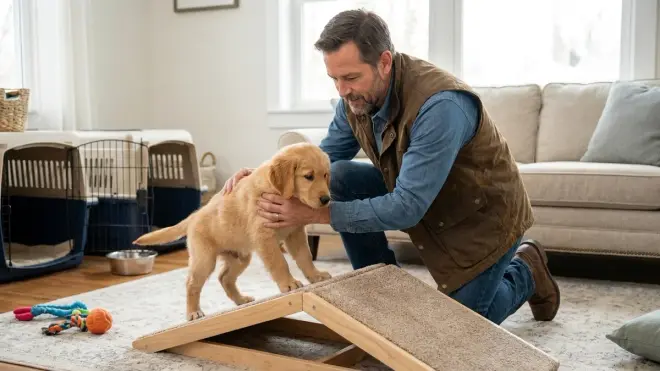
Bladder control develops gradually. A general rule that's held up well in my experience: a puppy can hold it for about one hour per month of age during the day, up to about 8-10 hours maximum for an adult dog. So your 3-month-old puppy? Roughly 3-4 hours max, and that's pushing it.
At night, puppies can usually hold it a bit longer because they're not active, eating, or drinking. But expecting a young puppy to make it through a full 8-hour night without a bathroom break in the first few weeks is asking too much. Most puppies aren't reliably sleeping through the night without needing to go out until around 4-5 months old.
Bowel movements are more predictable than urination. According to the American Kennel Club, puppies typically need to defecate within 30 minutes after eating. Their digestive systems work fast. This predictability is your biggest advantage—you know when to expect it, so you can be ready.
The Training Process: Step by Step
Step one is establishing a schedule. Your puppy should go out first thing in the morning, after every meal, after naps, after play sessions, and right before bed. For young puppies (8-12 weeks), that means you're taking them out every 1-2 hours during the day. Yes, it's a lot. Yes, it's temporary. Our puppy potty training schedule breaks this down by age with specific timings that have worked for thousands of families.
Step two is confinement when you can't supervise. This is where crate training becomes invaluable. Dogs naturally avoid soiling their sleeping area. A properly sized crate—just big enough for your puppy to stand, turn around, and lie down—encourages them to hold it. When you can't watch your puppy like a hawk, they should be in the crate, in a puppy-proofed small room, or in an exercise pen. Free-roaming access to your entire house is earned over time, not given on day one.
Step three is the actual reward process. When your puppy eliminates in the right spot, you need to mark that moment immediately. I mean within one second of them finishing. A happy "Yes!" or "Good potty!" followed by a high-value treat creates the association. The timing matters more than the size of the treat. Your puppy's brain is connecting the dots: I went here → exciting things happened. If you wait until you're back inside to give the treat, that moment has passed.
Step four is supervision and interruption. When your puppy is out of the crate and inside with you, they need to be in the same room where you can see them. The second you see sniffing, circling, or starting to squat, you calmly interrupt with "Outside!" and hustle them to the potty spot. If they finish outside, reward heavily. If they already went inside, clean it up without drama and remind yourself to watch more carefully next time.
Common Training Mistakes That Slow Progress
Punishing accidents doesn't work. Yelling, rubbing their nose in it, or acting angry just teaches your puppy that you're unpredictable and scary—not that going inside is wrong. I've seen this hundreds of times: the puppy learns to hide when they have accidents (behind the couch, in another room) because they associate you seeing it with punishment, not the act itself with wrongness.
Inconsistent schedules confuse puppies. If you take them out every two hours on Saturday but make them wait five hours on Tuesday because you're busy, you're essentially resetting the training. Puppies learn through pattern recognition. Break the pattern, delay the training.
Using the wrong cleaning products leaves scent markers that encourage repeat accidents in the same spot. Regular household cleaners don't break down the uric acid in urine. You need an enzymatic cleaner specifically designed for pet accidents. I recommend products containing bacterial enzymes that actually digest the organic compounds.
Training Aid Tools That Help
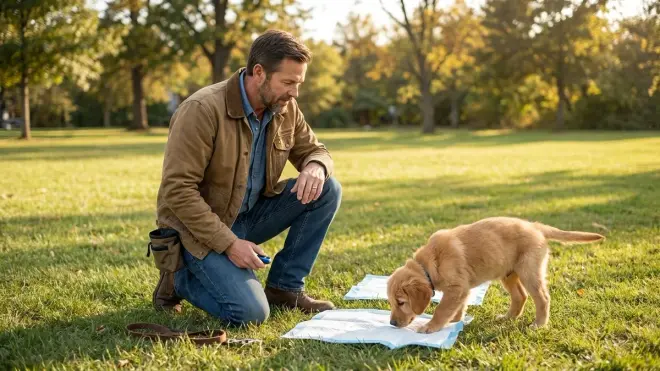
Some products genuinely make this process easier. Potty training sprays like NatureVet Potty Here Training Aid Spray contain scents that encourage elimination. You spray the designated area, and many puppies naturally want to go there. Our guide to dog potty training aids covers how these work and when they're most useful.
Training pads serve as an intermediate step for people who can't get outside frequently—apartment dwellers, people with mobility issues, or those with very young puppies. The best puppy potty training pads have attractant scents built in and absorbent layers that wick moisture away from the surface. Just understand that if you train your puppy to use pads, you'll eventually need to transition them fully outdoors if that's your end goal.
Crates and exercise pens aren't optional accessories—they're fundamental management tools. The right size matters. Too big, and your puppy can eliminate in one corner and sleep in another. Too small, and it's uncomfortable. For a growing puppy, look for crates with adjustable dividers so you can increase the space as they grow.
Why Potty Training Your Puppy Properly Matters
Beyond the obvious benefit of not living in a house that smells like a kennel, proper potty training builds the foundation for all future training. When you successfully teach your puppy bladder control and appropriate elimination, you're also teaching them to respond to your schedule, to earn rewards through specific behaviors, and to understand that you're the one who controls access to important resources.
A well-trained dog has more freedom. Puppies who aren't reliable in the house spend years confined to crates or small areas whenever their owners can't watch them. That's not a great quality of life. Once your dog is trustworthy, they get to be part of your daily routine—sleeping in your bedroom, hanging out while you work, joining you in more areas of the house.
It protects your home and your wallet. I've seen carpet replacement bills that run into thousands of dollars. Hardwood floors can warp from repeated urine exposure. Furniture gets ruined. These aren't just cosmetic issues—rental deposits disappear, and homeowners face legitimate property damage. Investing 8-12 weeks of diligent training saves you years of headaches and significant money.
Training reduces stress for your puppy too. Dogs are naturally clean animals. Most adult dogs genuinely don't want to eliminate where they live and sleep. When accidents keep happening because the training hasn't clicked yet, your puppy experiences confusion and stress. They don't understand why sometimes going inside is fine (because no one stopped them) and other times it seems to upset you. Clear, consistent training creates clarity, and clarity reduces anxiety.
Think about the bigger picture too. A dog who isn't housebroken by 6-8 months often ends up in a shelter. It's one of the most common reasons people give up their dogs. That's heartbreaking and entirely preventable with the right approach from day one. If you're bringing home a new puppy, our new dog checklist covers what you need ready before your puppy arrives.
Types of Potty Training Methods
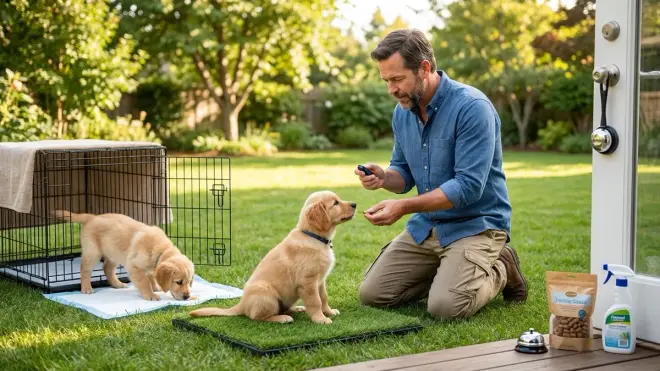
There's no single "right" way to potty train a puppy, but there are several approaches that work well depending on your living situation, schedule, and long-term goals. Here's what I've seen succeed.
Outdoor Training Only
This is the most straightforward approach for people with easy outdoor access. You take your puppy directly outside to a designated potty spot every time, never establishing an indoor option. The advantage is simplicity—there's no confusion about where it's appropriate to go. It's always outside, period.
The challenge is that it requires consistent access to your outdoor space and the ability to get your puppy out frequently. If you live in an apartment on the 12th floor, or if you have mobility limitations, or if you live somewhere with brutal winter weather, this approach can be difficult in the early weeks when your puppy needs to go out every hour or two.
Indoor Pad Training Transitioning to Outdoor
This method uses training pads as an intermediate step. You establish a pad area inside where your puppy learns to eliminate, then gradually move the pads closer to the door, eventually outside, and then remove them entirely. It's particularly useful for very young puppies (8-10 weeks) who can't hold it long enough to make it outside reliably, or for people who work long hours and need an indoor option during the transition period.
The main consideration: you're essentially training twice—first to use pads, then to eliminate outdoors. Some puppies transition smoothly; others get confused about why the rules suddenly changed. Our article comparing crate training vs puppy pads walks through the pros and cons of each approach in detail.
Paper Training
Similar to pad training, but using newspaper instead of commercial pads. This is an older method that's fallen out of favor because newspaper doesn't absorb well, can leave ink stains, and doesn't have the attractant scents that modern training pads include. I don't generally recommend it unless you're in a situation where you have no other option.
Litter Box Training for Small Breeds
Yes, really. Some toy breed owners successfully litter train their dogs using boxes designed for dogs (larger and shallower than cat boxes) filled with special dog litter or artificial grass. This is a permanent indoor solution, not a transition method. It works best for dogs under 15 pounds and for people who genuinely can't provide regular outdoor access.
Combination Approaches
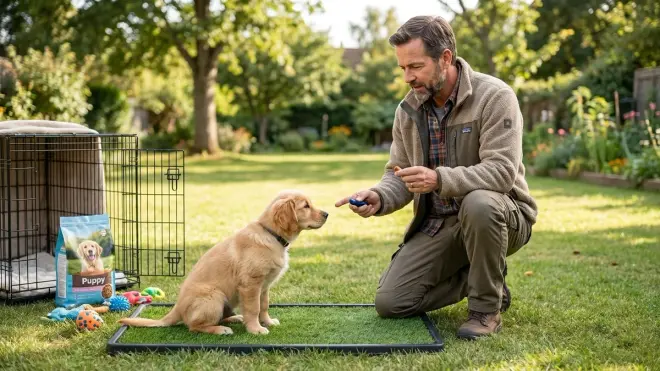
Many people use a hybrid method that adjusts to their circumstances. Maybe pads are available during the workday but you do outdoor trips in the evenings and on weekends. Or you have an outdoor potty area but also establish a single indoor backup spot for emergencies or bad weather.
The key is consistency within whatever method you choose. Switching methods every few days because you're not seeing instant results just confuses your puppy and prolongs the process.
Frequently Asked Questions
How long does it take to potty train a puppy?
Most puppies achieve basic reliability—meaning they can signal when they need to go out and hold it for several hours—between 4 and 6 months old. Complete reliability, where accidents are extremely rare even during distractions or excitement, typically happens between 6 and 12 months. This timeline varies significantly based on breed, individual temperament, consistency of training, and how much time you can dedicate to the process. Smaller breeds often take longer because they have smaller bladders and faster metabolisms. Some puppies click into it within a few weeks; others need several months of patient repetition.
What should I do if my puppy keeps having accidents in the house?
First, check your schedule—you're probably not taking your puppy out frequently enough for their current age and bladder capacity. Go back to taking them out every 1-2 hours and immediately after eating, playing, or waking from a nap. Second, increase supervision when they're out of the crate. If you can't watch them directly, they shouldn't have free access to your home. Third, review your cleaning methods—if you're not using an enzymatic cleaner, residual scent is attracting them back to the same spots. If accidents continue despite these adjustments, visit your vet to rule out urinary tract infections or other medical issues. Our article on why puppies have accidents in the house covers the most common causes and solutions.
Can you potty train an 8-week-old puppy?
Yes, you absolutely should start potty training the day your 8-week-old puppy comes home. What you can't expect is immediate success. At 8 weeks, your puppy has virtually no bladder control and needs to go out every 1-2 hours during the day. You're not training them to hold it yet—you're training them where to go by creating successful repetitions. Take them to the same spot outside, wait patiently until they eliminate, then reward enthusiastically. Do this 10-15 times a day, and your puppy will start to understand that eliminating in this specific place makes you very happy. The muscle control and pattern recognition develop together over the following weeks.
Should I use puppy pads or go straight to outdoor training?
That depends entirely on your situation. If you have easy access to an outdoor space, live in a temperate climate, have a flexible schedule that allows frequent trips outside, and want the simplest training path, skip the pads and go straight to outdoor training. If you live in an apartment, work long hours, have a very young puppy with an exceptionally small bladder, or face mobility limitations that make multiple daily outdoor trips difficult, pads provide a useful intermediate step. The tradeoff is that pad training means you'll eventually need to transition your puppy away from using them if outdoor elimination is your goal. There's no universally correct answer—choose based on what's actually sustainable for your household.
What's the best age to start potty training a puppy?
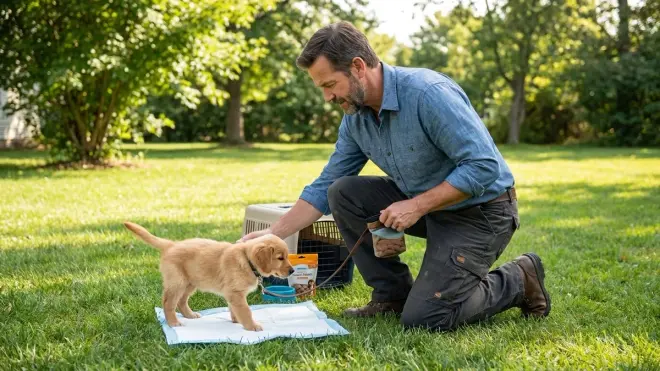
Start the day you bring your puppy home, regardless of age. Whether that's 8 weeks, 12 weeks, or even older, the training process is the same—establish a schedule, provide frequent opportunities to eliminate in the right place, reward success, and prevent access to areas where accidents are likely. Younger puppies require more frequent trips outside and will take longer to achieve reliable control simply because their bodies are still developing. Older puppies may have already formed bad habits that need to be overwritten, which adds time. But there's no "wait until they're ready" period. Start immediately with age-appropriate expectations.
What You Need to Remember About Potty Training
Learning how to potty train a puppy comes down to three non-negotiable principles: frequency, consistency, and patience. Take your puppy out more often than you think necessary. Follow the same routine every single day. Celebrate the successes and clean up the accidents without drama.
Your puppy isn't trying to frustrate you. They're learning a complex skill that involves physical control, pattern recognition, and communication. Some days will feel like you're making zero progress. Some weeks you'll wonder if you adopted the only puppy on earth who will never figure this out. Then one day you'll realize it's been three days without an accident, and a week later they'll bark at the door to go out. It happens gradually, and then suddenly.
Stock up on enzymatic cleaner, set alarms on your phone for potty breaks, and prepare yourself for some early morning wake-up calls. Grab everything you need from our puppy potty training supplies checklist before your first day of training. If you run into a puppy who seems particularly resistant to standard training methods, our guide on how to potty train a stubborn puppy covers the specific adjustments that help.
The investment you make right now pays off for the next 10-15 years. A fully housetrained dog makes everything else about dog ownership easier and more enjoyable.