
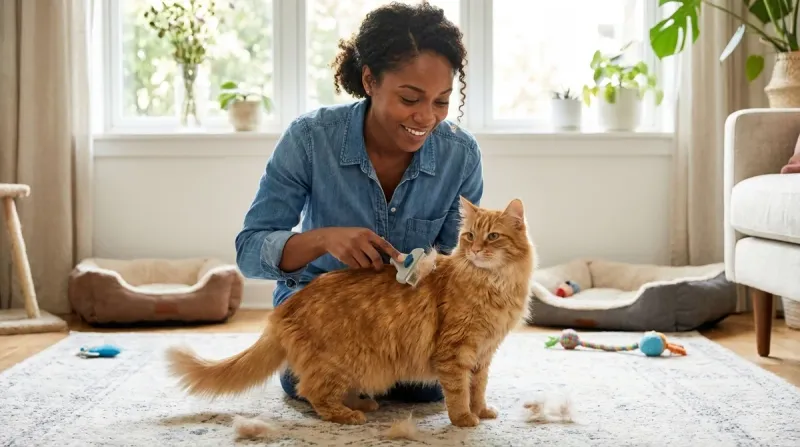

I'll be honest—grooming cats isn't my daily bread and butter the way dogs are. But after nearly a decade at the grooming table, I've learned that shedding is shedding, and the principles of moving undercoat and loose fur don't change much between species. The best cat grooming brush for shedding needs to reach through that topcoat, grab the undercoat that's ready to come out, and do it all without turning your kitty into a hissing ball of fury. I've watched enough cat parents struggle with the wrong tools—slicker brushes that barely touch the undercoat, combs that snag and pull, or those gimmicky gloves that just smooth the surface. Finding a brush that actually pulls loose fur before it ends up on your couch is the difference between managing shedding and just redistributing it around your house.
Quick verdict: The FURminator deShedding Tool dominates for a reason, but it's not the right fit for every cat or every coat type. Your best pick depends on whether you're dealing with long or short hair, how tolerant your cat is of grooming sessions, and whether you're tackling seasonal blow-outs or year-round maintenance.
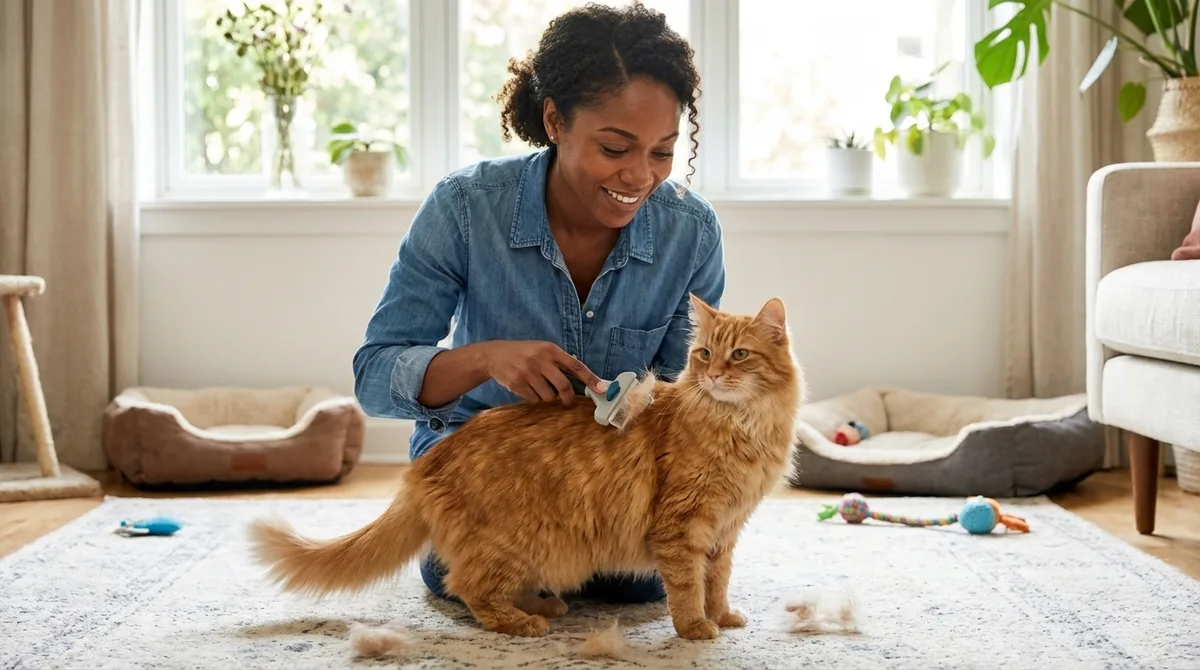
What to Look For in a Cat Grooming Brush for Shedding
Tooth Design and Depth
The actual structure of the brush teeth matters more than most people realize. Stainless steel teeth with rounded tips grab undercoat without scratching skin—crucial for cats, who have thinner, more sensitive skin than most dogs. Tooth depth needs to match coat length: short-haired cats need teeth around 2 inches or less to reach the undercoat without poking through to skin, while long-haired breeds like Persians or Maine Coons need deeper penetration (2.5-3 inches) to get past all that fluff.
I've seen too many people use human hairbrushes or generic pet brushes that only skim the top layer. Those surface-level tools just move fur around—they don't actually remove the dead undercoat that's causing the shedding problem. Look for teeth that are close enough together to catch fine undercoat fibers (usually 1-2mm spacing) but not so dense that they mat or pull.
Blade vs. Brush Design
Here's where it gets interesting. Deshedding tools use a blade-like edge with fine teeth that essentially rake out loose undercoat—they're aggressive and effective, but they can remove too much if you're not careful. I think of them like thinning shears versus regular scissors. Traditional brushes with individual pins or bristles are gentler and better for maintenance, but they won't pull as much fur in a single session.
Most cats do best with a combination approach: a deshedding tool during heavy shedding seasons (spring and fall, typically) and a gentler slicker or pin brush for weekly maintenance between those peak times. If your cat has a single coat (like a Siamese or Burmese), you probably don't need the aggressive deshedding blade at all—a good slicker will handle it.
Handle Ergonomics and Control
This matters more than you'd think, especially if you're working with a cat who tolerates grooming but isn't exactly thrilled about it. You need one-handed control so your other hand is free to steady your cat, scritch their favorite spot, or keep them from backing away. Rubber or textured grips prevent the brush from slipping if your cat decides to make a sudden move.
Weight distribution is huge too. A top-heavy brush makes your wrist work harder, and after five minutes your control starts to suffer—that's when you accidentally press too hard or lose your angle. The best cat grooming brush for shedding should feel like an extension of your hand, not a tool you're wrestling.
Self-Cleaning Mechanism
Let me tell you, pulling clumps of fur out of brush teeth is nobody's idea of fun. Self-cleaning buttons that push teeth forward to release trapped fur save time and frustration—you press it, the fur lifts off in one sheet, you toss it and keep going. Some brushes require you to manually pull fur from between each tooth, which gets old fast when you're dealing with a cat who's done sitting still.
The mechanism needs to be solid, though. I've used self-cleaning brushes where the button sticks or the teeth don't retract fully, leaving fur trapped halfway. That's worse than no button at all.
Size Appropriate for Cats
Cat brushes should be smaller than dog brushes—seems obvious, but I see people trying to use the same deshedding tool on their cat that they use on their golden retriever. Cats have smaller bodies with more angular bone structure, especially around the face, legs, and tail base. A brush head that's too large can't navigate those areas without bumping into things or forcing awkward angles that stress your cat out.
Look for brush heads in the 2-3 inch range for most cats, maybe slightly larger for big breeds like Maine Coons. The smaller footprint gives you precision, which builds trust because you're not constantly bumping into whiskers or elbows.
Coat Type Compatibility
Not all cats shed the same way. Short-haired cats with dense undercoats (like British Shorthairs or Russian Blues) need different tools than long-haired cats with silky topcoats. Double-coated breeds shed undercoat in seasonal waves, while single-coated breeds lose hair more consistently year-round but in smaller amounts.
If your cat has a coat that mats easily—Persians, Himalayans, or really any long-hair who's not a fan of grooming at home—you need a brush that can work through tangles without ripping. That usually means wider-spaced teeth or a two-step process: detangle first with a steel comb, then deshed with the brush.
Our Top Picks
FURminator Short Hair deShedding Tool for Cats
The FURminator Short Hair deShedding Tool for Cats🛒 Amazon is the workhorse that built the brand's reputation, and for most short-haired cats dealing with undercoat shedding, it's hard to beat. The stainless steel edge with fine teeth pulls massive amounts of loose fur in just a few strokes—I'm talking clumps that make you wonder how your cat has any hair left. FURminator's edge design reaches through the topcoat to grab undercoat without cutting healthy hair, and the FURejector button pops trapped fur off cleanly.
Pros:
- Removes up to 90% of loose undercoat in one session during heavy shedding
- Stainless steel edge with skin guard prevents digging into skin
- FURejector button releases fur with one press
- Ergonomic handle with rubber grip for solid control
- Available in separate long-hair and short-hair versions
Cons:
- Aggressive design can remove too much undercoat if you overuse it (limit to once weekly during shedding season)
- Not suitable for cats without undercoat or with very thin coats
- Higher price point than traditional brushes (usually around $30-40)
Hertzko Self-Cleaning Slicker Brush
The Hertzko Self-Cleaning Slicker Brush🛒 Amazon is my go-to recommendation for cats who won't tolerate the FURminator's intensity or for weekly maintenance between deshedding sessions. The fine bent-wire bristles with protective tips grab loose fur and work through minor tangles without the aggressive pull of a blade-style tool. That self-cleaning button actually works—press it and the bristles retract, popping the fur off in one piece.
Pros:
- Gentle enough for daily or every-other-day use
- Works on both long and short coats
- Self-cleaning mechanism is reliable and smooth
- Angled bristles reach undercoat without scraping skin
- Budget-friendly (typically under $15)
Cons:
- Won't remove as much undercoat per session as dedicated deshedding tools
- Bristles can bend if you press too hard repeatedly
- Smaller brush head means more passes for larger cats
Safari Self-Cleaning Slicker Brush for Cats
The Safari Self-Cleaning Slicker Brush for Cats🛒 Amazon sits in that sweet spot between effective deshedding and tolerability for fussy cats. The stainless steel pins are angled to follow your cat's body contours, and they're fine enough to catch undercoat but flexible enough not to feel harsh. I like the retractable pin mechanism—it's sturdier than cheaper self-cleaning brushes and doesn't jam up with fur.
Pros:
- Angled pins conform to body shape for more natural strokes
- Durable construction that holds up to regular use
- Self-cleaning retraction works smoothly even with dense fur
- Comfortable non-slip handle
- Appropriate size for most cat breeds
Cons:
- Pin spacing could be tighter for very dense undercoats
- The cleaning button requires more pressure than some other models
- Not ideal for long-haired cats with severe matting
Li'l Pals Coated Tips Cat Slicker Brush
The Li'l Pals Coated Tips Cat Slicker Brush🛒 Amazon is specifically sized for kittens and small-breed cats like Singapuras or Munchkins. The coated pin tips are extra gentle, making this a solid choice for introducing grooming to young cats or working with seniors who have thin skin or arthritis that makes them sensitive to pressure. The smaller head navigates tight spaces like under the chin and behind the ears.
Pros:
- Perfect size for kittens, small cats, and detail work
- Coated tips minimize skin irritation
- Lightweight and easy to maneuver with precision
- Affordable entry point for new cat owners
- Gentle enough for cats with sensitive skin
Cons:
- Too small to efficiently groom larger cats
- Doesn't pull as much undercoat as larger, more aggressive tools
- No self-cleaning mechanism—you'll pull fur out manually
- Pins are short and better for surface coat than deep undercoat removal
JW Pet GripSoft Cat Slicker Brush
The JW Pet GripSoft Cat Slicker Brush🛒 Amazon earns its spot with that distinctive rubber-sheathed handle that genuinely improves control. The oval brush head with angled pins covers more surface area than rectangular slickers, which speeds up grooming sessions—useful when your cat's patience has a five-minute limit. The pins are fine wire with rounded ends, effective on undercoat without the harshness of a deshedding blade.
Pros:
- Oval head shape covers more coat per stroke
- GripSoft handle reduces hand fatigue during longer sessions
- Angled pins reach undercoat effectively
- Durable construction from an established pet brand
- Works well on both medium and long coats
Cons:
- No self-cleaning feature means manual fur removal
- Larger head size can be awkward around face and legs
- Pins can loosen from the base with very aggressive use over time
Andis Premium Metal Pin Pet Brush
The Andis Premium Metal Pin Pet Brush🛒 Amazon brings a more traditional pin brush design that's particularly good for long-haired cats or as a finishing tool after deshedding. The metal pins with rounded tips work through the coat without grabbing undercoat as aggressively, which makes this ideal for daily maintenance or for cats who mat easily and need regular detangling. I use pin brushes like this as the final pass to smooth the coat and catch any stragglers.
Pros:
- Metal pins glide through long coats without snagging
- Rounded tips are gentle on sensitive skin
- Smooths and finishes the coat after deshedding
- Sturdy construction from a professional grooming brand
- Non-slip handle provides good control
Cons:
- Not designed for heavy undercoat removal—this is a finishing brush
- Requires more frequent passes to manage shedding than deshedding tools
- Pins can collect oil and debris, requiring regular cleaning
HandsOn Gloves Grooming Tool
The HandsOn Gloves Grooming Tool🛒 Amazon takes a completely different approach with flexible rubber nodules that you work over your cat's coat. These are fantastic for cats who hate traditional brushes but tolerate petting—you're essentially grooming through massage. The nodules grab loose hair while stimulating circulation and distributing natural oils. They're particularly good for short-haired breeds or for anxious cats building tolerance to grooming.
Pros:
- Feels like petting rather than brushing for skittish cats
- Works well on short to medium coats
- Machine washable for easy cleaning
- Good for building positive grooming associations
- Allows close contact and control during grooming
Cons:
- Doesn't remove nearly as much undercoat as dedicated brushes
- Not effective on long or heavily matted coats
- Can take longer to cover the whole cat
- More of a supplementary tool than a primary deshedder
Chris Christensen Oval Pin Brush
The Chris Christensen Oval Pin Brush🛒 Amazon represents the professional grooming end of the spectrum, and while it's pricey, the quality shows in every stroke. The stainless steel pins are set in a cushioned pad that flexes with your cat's body contours, preventing that harsh scraping feeling that makes cats bail on grooming sessions. This is my recommendation for long-haired breeds who need regular brushing to prevent mats or for show cats who need coat perfection.
Pros:
- Professional-grade construction built for daily use
- Cushioned pin base flexes with body contours
- Polished pins glide through long coats smoothly
- Wooden handle is balanced and comfortable for extended sessions
- Excellent for preventing mats in long-haired breeds
Cons:
- Premium price point (often $30-50 depending on size)
- Designed for coat maintenance rather than aggressive deshedding
- Overkill for short-haired cats with minimal grooming needs
SleekEZ Deshedding Tool
The SleekEZ Deshedding Tool🛒 Amazon uses a unique wavy blade design that grabs loose fur from multiple angles in one pass. Originally designed for horses, the cat-sized version works surprisingly well on double-coated cats dealing with seasonal blowouts. That wavy edge catches fur other tools miss without the aggressive pull of straight-blade desheddors. It's also one of the few tools I've used that genuinely works on wet or dry coat.
Pros:
- Wavy blade design catches fur from multiple directions
- Works on wet or dry coats
- Removes loose fur without cutting healthy hair
- Wooden handle feels substantial and balanced
- Effective on both undercoat and loose topcoat
Cons:
- Takes practice to find the right pressure and angle
- Can remove too much coat if you're not careful
- Blade edge needs occasional cleaning to maintain effectiveness
- Not ideal for cats who startle at the scraping sound it makes
Frequently Asked Questions
How often should I brush my cat with a deshedding tool?
For most cats with undercoat, brush with a deshedding tool like the FURminator once or twice weekly during peak shedding seasons (spring and fall) and once every two weeks during maintenance periods. Daily deshedding removes too much undercoat and can thin the coat to the point where it doesn't insulate properly or protect skin. Short-haired cats without significant undercoat—breeds like Siamese, Burmese, or Cornish Rex—do better with a gentle slicker brush two to three times weekly rather than aggressive deshedding tools. Long-haired cats often need daily brushing with a pin brush or slicker to prevent mats, but save the deshedding blade for weekly dedicated sessions. Watch your cat's coat condition: if it starts looking thin or dull, you're over-brushing.
Can deshedding brushes damage my cat's coat?
Yes, overusing deshedding tools or applying too much pressure can thin the coat, damage healthy guard hairs, and irritate skin, but used correctly they're safe and effective. The key is understanding that deshedding tools remove loose undercoat that's already shed from the follicle—they don't pull hair that's still attached and growing. Problems happen when people press too hard (thinking more pressure equals more results), use the tool too frequently, or keep brushing after they've already removed the loose undercoat in that area. The coat should look fuller and healthier after brushing, not patchy or thin. If you notice bald spots, irritated skin, or your cat becoming sensitive to touch after brushing, you're either using too much pressure or brushing too often. For cats prone to skin sensitivity, learning proper grooming technique helps prevent damage while still managing shedding.
What's the difference between a slicker brush and a deshedding tool?
Slicker brushes use fine, bent-wire bristles to remove loose topcoat and work through tangles, while deshedding tools use a blade-like edge with teeth specifically designed to reach through the topcoat and remove loose undercoat. Think of slicker brushes as daily maintenance tools that keep the coat smooth and catch hair as it naturally sheds. They're gentler and appropriate for more frequent use. Deshedding tools are more aggressive—they're the power tool you bring out when your cat is blowing their coat or when you need to seriously reduce undercoat volume before shedding gets out of control. Most cats benefit from both: a slicker for regular brushing and a deshedder for targeted sessions during heavy shedding periods. Single-coated breeds without significant undercoat often don't need a deshedding tool at all—a good slicker handles everything.
How do I stop my cat from hating the grooming brush?
Build positive associations by starting with very short sessions (2-3 minutes), brushing only areas your cat enjoys being touched, and pairing grooming with high-value rewards like treats or playtime. Most cats who hate brushing had a bad experience—someone brushed too hard, pulled a mat, or forced them to sit still longer than they could tolerate. Start over by letting your cat investigate the brush on their terms. Brush once or twice in a spot they love (usually the cheeks or under the chin), then stop and reward. Gradually increase duration and coverage over several weeks. Use a gentler brush initially—even if it doesn't remove much fur, you're rebuilding trust. The Hertzko slicker or grooming gloves work well for this because they feel less clinical than a deshedding blade. Some cats never tolerate long grooming sessions, and that's okay—three focused minutes every other day accomplishes more than a twenty-minute wrestling match once a month.
Do short-haired cats need special grooming brushes compared to long-haired cats?
Yes, short-haired cats need brushes with shorter teeth (around 2 inches or less) that reach their undercoat without poking through to skin, while long-haired cats need deeper teeth (2.5-3 inches) that penetrate through all that length to grab undercoat. The FURminator and similar tools come in specific short-hair and long-hair versions for exactly this reason—using a long-hair tool on a short-haired cat means the teeth are too long and can scrape skin, while a short-hair tool on a long-haired cat won't reach the undercoat where shedding actually happens. Beyond tooth length, long-haired cats often need a two-step process: detangle with a steel comb or pin brush first, then deshed with the appropriate tool. Short-haired cats can usually go straight to deshedding. Dense short coats like British Shorthairs shed as much as any long-haired breed—they just need the right tool to get to it.
The Verdict
The best cat grooming brush for shedding isn't a one-size-fits-all answer—it depends on your cat's coat type, tolerance level, and whether you're managing year-round maintenance or seasonal blowouts. For most short-haired cats with dense undercoat, the FURminator delivers results nothing else matches, but you need to use it correctly and not overdo it. Long-haired cats often do better with a combination approach: the Chris Christensen or Andis pin brushes for daily detangling and coat maintenance, paired with a deshedding tool like the SleekEZ for targeted undercoat removal during heavy shedding periods.
If your cat barely tolerates grooming, start with the HandsOn Gloves or Hertzko slicker to build positive associations before introducing more aggressive tools. The goal isn't to win a wrestling match or strip every possible loose hair in one session—it's to remove enough undercoat that your cat stays comfortable and your furniture stays relatively fur-free, all while keeping grooming something your cat tolerates or even enjoys. That balance looks different for every cat, but having the right tool for your specific situation makes all the difference.