
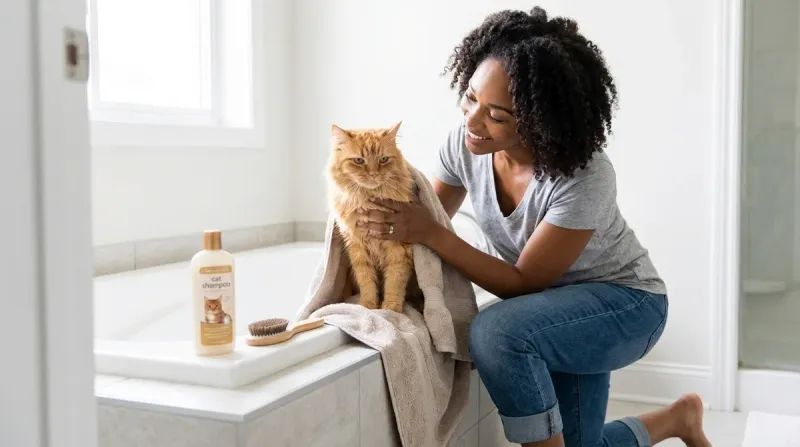

I'll be honest—after nearly a decade of grooming dogs professionally, I never expected to become the person my friends call when their cats need bathing. But here we are. And the first thing I always tell them? The answer to how often should you bathe a cat is probably "less than you think." In this guide, you'll learn the real bathing frequency most cats need (spoiler: it might be never), when baths become necessary, and exactly how to bathe a cat without turning your bathroom into a crime scene. Whether you're dealing with a senior cat who can't groom properly, a long-haired Persian with matted fur, or a kitten who found something unspeakable to roll in, I'm walking you through the truth about feline bath frequency.
Skill level: Beginner to intermediate
Time estimate: 15-30 minutes per bath (plus prep and recovery time)
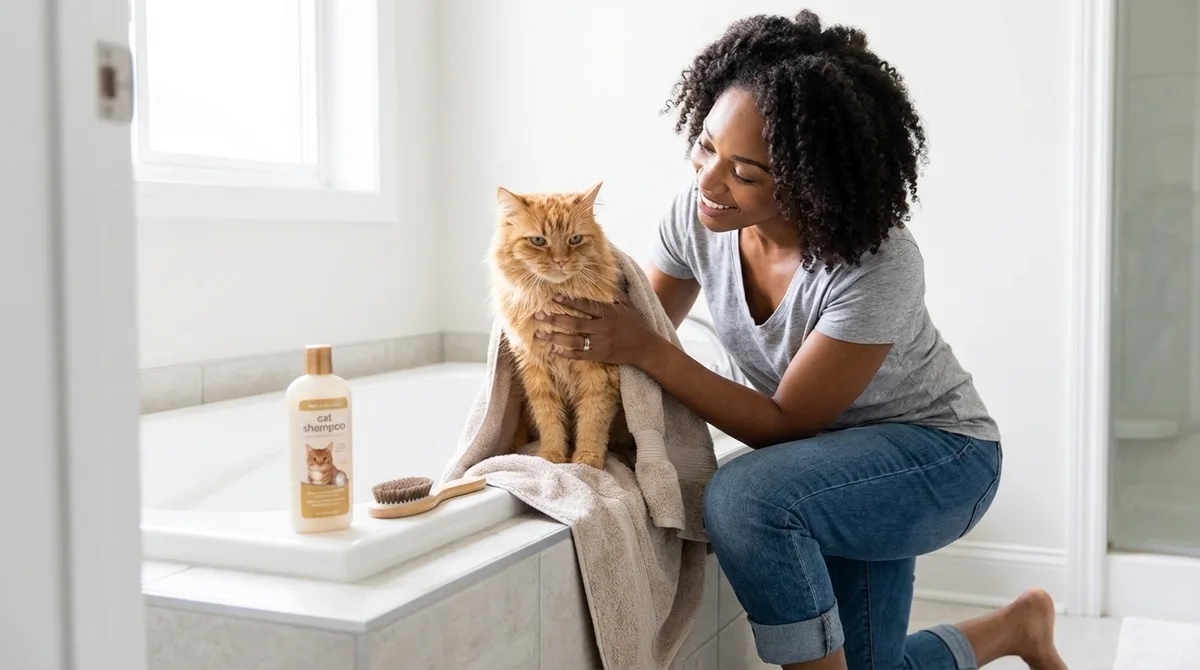
What You'll Need
Before we dive into the step-by-step process, gather these supplies. Trust me—you don't want to be dripping wet, holding a soapy, angry cat while you search for a towel.
- Cat-specific shampoo (never dog or human shampoo—pH levels are different)
- Large towels (at least 2-3 bath towels)
- Non-slip mat for the sink or tub
- Handheld sprayer or pitcher for rinsing
- Cotton balls (to protect ears from water)
- Treats for positive reinforcement
- Brush or comb appropriate for your cat's coat type
- Nail clippers (trim those claws before bathing for your own safety)
- Helper (optional but highly recommended for your first few attempts)
- Closed bathroom door (non-negotiable—escaped wet cats are impossible to recapture)
Step 1: Understand Your Cat's Actual Bathing Needs
Before you fill that tub, let's talk about whether your cat actually needs a bath. Most healthy adult cats never need bathing. That's not laziness talking—that's biology. Cats are self-grooming machines, spending 30-50% of their waking hours grooming themselves, according to feline behavioral research. Their tongues have backward-facing barbs called papillae that work like natural combs, distributing skin oils and removing dirt.
So when does the question "how often should you bathe a cat" actually matter? Here's what I've learned from grooming appointments and my years working with animals:
Short-haired, healthy adult cats: Almost never need baths. Maybe once a year if they get into something sticky, or never at all. Their self-grooming system handles everything.
Long-haired breeds (Persians, Maine Coons, Ragdolls): Every 4-6 weeks if they develop mats or greasiness, especially around the hindquarters. I've seen too many long-haired cats come in with matted fur because owners thought cats "don't need grooming." They do—it's just not always a bath they need. Sometimes it's daily brushing with the right tool for their coat type.
Senior cats: Every 1-3 months, depending on mobility. Arthritis makes grooming painful. I had a 16-year-old client cat who couldn't reach her back anymore—she needed gentle baths every six weeks to prevent her coat from becoming greasy and matted.
Kittens: Only when necessary (after accidents or if orphaned and not groomed by mom). Their coordination is still developing, and young kittens can get chilled easily.
Hairless breeds (Sphynx, Peterbald): Weekly or biweekly baths. Without fur to absorb oils, their skin gets greasy and needs regular washing—more like human skin care than typical cat grooming.
The moment you ask "how often should you bathe a cat" is usually the moment something's gone wrong with their natural grooming routine.
Step 2: Identify When Bathing Becomes Necessary
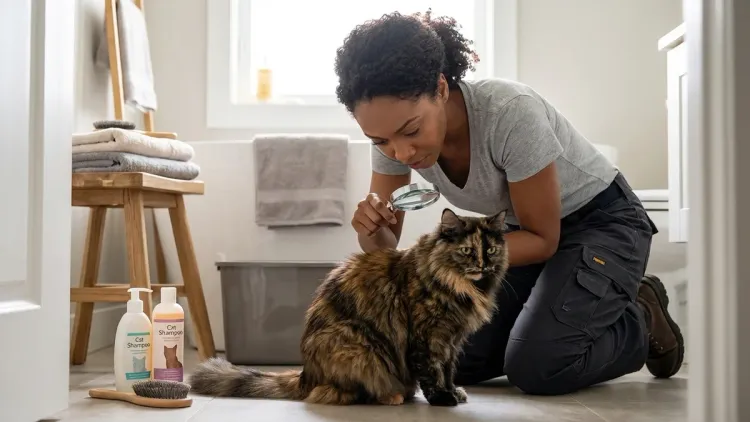
Even cats who normally self-groom hit situations where they need help. I've bathed cats for all these reasons at the shop, and each one taught me something about when human intervention actually helps:
Medical reasons are the big one. Skin conditions like seborrhea, ringworm, or flea infestations often require medicated baths prescribed by your vet. Follow your vet's specific timeline—usually weekly or biweekly for treatment periods.
Obesity affects grooming ability. Cats who can't physically reach their hindquarters develop greasy, sometimes foul-smelling rear ends. I've worked with several overweight cats who needed monthly baths while their owners worked on weight management. The bath was a temporary fix, not the solution.
Diarrhea or litter box accidents require immediate cleanup. No cat should sit in fecal matter, and you can't just wipe this away with a cloth. A targeted bath of the soiled area prevents skin irritation and infection.
Toxic substance exposure demands emergency bathing. If your cat walks through antifreeze, motor oil, paint, or anything poisonous, bathe them immediately before they ingest it through grooming. This is when you don't wait—you act.
Severe matting sometimes requires a bath after shaving or dematting to remove loose hair and soothe the skin. But honestly, if matting is severe, see a professional groomer first. I've seen too many owners accidentally cut skin while trying to remove mats themselves.
Outdoor adventures occasionally leave indoor cats filthy. Cats who escape outside and roll in mud, get sprayed by skunks, or find dead things need baths. This is situational, not scheduled.
Notice what's not on this list? "Because it's been a month" or "because they smell a little like cat." Those aren't reasons. Cats smell like cats. That's normal.
Step 3: Prepare Your Cat and Your Space
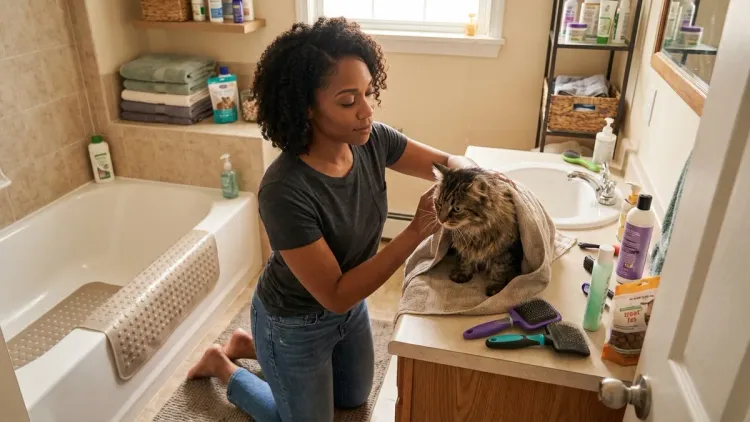
This step makes or breaks the entire experience. I've bathed hundreds of dogs professionally, and I can tell you: cats require ten times the prep work for half the bath time. Respect that, or pay the price in scratches.
Tire them out first. Play with your cat for 15-20 minutes before bath time. A tired cat has less energy to fight you. Use a wand toy, laser pointer, or whatever gets them moving. This is especially crucial for young, energetic cats.
Trim claws 24 hours before bathing if possible. Fresh nail trims can be sensitive, so give them a day to settle. If you're bathing due to an emergency, you might skip this, but your arms will regret it.
Brush thoroughly before wetting your cat. Mats become cement when wet. If your cat has any tangles, work them out first. For serious shedding issues, use a deshedding brush to remove loose fur—you don't want that clogging your drain.
Set up your bathing station completely before bringing in the cat. I use a kitchen sink for most cats—the smaller space feels more secure than a big tub. Place your non-slip mat, lay out towels within arm's reach, set the water temperature (lukewarm, never hot), and close the bathroom door. No escape routes.
Get your shampoo diluted if needed. Some cat shampoos work better when pre-diluted in a squeeze bottle. Have this ready.
Put cotton balls in their ears gently—just enough to prevent water from entering the ear canal. Don't shove them deep; they should be easy to remove.
One trick I learned from a feline-exclusive groomer: place a window screen or sink strainer over the drain before you start. Gives cats something to grip with their claws, which reduces panic. It's a small thing, but it matters.
Step 4: The Actual Bathing Process—Step by Step
Here's where theory meets very wet, very angry reality. How often should you bathe a cat matters less than how well you bathe them when you do. A traumatic bath means your cat will hide under the bed for three days and make your next attempt impossible.
Start with reassurance and slow movements. Bring your cat into the bathroom calmly. Speak in a low, steady voice—not high-pitched baby talk, which can amp up their stress. Set them gently in the sink or tub.
Wet the coat gradually. Use a handheld sprayer on gentle pressure or a pitcher to pour water. Start at the shoulders and work backward—never spray the face directly. Most cats panic when water hits their head first. Keep one hand on your cat at all times. I use a firm but gentle hold on the scruff area or chest, not restraining, just grounding them.
Apply shampoo and work it through the coat. Use about a quarter-sized amount for short-haired cats, more for long-haired breeds. Lather from neck to tail, avoiding the head. Get down to the skin—that's where oils and dirt accumulate. For long-haired cats, work in sections. Don't scrub roughly; use massaging motions. Some cats actually start to relax at this point if you're calm.
Rinse thoroughly. This is where most people fail. Leftover shampoo causes skin irritation, itching, and dander buildup. Rinse until the water runs completely clear, then rinse one more time. For long coats, this takes 3-5 minutes of continuous rinsing. It feels like forever. Do it anyway.
Wash the face last with a damp cloth only. No shampoo, no spraying. Wipe around the eyes, nose, and chin with a warm, damp washcloth. That's it.
Wrap immediately in a towel when you're done. I do this while they're still in the sink—lift them out already wrapped. This contains the inevitable shake-off explosion and gives them a sense of security.
Throughout this entire process, your cat will probably vocalize. That's normal. What's not normal: thrashing, trying to bite, or going completely limp. If your cat is that distressed, stop, dry them off, and consult your vet about sedation options for future baths or consider professional grooming services.
Step 5: Post-Bath Drying and Recovery
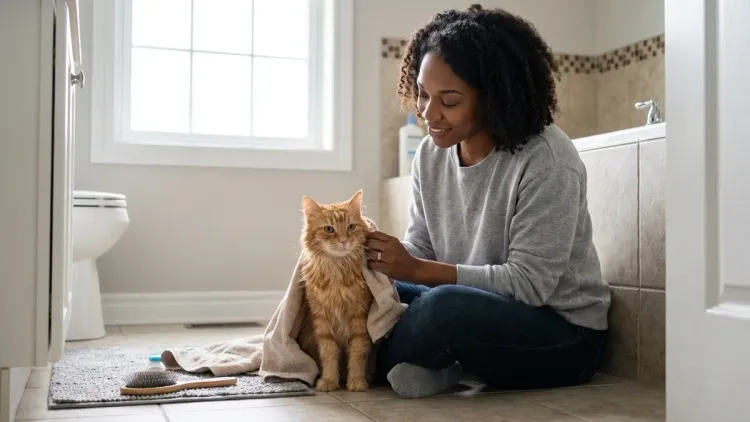
The bath isn't over when the water stops. The next 30 minutes determine whether your cat forgives you by dinner or holds a grudge for three weeks.
Towel dry as much as possible. Use multiple towels and blot—don't rub vigorously. Rubbing tangles long hair and irritates skin. I go through three towels on a long-haired cat. Press the towel against the coat and squeeze gently to absorb water.
Consider your heating options carefully. Most cats are terrified of blow dryers, even on low. I don't recommend them for home use unless your cat has been conditioned to accept them from kittenhood. Air drying in a warm room works fine for most cats. Set up a space heater (at a safe distance) or close them in a bathroom with a heating vent.
Keep them confined until mostly dry. A damp cat in a house with hiding spots will find the darkest, dustiest corner and roll in it, undoing your entire bath. I keep cats in a warm bathroom with access to water and a litter box until they're about 80% dry.
Offer high-value treats immediately after release. Positive reinforcement matters for cats, too. Yes, I linked a puppy article—the behavioral principle is identical across species.
Brush again once fully dry. This is especially important for long-haired cats. Bathing loosens dead undercoat, and if you don't brush it out, you'll have mats within 48 hours.
Monitor your cat for the next few hours. Some licking and grooming is normal—they're redistributing oils and getting their scent back. Excessive licking, especially in one spot, might indicate skin irritation from leftover shampoo. Check their skin and rinse again if needed.
Step 6: Establish Your Cat's Individual Bath Schedule
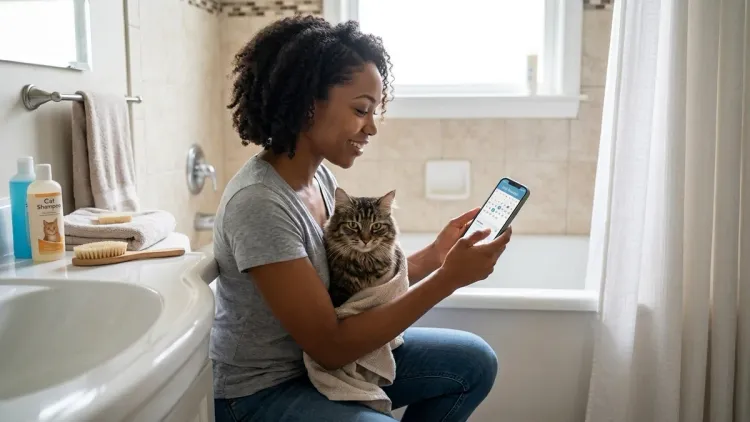
Now that you've survived one bath, let's talk about the bigger question: how often should you bathe a cat your cat? Not cats in general—your specific animal.
Base it on observation, not a calendar. I check my dog clients' records, but I check their actual coats more. Same applies to cats. Watch for these signs that a bath is coming due:
- Visible greasiness especially at the base of the tail or behind the ears
- Dander visible on dark furniture after your cat sits there
- Matting starting to form despite regular brushing
- Odor that's not typical cat smell—a sour or greasy smell indicates oil buildup
- Dull coat that lacks shine even after grooming
Track what you observe. I keep a simple note on my phone for my more complicated grooming clients: "Bathed Oct 15. Coat looked greasy again by Nov 20—try every 5 weeks instead." For cats, this tracking matters even more because you're trying to establish their minimum necessary frequency.
For cats with ongoing needs (seniors, hairless breeds, medical conditions), create a routine. Routine reduces stress. If your Sphynx gets bathed every Sunday, they accept it faster than if you bathe them randomly when you remember.
For normal adult cats, "how often should you bathe a cat" might be answered with specific numbers: once or twice per year, usually spring and fall when they're blowing coat. Or never. I'm not kidding—some cats go their entire lives with zero baths and maintain perfect coat condition.
Adjust for lifestyle changes. If your indoor cat becomes indoor-outdoor, bath frequency might increase. If your senior cat develops arthritis and stops grooming, you'll need to start bathing. If you switch to a higher-quality diet and their coat improves, you might bathe less. Nothing is set in stone.
The goal isn't to establish "bath day" like you would with a dog. The goal is to bathe only when necessary and recognize what "necessary" looks like for your individual cat.
Step 7: Know When to Call a Professional
This is the step people skip, and it costs them. I've had clients bring me cats with severe mat wounds because they kept trying to bathe at home when they should have called a groomer three weeks earlier.
Call a professional groomer if:
- Your cat becomes aggressive during home baths (biting, deep scratching, not just protest vocalization)
- Matting is severe or close to the skin—you risk cutting skin if you try to remove it yourself
- Your cat is elderly or has mobility issues that make restraint painful
- You have a long-haired breed and you're overwhelmed by coat maintenance
- Your cat needs medicated baths and you can't manage the stress
Call your vet before a groomer if:
- Your cat has a skin condition you haven't diagnosed yet
- There's hair loss, scabs, or open wounds
- Your cat is lethargic or showing other signs of illness
- You need prescription shampoo or treatment
Professional grooming for cats costs more than for dogs—usually around $50-100 for a basic bath, more for specialty services. That's because cats are harder to groom. We earn that money. But sometimes it's worth it for your relationship with your cat. I've seen owners who destroyed their cats' trust by forcing traumatic home baths when professional help would have preserved that bond.
Some cats, despite your best efforts, will never tolerate home bathing. That's not failure—that's knowing your animal. I have four dogs and I still take my long-haired shepherd to a colleague for full grooms because she trusts other people more than she trusts me with clippers. No shame in that.
Pro Tips & Common Mistakes
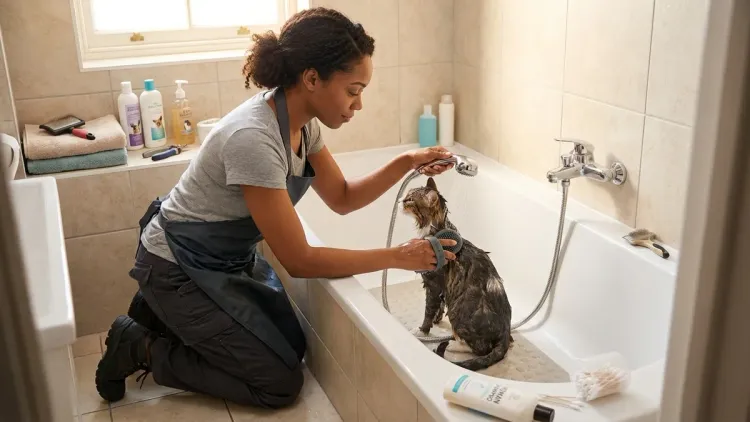
After watching dozens of cat bath attempts go sideways (and conducting plenty of successful ones), here's what separates the smooth experiences from the bathroom disasters:
Don't wait until the cat is filthy to start. If you have a breed or situation where you know regular bathing will be needed, start conditioning your kitten to baths early. Monthly baths from 6 months onward create a cat who tolerates it by age two. Starting with a five-year-old cat who's never been bathed? You're in for a fight.
Never use dog shampoo on cats. I mentioned this in the supply list, but it bears repeating. Dogs and cats have different skin pH levels. Dog shampoo can cause serious skin irritation and dryness in cats. Same goes for human shampoo—it's too harsh. Spend the money on cat-specific products.
Timing matters more than technique. Bathe your cat when they're already calm—late evening after dinner, not first thing in the morning when they're hyper. Read the room, or in this case, read the cat.
Two people make this exponentially easier if your cat is resistant. One person holds and reassures, the other washes. This isn't admitting defeat—it's being strategic.
The biggest mistake I see? Owners giving up halfway through. They get the cat wet, the cat protests, and they abort mission, leaving a damp, soapy, angry cat loose in the house. If you start a bath, finish it. Don't begin unless you're committed to seeing it through. The psychological damage of a half-done bath is worse than just not bathing at all.
Finally, manage your own stress. Cats read your energy. If you're anxious and expecting a disaster, you'll create one. I approach cat baths the same way I approach trimming nails on anxious dogs—calm, matter-of-fact, no big deal. Your energy sets the tone.
Frequently Asked Questions
How often should you bathe a cat with normal grooming habits?
Most healthy adult cats with normal self-grooming habits don't need regular baths at all—maybe once or twice a year if they get into something messy, or never throughout their entire lives. Cats are designed to clean themselves, and over-bathing strips natural oils from their coat, leading to dry skin and irritation. Only bathe when there's a specific need like medical treatment, severe soiling, or inability to self-groom due to age or health issues.
Can I bathe my cat every week?
Weekly bathing is only appropriate for specific situations like hairless breeds (Sphynx, Peterbald) who need regular skin cleansing, or cats receiving veterinary-prescribed medicated baths for skin conditions. For normal cats with fur, weekly bathing is excessive and will damage their coat and skin by stripping protective oils, causing dryness, irritation, and increased dander. Even long-haired breeds rarely need baths more frequently than every 4-6 weeks at most.
What happens if I never bathe my cat?
For most healthy cats, nothing bad happens—they maintain perfect coat condition through self-grooming and never need human intervention. However, senior cats with arthritis, obese cats who can't reach their hindquarters, long-haired breeds prone to matting, and cats with certain medical conditions may develop greasy, matted, or odorous coats if never bathed, which can lead to skin irritation, infections, or discomfort that requires eventual professional grooming intervention.
Do indoor cats need baths?
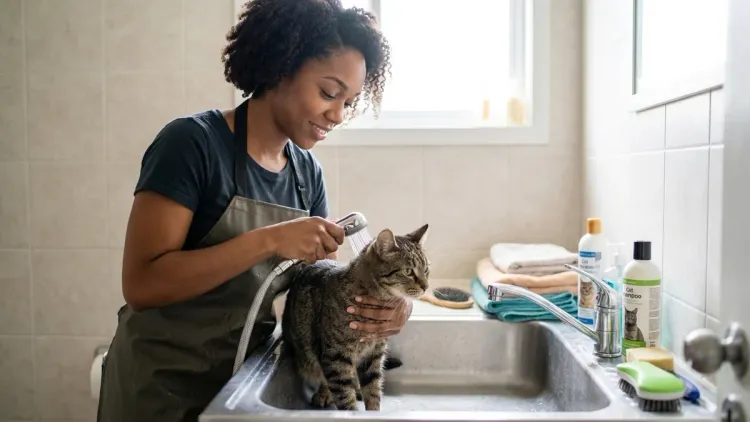
Indoor cats typically need baths even less frequently than outdoor cats because they don't get exposed to dirt, mud, or outdoor contaminants. Most healthy indoor cats go their entire lives without needing a bath unless they develop a medical condition affecting their grooming ability, become obese or elderly and can't groom properly, or have an accident involving something toxic or sticky that they shouldn't ingest through self-grooming.
Summary
The honest answer to "how often should you bathe a cat" is simpler than most grooming advice makes it sound: most cats never need regular bathing, and those who do need it only as often as their individual circumstances require. Watch your cat's coat condition, not the calendar. Bathe when you see greasiness, matting, medical need, or contamination—not because it's been a certain number of weeks. When you do bathe, prepare thoroughly, work efficiently, and end on a positive note with treats and warmth. Your cat's self-grooming instincts handle the rest. Save the regular grooming routines for brushing, nail trims, and relationship-building activities that don't involve water. Trust me—your cat will thank you for recognizing the difference between maintenance they need and maintenance they don't.