
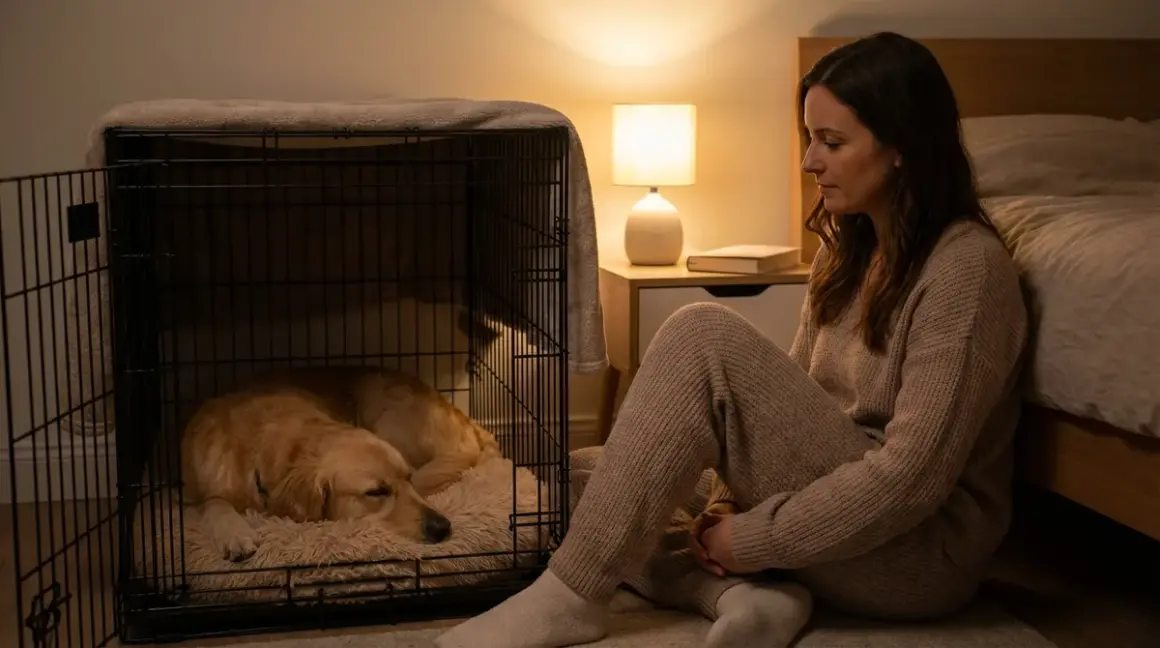

I've worked with hundreds of families who've lost weeks of sleep to a barking dog at 2 AM. Here's the truth: learning how to crate train a dog to sleep through the night isn't about forcing your dog to be quiet—it's about creating an environment where staying quiet feels natural and comfortable. This guide walks you through the exact process I use with my training clients, from choosing the right crate setup to handling midnight wake-ups without undoing your progress. Whether you're bringing home an 8-week-old puppy or working with an adult rescue, you'll have a practical roadmap that addresses the real reasons dogs bark at night and gives you specific techniques to work through them.
Skill level: Beginner-friendly, though you'll need patience
Time to results: 3-7 days for noticeable improvement; 2-4 weeks for consistent quiet nights
What You'll Need
- Wire or plastic dog crate (sized so your dog can stand, turn around, and lie down comfortably—not bigger)
- Comfortable crate pad or bed (machine-washable, snug fit)
- Lightweight crate cover or blanket (to create a den-like atmosphere)
- High-value training treats (small, soft pieces your dog genuinely gets excited about—check out our guide on best puppy training treats for options that work well for nighttime training)
- White noise machine or fan (optional but incredibly helpful for masking household sounds)
- Puzzle toy or long-lasting chew (like a frozen Kong, for pre-bedtime settling)
- Consistency and realistic expectations (this one's non-negotiable)
Step 1: Set Up the Crate in the Right Location
Where you put the crate determines half your success before you even start training. I've seen this a hundred times—someone puts the crate in a lonely basement or garage, then wonders why their dog panics all night.
Place the crate in your bedroom, at least for the first several weeks. Your dog is a social animal, and the sound of your breathing, the slight movements you make while sleeping—these provide enormous comfort to an anxious dog. This is especially critical for puppies under 16 weeks and newly adopted adult dogs who haven't bonded with you yet.
Make sure the crate sits on stable ground, not wobbling on carpet or uneven flooring. Dogs notice instability, and it adds to their anxiety. Position it away from heating vents, air conditioners, or drafty windows. Temperature matters more than most people realize—a dog who's too cold or too hot won't settle easily.
Cover three sides of the crate with a lightweight blanket, leaving the door side open for airflow. This creates that den-like feeling dogs naturally seek. I use breathable cotton or fleece, nothing heavy that restricts air circulation. Some dogs do better with all four sides covered; you'll learn your dog's preference quickly.
If you have a puppy under 4-5 months who can't hold their bladder all night yet, position the crate close enough to your bed that you'll hear subtle restlessness—that's your cue they need a middle-of-the-night potty break.
Step 2: Build Positive Crate Associations During Daytime Hours
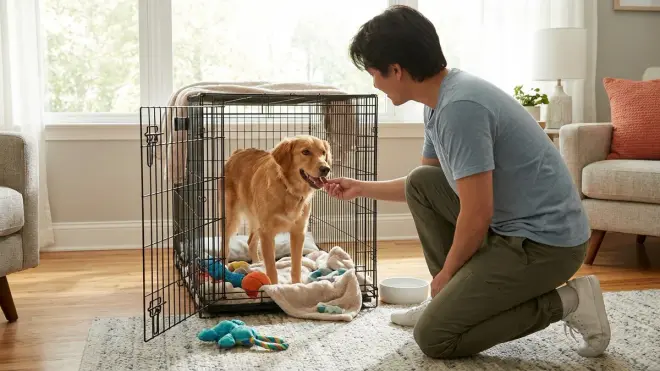
You can't expect a dog to love the crate at midnight if they've never been in it during the day. Nighttime crate training actually starts with daytime conditioning, and this step is where most people rush things.
Spend 3-5 days making the crate the best place in your house. Toss treats inside randomly throughout the day—not when you're asking your dog to go in, just when they happen to notice. Feed all meals inside the crate with the door open. Place a special chew toy or stuffed Kong inside for them to discover.
After a couple days of this, start closing the door for very short periods while your dog is happily occupied with a treat or toy. We're talking 30 seconds the first time. Open the door before your dog finishes the treat or shows any signs of wanting out. This is crucial—you want to end every session on your terms, not theirs.
Gradually extend the time, but keep it unpredictable. Sometimes 45 seconds, sometimes two minutes, sometimes back down to 30 seconds. This prevents your dog from learning to anticipate the moment of release and getting anxious about it.
Practice leaving the room briefly while your dog is crated and content. Start with stepping just outside the door for five seconds, then returning calmly. No big greeting, no dramatic "good dog!" fuss. Just casual re-entry. Your calm demeanor teaches them that your departures and arrivals are completely unremarkable.
Step 3: Establish a Consistent Pre-Bedtime Routine
Dogs thrive on predictable patterns, and a rock-solid bedtime routine signals that sleep time is coming. I tell my clients to treat this like you would with a toddler—same sequence, same timing, every single night.
Start your routine 45-60 minutes before you want your dog crated. Here's the sequence that works for most dogs:
Take your dog outside for a final potty break. Wait until they actually eliminate—don't just open the door and hope. For puppies, this might take 10-15 minutes of patient waiting in the yard. Bring treats and reward immediately after they go.
Come back inside and offer a drink of water, then remove the water bowl. Puppies especially can't have unlimited water access right before bed, or you're guaranteeing midnight potty emergencies.
Spend 15-20 minutes on calm, low-energy activities. This isn't playtime. Gentle petting, quiet conversation, maybe some light brushing or massage work well. You're downshifting their energy, not ramping it up. Some of my clients give their dog a long-lasting chew or frozen Kong during this window—the sustained chewing action is naturally calming and tiring.
About 10 minutes before crate time, give your dog a high-value treat and begin using whatever cue word you've chosen. I use "bedtime," but "kennel," "crate," or "night-night" all work fine. Consistency matters more than the specific word. For guidance on treat selection and usage, our article on how to use treats for puppy training covers the fundamentals.
Walk calmly toward the bedroom, encouraging your dog to follow. No excited voices, no running. Everything about your body language should communicate that this is settling-down time.
Step 4: Create the Perfect Sleep Environment Inside the Crate
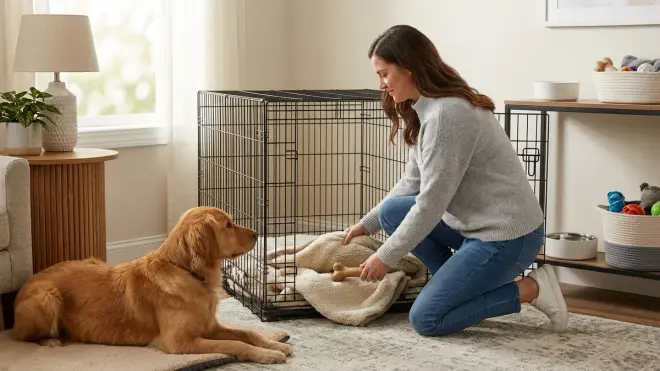
The interior setup of the crate directly affects your dog's comfort and willingness to stay quiet. Get this wrong, and you're fighting an uphill battle.
Use a crate pad or bed that fits snugly with minimal extra space. Dogs like to nest into something that defines their sleeping area. A bed that's too small leaves them on hard plastic or wire; too large and it doesn't provide that denning feeling. I prefer machine-washable options because, let's be honest, accidents happen during training. Memory foam beds work well for adult dogs and seniors, but skip them for young puppies who might chew and ingest the foam.
Consider crate temperature carefully. Most homes run cooler at night, and a dog lying still for 8 hours can get genuinely cold. If your house drops below 68°F at night, add a blanket inside the crate or use a pet-safe heating pad designed for this purpose. Conversely, thick-coated breeds like Huskies or Malamutes often sleep better with minimal bedding and good airflow.
Test whether a white noise machine helps. This isn't just new-age nonsense—white noise masks household sounds that might trigger barking. The refrigerator kicking on, a car door outside, your partner getting up for water—these sounds can jolt a lightly sleeping dog awake. You can also find calming music playlists specifically designed for canine hearing ranges. If barking at sounds is a persistent issue, check out our guide on white noise machines for dogs that bark for specific product recommendations.
Attach a safe chew item to the inside of the crate using a crate clip or carabiner if your dog tends to get anxious. This gives them an appropriate outlet if they wake up stressed. Choose something durable and non-ingestible—not rawhide or anything that can break into swallowable chunks. Rubber toys work well.
For puppies, place the crate on puppy pads or keep cleaning supplies nearby. Young puppies physically cannot hold their bladders for 8 hours, regardless of how well-trained they are.
Step 5: Execute the Actual Crating Process Calmly
This is the moment everything either clicks or falls apart. How you put your dog in the crate sets the tone for the entire night.
Use your cue word ("bedtime" or whatever you've chosen) and gesture toward the open crate door. Toss a high-value treat to the back of the crate if needed. Don't physically place your dog inside—let them walk in voluntarily, even if it takes 30 seconds of patient waiting.
The instant your dog enters, say "yes" or use whatever marker word you've established, then give another treat through the door. Close the door calmly—no slamming, no dramatic movements.
Sit near the crate for 5-10 minutes before you turn off the lights and settle into bed. Occasionally drop treats through the bars or door slots when your dog is calm and quiet. You're reinforcing the behavior of resting peacefully in the crate.
Don't talk to your dog constantly during this time. A quiet "good" or "nice" occasionally is fine, but lengthy conversations signal that this is interactive time, not sleep time.
When you're ready to sleep, turn off the lights, get into bed, and completely ignore your dog. This is harder than it sounds. If your dog whines or barks at this point, you'll need to make a judgment call about why they're vocalizing—which brings us to the next step.
Step 6: Respond Strategically to Nighttime Barking and Whining
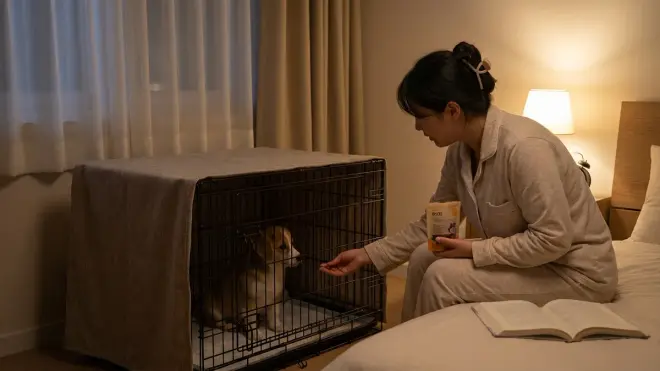
Here's where most people either succeed or give up. Understanding why your dog is barking determines your response, and responding incorrectly can set your training back by weeks.
Distinguish between three types of nighttime vocalizing:
Attention-seeking barking sounds demanding and often comes with scratching at the crate door. It typically starts immediately after you lie down or within the first 15 minutes. The dog is testing whether vocalizing brings you back. Your response? Absolute silence. Don't say "quiet," don't shush them, don't even shift position in bed. Any reaction—positive or negative—reinforces the behavior because it proves that barking gets your attention.
This can be brutal the first few nights. I've had dogs bark for 45 minutes straight. But if you respond even once during that 45 minutes, you've just taught them that 45 minutes of barking works. Hold firm.
Genuine distress vocalizing sounds different—higher pitched, more frantic, often accompanied by panting or signs of panic. This is more common in puppies under 12 weeks or adult dogs who've experienced trauma. For this, you can offer quiet verbal reassurance without opening the crate. "You're okay" in a calm, boring voice. Place your hand near the crate so they can smell you. But don't take them out or you'll accidentally reinforce panicking as the way to escape the crate.
Potty-emergency vocalizing usually happens 3-5 hours into the night with young puppies. It often sounds urgent but not panicked, and comes with restless movement. If your puppy is under 16 weeks, they legitimately might need to eliminate. Take them directly outside in silence—no play, no talking, no excitement. Let them potty, then immediately back to the crate. Make this so boring they don't learn that nighttime is fun interaction time. For more context on nighttime barking triggers, our article on why dogs bark at nothing at night covers several scenarios that might be relevant.
Set a timer for yourself the first few nights. If your dog barks for attention, commit to ignoring it for at least 20 minutes before reassessing. Most attention-seeking barking will stop within 10-15 minutes if you're completely consistent.
Step 7: Handle the Morning Exit Properly to Reinforce Quiet Behavior
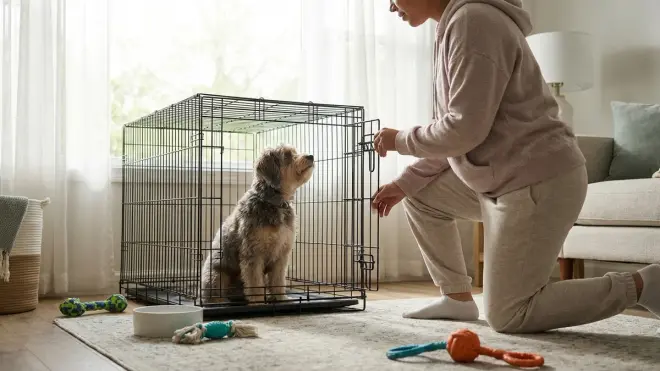
How you let your dog out in the morning is just as important as how you put them in at night. Get this wrong and you'll undo hours of good work.
Wait for 10-15 seconds of complete silence before opening the crate door in the morning. If your dog is barking, whining, or scratching when you wake up, you need to outlast them. Lie still, check your phone, meditate—whatever it takes. The moment they pause or settle, that's when you move toward the crate.
If they start up again as you approach, freeze. Wait for quiet. This might take five attempts the first morning, but you're teaching a critical lesson: quiet behavior opens the door, vocalizing keeps it closed.
When you do open the door, keep your greeting extremely low-key. No high-pitched "good morning!" or excited petting. A calm "okay" and gesture toward the door to go outside works perfectly. Save the enthusiastic greeting for after they've gone potty outside.
Immediately take your dog to their potty spot. Don't stop for food, don't let them explore the house—straight outside. This reinforces that leaving the crate leads directly to relief, which builds positive associations.
After they eliminate outside, then you can offer a proper greeting, breakfast, and start your regular day. This sequence—quiet → door opens → potty → praise and food—becomes the expected pattern that makes crate time worthwhile from your dog's perspective.
Step 8: Gradually Increase Independence and Adjust as Needed
Once you've had 3-4 consecutive nights without significant barking, you can begin the gradual process of increasing independence. This looks different depending on your long-term goals.
If your goal is for your dog to sleep in a different room eventually, start by moving the crate six inches away from your bed each night. Yes, literally six inches. I've seen people try to move the crate to the hallway after one good night, and the dog regresses completely.
After the crate is across the room from your bed, move it just outside your bedroom door (door open). Then door cracked. Then door closed. This process might take 2-3 weeks for an anxious dog, and that's completely normal.
If your dog is a young puppy, expect to wake up once per night for potty breaks until they're about 4-5 months old. Their bladder physically cannot handle 8 hours yet. Set an alarm for 3-4 hours after bedtime, take them out silently, then back to the crate. As they mature, push this wake-up time later and later until you eliminate it entirely.
Adjust crate setup based on what you observe. If your dog seems restless but not distressed, they might be too warm—remove a blanket layer or increase airflow. If they're shivering or curled in a tight ball, add warmth. If they're chewing on the bedding, remove it temporarily and use a towel instead until the chewing phase passes.
Watch for signs of genuine crate aversion versus simple preference. A dog who enters the crate voluntarily during the day but complains at night is dealing with separation anxiety or routine issues, not crate fear. A dog who refuses to enter the crate even for meals needs more foundational positive conditioning before nighttime crating is appropriate.
Keep a training log for the first two weeks. Note what time your dog went in the crate, how long they vocalized (if at all), and any changes you made to the routine. Patterns emerge quickly, and you'll spot what works and what doesn't far more clearly when you have written records.
Pro Tips & Common Mistakes
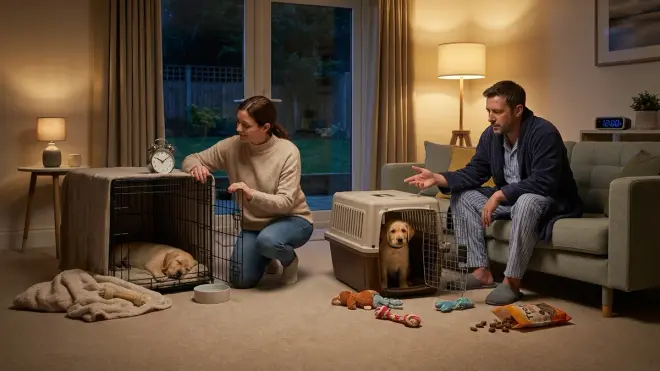
The biggest mistake I see? Letting the dog out of the crate when they're barking "just this once." There's no such thing as "just this once" in dog training. That single moment teaches them that escalating behavior works, and you'll spend the next week undoing the damage.
Exercise timing matters more than exercise amount. A dog who plays hard right before bed is often too amped up to settle. End serious exercise at least 2-3 hours before crate time. A calm evening walk 30 minutes before bed works better than backyard zoomies at 9 PM.
Consider your dog's individual sleep needs. Working breeds like Border Collies and Belgian Malinois genuinely need more mental stimulation during the day or they won't be tired enough to sleep through the night. A 15-minute walk won't cut it. Similarly, brachycephalic breeds (flat-faced dogs like Bulldogs and Pugs) often sleep more soundly in slightly elevated positions that ease breathing—a wedge-style bed inside the crate can help.
Don't rush the process for adult rescue dogs with unknown histories. These dogs might have negative crate associations from previous situations. They need slower conditioning, more patience, and sometimes the help of a professional trainer or veterinary behaviorist. If your adult dog is showing genuine panic responses—excessive drooling, destructive attempts to escape, elimination from fear—consult with a professional before continuing.
Use your voice strategically. Your calm, boring tone should be the soundtrack of nighttime crate training. High-pitched "it's okay baby" voices sound like distress to dogs and amp up their anxiety. Deep, slow, monotone verbal cues signal safety and calm.
If you're dealing with persistent nighttime barking beyond what crate training can address, our comprehensive guide on how to stop dog barking at night covers additional techniques and causes you might need to consider.
Frequently Asked Questions
How long does it typically take to crate train a dog to sleep through the night?
Most dogs show significant improvement within 3-7 days of consistent training, with fully reliable quiet nights achieved in 2-4 weeks. Puppies under 12 weeks and adult rescue dogs with anxiety issues may take 6-8 weeks or longer, depending on their individual history and temperament. The key factor is absolute consistency—every person in your household must follow the exact same routine and response protocols, or you'll extend the training timeline significantly.
Should I cover the crate completely or leave the front open when crate training at night?
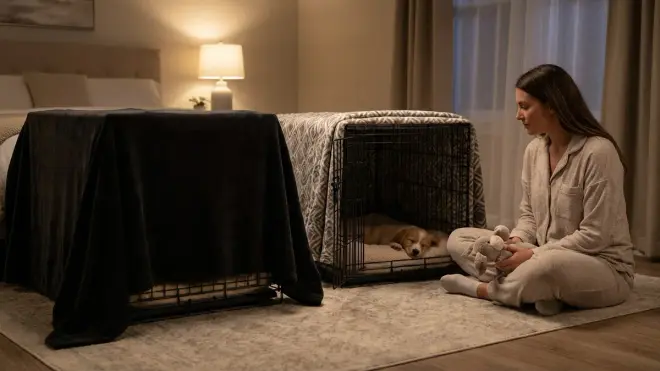
Cover three sides of the crate while leaving the door side open for adequate airflow and ventilation, especially during warmer months or in heated homes. Some dogs prefer all four sides covered once they're comfortable, creating a darker, more den-like environment that helps them settle faster. Monitor your dog's comfort level—if you notice excessive panting or restlessness, remove one layer of coverage to improve air circulation. The cover should be lightweight cotton or fleece, never heavy blankets that restrict airflow completely.
Can I crate train an adult dog who has never slept in a crate before?
Yes, adult dogs can absolutely learn to sleep peacefully in crates, though the process often requires more patience than with puppies since adult dogs have established sleeping preferences and routines. Start with the same daytime positive conditioning described in this guide, spending 1-2 weeks building comfort with the crate before attempting overnight stays. Adult dogs typically don't need middle-of-the-night potty breaks, which actually makes the process easier once they're comfortable with confinement. If your adult dog shows signs of true panic or claustrophobia, consult with a certified professional dog trainer or veterinary behaviorist rather than forcing the issue.
What should I do if my puppy barks in the crate because they need to eliminate during the night?
Take puppies under 16 weeks outside for a bathroom break once during the night, typically 4-5 hours after bedtime, keeping the entire experience quiet and boring—no play, no talking, and minimal light. Set an alarm to wake yourself before the puppy wakes crying, which prevents them from practicing the "bark to get out" behavior. Keep them on-leash, walk directly to the potty spot, wait for elimination, then immediately return to the crate without any interaction or treat rewards. As your puppy matures between 4-6 months, gradually push this nighttime break later in 30-minute increments until you eliminate it entirely when their bladder capacity can handle 7-8 hours.
Summary
Learning how to crate train a dog to sleep through the night comes down to three core principles: making the crate genuinely comfortable, building positive associations during daytime hours, and responding strategically to nighttime vocalizing. The location matters—keep that crate in your bedroom initially. The routine matters—same sequence, same timing, every night. And your response to barking matters most of all—consistency here determines whether you succeed in a week or struggle for months.
Remember that every dog adapts at their own pace. A confident adult Labrador might settle in three nights, while an anxious rescue might need six weeks of patient work. Neither timeline means you're doing anything wrong. You're teaching your dog that nighttime is safe, quiet is rewarded, and the crate is their personal sanctuary—not a punishment. Stay consistent, trust the process, and give it time. The quiet nights are coming.