
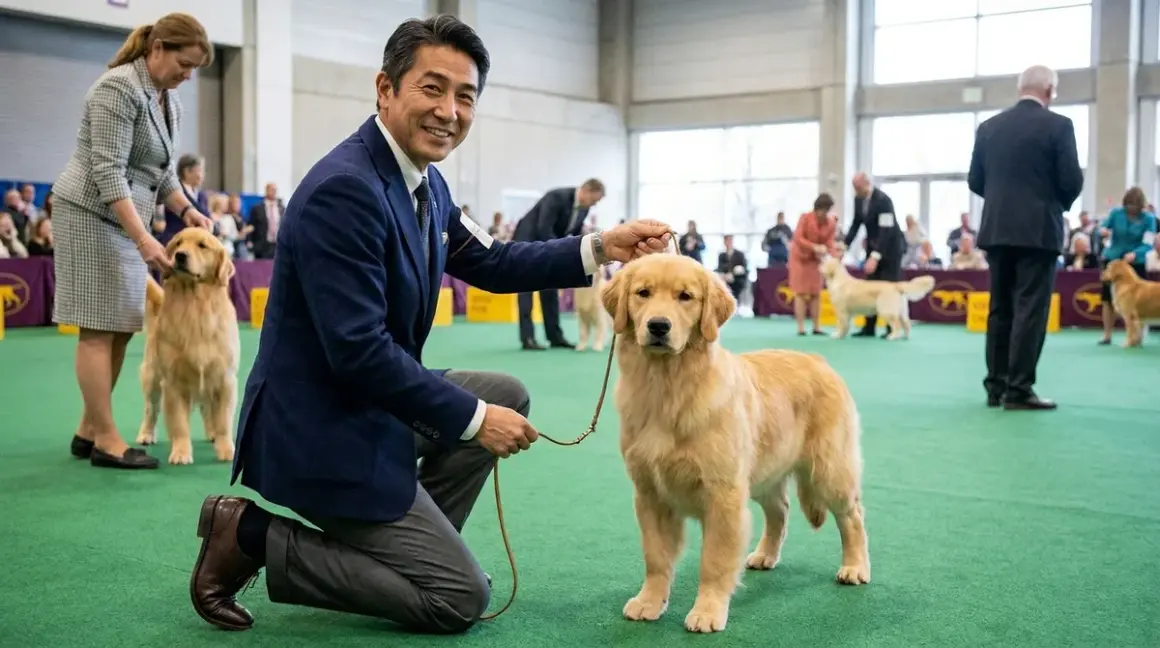

I'll be honest—when my niece started competing in junior showmanship with her Golden Retriever last year, I thought choosing a dog showmanship leash would be straightforward. How different could it be from the aquarium equipment I'm used to researching? Turns out, a lot. After watching her struggle with a cheap nylon lead that bunched in her hands and threw off her handling posture, I dove into the conformation world with the same obsessive research energy I bring to tank builds. The short version: you want a thin, soft leather or braided nylon show lead that disappears in your hand and allows for one-handed stacking, typically 4-6 feet in length for most breeds. But the details matter enormously, especially when you're learning ring mechanics and don't need your equipment fighting against you.
What to Look For in a Dog Showmanship Leash
Material and Grip Feel
In my experience with maintaining delicate equipment—whether it's precision dosing pumps or, as I've learned, show leads—the material makes or breaks the experience. Leather show leads are the traditional choice for good reason: they soften with use, develop a personalized grip pattern, and create minimal visual bulk in the ring. Kangaroo leather is the premium option, offering incredible strength-to-diameter ratio, though it comes at a higher price point. Cowhide leather works beautifully for beginners and softens nicely after a few shows.

What I've found works for many junior handlers is braided nylon, which offers consistent grip even when your hands are sweaty (and trust me, they will be during your first few shows). Unlike my early aquarium mishaps where I'd buy the cheapest version of everything, I learned that show leads need to feel comfortable during extended holding periods. You'll be managing this lead while moving, stacking, and presenting your dog—sometimes for 20-30 minutes straight during larger classes.
The diameter matters more than you'd think. Most show leads range from 3/16 inch to 1/4 inch thick, with thinner leads offering more control and less visual distraction but requiring better hand conditioning. Junior handlers often do better starting with 1/4 inch leads that won't dig into their palms during those inevitable nervous grip moments. Understanding canine training aids helps clarify how show leads differ from everyday training equipment—they're designed for presentation, not correction.
Length and Adjustability
Standard show leads run 4-6 feet, but the right length depends on your height relative to your dog's size. My niece is 5'2" and shows a Golden—she needs every bit of that 6-foot length to maintain proper posture while keeping appropriate distance during the down-and-back. A junior handler showing a Pembroke Welsh Corgi might work better with a 4-foot lead to avoid excess material management.
Adjustable leads with sliding stops offer versatility as handlers grow or work with multiple dogs, though they add a slight bulk element that some judges find visually distracting. Fixed-loop leads create cleaner lines but require precise sizing. I've seen experienced handlers own multiple leads in different lengths for different presentation scenarios, much like how I keep different nets for different tank maintenance tasks—it seems excessive until you understand the specific applications.
For beginners, I'd lean toward a 5-6 foot fixed or minimally adjustable lead. You can always size down as you develop preferences, but starting with too little length creates frustrating handling limitations that compound the learning curve.
Color Coordination and Visibility

This one surprised me when I first started researching—the lead color should complement or contrast with your dog's coat in ways that minimize visual interruption of the dog's outline. Dark leads for light-colored dogs, lighter leads for dark dogs. It's the presentation equivalent of choosing background plants that make fish colors pop rather than creating visual competition.
That said, for showmanship classes where the judge evaluates the handler rather than the dog, some handlers prefer leads that create slight contrast so their hand positioning is clearly visible. The dog show lead vs training leash comparison really highlights these nuanced choices—training equipment prioritizes function over form, while show leads balance both.
Metal hardware should be minimal and discreet. Heavy snap bolts create bulk at the collar area that disrupts the dog's neck presentation. Many show leads use tiny O-rings or sewn-in stops rather than bulky clasps, though this requires proper collar coordination. Junior handlers starting out often appreciate leads with small snap closures for quick changes between classes, even if they're not the most refined option.
Construction Quality and Durability
I learned my lesson about buying cheap equipment after my third aquarium overflow disaster. With show leads, reinforced stitching and proper leather treatment make the difference between a lead that lasts years and one that falls apart after a few shows. Check the connection points—where the loop meets the main lead, where any hardware attaches—for double-stitching or reinforced wrapping.
Braided nylon leads should have tight, even braiding without loose sections that'll catch on your fingers or the dog's coat. Leather leads should be evenly dyed (important for presentation) and treated to resist moisture from your hands and the occasional rainy outdoor show. Some premium leads come with conditioning instructions similar to breaking in baseball gloves—a process that creates a personalized fit.
My niece's first lead cost around fifteen dollars and literally fell apart at the stitching during her third show, creating a panicked scrambling moment that threw off her entire run. Her replacement—a mid-range braided nylon from a reputable show supplier—has held up through an entire season of weekly handling classes and monthly shows. Sometimes paying a bit more upfront saves you from learning equipment lessons at exactly the wrong moment, which is true whether you're keeping a reef tank or showing dogs.
Breed-Specific Considerations
Just like choosing appropriate fish for your tank size, matching your lead to your breed's showing style matters enormously. Toy breeds often show on ultra-thin leads (sometimes called "show strings") that practically disappear in photos, though these require excellent hand control that beginners often don't have yet. Sporting and working breeds typically show on standard 1/4 inch leather or braided leads that provide secure control during energetic presentations.
Large and giant breeds may require slightly wider leads purely for handler comfort during extended holding, though you'll see experienced handlers managing Mastiffs on surprisingly delicate leads. The difference is conditioning and technique—something beginners shouldn't try to skip ahead on. Start with equipment that forgives learning curves, not equipment that demands mastery.
If you're working with a breed that requires specific stacking techniques, consider how your lead choice affects your ability to practice those positions. Some leads create better one-handed control for breeds requiring manual front leg placement, while others distribute across both hands more comfortably for natural stacking positions.
Our Top Picks for Dog Showmanship Leashes
Mendota Products British-Style Slip Lead
The Mendota British Style Slip Lead🛒 Amazon has become something of a standard in junior showmanship circles, and after handling one myself, I understand why. This braided nylon lead offers consistent grip without the break-in period leather requires, which matters when you're learning handling mechanics and don't need your equipment changing feel every few weeks. The British-style construction creates a slightly wider, flatter braid than standard round leads, distributing pressure across your palm rather than creating a single pressure line.
Pros:
- Extremely consistent texture and grip, even when wet
- Available in 3/8 inch, 1/4 inch, and 1/8 inch diameters to match handler experience and dog size
- Comes in over 20 colors for breed-appropriate coordination
- Machine washable (something my niece appreciated after a muddy outdoor show)
- Holds up to weekly handling class use without fraying or stretching
Cons:
- The braided texture, while comfortable, creates slightly more visual bulk than flat leather
- Color can fade with heavy sun exposure and repeated washing
- The slip loop takes practice to size correctly for quick adjustments
Resco Professional Show Lead
The Resco Professional Show Lead🛒 Amazon represents what I'd call the intermediate step between beginner-friendly nylon and professional leather. This lead uses a combination of premium leather and precisely sized metal hardware to create a clean, traditional presentation that works across most breed rings. What I've found particularly clever is how Resco balances grip comfort (slightly wider leather at the handler end) with visual refinement (narrower profile near the collar connection).
Pros:
- Leather softens beautifully after 4-5 shows while maintaining structural integrity
- Small, discrete O-ring connection creates minimal collar bulk
- Available in lengths from 4 to 6 feet for different handler-dog size combinations
- Traditional appearance that judges expect to see in the ring
- Comes in basic colors (black, brown, tan) that coordinate with most coat colors
Cons:
- Requires proper leather conditioning every few months to prevent drying and cracking
- The narrower sections can create pressure points for handlers with sweaty or sensitive hands
- More expensive than synthetic options (usually around $25-35 depending on length)
Coastal Pet Show Dog Snap Leash
For absolute beginners—especially younger junior handlers—the Coastal Pet Show Dog Snap Leash🛒 Amazon offers a forgiving introduction to show lead mechanics. Unlike slip leads that require precise loop sizing, this lead features a small snap closure that attaches to your show collar independently. It's training wheels for ring presentation, and there's no shame in using equipment that builds confidence while you're learning. My niece used one for her first three shows before transitioning to a slip lead once she mastered ring movement patterns.
Pros:
- No loop-sizing stress; just snap and go
- Nylon construction stays soft without break-in period
- Very affordable (typically under $15) for handlers still determining if showing is a long-term commitment
- Available in narrow widths (3/16 inch) that create clean lines despite the snap hardware
- Easy to switch between dogs during multi-dog handling practice
Cons:
- The snap creates visible hardware bulk that more experienced handlers avoid
- Not appropriate for higher-level competition where equipment refinement matters
- Can catch on coat during stacking with long-haired breeds
- Slightly less precise control than properly fitted slip leads
Platinum Pets Kangaroo Leather Show Lead

When you're ready to invest in premium equipment—and I mean ready, as in you've already completed a full show season and know this is a sustained commitment—the Platinum Pets Kangaroo Leather Show Lead🛒 Amazon represents the kind of quality that lasts years. Kangaroo leather is ridiculously strong relative to its diameter, allowing ultra-thin profiles (down to 1/8 inch) that practically disappear visually while still providing excellent control. It's the show lead equivalent of investing in a high-quality protein skimmer after you've proven you can maintain water chemistry basics.
Pros:
- Incredibly thin profile creates minimal visual distraction in presentation
- Kangaroo leather stays soft and flexible even with irregular conditioning
- Develops a personalized grip pattern that molds to your hand over time
- Professional appearance appropriate for national-level competition
- Surprisingly comfortable despite thin diameter once your hands are conditioned
Cons:
- Expensive (typically $40-60 depending on length and hardware)
- Requires conditioned hands; beginners will find it uncomfortable for extended holding
- The thin profile means dropped loops or tangles require careful unwinding
- Limited color options (usually just natural tan or black)
Chris Christensen Obedience Martingale Show Lead
The Chris Christensen Obedience Martingale Show Lead🛒 Amazon bridges the gap between training equipment and show presentation in ways that work particularly well for handlers managing energetic or easily distracted dogs during junior showmanship. The martingale design provides gentle correction capability without the bulk of standard training collars, which matters when you're trying to maintain ring decorum with a adolescent dog that spots another Golden across the ring and wants to say hello.
Pros:
- Martingale action provides subtle control for exuberant dogs without harsh corrections
- Premium nylon construction with reinforced stitching at stress points
- Available in sophisticated color combinations (two-tone options) that work across coat colors
- Wide enough (3/8 inch) to be comfortable for handlers still building hand conditioning
- The stopping mechanism is smooth enough to be nearly silent during adjustments
Cons:
- Slightly more expensive than basic show leads (around $30-35)
- The martingale hardware, while refined, still creates more visual bulk than simple slip leads
- Requires understanding of proper martingale fitting to avoid over-tightening
- Not appropriate for breeds where absolute minimal equipment is presentation standard
Herm Sprenger Ultra-Plus Show Lead
For handlers dealing with particularly strong or high-drive dogs—think young German Shepherds or energetic sporting breeds—the Herm Sprenger Ultra-Plus Show Lead🛒 Amazon offers control without sacrificing show-appropriate appearance. Herm Sprenger built their reputation on training equipment, and this lead brings that engineering precision to the show ring. What I appreciate is how they've created something that handles like quality training equipment but looks refined enough for competition.
Pros:
- Exceptional durability; the chain portion is practically indestructible
- Provides more control than standard show leads for powerful breeds
- The leather sections are pre-softened and ready to use immediately
- Works well as a dual-purpose training and showing lead for beginning handlers
- Available in sizes appropriate for everything from terriers to giant breeds
Cons:
- The chain section creates noise during movement that some judges find distracting
- Heavier overall weight than fabric or leather-only leads
- More visually obvious than traditional show leads; not appropriate for breeds where minimal equipment is expected
- The combination of materials (leather and chain) requires different cleaning approaches
Frequently Asked Questions
What's the difference between a show lead and a regular leash for dog showmanship?
A show lead is specifically designed for ring presentation rather than everyday walking or training. In my experience helping my niece prepare for junior showmanship, the biggest differences come down to material thickness, length optimization, and hardware minimization. Show leads typically use very thin leather or braided materials (3/16 to 1/4 inch diameter) that create minimal visual bulk when you're presenting your dog to judges, whereas regular leashes prioritize durability and often use 1/2 inch or wider materials with substantial clips and hardware. Show leads also eliminate unnecessary components—you won't find padded handles, D-rings for waste bag attachments, or reflective stitching because everything is about creating clean, uninterrupted lines that showcase the dog rather than the equipment. The length typically ranges from 4-6 feet to allow proper handler positioning during gaiting and stacking, compared to the standard 6-foot walking leash. Most importantly, show leads use slip-style or minimal-hardware connections that can be quickly adjusted with one hand while you're managing your dog's position with the other—something that takes practice but becomes essential during conformation showing where timing and precision matter.
Can beginners use the same show lead as experienced handlers?
Technically yes, but I wouldn't recommend it for the same reason I don't suggest new aquarists start with advanced reef systems—you'll be fighting your equipment instead of learning fundamentals. Beginners typically benefit from leads with slightly wider diameters (1/4 inch rather than 1/8 inch) because thinner leads require conditioned hands and refined grip technique that takes months to develop. My niece started with a 1/4 inch braided nylon lead that felt comfortable during her entire first season of handling classes, then transitioned to a thinner leather lead once she'd built up hand strength and developed consistent grip mechanics. Ultra-thin kangaroo leather leads that experienced handlers prefer will dig into unconditioned palms during extended holding, creating discomfort that translates to tense shoulders and poor ring posture. Similarly, slip leads require precise loop sizing skills that beginners often struggle with while managing everything else happening in the ring. Starting with a show lead that has a small snap closure or slightly wider grip diameter lets you focus on footwork, timing, and dog management without your equipment creating additional challenges. You can always upgrade to more refined equipment as your skills develop—and you'll appreciate the difference more when you've earned the technique to use it properly.
What length show lead should junior handlers use?

The right length depends on the handler's height relative to their dog's size, and I've found this is one of those specs that actually matters in real-world use. As a general guideline, the lead should allow the handler to maintain proper upright posture while keeping appropriate distance from the dog during gaiting, which typically means a 4-6 foot lead for most handler-dog combinations. Junior handlers showing large dogs like Golden Retrievers, German Shepherds, or Labrador Retrievers usually work best with 6-foot leads that provide enough length to present the dog during the down-and-back without the handler hunching forward or restricting the dog's natural movement. For small and toy breeds—think Miniature Pinschers, Papillons, or Yorkshire Terriers—junior handlers often prefer 4-foot leads because excess material becomes a management problem when you're already dealing with a tiny dog that's moving quickly. Medium-sized breeds like Cocker Spaniels or Beagles typically work well with 5-foot leads. What I've seen work for handlers managing multiple breeds or who are still growing (which describes most junior handlers) is having one 6-foot adjustable lead that can be shortened as needed, though this adds slight hardware bulk that becomes less ideal as you advance. The real test is whether you can comfortably gait your dog, stack it with proper handler distance, and perform all the showmanship techniques your instructor teaches without the lead feeling too long (tangling or creating excess material) or too short (pulling you off-balance or restricting the dog's movement).
How do you break in a leather show lead?
Breaking in a leather show lead follows similar principles to conditioning a baseball glove, and I've learned there's a right way that creates a personalized tool and a wrong way that damages the leather permanently. Start by applying a quality leather conditioner—nothing fancy, just standard products designed for tack or work gloves work perfectly—to the entire lead, paying special attention to the areas where your hand will grip most frequently. Work the conditioner in with your fingers, really massaging it into the leather fibers, then let it absorb for several hours or overnight. The next step is simply using the lead during practice sessions rather than trying to accelerate the break-in artificially (I've seen people try everything from soaking leads in water to running them through their hands repeatedly while watching TV, and most of these approaches create weak spots or inconsistent softening). Over the first 4-5 practice sessions or shows, the leather will naturally soften and mold to your grip pattern, developing what feels like custom-made comfort in the sections you hold most. You'll want to condition the lead every month or so during active showing seasons, more frequently if you're dealing with particularly dry climates or indoor show venues with heavy air conditioning. What you're avoiding is over-conditioning, which makes leather too soft and reduces its strength, or under-conditioning, which leads to cracking and brittle sections that'll fail at the worst possible moment. The properly broken-in show lead should feel substantial enough to provide secure control but soft enough that you can hold it for 20-30 minutes without developing pressure points or hand fatigue—similar to how I condition my hands to handle delicate aquarium plants without crushing them but with enough firmness to work efficiently.
Should you use different show leads for different breeds or show levels?
In my experience watching handlers across different levels—from first-time juniors to professional handlers managing multiple breed specialties—the answer is eventually yes, though beginners shouldn't worry about this during their first season. Different breeds have different presentation standards that extend to equipment choices: toy breeds often show on ultra-thin "show strings" that practically disappear visually, while working and herding breeds typically use standard-width leather or braided leads that provide secure control during more dynamic presentations. The coat color coordination matters too—you'll see handlers who compete across multiple breeds keeping different colored leads to create appropriate contrast or complementary tones depending on whether they're showing a black Standard Poodle or a wheaten Soft Coated Wheaten Terrier that day. Regarding show levels, there's definitely equipment refinement that happens as you move from local match shows to AKC pointed conformation shows to national specialty competitions. Beginners can absolutely use quality mid-range equipment across all these levels, but as you develop skills and judges begin evaluating finer details of presentation, you'll likely invest in more refined leads with minimal hardware and cleaner lines. I've also seen handlers keep a "practice lead" that's more forgiving and comfortable for weekly training sessions and a "show lead" that's thinner and more refined for actual competition days. This is similar to how I maintain both inexpensive nets for messy tank maintenance and pristine specimen nets for moving delicate fish during aquascaping—different tools for different levels of precision. That said, a quality 1/4 inch leather or braided show lead will serve a beginning junior handler perfectly well across breeds and show levels for at least their first full year of competing, and trying to optimize equipment before you've mastered basic handling is putting the cart before the horse.
The Verdict
After researching show leads with the same intensity I brought to figuring out protein skimmer ratings when I started reef keeping, I've realized the best dog showmanship leash for beginners prioritizes comfort and forgiveness over visual refinement. My top recommendation for most junior handlers starting out is the Mendota British-Style Slip Lead in 1/4 inch diameter—it offers consistent grip without a break-in period, holds up to enthusiastic beginner handling, and works across most breed presentations while you're developing fundamental skills. Once you've completed a full season and built up hand conditioning, transitioning to the Resco Professional Show Lead gives you that traditional leather feel with proven durability.
The equipment matters, but it's secondary to practice time and proper instruction. I've watched my niece transform from a nervous first-timer struggling with lead management to a confident handler who barely thinks about her equipment because she's put in the hours. Get a quality mid-range lead that feels comfortable in your hand, spend your energy on mastering handling techniques, and upgrade your equipment as your skills demand it rather than hoping expensive gear will compensate for practice you haven't put in yet. That approach works whether you're building aquarium systems or showing dogs—fundamentals first, refinement second.