
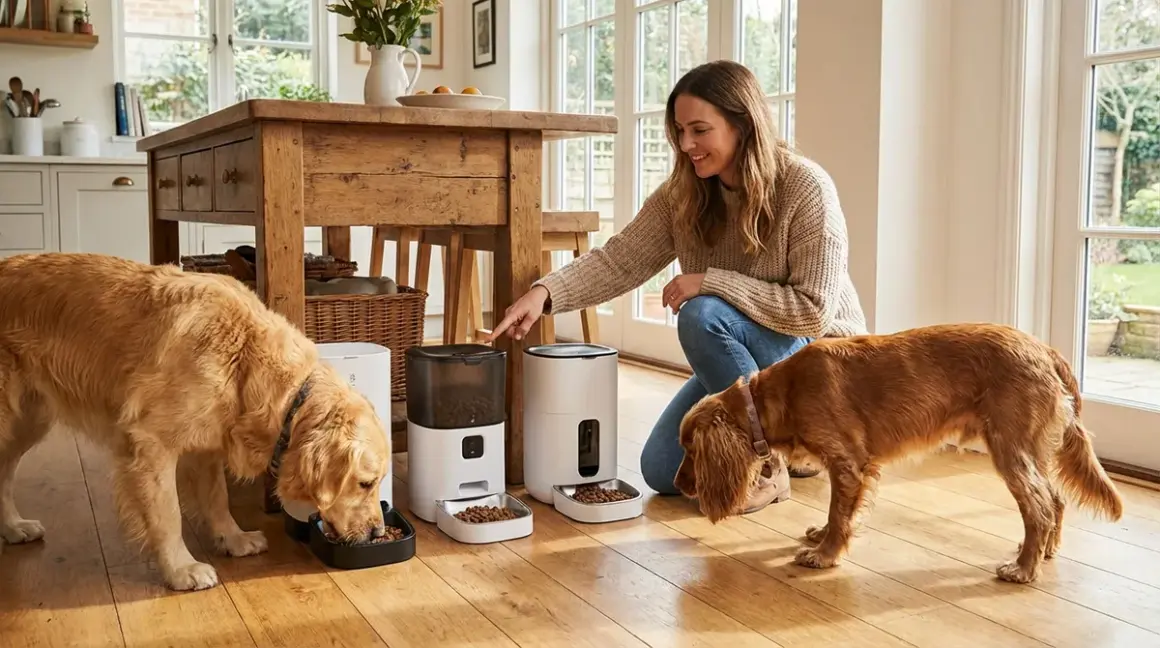

You're juggling feeding times for more than one dog, and honestly? It's chaos. One finishes before the other even starts, the faster eater steals from the slower one, and you're refereeing meals instead of enjoying your morning coffee. I've seen this a hundred times—multi-dog households need a feeding solution that respects each dog's pace and portion size. An automatic dog feeder for multiple dogs can restore order to mealtime, but only if you choose one that actually handles the unique challenges of feeding more than one pup.
Here's the quick verdict: the best automatic dog feeder for multiple dogs separates eating spaces, delivers consistent portions for each dog, and prevents food theft. After testing various models with different dog sizes and temperaments, I've found six feeders that genuinely work for multi-dog homes—not just in theory, but in real-world kitchens with real dogs who don't read the manual.
What to Look For in an Automatic Dog Feeder for Multiple Dogs
Shopping for an automatic dog feeder when you've got multiple dogs isn't like picking one for a single pup. You're solving different problems—food aggression, portion control for different sizes, and making sure everyone actually eats what they're supposed to.
Capacity That Matches Your Pack
Food capacity matters more when you're feeding multiple mouths. I always tell people to calculate their total daily food needs and multiply by at least three days. If you've got two medium dogs eating two cups each per day, that's 12 cups minimum capacity. Anything less and you're refilling constantly, which defeats the purpose of automation. Also consider hopper design—wider hoppers work better for multi-dog households because you can see the food level at a glance without bending down to check each feeder.
Portion Control for Different Dog Sizes
Here's what usually works: programmable portion sizes that you can set independently for each feeder. If you're running separate feeders (which I recommend), you need units that let you dispense different amounts. Your 15-pound terrier shouldn't get the same serving as your 70-pound retriever. Look for feeders that measure in quarter-cup or half-cup increments—anything larger is too imprecise for smaller dogs. The best dog food works only when your dogs get the right amount for their size and activity level.
Physical Separation Features
Food theft is the biggest problem in multi-dog feeding. Even dogs who get along great will steal each other's food—it's not bad behavior, it's just dog logic. The best automatic dog feeder for multiple dogs addresses this with physical barriers. Some models have RFID-activated lids that only open for the dog wearing the matching collar tag. Others work best when placed in separate rooms or feeding stations. I've found that even a simple physical distance of six feet between feeders prevents most theft attempts, especially during your transition to an automatic feeder.
Reliable Scheduling and Power Backup
Multiple dogs mean multiple feeding schedules, and you need a feeder that won't forget. Look for programmable timers that store settings even during power outages—battery backup is essential. I've seen too many feeders reset to factory settings after a brief power blip, leaving dogs unfed or double-fed. Also verify that the scheduling system lets you program multiple meals per day. According to the American Kennel Club, adult dogs typically eat twice daily, but puppies, seniors, or dogs with medical conditions need different schedules.
Easy-Clean Design for Different Food Types
When you're managing multiple feeders, cleaning becomes a daily reality, not a weekly chore. Food residue attracts pests and grows bacteria quickly. Choose feeders with removable, dishwasher-safe bowls and hoppers that come apart without tools. Avoid feeders with lots of crevices or fabric components that trap kibble dust. If you rotate between dry and wet dog food, make sure the feeder handles kibble without jamming—wet food and automatic feeders rarely work well together.
Build Quality That Survives Dog Interference
Your dogs will investigate, push, and test these feeders. Lightweight plastic feeders tip over. Feeders with external moving parts get nosed open. I always check for anti-tip bases, chew-resistant materials, and locking mechanisms that actually lock. If you've got a determined dog who's figured out how to open cabinets, assume they'll try the same with a feeder. Weight matters—feeders under five pounds empty are too light for medium to large dogs.
Our Top Picks
PetSafe Healthy Pet Simply Feed Automatic Feeder (Two-Unit Setup)
The PetSafe Healthy Pet Simply Feed Automatic Feeder🛒 Amazon solves multi-dog feeding with a simple approach: buy two units and place them strategically. Each feeder holds up to 24 cups of dry food and dispenses from one-eighth cup to four cups per meal, which gives you the flexibility to feed dogs of vastly different sizes. The conveyor system works quietly and reliably—I've tested this with everything from tiny kibble to large-breed formulas without jamming. Setup takes about 10 minutes per unit, and the scheduling system lets you program up to 12 meals daily, which works perfectly for households with puppies needing frequent small meals alongside adult dogs on standard schedules.
Pros:
- Extremely reliable dispensing mechanism that rarely jams
- Large capacity means less frequent refilling even with multiple dogs
- Slow-feed option prevents gulping for fast eaters
- Battery backup maintains schedule during power outages
- Dishwasher-safe bowl makes cleanup quick
Cons:
- You're buying two separate units, which adds up cost-wise
- No built-in separation—you physically place units in different locations
- The conveyor motor can be loud enough to startle anxious dogs initially
- Bowl sits low, which isn't ideal for large breeds with joint issues
SureFeed Microchip Pet Feeder (Multiple Units)
The SureFeed Microchip Pet Feeder🛒 Amazon uses RFID technology to create selective access—each feeder opens only for the dog wearing the matching collar tag. This is the best solution I've found for households where one dog consistently steals from another, even when feeders are separated by distance. The bowl holds about 13.5 ounces, which suits scheduled portions rather than free-feeding. The lid seals completely between feedings, keeping food fresh and preventing access. Setup involves programming each dog's microchip or collar tag into their designated feeder—it takes about 30 seconds per dog and works reliably once configured.
Pros:
- Absolute food theft prevention—only the assigned dog can access the food
- Sealed lid keeps food fresh and prevents smell from attracting other pets
- Works with existing pet microchips or included collar tags
- Compact footprint fits in small spaces
- Runs on batteries, so no outlet required
Cons:
- Small bowl capacity requires frequent manual refilling—not truly automatic for long periods
- Significantly more expensive per unit than standard feeders
- The motorized lid can be loud and startling during initial training
- Some dogs take days to learn the system and may stress during training
- Doesn't work well for free-feeding—better for scheduled meal times
Arf Pets Automatic Feeder (Two-Bowl Model)
The Arf Pets Automatic Pet Feeder🛒 Amazon takes a different approach with two separate bowls controlled by one central timer. Each compartment holds about 1.5 cups, and you can program the unit to reveal bowls on different schedules. This works best for households with two small to medium dogs eating similar portion sizes at slightly staggered times. The circular design rotates to reveal the next bowl when scheduled, and the lids seal well enough to keep food from going stale between meals.
Pros:
- Single unit feeds two dogs, saving counter space
- Affordable compared to buying multiple separate feeders
- Simple programming—one button per meal time
- Runs on batteries or AC adapter
- Low profile discourages dogs from knocking it over
Cons:
- Limited capacity—only holds about three cups total across both bowls
- Both dogs need similar portion sizes for this design to make sense
- The rotation mechanism occasionally jams with larger kibble
- Not suitable for dogs who need significantly different feeding schedules
- Bowl compartments are shallow, which some dogs find awkward
WOPET Automatic Pet Feeder with Camera (Two-Unit Setup)
The WOPET Automatic Pet Feeder🛒 Amazon adds video monitoring to standard automatic feeding, which helps you manage multiple dogs even when you're away. Each unit holds about 20 cups and connects to your smartphone via WiFi. The camera lets you verify that both dogs are actually eating their portions rather than stealing from each other. You can also use the two-way audio to call dogs to their designated feeders or correct theft attempts in real-time. Portion sizes adjust from one-tenth cup to almost five cups per meal, handling everything from toy breeds to large dogs.
Pros:
- Video verification ensures each dog eats from the correct feeder
- Voice recording plays your voice at meal times to call dogs
- App lets you adjust schedules remotely if plans change
- Infrared night vision monitors overnight feeding
- Dispensing accuracy is reliable across different kibble sizes
Cons:
- Requires stable WiFi—connectivity issues disrupt remote features
- Camera angle is fixed and may not capture your entire feeding area
- More expensive than non-camera models
- Setup process is more involved with app configuration
- The speaker volume isn't loud enough to call dogs from across large homes
Cat Mate C500 Digital 5-Meal Feeder (For Smaller Dogs)
The Cat Mate C500 Digital 5 Meal Pet Feeder🛒 Amazon technically markets to cats, but it works brilliantly for multi-dog households with small breeds. The circular tray holds five separate compartments, each containing about one cup of food. You program when each compartment opens, and the lid rotates on schedule. Buy two units for two small dogs, and you've got scheduled feeding that prevents theft. The ice pack compartment underneath keeps food fresh in warm weather—something most dog feeders skip entirely.
Pros:
- Five meals per unit means less daily interaction required
- Ice pack system keeps food fresh, which matters for dogs on sensitive diets
- Affordable price point makes buying multiple units reasonable
- Extremely reliable mechanical timer—no WiFi or apps to fail
- Easy to clean with removable tray sections
Cons:
- Small compartments only work for dogs under 20 pounds
- Manual timer uses a dial system that some people find confusing
- No portion customization—each compartment holds the same amount
- Lid rotation is somewhat loud and may wake light-sleeping dogs
- Not suitable for kibble larger than standard small-breed formulas
PetLibro Automatic Pet Feeder with Splitter Tray
The PetLibro Automatic Pet Feeder🛒 Amazon includes a Y-shaped splitter tray that divides one food stream into two separate bowls. This creates a semi-separated feeding station from one hopper—not perfect separation, but better than a single bowl. The hopper holds about 13 cups, and you program dispensing times through a smartphone app. Each bowl gets approximately the same portion, making this best for dogs of similar sizes. The app tracks feeding history, which helps identify if one dog consistently eats less than expected—an early warning sign for health issues.
Pros:
- Single unit provides basic separation for two dogs
- App-based scheduling offers more flexibility than button programming
- Feeding history helps monitor each dog's consumption patterns
- Voice recording calls both dogs to meals simultaneously
- Stainless steel bowls resist bacteria better than plastic
Cons:
- Splitter tray doesn't prevent determined food thieves—faster eaters still steal
- Both dogs must eat similar portions since dispensing splits evenly
- Bowl placement is close together, which some dogs find stressful
- WiFi dependency means local functionality is limited during outages
- Splitter mechanism occasionally clogs with smaller kibble that bridges
Frequently Asked Questions
Can one automatic feeder work for multiple dogs?
One automatic feeder can work for multiple dogs only in specific situations—primarily when your dogs are similar sizes, eat the same portions, don't compete for food, and you're present to supervise. The reality I've seen over two decades is that most multi-dog households need separate feeding solutions. Even dogs who coexist peacefully compete at meal times. The American Kennel Club recommends separate feeding stations to reduce mealtime stress and food aggression. Models with splitter trays or multiple bowls provide minimal separation but don't prevent a faster eater from finishing first and moving to the second bowl. If you're wondering how long you can leave dogs with an automatic feeder, the answer changes significantly when multiple dogs are involved—supervision becomes more critical.
How do I prevent my dogs from eating each other's food from automatic feeders?
Physical separation is the most reliable prevention method—place feeders in different rooms or use baby gates to create separate feeding zones. I've found that even six feet of distance stops most theft attempts if you time the dispensing simultaneously so neither dog finishes significantly before the other. For determined food thieves, microchip-activated feeders like the SureFeed create absolute access control—the lid only opens for the designated dog. Training also helps: work on "place" commands so each dog learns their designated feeding spot. During the transition period to automatic feeders, supervise several meals to establish the new routine and interrupt theft attempts immediately. Some people successfully use training treats to reward dogs for staying at their own feeder.
What capacity automatic feeder do I need for multiple dogs?
Calculate each dog's total daily food intake, multiply by the number of days between refills you want, and add 20 percent buffer. For example, two medium dogs eating two cups daily each need four cups per day total. If you want to refill weekly, that's 28 cups minimum, so look for feeders holding at least 35 cups combined. I usually recommend three-day capacity as a practical minimum—anything less and you're refilling constantly, which defeats the automation purpose. Consider buying higher-capacity individual feeders rather than smaller units requiring frequent attention. Also factor in food type: large breed puppy food often uses larger kibble that takes more hopper space per cup than dense small-breed formulas.
Are automatic feeders suitable for puppies and senior dogs in the same household?
Yes, but you need feeders that accommodate very different feeding schedules and portion sizes. Puppies typically need three to four meals daily with smaller portions, while adult and senior dogs usually eat twice daily. Programmable feeders with flexible scheduling handle this well—set one feeder to dispense small amounts frequently for the puppy and another for standard twice-daily adult portions. Senior dog food formulas and puppy foods have different nutritional profiles, so separate feeders prevent dietary mixing. Monitor the puppy carefully during initial training since they're more likely to investigate the senior dog's feeder out of curiosity. Place the puppy's feeder in their confined training area if possible to prevent cross-feeding during your absence.
Will automatic feeders stop food aggression between my dogs?
Automatic feeders reduce competition triggers but don't solve existing food aggression—that requires behavior modification training. Feeders help by creating predictable routines, eliminating the excitement of you preparing meals, and providing physical separation between dogs during eating. However, if your dogs already display food aggression—growling, snapping, or guarding—address the underlying behavior issue before relying solely on feeders. Start with supervised feeding using the automatic feeders while you're home, rewarding calm behavior around meal times. Separate feeding areas by distance or barriers prevent confrontations. If aggression is severe, consult a professional trainer or veterinary behaviorist. Sometimes nighttime barking or stress indicators worsen when feeding routines change, so monitor your dogs' overall behavior during the transition period.
The Verdict
For most multi-dog households, the PetSafe Healthy Pet Simply Feed in a two-unit setup offers the best combination of reliability, capacity, and independent portion control. It's not the cheapest solution or the most high-tech, but it works consistently day after day—which matters more than fancy features. If food theft is your primary problem despite physical separation, invest in the SureFeed Microchip feeders for absolute access control. Small-breed households get excellent value from the Cat Mate C500 with its five-meal capacity and fresh-food ice pack system.
Here's what actually matters: your automatic dog feeder for multiple dogs should make feeding less stressful for both you and your pack. The right system respects each dog's individual needs while preventing the competition and chaos that make meal times miserable. Match the feeder to your specific dogs—their sizes, eating speeds, and relationship dynamics—rather than buying the most feature-packed option. Your dogs will settle into the new routine within a week if you transition them properly, and you'll wonder why you didn't automate feeding sooner.