
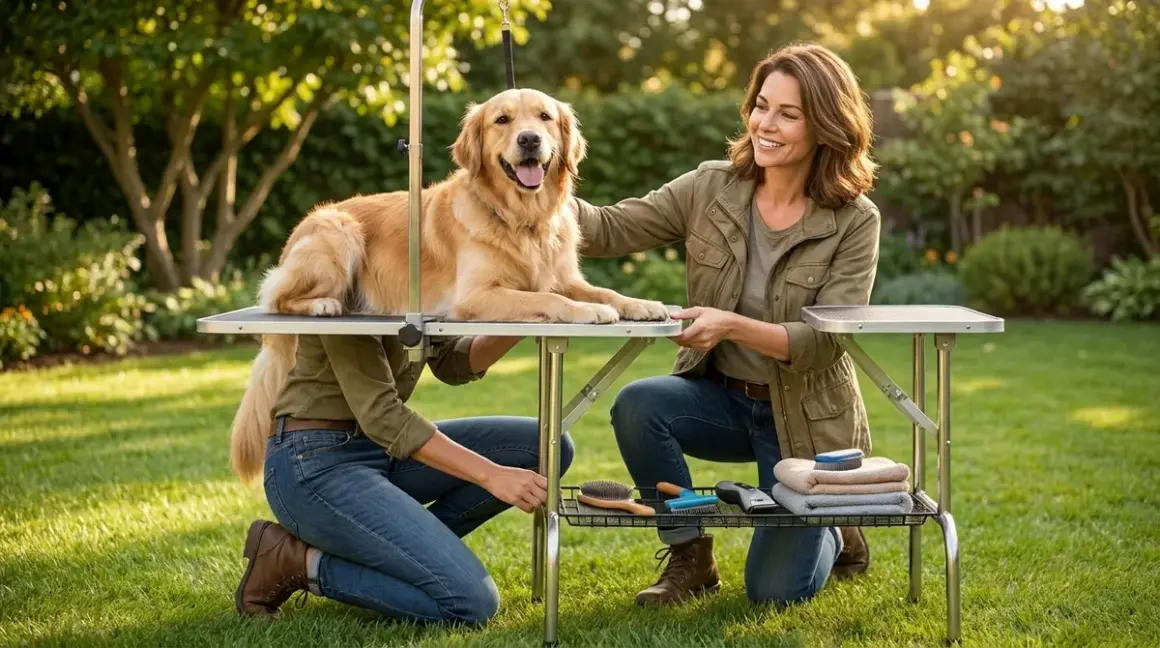

After grooming show dogs for nearly a decade, I can tell you that investing in the right dog show grooming table makes the difference between a calm, efficient prep session and a wrestling match in the hotel bathroom. This guide breaks down the two main types—hydraulic and folding static tables—covering stability, portability, surface materials, height adjustment mechanisms, and the practical realities of working each breed from Yorkies to Great Danes.
Quick Comparison: Hydraulic vs. Folding Static Grooming Tables
| Criterion | Hydraulic Tables | Folding Static Tables |
|---|---|---|
| Height Adjustment | Foot-pump or electric adjustment, infinite positioning from floor to chest height | Fixed leg positions (usually 2-3 preset heights) or manual screw adjustment |
| Portability | Heavy (40-80 lbs), requires vehicle space, setup time | Lightweight (15-35 lbs), compact fold, fits in most vehicles |
| Stability | Extremely stable, no wobble even with large or fidgety dogs | Adequate for most breeds, some flex with dogs over 50 lbs or active movement |
| Price Range | Around $300-$800+ depending on electric vs manual hydraulics | Around $60-$250 depending on surface size and materials |
Height Adjustment: Why It Matters More Than You'd Think
I learned the hard way that working at the wrong height for hours destroys your back. When I started grooming professionally, I used whatever table the shop had—usually a basic folding static model set to one height. After a full Saturday of Poodle trims and Bichon scissoring, my lower back would scream.
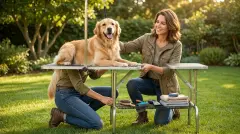
Hydraulic dog show grooming tables let you fine-tune the working height for each dog and each task. When I'm doing face work on a Yorkie, I pump the Flying Pig Heavy Duty Stainless Steel Pet Grooming Table🛒 Amazon up to chest height so I can see exactly what I'm doing without hunching. For bathing a Golden Retriever or stacking a German Shepherd for show preparation, I lower it to mid-thigh so I can reach their topline comfortably.
The foot-pump mechanism is simple—step on it repeatedly until the table rises to your preferred height, then release a lever to lower. Electric hydraulic models (usually found in professional shops) use a button or foot pedal for powered adjustment, which saves effort if you're grooming all day. The downside? Hydraulic tables are heavy. Mine weighs around 65 pounds, and getting it in and out of my SUV before dog shows requires some muscle and planning.
Folding static tables typically offer two or three preset heights via removable leg extensions or adjustable rubber feet. You set the height once before you start working, and that's where it stays. For conformation showing where you're working on one or two dogs in quick succession, this is usually fine—you're not switching heights every fifteen minutes. But if you're grooming multiple breeds or spending hours on detailed coat work, the lack of adjustment catches up with you. I keep a folding table in my car for quick touchups at outdoor shows, but I never use it for serious prep anymore.
Portability and Storage: The Travel Reality
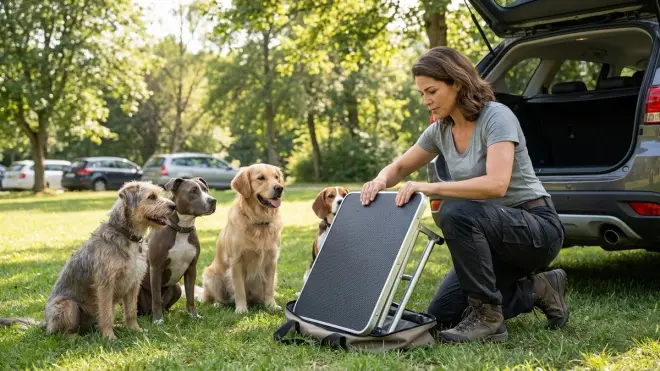
I travel to shows almost every other weekend during show season, and portability is the real deciding factor for most exhibitors I know. A folding static grooming table collapses flat—usually to about 3-4 inches thick—and weighs anywhere from 15 to 35 pounds depending on size and materials. I can slide mine behind the back seat of my car alongside crates, grooming supplies, and a cooler. Setup takes maybe thirty seconds: unfold the legs, lock them in place, attach the grooming arm if you use one.
Hydraulic tables don't fold. Some models have wheels and a tilt mechanism so you can roll them like a dolly, but you're still maneuvering a 50-80 pound piece of equipment. I've seen people haul hydraulic tables to shows in RVs, cargo vans, or SUVs with the rear seats permanently removed. It's doable, but it requires commitment. If you're flying to a national specialty or showing multiple weekends a month in different states, the hydraulic table stays home unless you're shipping a full setup ahead of time.
Storage at home is another consideration. My hydraulic table lives in my garage grooming area—it's too bulky to store anywhere else. My folding table leans against a wall in the mudroom, taking up about as much space as an ironing board. If you live in an apartment or have limited garage space, that difference matters.
Surface Material and Texture: What Your Dog Feels
The tabletop surface affects how confident your dog feels standing still, which directly impacts how smoothly grooming goes. I've worked on everything from rubberized textured tops to bare aluminum, and the difference in dog body language is obvious.
Rubberized or textured surfaces provide grip, especially important for nervous dogs or breeds with heavy coats that obscure their vision (like Old English Sheepdogs or Komondors). My senior shepherd has some rear-end weakness due to arthritis, and she's much more relaxed on a table with good traction. She can feel her footing, which means she doesn't tense up trying to balance. Most folding static tables come with a black or colored rubber top that's easy to clean and provides decent grip.
Stainless steel or aluminum tops are common on hydraulic tables. They're durable, easy to sanitize (critical when you're grooming client dogs or multiple dogs at shows), and they don't absorb odors or stains. But they're slippery. I always use a rubber grooming mat on top of my stainless hydraulic table—it gives dogs the traction they need and protects the metal surface from clipper scratches. The Master Equipment Small Grooming Table Mat🛒 Amazon is what I reach for most often because it stays put and cleans up quickly.
Some higher-end hydraulic tables now feature composite or non-slip coated tops built in, which splits the difference—durable like steel, grippy like rubber. If you're buying new and can afford it, that's the way I'd go.
One thing nobody mentions enough: table edges. Rounded or rolled edges are kinder to your forearms when you're leaning against the table for detailed work. Sharp 90-degree edges dig into your skin after an hour. Check this before you buy—run your hand along the perimeter and imagine that pressure point against your arm all day.
Stability and Weight Capacity: When Dogs Move
A dog show grooming table has to handle more than just weight—it has to handle movement. Dogs shift, shake, step sideways, and occasionally try to jump off when they spot another dog across the grooming area. I've had a 90-pound Standard Poodle lunge toward a friend while I was trimming his feet, and if that table had wobbled or tipped, we'd have had a real problem.
Hydraulic tables are built like tanks. The wide base, heavy frame, and low center of gravity mean they don't budge. I've never had a hydraulic table tip or flex, even when working on a bouncy young Boxer who couldn't stand still. The weight capacity is usually 300-400 pounds, which is overkill for most dogs but gives you confidence when you're working on giant breeds like Newfoundlands or Mastiffs.
Folding static tables vary wildly. Cheaper models (under $80) often have thin legs and lightweight frames that flex when a 60-pound dog shifts weight quickly. I've seen tables actually fold up mid-groom because the leg locks weren't secure—terrifying for the dog and dangerous for everyone. If you're going with a folding table, spend the extra money for a model with thick tubular steel legs, reinforced corner braces, and positive locking mechanisms. Check the stated weight capacity, but also read reviews from people working breeds similar to yours. A table rated for 200 pounds might technically hold a Rottweiler, but that doesn't mean it won't wobble.
For toy breeds and small dogs under 20 pounds, stability is less of a structural concern and more about table size. A 24x18-inch surface is plenty for a Maltese or a Papillon and keeps them from wandering around while you're working. Larger tables (36x24 inches or bigger) are necessary for medium to large breeds, but they also take up more vehicle and storage space.
Who Should Choose a Hydraulic Grooming Table
If you groom regularly at home—whether for shows or just routine maintenance—and you have the space and vehicle capacity to accommodate a heavy table, hydraulic is the way to go. I bought mine after my third year of serious showing, once I knew I'd be prepping dogs every month and my back couldn't take the static table anymore.
Hydraulic tables make sense for professional groomers, breeders with multiple dogs, and serious exhibitors who want shop-quality equipment at home. They're also worth it if you're working large or giant breeds frequently—the stability and infinite height adjustment make a massive difference when you're trying to stack a 100-pound dog for the show ring.
You'll also appreciate a hydraulic table if you groom alone. Being able to raise and lower the table without bending or straining means you can work efficiently without help. When I'm bathing my terrier mix after a muddy hike, I lower the table so he can step onto it himself instead of me lifting him. Small detail, but it adds up over years of repetitive motion.
Who Should Choose a Folding Static Table
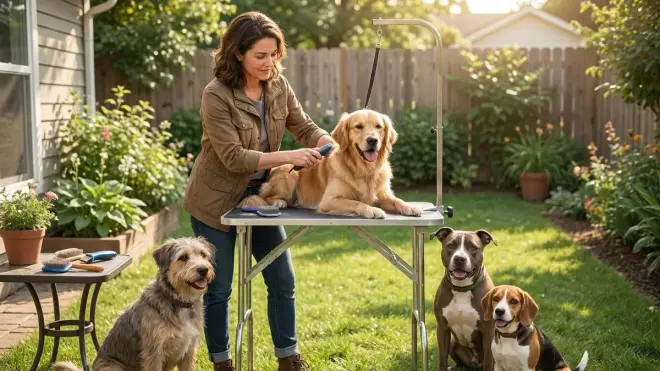
If you travel to shows frequently, don't have dedicated grooming space at home, or you're primarily doing quick touchups and maintenance rather than full show prep, a folding static grooming table is the practical choice. Most of the handlers I know who show occasionally—maybe once a month or at regional specialties—use folding tables exclusively.
They're also ideal if you're just starting out in conformation and haven't committed to the show circuit long-term. My first table was a $90 folding model with a 30x18-inch rubberized top, and it served me well for two years before I upgraded. It's still in my car for ringside touchups and emergency situations. I used it last month when my hydraulic table's foot pump started leaking—having a backup is never a bad idea.
For toy and small breed exhibitors, folding tables are often sufficient even for serious showing. If your Papillon weighs eight pounds and you're mostly working on coat conditioning and presentation trimming, you don't need a 70-pound hydraulic table. The portability trade-off is worth it.
Budget is another factor. If you're spending money on show leads, entry fees, and travel expenses, a $150 folding table lets you allocate resources elsewhere while still giving you a functional workspace.
Frequently Asked Questions
What size grooming table do I need for a medium-sized dog like a Cocker Spaniel or Border Collie?
A grooming table with a 36x24-inch surface gives you enough room for a medium-sized dog to stand comfortably while you work around them, with space for clippers, combs, and sprays within reach. Smaller 30x18-inch tables work for quick touchups, but you'll feel cramped during full grooming sessions when you need to access all sides of the dog without constantly repositioning them.
Can I use a regular folding table instead of a dog grooming table?
Regular folding tables lack the non-slip surface, reinforced stability, and grooming arm attachment points that make working on a dog safe and efficient. I tried using a camping table early in my grooming career for an outdoor show, and my dog slipped twice within five minutes because the smooth plastic top gave him no traction—he panicked, I panicked, and we accomplished nothing. A proper grooming table is worth the investment if you're doing this more than once.
How do I know if a grooming table is stable enough for my dog's size?
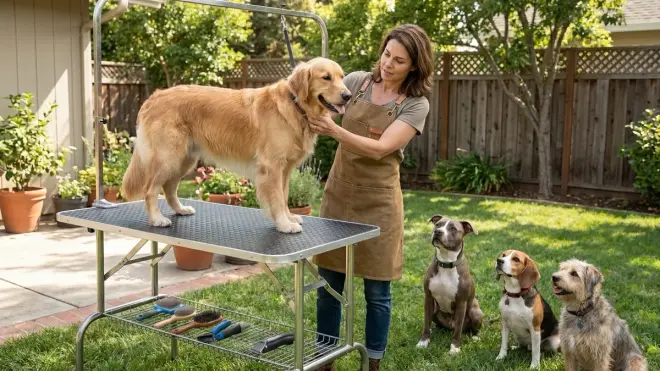
Check the manufacturer's stated weight capacity and look for reviews from handlers working similar-sized breeds, but also test the table yourself by pressing down firmly on opposite corners and the center—there should be minimal flex or wobble. When I evaluate a table, I push on it with about 50 pounds of force and lean my body weight against the edge to simulate a dog shifting or pulling against the grooming arm; if it tips or the legs buckle, I pass on it regardless of what the specs claim.
Bottom Line
The right dog show grooming table depends entirely on where and how you're using it. I keep both types—my hydraulic table handles all my serious at-home prep work and saves my back during long grooming sessions, while my folding table lives in the car for shows and travel. If you're grooming regularly at home and have the space, invest in a quality hydraulic table with a non-slip surface or add a rubber mat. If you're traveling frequently or just starting out, a well-built folding static table with reinforced legs and good traction is plenty.
The table is where you and your dog spend hours together before you ever step into the ring. Make it comfortable for both of you, and the show preparation work becomes part of the relationship instead of a battle. That's when grooming stops feeling like a chore and starts feeling like the trust-building it really is.