


I'll be honest—when I first heard about potty training sprays like the Bodhi Dog Potty Training Spray, I was skeptical. My background is in aquariums, not dog training, but the concept reminded me of how certain chemical cues guide fish behavior in tanks. Turns out, the bodhi dog potty training spray works on a similar principle: pheromone-based attractants that signal to puppies "this is the right spot." After helping my sister set up a complete training system for her Golden Retriever puppy last year, I realized success isn't just about the spray itself—it's about having everything in place before you start. This checklist covers every item and step you need to make the bodhi dog potty training spray work effectively, whether you're working with an 8-week-old puppy or retraining an adult dog who's developed bad habits.
Essential Supplies Before You Spray
The bodhi dog potty training spray bottle itself (16 oz or larger recommended). In my experience, the smaller 8 oz bottles run out too quickly during the critical first two weeks—you'll be reapplying multiple times daily, and running out mid-training disrupts the consistency that makes or breaks success.

High-quality puppy pads with leak-proof backing and odor-control layers. Not all pads are created equal, and I learned this the hard way when my sister initially bought budget pads that let urine seep through to the floor—the puppy started avoiding them entirely because they felt wet underfoot, which completely undermined the spray's attractant effect.
Enzymatic cleaner specifically formulated for pet urine (never ammonia-based). This is non-negotiable because regular household cleaners leave scent traces that actually encourage puppies to re-mark the same spots; enzymatic formulas break down the uric acid crystals that create lingering odors, giving the bodhi dog potty training spray a clean slate to work with.
A designated potty area with consistent flooring or outdoor surface. Whether it's a specific corner with washable tile, a balcony section, or a yard spot, the surface needs to stay the same—switching between grass one day and gravel the next confuses the association you're building with the spray.
Training treats in pea-sized portions (soft, high-value options work best). The spray gets your puppy to the right location, but immediate positive reinforcement when they actually go is what cements the behavior; I recommend checking out our guide on how to use treats for puppy training for timing strategies that really make a difference.
A consistent schedule tracker (app, notebook, or kitchen timer). Puppies under 16 weeks typically need bathroom breaks every 2-3 hours, plus immediately after meals, naps, and play sessions—tracking these patterns helps you anticipate when to bring them to the sprayed area before accidents happen.
Paper towels and a designated cleanup kit stored near training areas. Accidents will happen, and your response time matters; having supplies within arm's reach means you can clean and re-establish the correct spot with the spray before the puppy forms a new preference.
Optional but helpful: a small cordoned area or exercise pen. For the first week or two, limiting your puppy's roaming space to one or two rooms makes it easier to supervise and redirect them to the sprayed potty pad—my sister used baby gates to create a 10x10 foot zone, which dramatically reduced the "searching for the puppy who wandered off to pee behind the couch" problem.
Pre-Application Preparation Steps
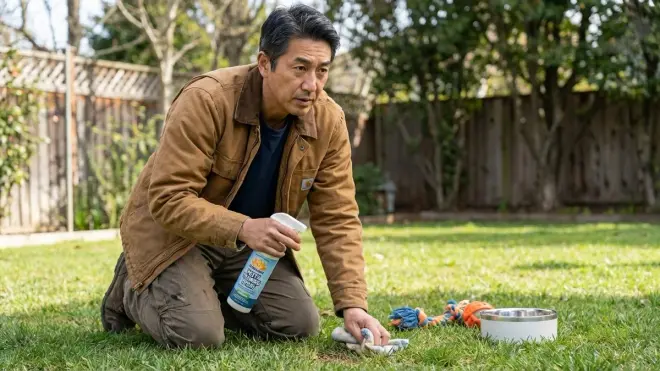
Thoroughly clean all previous accident sites with enzymatic cleaner 24 hours before starting. I can't stress this enough—if your puppy can still smell their old pee spots, the bodhi dog potty training spray is fighting an uphill battle against established scent markers that already say "bathroom here."
Choose your primary potty location and commit to it for at least two weeks. Moving the designated spot during the learning phase is like trying to teach a puppy two different commands for the same behavior; what I've found works is picking the most convenient long-term location from day one, even if it seems slightly inconvenient initially.
Remove or block access to current favorite accident spots. If your puppy consistently pees next to the dining room chair, either move the chair temporarily or use furniture blockers—you're essentially removing the competing option so the spray-designated area becomes the path of least resistance.
Test the spray on a small section of your flooring or pad material. While the bodhi dog potty training spray is generally safe for most surfaces, I learned from a friend's mishap that some dyed fabrics can show slight discoloration; a 2x2 inch test spot in a corner will reveal any issues before you commit.
Read through the manufacturer's instructions even if you think you know how it works. Bodhi Dog's official site includes specific application distances and frequency recommendations that differ slightly from other brands—I initially over-sprayed based on assumptions, which created an overwhelming scent that actually repelled my sister's puppy for the first day.
Establish your reward delivery system and practice the timing. The most effective setup I've seen involves keeping treats in a small pouch on your hip so you can deliver a reward within 2 seconds of the puppy finishing—this narrow window is when they connect the action to the consequence.
Set realistic expectations and clear your schedule for the first 72 hours. The initial training period requires near-constant supervision; trying to start this process the same week you're launching a work project or hosting visitors almost guarantees inconsistency that extends the training timeline from days to weeks.
Application Protocol and Usage Rules
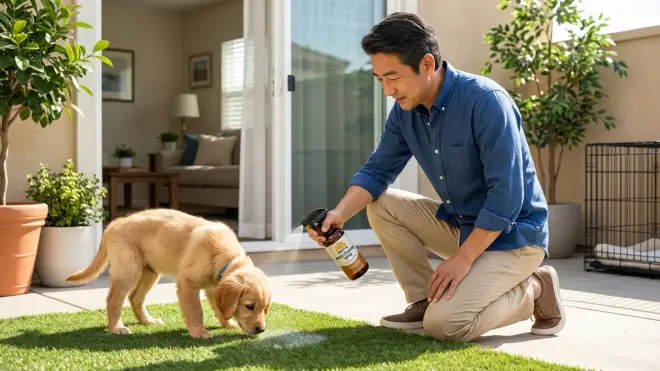
Apply 3-4 sprays to the center of the potty pad or designated outdoor spot. Too little and the scent isn't detectable enough to guide your puppy; too much and you create a wet spot they'll avoid stepping on—I found the sweet spot was a light misting that dries within 30 seconds but leaves the attractant compounds active.
Reapply immediately after each successful potty session. The act of urinating partially neutralizes the spray's pheromones, so refreshing the scent after each use maintains consistent cue strength; this was the single detail that accelerated my sister's puppy's learning curve from three weeks to nine days.
Bring your puppy to the sprayed area on a schedule, not just when they show signs of needing to go. Waiting for circling or sniffing behavior means you're already late—schedule-based visits (every 2 hours for young puppies) intercept the need before it becomes urgent, giving them time to respond to the spray rather than rushing an emergency.
Use a consistent verbal cue each time you bring them to the spot. Whether it's "go potty," "do your business," or "hurry up," the repeated phrase becomes a secondary signal that works alongside the spray; over time, you'll be able to phase out the spray but keep the verbal command.
Stay present but boring during the sprayed-area visits. This is counterintuitive for new puppy parents, but what I've found works is standing still without talking or making eye contact—any interaction becomes playtime, which distracts from the bodhi dog potty training spray's subtle cues.
Keep visits to the sprayed area brief (5 minutes maximum) if nothing happens. Extended sessions teach puppies that the potty spot is a hangout zone rather than a bathroom; if they don't go within 5 minutes, remove them, supervise closely for 15 minutes, then try again—this creates a rhythm that highlights the purpose of the space.
Never punish accidents or force your puppy's nose near mistakes. Beyond being ineffective, negative associations can make puppies afraid to eliminate in front of you at all, leading to sneaky bathroom behavior that undermines the spray's guidance system; our article on dog potty training aids explained covers why positive-only methods work better with attractant-based tools.
Track success rates daily to identify patterns and adjust timing. I had my sister keep a simple tally—successful uses of the sprayed area versus accidents elsewhere—which revealed her puppy needed an extra late-evening session she'd been skipping; data beats guesswork when you're troubleshooting.
Troubleshooting Common Setup Failures
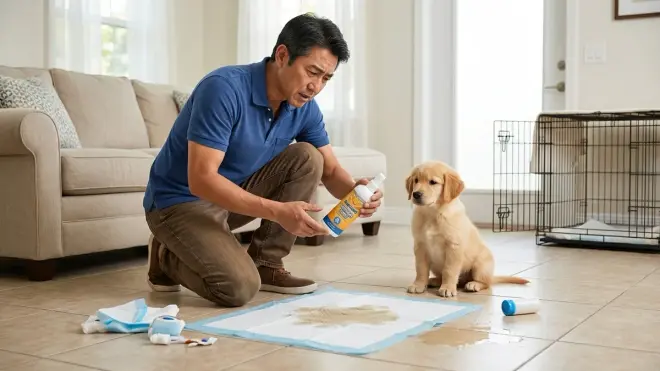
If your puppy ignores the sprayed area entirely, check for competing strong scents. Air fresheners, cleaning product residue, or even your own perfume can overpower the bodhi dog potty training spray's pheromone attractants—I've seen this happen when someone used Febreze on a potty pad thinking it would help with odors.
If they approach but won't step on the sprayed spot, the surface may be the issue. Some puppies dislike certain textures under their paws; my sister's Golden initially refused pads with a crinkly plastic backing, so we switched to cloth-topped washable pads and saw immediate improvement—the spray works, but only if they're willing to stand where you've applied it.
If success was good for three days then suddenly declined, you may be diluting the spray with too-frequent cleaning. Washing the area with soap and water removes the accumulated scent layers that reinforce the behavior; what I've found works better is spot-cleaning accidents but only doing a deep clean of the success zone once weekly, reapplying spray generously afterward.
If multiple puppies are involved and only one uses the sprayed area, separate them during training. Pack dynamics can create bathroom hierarchies where a dominant puppy claims the prime spot; individual training sessions for the first week establish that the sprayed area is available to everyone.
If your puppy uses the sprayed area but also continues using accident spots, you haven't fully neutralized the old scents. Go back with your enzymatic cleaner and treat a larger radius around previous accidents—urine can seep into baseboards and grout that you might miss on the first pass.
If they use the indoor sprayed pad perfectly but won't transition outdoors, create a bridge. Move the sprayed pad progressively closer to the door over several days, then place it just outside, then gradually reduce its size while expanding the outdoor spray zone—this gradual shift maintains the cue while changing the location.
If the spray seems to have stopped working after two weeks, check the bottle's manufacture date and storage. Pheromone-based attractants can degrade if exposed to heat or direct sunlight; I discovered my sister had been leaving the bottle on a sunny windowsill, which likely reduced its potency—proper storage in a cool, dark cabinet matters more than you'd expect.
Long-Term Success Maintenance
Begin reducing spray application frequency once you hit 7 consecutive days of 90%+ success. What I've found works is dropping from every-time application to every-other-time for a week, monitoring closely for regression; if success holds, you can phase to once-daily maintenance applications.
Introduce natural outdoor scent cues if you're transitioning from pads to yard. Take a used (but not soaking) pad to your outdoor designated spot and place it there while applying the bodhi dog potty training spray around it—this creates a bridge between the indoor scent they know and the new outdoor location.
Keep the bodhi dog potty training spray accessible for at least 60 days after "graduation." Stress events (visitors, moving furniture, schedule changes) can trigger temporary regression; having the spray on hand means you can immediately reinforce the designated spot rather than starting over from scratch.
Gradually expand your puppy's access to the full house only after sustained success. Adding one new room per week while maintaining the established potty routine prevents the "too much freedom too fast" problem that creates new accident patterns; our guide on puppy training aids discusses this phasing strategy in more detail.
Document your final successful setup with photos and notes. If you ever get another puppy or help a friend with training, having your proven protocol—specific spray pattern, pad brand, schedule, everything—saves you from reinventing the wheel; I actually created a simple one-page reference sheet for my sister that she's already shared with three other puppy parents.
Consider keeping a maintenance spray schedule for life in multi-dog households. Even adult dogs respond to pheromone cues, and periodic application to designated outdoor spots can prevent territory-marking disputes when you add new dogs to the family.
Recognize when success is truly habitual and celebrate the transition. There's a moment—usually around 8-10 weeks into training—when you realize your puppy is seeking out the spot independently without verbal cues or spray; that's when you know the behavior is internalized, not just externally cued.
Final Check Before You Go
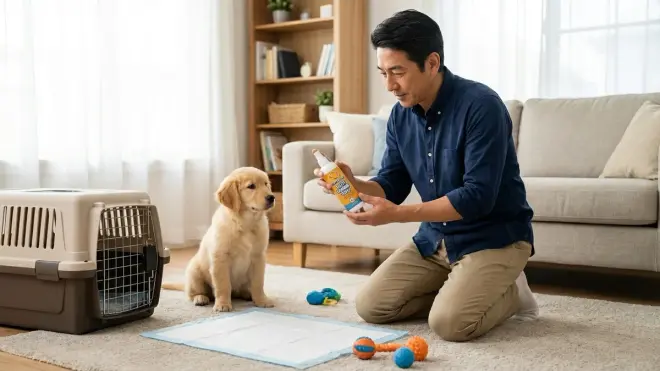
Before you start your bodhi dog potty training spray protocol, confirm you have:
- ✅ Bodhi dog potty training spray (16 oz minimum)
- ✅ Enzymatic cleaner and all old accident sites treated
- ✅ Quality potty pads or designated outdoor spot selected
- ✅ Training treats portioned and accessible
- ✅ Schedule tracker set up (every 2-3 hours for puppies under 4 months)
- ✅ Cleanup supplies stationed near training area
- ✅ Limited supervision space (gates or closed doors)
- ✅ Consistent verbal cue chosen
- ✅ 72 hours of availability for intensive supervision
- ✅ Realistic timeline expectations (7-14 days for initial success)
- ✅ Backup spray bottle ordered (you'll need it)
Frequently Asked Questions
How long does it take for bodhi dog potty training spray to start working with puppies? Most puppies between 8-16 weeks will show initial response to the bodhi dog potty training spray within the first 3-5 applications when combined with proper scheduling and supervision, though establishing consistent habit patterns typically takes 7-14 days of dedicated training, with adult dogs sometimes requiring up to 3 weeks if they're unlearning previous bathroom locations.
Can you use bodhi dog potty training spray on both indoor pads and outdoor grass for the same puppy? Yes, you can apply bodhi dog potty training spray to both indoor and outdoor locations, but introducing both simultaneously often confuses puppies during initial training—what works better is establishing success with one location first for 5-7 days before introducing a second sprayed area, which helps them generalize the "bathroom here" cue rather than fixating on one specific surface type.
Does bodhi dog potty training spray work for older dogs who were never properly house trained? The bodhi dog potty training spray is effective for adult dogs including seniors who missed early training or developed bad habits, though older dogs typically require longer consistent application periods (3-4 weeks versus 1-2 weeks for puppies) because you're competing against years of established patterns rather than creating new behaviors on a blank slate—the enzymatic cleaning of old spots becomes even more critical with adults who have deeply ingrained preferences.
Final Thoughts
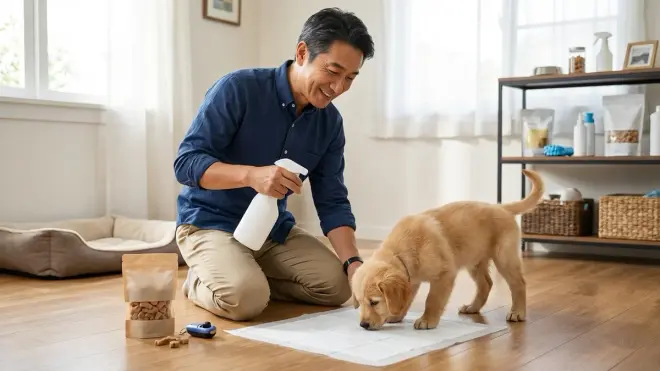
What surprised me most about helping with this potty training setup wasn't the bodhi dog potty training spray itself—the pheromone science makes sense, just like how chemical cues regulate fish schooling behavior in my reef tanks. It was realizing how much the surrounding system matters. The spray is genuinely effective at guiding puppies to the right spot, but it can't overcome inconsistent schedules, incomplete accident cleanup, or surface textures the puppy simply won't stand on.
Think of the spray as one powerful tool in a complete toolkit rather than a magic solution. When my sister followed this full checklist—enzymatic cleaning, scheduled visits, immediate rewards, proper application frequency—her puppy went from 15 accidents per day to essentially zero within nine days. When her neighbor tried using just the spray without changing anything else about their routine, they saw minimal improvement and gave up after a week, convinced it didn't work.
The investment isn't just the bottle of spray; it's the 72 hours of intensive supervision at the start, the enzymatic cleaner for thorough prep, and the mental commitment to consistency even when it's inconvenient. But what I've found is that getting this foundation right pays dividends far beyond just having a house-trained dog—it establishes the pattern of clear communication and positive reinforcement that makes every future training goal easier. You're not just teaching your puppy where to pee; you're teaching them that paying attention to your cues leads to good things, which is the foundation of basically everything else you'll ever want them to learn.