
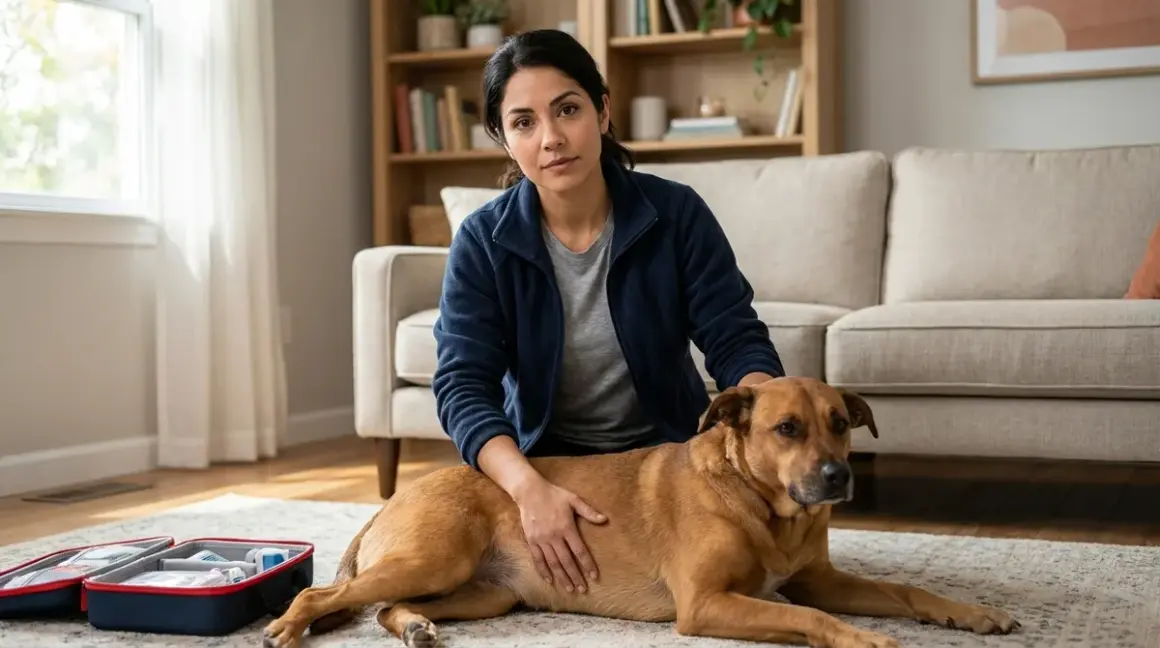

I'll never forget the morning one of my guinea pigs, Peaches, started making these terrible gasping sounds while munching on a carrot chunk I'd cut too large. My heart absolutely stopped. In that moment, I realized how unprepared I was—and how quickly a choking emergency can escalate. Whether you share your space with guinea pigs, rabbits, cats, dogs, or other companion animals, knowing what to do when your pet is choking can literally save their life. This guide walks you through recognizing the signs, responding safely, and performing species-appropriate interventions for dogs, cats, and small animals like rabbits and guinea pigs. You don't need veterinary training—just a clear head and the right information. Most interventions take 30-90 seconds once you've identified the problem, though the entire emergency typically resolves within five minutes if handled correctly.
What You'll Need
Having these items accessible (ideally in your best pet first aid kit) makes responding to a choking emergency faster and safer:

- Penlight or phone flashlight – to visualize the throat
- Blunt-tipped tweezers or hemostats – for removing visible obstructions in small pets
- Towel or blanket – to safely restrain a panicking pet
- Emergency vet contact information – saved in your phone with after-hours numbers
- Gauze pads – to grip slippery objects in the mouth
- Calm presence – your pet will pick up on your panic, so breathe
You won't use all these items every time, but having them within arm's reach eliminates the frantic searching that eats up precious seconds.
Step 1: Confirm Your Pet Is Actually Choking
Dogs and cats showing signs of choking will paw at their mouth, make exaggerated swallowing motions, gag repeatedly without producing vomit, or stand with their neck extended and head down. You might hear wheezing or see their gums turning blue or pale. Choking dogs often panic and may become aggressive due to fear and oxygen deprivation.
Small animals (guinea pigs, rabbits, ferrets, chinchillas) display subtler signs. Watch for open-mouth breathing (highly abnormal for guinea pigs and rabbits, who are obligate nasal breathers), pawing at the face, hunched posture, drooling, or sudden stillness after eating. Peaches went completely rigid and silent—the absence of her usual chirping was the biggest red flag.
Puppies and kittens are especially prone to choking on toys, rawhide pieces, or kibble that's too large for their developing jaw strength. Senior pets with dental disease or weakened swallowing reflexes face higher risk too.
Not every cough or gag means choking. If your pet can cough forcefully, they're moving air—that's a partial obstruction that might resolve on its own. Complete choking means no air movement, no sound, and rapidly escalating distress. That's when you need to act immediately on what to do when your pet is choking.
Step 2: Stay Calm and Restrain Your Pet Safely

This is harder than it sounds when your companion is in distress, but panic helps no one. Take two deep breaths—seriously, actually do it—then approach your pet with calm confidence.
For dogs: Smaller dogs (under 25 pounds) can be picked up. Larger dogs should stay on the ground where you have better leverage. If the dog is conscious and frantic, wrap them in a towel or have someone help restrain them. A choking dog may bite reflexively, even if they've never shown aggression. Don't put your face near their mouth.
For cats: Wrap them burrito-style in a towel with just the head exposed. Cats are incredibly strong when terrified, and those claws will shred your arms if you don't contain them. Even the sweetest cat becomes a tornado of panic when they can't breathe.
For small animals: Guinea pigs, rabbits, and similar pets need gentle but firm restraint. I learned to tuck Peaches against my body with one hand supporting her chest and hindquarters while using the other to examine her mouth. Small animals can go into shock from stress alone, so work as quickly and smoothly as possible. A panicking rabbit can break its own spine with powerful back-leg kicks, so support their rear end at all times.
Talk to your pet in a steady voice. They won't understand your words, but your tone matters. This is the foundation of pet emergency care: what every dog and cat owner needs to know—staying functional when every instinct screams at you to panic.
Step 3: Open the Mouth and Look for the Obstruction
Dogs: Gently pull the lower jaw down (don't force it) and use your flashlight to look at the back of the throat. Common culprits include rawhide chunks, pieces of toys, bones, balls, or food gulped without chewing. If you see something and can grasp it easily without pushing it deeper, use your fingers or gauze to pull it straight out. Never blindly sweep the throat—you might lodge the object deeper or damage soft tissue.
Cats: Their mouths are smaller and they're less cooperative about opening wide. Use one hand to gently press on the corners of their jaw hinge (where the upper and lower jaws meet) to encourage opening. Cats frequently choke on string, dental treats broken into sharp pieces, hairballs combined with food, or even small toy parts. If you see string trailing from the mouth, do not pull it—it could be anchored around the tongue base or in the intestines. Cut what you can reach and get to a vet immediately.
Small animals: Guinea pig and rabbit mouths are structured differently—their teeth continue far back into the mouth, and you can't see much without proper tools. I could only see about half an inch into Peaches' mouth, but that was enough to spot the carrot piece lodged to one side. Use your penlight and blunt-tipped tweezers very carefully. For these species, even a minor mouth injury can lead to eating refusal and serious health decline.
If you can't see anything obvious or can't safely remove what you see, move immediately to the next step. You have about three to four minutes before oxygen deprivation causes brain damage.
Step 4: Perform Back Blows (All Species)

This is often the safest first intervention when you can't manually remove the obstruction, and it's what saved Peaches.
Small dogs and cats (under 20 pounds): Hold them against your chest with their back to you, head downward at about a 45-degree angle. Use the heel of your hand to deliver four to five firm blows between the shoulder blades. You're trying to dislodge the object with gravity and force—hit hard enough to make a solid thump, but not so hard you crack ribs.
Large dogs (over 20 pounds): Keep them standing on all fours. Position yourself over or beside them and deliver firm blows between the shoulder blades with the heel of your palm. Use your body weight, not just arm strength. If the dog collapses, continue with them lying on their side.
Small animals: This requires a gentler approach due to their fragile rib cages. Hold your guinea pig or rabbit upright against your chest with their back to you, head tilted slightly downward. Use two or three fingers (not your whole palm) to deliver quick, sharp taps between the shoulder blades—think of the pressure you'd use to knock snow off a delicate ornament. After Peaches' incident, I practiced the motion on a plush toy so I'd know exactly how much force to use. Too gentle and it won't work; too hard and you risk injury.
Check the mouth after every few blows to see if the object has moved into view. Some pets will cough it out on their own once it's dislodged slightly.
Step 5: Use Abdominal Thrusts (Dogs and Cats Only)
If back blows don't work, abdominal thrusts (the Heimlich maneuver adapted for pets) are your next tool. Do not attempt this on small animals like guinea pigs, rabbits, ferrets, or chinchillas—their internal anatomy is too delicate and you'll cause fatal internal injuries.
For dogs: Position yourself behind the standing dog (or straddle them if they're on their side). Make a fist with one hand and place it just behind the rib cage, in the soft hollow of the abdomen. Wrap your other hand around your fist. Give four to five quick, upward thrusts—imagine you're trying to lift the dog slightly off the ground with each thrust. The goal is to force air from the lungs in a burst that ejects the obstruction. Check the mouth after every few thrusts.
For cats: This is trickier due to their size and flexibility. Hold the cat with their back against your chest, feet dangling. Find the soft spot just below the rib cage. Use two fingers of one hand (or your thumb) to give quick, upward pushes—much gentler than with dogs, but still firm. Think of pressing a doorbell repeatedly with purpose. Cats have far less abdominal mass than dogs, so adjust your force accordingly.
Abdominal thrusts can cause internal bruising or organ damage even when performed correctly. If you use this technique, your pet needs veterinary examination afterward even if they seem fine. Delayed internal bleeding is a real risk, particularly in cats and small dogs.
Important: For small animals experiencing choking that doesn't resolve with back blows and visible obstruction removal, skip abdominal thrusts entirely and proceed directly to emergency veterinary care. The emergency vet vs regular vet: which does your fur baby need decision is already made for you—this is absolutely an emergency vet situation.
Step 6: Repeat and Reassess Every 30 Seconds
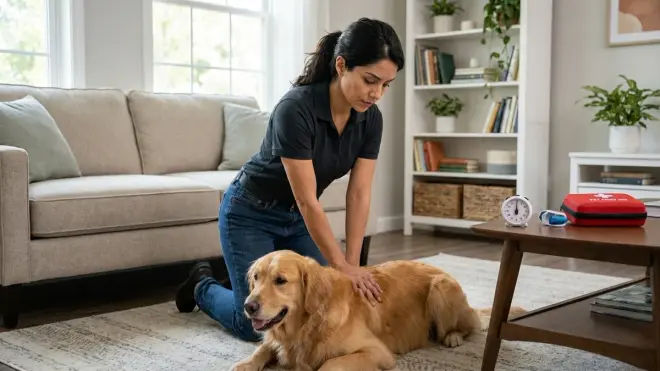
Alternate between checking the mouth, back blows, and (if appropriate for your pet's species) abdominal thrusts every 20-30 seconds. Work quickly but methodically—frantic rushing causes mistakes.
If the object is partially dislodged but not fully expelled, you might see it shift position or your pet might manage a weak cough. Keep going. Partial progress means your technique is working.
If your pet loses consciousness, lay them on their side immediately. Open the mouth—sometimes the jaw muscles relax when unconscious, making the obstruction easier to see and remove. If you can see and safely grasp the object, remove it now. If not, begin rescue breathing (one breath every five seconds for cats and small dogs, one breath every three seconds for large dogs) and prepare for CPR if no heartbeat is detected. This is beyond the scope of this guide, but basic pet CPR training is something every owner should consider.
For small animals that lose consciousness, the prognosis is unfortunately poor. Their rapid metabolism and small lung capacity mean they have very little reserve. Continue gentle back blows, check the mouth one more time, and rush to the nearest veterinarian who handles exotics—not all vets are equipped to treat guinea pigs or rabbits, so know your local specialists before an emergency happens.
The physical exertion of performing these interventions is real. Your arms will get tired. You might feel like you're not doing it right because nothing's happening. Keep going. Don't give up during the critical first three to four minutes.
Step 7: Know When the Obstruction Is Cleared
You'll know you've succeeded when your pet takes a deep, full breath—often followed by coughing, sputtering, or even vomiting. Their gums should start returning to a normal pink color within 30-60 seconds, though they'll remain pale or blue if they're in shock from the experience.
Dogs typically shake themselves off, look confused, and either act clingy or retreat to hide. Some start panting heavily or drinking water compulsively. Let them calm down, but don't offer food for at least 30 minutes.
Cats usually bolt and hide immediately. This is normal—they need to decompress from the trauma. Check on them every 10-15 minutes but don't force interaction. Monitor their breathing from a distance.
Small animals often remain very still for several minutes. Peaches sat in my lap absolutely motionless for almost ten minutes after I dislodged the carrot piece, just breathing slowly while I held her. This is a stress response. Keep them warm (wrap in a fleece or place a heating pad set to low near—not under—them) and speak softly. Offer their favorite treat after 20-30 minutes to gauge if they're recovering.
Even if your pet seems completely fine, call your veterinarian. Describe what happened, what you did, and ask whether they need to be seen. Throat trauma, aspiration of stomach contents during the incident, or internal injuries from abdominal thrusts might not show immediate symptoms. Better to be overly cautious than to miss delayed complications.
Step 8: Prevent Future Choking Incidents

After you've caught your breath (and maybe had a good cry because holy hell that was terrifying), it's time to audit your pet's environment and habits.
Food-related prevention:
- Cut food into appropriately sized pieces for your pet's mouth and chewing ability. For guinea pigs and rabbits, nothing larger than their head in diameter. For dogs, avoid chunks larger than their throat opening—this varies dramatically by breed.
- Slow down fast eaters with puzzle feeders or slow-feed bowls. Dogs who inhale their meals are choking risks waiting to happen. The transition from dry dog food vs wet dog food can also affect eating speed—wet food typically encourages slower consumption.
- Avoid high-risk treats: rawhide, bones that can splinter, whole carrots or apples for small animals, dental chews that break into sharp chunks, ice cubes (yes, really), and toys with pieces that can be chewed off.
Toy-related prevention:
- Size toys appropriately—they should be too large to fit entirely in the mouth. For dogs, use the toilet paper roll test: if a toy fits through a toilet paper tube, it's too small for that dog.
- Inspect toys weekly for damage. Throw away anything with loose pieces, torn sections, or weak points.
- Remove toys during unsupervised time, especially for puppies, kittens, and small animals.
Environmental factors:
- Keep small objects (hair ties, rubber bands, bottle caps, children's toys, coins, batteries) completely inaccessible.
- Supervise interactions with new foods or treats until you know your pet handles them safely.
- Don't let pets play with string, yarn, dental floss, ribbon, or tinsel (cats especially are attracted to these and they cause deadly intestinal blockages if swallowed).
Pro Tips & Common Mistakes
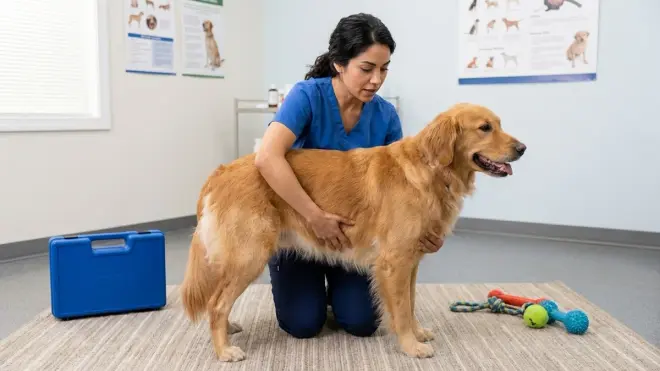
Pro tip: Practice the physical motions of back blows and abdominal thrusts on a stuffed animal that approximates your pet's size. Muscle memory matters when you're flooded with adrenaline. I keep a plush pig toy near my guinea pig's enclosure as a reminder of where my hands should go and how much pressure to use. It sounds silly, but that practice literally saved Peaches.
Pro tip: Small animals hide illness and distress as a survival instinct. If you think your guinea pig or rabbit might be choking but aren't sure, treat it as definite choking. Better to intervene unnecessarily than to watch and wait while an obstruction worsens.
Common mistake: Sticking fingers blindly down the throat. You can't see what you're doing, you risk pushing the object deeper, and you might trigger a bite reflex in a panicking pet. Always look first with adequate light.
Common mistake: Using abdominal thrusts on species that can't tolerate them. Small mammals have different internal organ placement and fragile skeletons. The same technique that saves a dog will kill a rabbit.
Common mistake: Assuming a pet who's "breathing funny" is just excited or hot. Unusual respiratory patterns demand immediate investigation, especially in species that should never mouth-breathe. This is part of how to recognize emergency symptoms in dogs and cats, though the principle applies to all companion animals.
Common mistake: Giving up too soon. Thirty seconds feels like an eternity when you're terrified. Keep trying for at least three to four minutes unless your pet becomes completely unresponsive, at which point you're en route to emergency care anyway.
If you've had to intervene for choking, you've just experienced one of the most stressful events of pet ownership. Give yourself credit for acting instead of freezing. Then use that experience to advocate for other pet parents—share what you learned, normalize having a plan, and remind people that knowing what to do when your pet is choking isn't paranoid, it's responsible.
Frequently Asked Questions
Can my pet choke on their own vomit?
Yes, particularly if they're lying on their back or unconscious. If your pet is vomiting and seems disoriented, lethargic, or has been exposed to toxins, position them on their side with their head slightly lower than their body so vomit can drain from the mouth. Never leave a vomiting pet unattended, especially if they've potentially ingested something from a pet poison control: common household toxins and treatment steps situation. Aspiration pneumonia from inhaling vomit is life-threatening and requires immediate veterinary care.
How do I know if my pet needs emergency care after choking, even if they seem fine?
Watch for continued coughing or gagging, reluctance to eat or drink, drooling, lethargy, rapid or shallow breathing, and any personality changes like unusual hiding or aggression. If you performed abdominal thrusts, veterinary examination is mandatory within 24 hours due to internal injury risk. For small animals, any choking incident warrants a vet visit because they can deteriorate rapidly from stress alone—exotic pet specialists can assess for aspiration, throat trauma, or shock that you might not recognize until it's too late.
Are certain breeds more prone to choking than others?
Yes. Brachycephalic (flat-faced) breeds like English Bulldogs, French Bulldogs, Pugs, Persian cats, and Exotic Shorthairs have anatomical abnormalities including narrowed airways, elongated soft palates, and smaller tracheas that increase choking risk. They also struggle to clear obstructions due to compromised breathing mechanics. Small breed dogs like Chihuahuas and Yorkshire Terriers have tiny throats that obstruct easily. For guinea pigs, American and Teddy breeds with shorter faces occasionally have more difficulty managing large food pieces than Abyssinians or Peruvians with longer facial structure, though any guinea pig can choke if given inappropriately sized food.
What's the difference between choking and reverse sneezing in dogs?
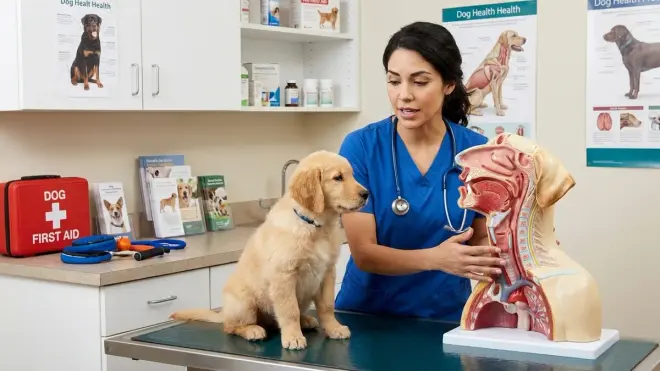
Reverse sneezing sounds alarming—dogs make rapid, loud snorting sounds while standing still with their neck extended—but it's not a breathing emergency. Air is still moving (unlike true choking), the episode typically lasts less than 60 seconds, and the dog returns to normal immediately afterward. Gently massaging the throat or covering the nostrils briefly to encourage swallowing through the mouth can help end the episode. If you're unsure whether what you're witnessing is reverse sneezing or actual respiratory distress, default to treating it as potential choking—better safe than sorry.
Summary
Knowing what to do when your pet is choking transforms a potentially fatal emergency into something you can handle with confidence. The key steps—confirm complete obstruction, restrain safely, check for visible objects, perform species-appropriate back blows, use abdominal thrusts only for dogs and cats, and reassess every 30 seconds—work across species with appropriate modifications for size and anatomy. Prevention through properly sized food and toys matters just as much as emergency response. After Peaches' scare, I overhauled everything about how I feed my guinea pigs, and I've never had another incident. Keep your emergency vet contact information accessible, practice the physical interventions before you need them, and remember that acting imperfectly is infinitely better than freezing. Your pet depends on you to be their advocate and their emergency responder—and now you're prepared for both roles.