
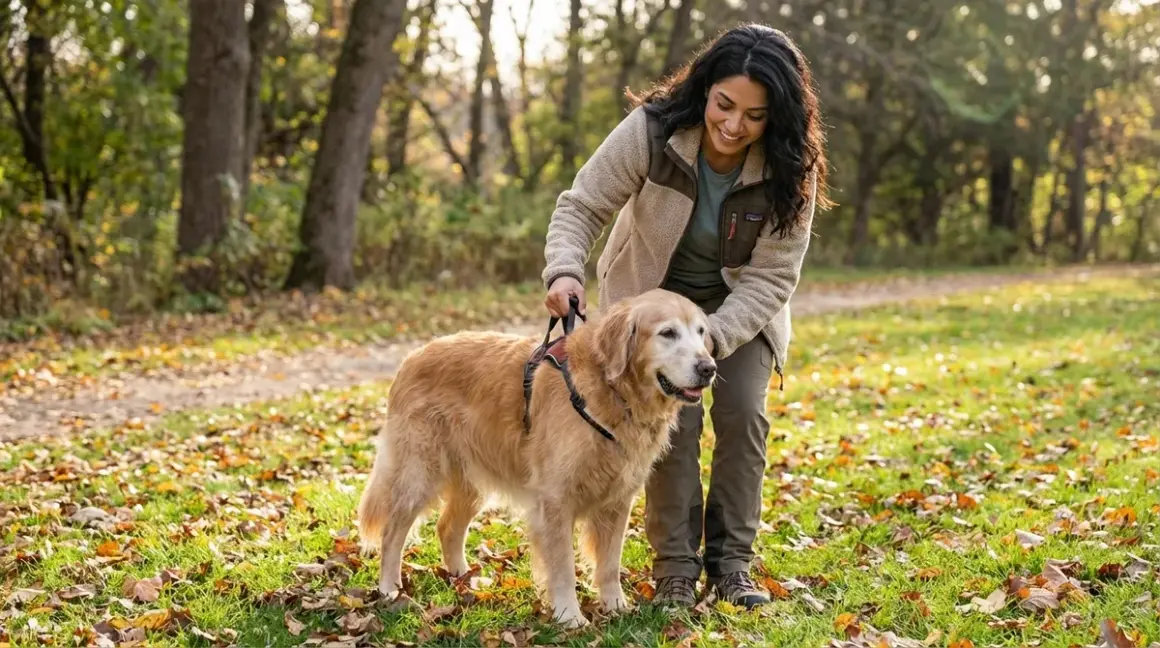

I'll be honest with you—I've spent most of my pet parenting journey learning the intricate needs of guinea pigs in small spaces, not exactly running laps with dogs. But when my neighbor asked me to help care for her 12-year-old Labrador while she recovered from surgery, I dove into researching exercise for elderly dogs with the same intensity I'd brought to understanding cavy nutrition years ago. What I discovered surprised me: adjusting physical activity for senior dogs isn't about doing less—it's about doing differently. This guide will walk you through recognizing when your dog needs routine changes, creating age-appropriate activities, and keeping your senior companion both safe and engaged. You'll need about 2-3 weeks to properly transition routines, and no previous experience with geriatric dog care is required—just patience and observation skills.
What You'll Need
- Current veterinary health assessment (within the last 6 months, including orthopedic and cardiac evaluation)
- Non-slip footwear for your dog (booties or paw wax for traction on slippery surfaces)
- Supportive harness (front-clip or vest-style that doesn't strain neck or joints)
- Short leash (4-6 feet for better control and stability support)
- Timer or smartphone (to track duration and prevent overexertion)
- Water bottle and collapsible bowl (hydration is critical for senior dogs)
- Joint supplements (glucosamine, chondroitin, or omega-3s as recommended by your vet—see Senior Dog Supplement Checklist: Vitamins, Joint Support and Cognitive Health)
- Orthopedic bed or mat (for post-exercise rest periods)
- Activity journal (notebook or app to track energy levels and any discomfort)
Step 1: Get a Complete Veterinary Assessment Before Making Changes
Before you adjust a single thing about exercise for elderly dogs, you absolutely need current medical information. I learned this the hard way when I assumed my neighbor's Lab just needed "gentle walks"—turns out she had early-stage arthritis in her hips that required specific movement modifications.
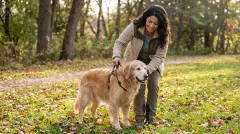
Schedule a comprehensive senior wellness exam if your dog hasn't had one in the past six months. This should include orthopedic palpation (checking joints for pain, swelling, or reduced range of motion), cardiac auscultation (listening for heart murmurs or arrhythmias common in older dogs), and bloodwork to assess organ function. Dogs are considered senior at different ages depending on size: giant breeds like Great Danes at 5-6 years, large breeds like Golden Retrievers at 7-8 years, medium breeds around 9-10 years, and small breeds at 10-11 years.
Ask your veterinarian specifically about exercise limitations. Does your dog have osteoarthritis that makes certain movements painful? Heart conditions that require monitoring exertion levels? Cognitive decline that affects their spatial awareness? Vision or hearing loss that makes outdoor navigation riskier? Each of these conditions—and many dogs have multiple—affects what types of exercise remain safe and beneficial.
Get specific numbers when possible. What's the recommended maximum heart rate during exercise? How many minutes of continuous activity are safe before requiring rest? Are there specific movements to avoid (like jumping, sudden direction changes, or stairs)? Having these concrete parameters removes guesswork from your adjustments.
Step 2: Establish Your Dog's Current Baseline Activity Level
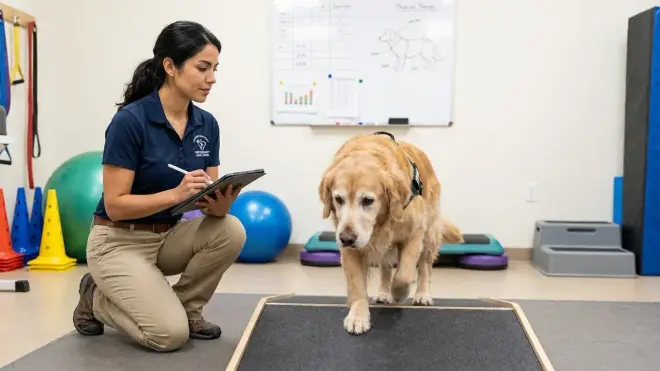
You can't adjust what you haven't measured. Spend one full week observing and documenting your dog's existing routine without making any changes yet—I know, the waiting is hard when you're eager to help, but this baseline data is genuinely essential.
Track every physical activity throughout each day: morning walk duration and distance, playtime minutes, time spent moving around the house versus resting, stair climbing frequency, and how they move after waking from naps. Note the specific times these activities occur, because senior dogs often have better mobility at certain times of day (many are stiffer in the morning, loosening up by afternoon).
Pay close attention to subtle signs of discomfort or fatigue. Does your dog lag behind on the second half of walks? Limp slightly after exercise? Seem reluctant to jump into the car when they used to hop right in? Take longer to lie down or stand up? These behaviors tell you where current activity levels exceed their comfort threshold. The wheek-wheek of my guinea pigs demanding breakfast is obvious communication—dogs are often quieter about their pain, expressing it through behavior changes instead.
Document their enthusiasm levels too. Does your dog still get excited about walks, or do they seem hesitant when you grab the leash? Do they engage in play, or just go through the motions to please you? Senior dogs often continue activities out of loyalty or routine even when those activities have become uncomfortable. Your job is noticing the difference between genuine enjoyment and dutiful compliance.
Create a simple chart with columns for activity type, duration, time of day, and a 1-5 energy/comfort rating. This week of data becomes your reference point for measuring whether your adjustments are working.
Step 3: Reduce Duration While Increasing Frequency
Here's the counterintuitive part that initially confused me: exercise for elderly dogs often means more sessions, not fewer—just shorter ones. Think of it like my approach to guinea pig floor time in my tiny apartment: frequent, manageable periods beat one long, exhausting session.
If your dog currently takes one 45-minute walk daily, split that into three 15-minute sessions spread throughout the day. This prevents the joint stiffness and muscle fatigue that accumulates during longer continuous activity. Senior dogs need movement to maintain mobility—the "use it or lose it" principle absolutely applies to aging joints and muscles—but they also need frequent recovery periods.
The magic happens in those rest intervals between exercise. When dogs move, synovial fluid lubricates their joints, reducing friction and discomfort. But prolonged activity depletes this lubrication faster than their aging bodies can replenish it. Short sessions with 3-4 hour breaks between them allow joints to recover while preventing the complete stiffness that comes from being sedentary all day.
Start with reducing duration by 25-30% from their baseline, then dividing that into multiple sessions. So if your Lab walked 40 minutes daily, aim for 28-30 minutes total, split into three 10-minute walks. Monitor their response for 4-5 days before making further adjustments. Some dogs tolerate this change immediately; others need a gentler transition with only 15-20% reduction initially.
Watch the post-exercise recovery period as your key indicator. If your dog recovers their normal energy level within 30 minutes of finishing a walk, the duration is appropriate. If they're still resting heavily or moving stiffly two hours later, you've exceeded their current capacity and need shorter sessions.
Step 4: Modify Intensity and Terrain Selection
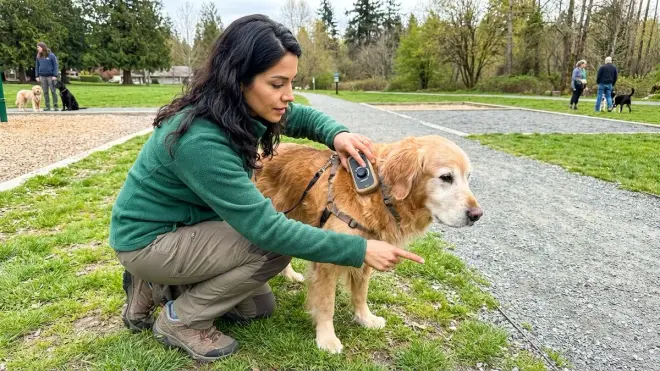
Walking distance matters less than how challenging that distance feels to your dog's aging body. A 10-minute walk on flat, even pavement creates entirely different physical demands than 10 minutes on uneven trails with inclines—both for the joints and the cardiovascular system.
Switch to level, predictable surfaces for the bulk of your dog's exercise. Smooth sidewalks, paved park paths, or even indoor hallways provide stable footing that reduces the constant micro-adjustments aging joints must make on uneven ground. Those tiny balance corrections compound into significant strain over a 15-minute walk. I think about how carefully I navigate my guinea pigs across different floor textures—slippery tile versus carpet requires completely different body mechanics, and the same principle applies to dogs with reduced joint stability.
Eliminate or drastically reduce hills and stairs from regular exercise routes. Inclines place 3-4 times more stress on hip and stifle (knee) joints than level walking does. If your previous route included hills, find a flat alternative even if it means driving to a different neighborhood. For dogs who live in multi-story homes, consider carrying them or installing a ramp with non-slip surface for necessary elevation changes.
Slow the pace deliberately. Your senior dog shouldn't be power-walking—aim for a leisurely stroll that allows them to sniff, pause, and move at whatever speed feels comfortable. A good target is about half the pace you'd maintain on a personal fitness walk. This reduced intensity keeps their heart rate in a safer zone while still providing cardiovascular benefit and mental stimulation from environmental exploration.
Grass is your friend whenever possible. The slight cushioning reduces impact on joints compared to concrete or asphalt. During hot months, grass also prevents paw pad burns that senior dogs may not react to quickly due to reduced sensitivity. Just avoid tall grass or overgrown areas where uneven ground might hide beneath the vegetation.
Step 5: Incorporate Low-Impact Alternative Activities
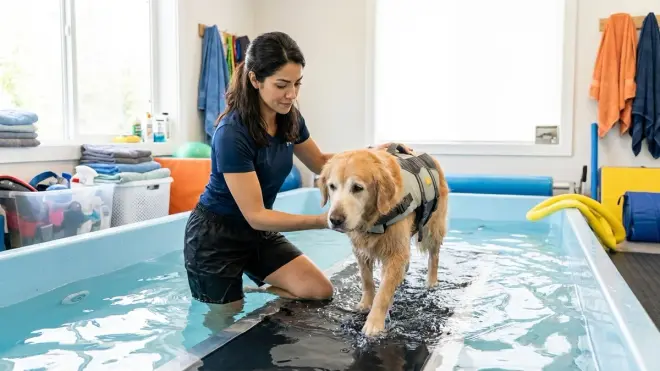
Traditional walking shouldn't be the only exercise for elderly dogs. Several alternative activities provide excellent physical and mental benefits with less joint stress—and honestly, this is where the adjustment process gets creative rather than just restrictive.
Swimming or hydrotherapy tops the list for senior dogs with mobility issues. Water buoyancy eliminates 60-70% of the body weight stress on joints while still requiring full range of motion and cardiovascular effort. Many veterinary rehabilitation facilities offer heated pool sessions, which provide the additional benefit of warm water increasing blood flow to stiff muscles and joints. Even dogs who've never swum before can often learn in their senior years with proper introduction and flotation support. If professional hydrotherapy isn't accessible, a shallow kiddie pool in your yard works for small to medium dogs—let them walk through the water rather than actually swimming.
Gentle play sessions that emphasize mental engagement over physical intensity work beautifully. Hide treats around your house for a low-speed scavenger hunt. Practice basic obedience commands for short periods (sit, down, stay) with treat rewards—the mental focus provides enrichment while the movements maintain body awareness. Roll a ball slowly for them to walk after rather than chase. The key is eliminating the frantic energy of traditional fetch while maintaining the engagement.
Passive range of motion exercises help maintain joint flexibility. With your dog lying on their side (post-walk when they're relaxed), gently move each leg through its normal range of motion 5-10 times: extend the leg forward, draw it back, rotate the paw in small circles. Think of it like stretching, but you're doing the work while they relax. This technique is commonly used in canine physical therapy and helps prevent the joint capsule tightening that accelerates arthritis progression.
Sniff walks might sound silly, but they're legitimate exercise. Let your dog control the pace entirely, stopping to investigate every smell for as long as they want. The mental processing of scent information genuinely tires dogs—sometimes more than physical exertion does. These walks might only cover a quarter-mile in 20 minutes, but they're packed with cognitive enrichment that senior dogs need just as much as movement.
Step 6: Add Pre- and Post-Exercise Warm-Up and Cool-Down Periods
I never thought about warming up my neighbor's Lab before walks—seemed unnecessary for a simple stroll—until a veterinary rehab specialist explained that cold muscles and joints are injury-prone muscles and joints, especially in senior dogs. This small addition made a visible difference in how smoothly she moved.
Before exercise, spend 3-5 minutes doing gentle preparation. Let your dog walk slowly around the yard or house for a couple minutes, allowing muscles to engage gradually. Do 2-3 repetitions of basic commands that involve movement (sit to stand, down to stand) to activate core and leg muscles. If your dog tolerates handling, perform gentle massage on their major muscle groups—shoulders, hips, thighs—using slow, firm pressure. This increases blood flow to tissues that are about to work.
Some dogs benefit from topical heat therapy before activity. Warm (not hot) compresses applied to arthritic joints for 10 minutes before walks can significantly reduce stiffness. Special heating pads designed for pets maintain safe temperatures, or you can use a damp towel warmed in the dryer. Never use human heating pads, which can burn a dog's skin more easily than ours.
After exercise, resist the urge to let your dog immediately flop down. Another 3-5 minutes of gradual cool-down prevents the abrupt stiffness that happens when worked muscles suddenly become sedentary. Walk slowly around your house or yard, allowing heart rate and respiration to return to baseline gradually. Offer fresh water in small amounts—senior dogs may gulp too much at once and vomit if they're overheated or excited.
This is also the ideal time for post-exercise range of motion work. Their muscles are warm and flexible, making gentle stretching most effective. If your dog is comfortable with it, encourage a gentle play bow stretch (front legs extended, rear end up) by holding a treat at ground level in front of them. For dogs with hip arthritis, having them stand with rear legs positioned wider than normal (think sumo stance) for 10-15 seconds helps maintain hip flexibility.
Step 7: Monitor Response and Make Data-Driven Adjustments
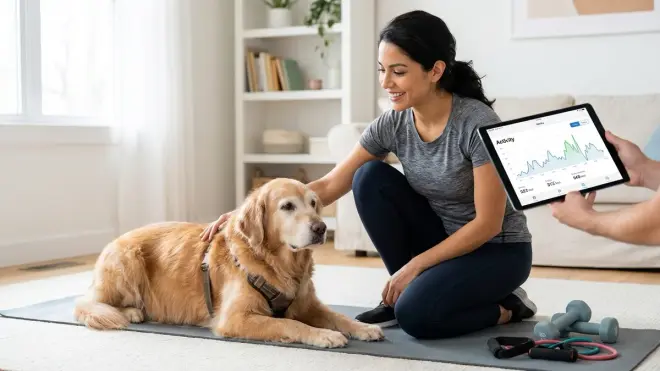
You can't just implement changes and hope they're working—you need to actively track your dog's response with the same detail you used during the baseline week. This is where that activity journal earns its keep.
After each exercise session, rate your dog's immediate recovery on a simple scale. Within 10 minutes of finishing, are they breathing normally? Moving freely? Eager for water but not desperately panting? These positive signs indicate appropriate intensity. Warning signs include continued heavy panting beyond 10 minutes, reluctance to move, limping, or immediately seeking rest rather than showing post-walk alertness.
Document next-day mobility. How does your dog move the morning after exercise? Increased stiffness, reluctance to rise from bed, or hesitation before activities they normally enjoy (like jumping on the couch or greeting you at the door) all suggest you exceeded their capacity the previous day. Senior dogs often don't show exercise-related pain until 12-24 hours later, so you're watching for delayed indicators.
Track appetite and sleep patterns too—these often shift with improper exercise levels. A dog who's overexerted may sleep excessively (more than 16-18 hours in 24 hours) or show reduced appetite. One who's under-exercised might demonstrate cognitive symptoms like increased nighttime restlessness, pacing, or anxiety behaviors.
Adjust based on patterns, not single instances. One rough day doesn't necessarily mean your routine is wrong—dogs have off days like we do. But if you see the same concerning signs 3-4 times within a week, reduce duration or intensity by 10-15% and monitor for another week. This iterative approach prevents the frustration of making dramatic changes that swing too far in either direction.
Every 4-6 weeks, reassess the entire routine. Senior dogs continue aging, and what worked in January may need modification by March. Their capabilities will gradually decline—that's the reality of geriatric dog care—and your routine needs to decline with them, always matching their current capacity rather than clinging to what used to work.
Step 8: Adapt for Seasonal and Environmental Changes
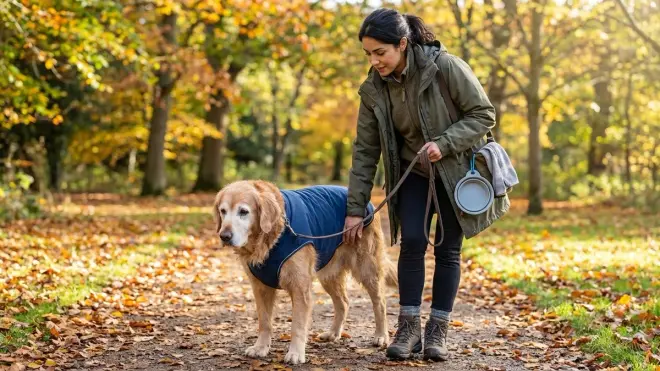
Just when you've perfected a routine, the seasons change and throw everything off. I learned with guinea pigs that environmental temperature dramatically affects their behavior and needs—same goes for exercise for elderly dogs, who struggle with temperature regulation more than younger dogs do.
Hot weather requires significant modifications. Senior dogs are at much higher risk for heatstroke because their cooling mechanisms (panting, circulatory response) function less efficiently with age. During summer months (typically June through September in most of the U.S.), shift walks to early morning (before 8 AM) or late evening (after 8 PM) when pavement has cooled. Test asphalt temperature with your palm—if you can't comfortably hold it there for 5 seconds, it's too hot for paw pads. Reduce walk duration by 30-40% in temperatures above 80°F, and carry water for both drinking and emergency cooling if your dog shows heat stress signs (excessive panting, drooling, stumbling).
Cold and winter weather present different challenges, particularly for dogs with arthritis (which includes most senior dogs). Cold temperatures cause joint fluid to thicken, making movement stiffer and more painful. Consider dog sweaters or coats—yes, really—for temperatures below 45°F, especially for short-haired breeds. The Hurtta Extreme Warmer style provides core warmth without restricting leg movement. Shorten walks when temperatures drop below freezing, and completely avoid icy conditions where slipping could cause joint injury. Salt and chemical ice melts irritate paw pads; use protective booties or apply paw wax before walks, and rinse paws with warm water immediately after.
Wet conditions make surfaces slippery, increasing fall risk for dogs with compromised balance or reduced strength. Skip walks during heavy rain, or move them entirely indoors—seriously, hallway walking and stair-substitute exercises work fine as temporary alternatives. I keep my guinea pigs' environment obsessively controlled because environmental stressors compound into health problems—being protective of your senior dog's conditions isn't being overprotective, it's being responsible.
Adjust for daylight hours too. If your dog has vision loss (common in elderly dogs), walking in low-light conditions increases their anxiety and stumbling risk. Shift schedules to maximize daylight exposure, or use lighted collars and well-lit routes for necessary twilight walks.
Pro Tips & Common Mistakes
The biggest mistake I see people make—and made myself initially—is maintaining exercise routines unchanged until the dog shows obvious pain or refusal. By that point, you've probably been pushing through their discomfort for weeks or months. Dogs are remarkably stoic about hiding pain, especially when they want to please you or maintain routine. Be proactive, not reactive. If your dog is 7+ years old (for large breeds) or 9+ (for small breeds), start gentle modifications even if they seem fine. Prevention is infinitely easier than reversing decline.
Don't mistake slower pace for less benefit. Many pet parents worry that their heavily reduced routine isn't "enough" exercise. Remember: the goal isn't fitness—it's maintaining quality of life and functional mobility for daily activities. A 12-year-old Labrador doesn't need to maintain the endurance of their 3-year-old self. They need enough movement to get up, walk to their water bowl, navigate to the bathroom spot, and interact with family comfortably. That's the bar.
Supplement strategically to support your modified routine. Joint supplements containing glucosamine (typically 500-1000mg per 25 pounds of body weight), chondroitin, and omega-3 fatty acids can measurably improve mobility when given consistently for 4-6 weeks. Check senior dog supplements for dosing specifics. Pain management might require prescription NSAIDs like carprofen or grapiprant—discuss options with your vet rather than assuming visible pain is just "part of aging."
Watch for weight gain carefully. Reduced exercise naturally decreases caloric needs, but many owners continue feeding the same amount. Senior dogs gain weight easily, and every extra pound adds 4 pounds of pressure to already compromised joints. Adjust food portions downward by 10-15% when you reduce exercise, and monitor body condition weekly. You should easily feel ribs with light pressure but not see them prominently. Consider switching to food specifically formulated for senior dogs, which typically contains fewer calories with maintained protein levels.
Temperature is a bigger deal than you think. I keep my apartment at specific temperatures for my guinea pigs' comfort—senior dogs similarly need environmental consideration. Dogs with arthritis genuinely hurt more in cold, damp weather. Providing comfortable, warm resting areas between activities, using orthopedic heated beds (the [K&H Pet Products Ortho Bolster Sleeper] maintains safe, consistent warmth), makes a measurable difference in their mobility before and after exercise.
Frequently Asked Questions
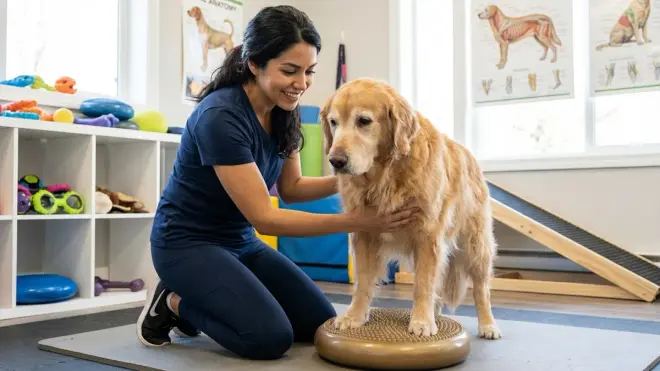
How much exercise does a senior dog need daily?
Most senior dogs need 30-60 minutes of total exercise daily, split into 2-4 shorter sessions rather than one continuous period. The exact duration depends on your dog's size, breed, health conditions, and individual fitness level—a healthy 8-year-old Border Collie requires significantly more activity than a 12-year-old Bulldog with arthritis. Start with three 10-minute gentle walks and adjust based on your dog's response, watching for signs of fatigue, discomfort, or reduced mobility in the hours following exercise. Consult your veterinarian for personalized recommendations based on your dog's specific health conditions and limitations.
What are signs my elderly dog is getting too much exercise?
Signs of excessive exercise in elderly dogs include heavy panting that continues more than 10 minutes after activity stops, limping or stiffness that appears during or after walks, reluctance to rise from resting positions the day after exercise, decreased appetite, excessive sleeping (more than 18 hours in 24 hours), reluctance to go on walks they previously enjoyed, and behavioral changes like increased irritability or withdrawal. Senior dogs often won't stop during activity even when uncomfortable, so you must watch for these delayed indicators and proactively reduce duration or intensity before your dog refuses to exercise entirely.
Can I still play fetch with my senior dog?
Traditional high-speed fetch with running, jumping, and sudden direction changes is too intense for most senior dogs and risks joint injury, but you can modify fetch into an appropriate activity by rolling a ball slowly for them to walk after rather than throwing it, using shorter distances (10-15 feet maximum), eliminating any jumping to catch, and limiting sessions to 5-10 minutes with frequent rest breaks. Consider replacing fetch with gentler alternatives like scent-based games, slow-paced hide-and-seek with treats, or simple obedience practice with rewards—activities that provide mental engagement without the physical intensity that stresses aging joints.
Should I use a harness or collar for walking my elderly dog?
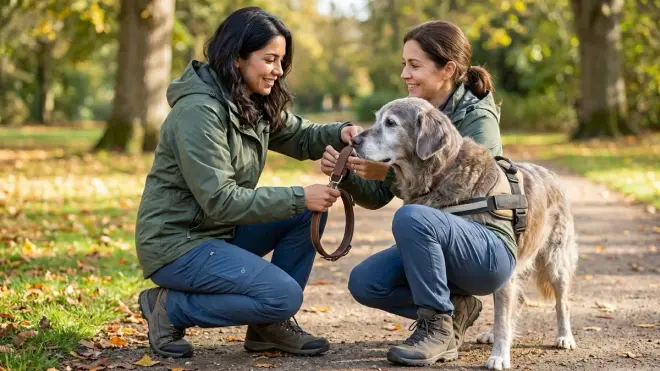
A properly fitted harness is superior to a collar for walking elderly dogs because it distributes pressure across the chest and shoulders rather than concentrating force on the neck and trachea, which is especially important for dogs with arthritis in the cervical spine, collapsing trachea (common in senior small breeds), or balance issues that might cause sudden pulling. Choose a front-clip or vest-style harness that doesn't restrict shoulder movement or chafe behind the front legs, and ensure it fits snugly enough that your dog can't back out of it but doesn't compress their ribcage—you should fit two fingers between the harness and your dog's body comfortably.
Summary
Adjusting exercise for elderly dogs isn't about restriction—it's about thoughtful adaptation that honors your dog's changing needs while maintaining their quality of life. The process requires baseline assessment, veterinary guidance, strategic modifications to duration and intensity, incorporation of alternative low-impact activities, and continuous monitoring with data-driven adjustments. You're looking for that sweet spot where your dog maintains functional mobility and mental engagement without pain or exhaustion. It takes more planning than simply clipping on a leash and walking the old route, but watching your senior dog move comfortably and enthusiastically—maybe not as far or as fast, but happily—makes every adjustment worthwhile. Your dog gave you their best years; these modifications ensure their remaining years are genuinely good ones.