
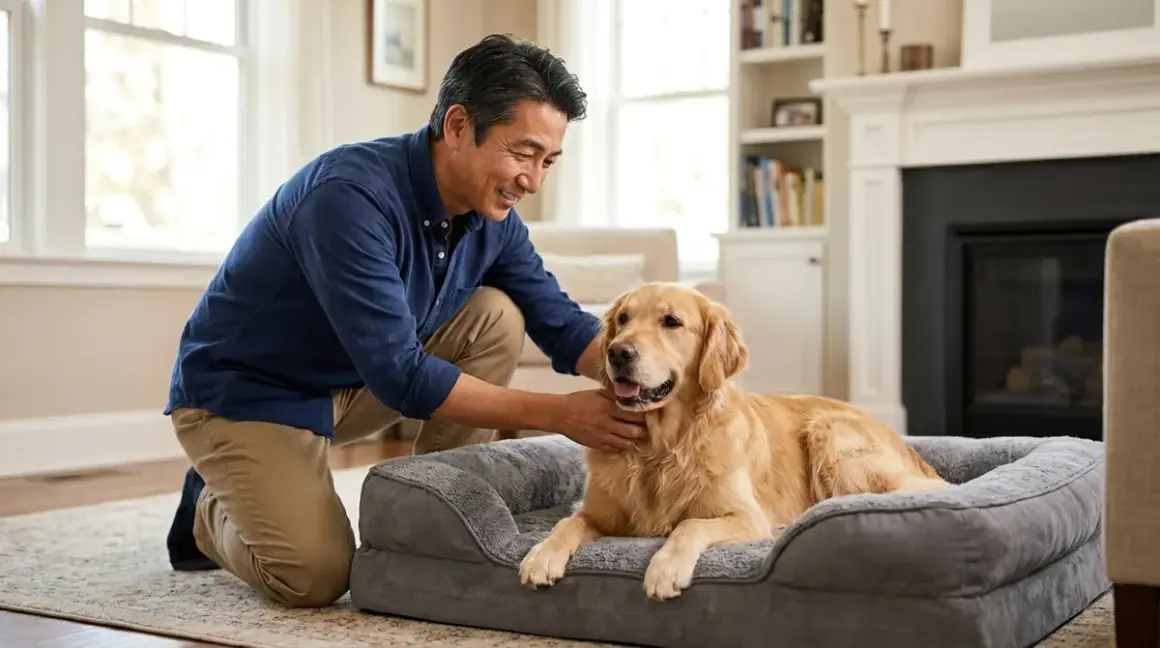

I'll be honest—when I first started looking into orthopedic dog beds for my friend's aging Labrador a few years back, I felt completely out of my depth. I'm a fish guy, right? I know water chemistry and filtration, not memory foam density and joint support. But watching that sweet old dog struggle to get up from his flat, worn-out bed hit me harder than I expected, and I threw myself into the research the same way I tackle any new challenge: methodically, obsessively, and with way too many browser tabs open. What I found is that not all orthopedic dog beds are created equal, and the difference between a marketing gimmick and genuine pain relief comes down to a handful of specific, measurable features. After helping several dog-owning friends work through this decision—and seeing the real-world results—I can tell you that the best orthopedic dog bed combines high-density memory foam (at least 4 inches thick for large breeds), a waterproof liner, and a washable cover that won't shrink or pill after a dozen laundry cycles.
Before you start shopping, though, you should understand the broader context of dog beds: complete guide to choosing the perfect sleeping solution for your pet, which covers everything from crate pads to elevated cots. But if your dog is showing signs of joint pain, hip dysplasia, arthritis, or general stiffness—especially in senior dogs or large breeds prone to these issues—an orthopedic bed isn't a luxury. It's a quality-of-life upgrade that can genuinely reduce discomfort and improve mobility.

What to Look For in an Orthopedic Dog Bed
The term "orthopedic" gets slapped on a lot of products that don't deserve it, so let me walk you through what actually matters based on what I've learned from veterinary orthopedic specialists and the experiences of friends whose dogs have benefited from these beds.
Foam density and composition are where most cheap beds fail. In my experience digging through specifications—yes, I approached this like researching filtration media for a reef tank—you want memory foam with a density of at least 5 pounds per cubic foot. Anything less than that compresses too quickly under a dog's weight, which defeats the entire purpose. The best beds use either solid memory foam slabs or a combination of memory foam over high-density support foam, creating a two-layer system that contours to the dog's body while preventing them from bottoming out. What I've found works especially well for dogs over 50 pounds is a three-inch memory foam layer on top of at least two inches of orthopedic base foam. Some manufacturers use egg-crate foam, which does help with air circulation and pressure distribution, but the foam quality matters more than the pattern—a high-density flat slab beats a low-density egg crate every time.
Size and thickness considerations get overlooked more often than they should. Your dog should be able to stretch out completely without any body part hanging off the edge, which means measuring your dog from nose to tail base and adding at least six inches. For the large dog bed size guide, breed-specific considerations become particularly relevant—a Great Dane needs different support than a Labrador, even if they weigh the same. Thickness matters because thinner beds (under three inches total) don't provide enough cushioning for the floors most of us have, whether that's hardwood, tile, or thin carpet. I've seen too many friends buy a two-inch bed thinking it would work, only to realize their dog's hip is still essentially resting on the floor with minimal support. For senior dogs or those with advanced arthritis, four to six inches of total foam thickness makes a measurable difference in comfort.
The cover needs to be truly washable—and by that I mean it should survive hot water, detergent, and a dryer cycle without shrinking three sizes or turning into a wrinkled mess.
Cover quality and maintenance is where I see people get frustrated after a few months. Look for covers made from microfiber, canvas, or heavy-duty polyester blends with reinforced zippers that won't break after a dozen washes. A waterproof inner liner is non-negotiable if your dog has any incontinence issues (common in senior dogs) or if you live somewhere humid where moisture can seep into foam and create a mold problem. What I've found through friends' trial and error is that covers with L-shaped zippers on two sides are far easier to wrestle back onto the foam than covers with a single short zipper—seems obvious once you know, but nobody mentions it in product descriptions.
Safety certifications and material standards matter more for dog beds than most people realize. Foam used in furniture and bedding can contain flame retardants, formaldehyde, and other chemicals that off-gas volatile organic compounds (VOCs). Look for beds certified by CertiPUR-US, which means the foam has been tested for harmful chemicals and meets specific standards for emissions and content. This isn't just about your dog's respiratory health—it's about the air quality in your home, too. Some higher-end beds also use organic cotton covers or materials certified by OEKO-TEX, which tests for hundreds of potentially harmful substances. While these certifications add to the cost, they're worth considering if your dog has allergies or respiratory sensitivities.
Design features for specific needs can make a huge difference depending on your dog's particular issues. Bolstered edges provide head and neck support for dogs who like to curl up or rest their chin on something elevated, which can be particularly comforting for dogs with neck arthritis or those recovering from surgery. Non-slip bottoms prevent the bed from sliding across hardwood or tile floors—something I didn't think about until I watched a friend's dog lose confidence in his new bed because it kept shifting when he tried to lie down. For dogs who struggle with mobility, beds with lower profiles (four to six inches total) are easier to get on and off than thick pillow-top designs, though this needs to be balanced against the support requirements. Some beds designed for senior dogs include subtle ramp edges or are low enough that they don't require dog steps for bed access, which can be a relief if your home is already crowded with mobility aids.
Temperature regulation doesn't get enough attention in orthopedic bed discussions, but memory foam retains heat, which can be uncomfortable for dogs who already run warm or live in climates with hot summers. Some beds incorporate cooling gel layers, ventilated foam designs, or breathable cover materials that help with airflow. This becomes particularly relevant if you're also considering temperature management solutions like dog cooling mats vs cooling pads for warmer months—an orthopedic bed with decent heat dissipation can reduce the need for supplemental cooling products.
Our Top Picks
Big Barker 7" Orthopedic Dog Bed
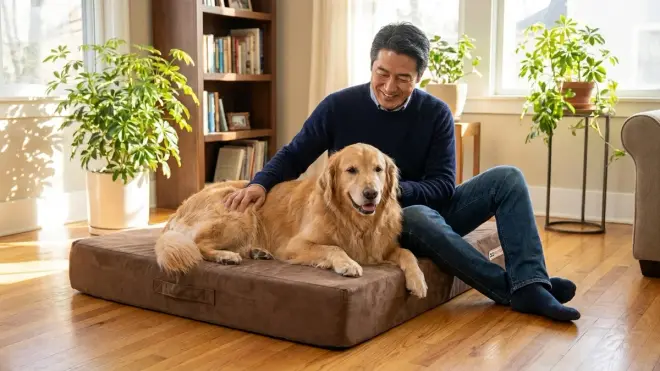
The Big Barker 7-Inch Pillow Top Orthopedic Dog Bed🛒 Amazon has become something of a gold standard in the large-breed community for good reason—it's one of the few beds that uses genuinely therapeutic-grade foam and backs it up with a 10-year warranty that they actually honor. The seven-inch foam system includes three distinct layers: a quilted microfiber pillow top, three inches of therapeutic foam that contours to joints, and four inches of support foam that prevents any bottoming out even for dogs over 100 pounds.
Pros:
- Exceptional foam quality with visible durability even after years of use—friends who bought this four years ago report zero sagging
- 10-year warranty that covers foam durability specifically, not just manufacturing defects like stitching
- Available in six sizes from small (32" x 20") up to giant (72" x 48") for extra-large breeds
- Removable, machine-washable cover made from microfiber that holds up well to repeated laundering
- Made in the USA with CertiPUR-US certified foam
Cons:
- Premium pricing puts it at the higher end of the market, typically around $200-$400 depending on size
- No bolstered sides which some dogs prefer for head support
- Heavy to move once unpacked—the giant size weighs over 35 pounds, making it difficult to relocate for cleaning
Friends Forever Orthopedic Dog Bed with Solid Memory Foam
The Friends Forever Orthopedic Dog Bed with Solid Memory Foam🛒 Amazon offers surprisingly good value in the mid-range category, using a full four-inch slab of memory foam rather than shredded fill or cheap egg-crate padding. What I've heard from multiple sources is that this bed holds up better than expected given the price point, typically lasting two to three years of daily use before showing any significant compression.
Pros:
- Solid memory foam construction rather than shredded or low-density alternatives
- Waterproof liner built in under the cover, protecting the foam from accidents
- Bolstered three-sided design provides head and neck support while leaving one side open for easy entry
- Non-slip bottom with textured material that actually grips hardwood and tile
- Wide size range from small to jumbo, with specific options for different body types
Cons:
- Cover fabric pills after multiple wash cycles according to long-term users, though it remains functional
- Zipper quality inconsistent—some users report smooth operation, others struggle with catches and snags
- Foam has a noticeable off-gassing smell for the first few days after unpacking, requiring ventilation
PetFusion Ultimate Dog Bed with Solid Memory Foam
The PetFusion Ultimate Dog Bed with Solid Memory Foam🛒 Amazon splits the difference between budget and premium options with a four-inch solid memory foam base and thoughtful design details that address common pain points. The bolster design uses the same quality foam throughout rather than stuffing the sides with cheaper fiberfill, which maintains support even when your dog leans against it or uses it as a headrest.
Pros:
- Consistent foam quality throughout bed and bolsters, not just the base
- Water-resistant cover (not fully waterproof but handles minor accidents well)
- Cover features YKK zippers which are far more durable than generic hardware
- Tear-resistant cover material holds up to digging and scratching better than microfiber alternatives
- Non-skid bottom with rubberized dots that grip without being difficult to reposition
Cons:
- Limited size options compared to other brands—only available in small, medium, large, and extra-large
- Higher sides may be difficult for dogs with severe mobility issues to step over
- Cover requires cold water wash and air dry which makes maintenance more time-consuming
Brindle Soft Shredded Memory Foam Dog Bed
The Brindle Soft Shredded Memory Foam Dog Bed with Removable Washable Cover🛒 Amazon takes a different approach with shredded memory foam fill that redistributes under the dog's weight, creating a nest-like effect that some dogs find more comfortable than firm support. This isn't my first choice for dogs needing maximum joint support, but I've seen it work well for medium-sized dogs with mild arthritis who prefer a softer sleeping surface.
Pros:
- Shredded foam allows customization—you can remove fill to adjust firmness or height
- Three-inch removable inner liner provides structure while maintaining softness
- Cover and liner both machine washable including the shredded foam itself if needed
- Budget-friendly pricing makes it accessible for multiple-dog households
- Gentle on joints for dogs who find solid memory foam too firm
Cons:
- Not suitable for heavy dogs—shredded fill compresses too much under 70+ pounds
- Requires regular fluffing to maintain even distribution of fill
- Foam can clump after washing unless thoroughly dried and redistributed
BarksBar Gray Orthopedic Dog Bed
The BarksBar Gray Orthopedic Dog Bed with Solid Orthopedic Foam🛒 Amazon combines a lower price point with decent foam quality, making it a solid entry-level option for dog owners on a budget or those who want to try an orthopedic bed without major investment. The four-inch foam base uses solid construction rather than shredded fill, and the bolstered edges use cotton padding that's not as supportive as memory foam but still provides the head-rest feel many dogs prefer.
Pros:
- Accessible pricing typically around $50-$80 depending on size
- Solid foam base provides better support than you'd expect at this price point
- Removable cover made from soft microsuede that dogs find comfortable
- Multiple color options including gray, brown, and beige
- Non-slip bottom prevents sliding on hard floors
Cons:
- Foam quality degrades after 12-18 months of daily use by large dogs
- Cover shows wear quickly—pilling and loose threads common after six months
- Bolsters flatten within a few months since they use fiberfill rather than foam
- No waterproof liner included, requiring purchase of separate mattress protector for dogs with incontinence
Best Pet Supplies Orthopedic Dog Bed with Memory Foam and Removable Cover
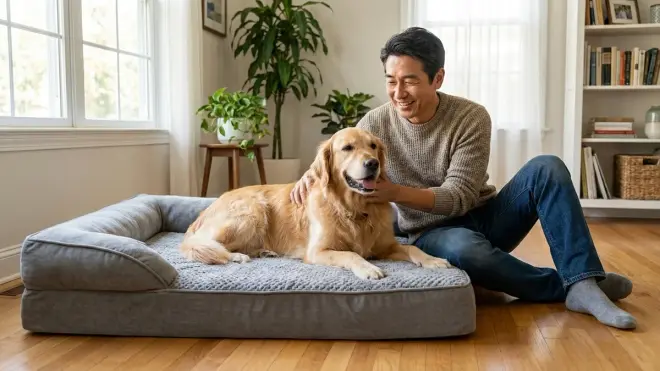
The Best Pet Supplies Orthopedic Dog Bed with Memory Foam and Removable Cover🛒 Amazon occupies an interesting middle ground with two inches of memory foam over two inches of support foam, creating a thinner profile that works well for smaller dogs or those who prefer lower beds but still need joint support. I've heard particularly good things about this bed for dogs transitioning from flat beds who aren't ready for thick pillow-top designs.
Pros:
- Four-inch total thickness is easier for senior dogs to get on and off compared to thicker beds
- Two-layer foam construction balances support and comfort despite lower profile
- Machine-washable cover with surprisingly durable construction given the price
- Fits well in crates and smaller spaces where thicker beds are too bulky
- Available in fun patterns if aesthetic matters for your home decor
Cons:
- Not suitable for large breeds—dogs over 60 pounds compress the foam too much
- Foam density on the lower end of what qualifies as truly orthopedic
- Zipper placement awkward—only accessible from one short side, making cover removal frustrating
- No waterproof protection in any form
Frequently Asked Questions
Do orthopedic dog beds actually help with arthritis pain?
Orthopedic dog beds can provide measurable relief for dogs with arthritis by reducing pressure points and supporting proper joint alignment during rest, which allows for better recovery between activity periods. The key mechanism is pressure distribution—memory foam contours to the dog's body shape, spreading their weight across a larger surface area rather than concentrating pressure on bony prominences like hips, shoulders, and elbows. This reduces inflammation in arthritic joints and allows better blood flow to the area. However, an orthopedic bed is just one component of arthritis management and works best when combined with appropriate veterinary care, weight management, joint supplements, and modified exercise routines. What I've seen in real-world examples is that dogs with mild to moderate arthritis show noticeable improvement in morning stiffness and willingness to rest comfortably, while dogs with severe arthritis need the bed as part of a broader pain management strategy that may include medications prescribed by a veterinarian.
How thick should an orthopedic dog bed be for a large breed?
Large breed dogs (typically 50-100 pounds) need orthopedic beds with at least four inches of total foam thickness to prevent bottoming out, while giant breeds over 100 pounds benefit most from beds with five to seven inches of high-density foam. The thickness requirement scales with weight because heavier dogs compress foam more deeply—a 90-pound Golden Retriever lying on a two-inch bed is essentially resting on the floor with minimal cushioning. What I've learned from friends with large breeds is that foam density matters as much as thickness: a four-inch bed with 5-pound-per-cubic-foot density foam provides better support than a six-inch bed with cheap 2-pound foam that compresses like a pancake. For reference, a typical human mattress uses 3-5 pound density foam, so look for dog beds at the higher end of that range. Dogs recovering from surgery or with advanced hip dysplasia may need even thicker beds—seven inches isn't excessive for a 120-pound Rottweiler with joint issues.
Can I use an orthopedic dog bed for a puppy?
You can absolutely use an orthopedic dog bed for a puppy, and there are actually some benefits to starting with proper support early, particularly for large and giant breed puppies prone to hip and elbow dysplasia. The memory foam won't harm their development and provides solid support during their rapid growth phase when joint health is particularly vulnerable. However, the practical considerations are significant: puppies chew, have accidents during house training, and grow rapidly, which means you might need to size up within six to twelve months depending on the breed. What I'd recommend based on conversations with dog-owning friends is either buying an inexpensive orthopedic bed for the puppy stage (knowing it's temporary) or investing in a high-quality bed with a truly waterproof liner and durable cover that can survive the puppy phase and then serve them well into adulthood. Skip the premium seven-inch beds for puppies—they don't need that much support yet, and you're paying for features they'll only benefit from years later.
How often should I replace an orthopedic dog bed?
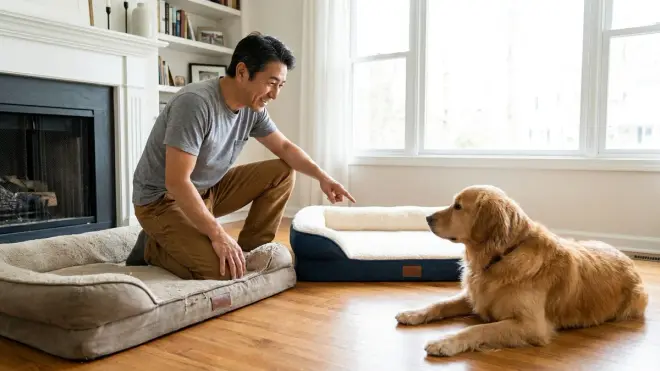
Most orthopedic dog beds need replacement every three to five years depending on the dog's weight, activity level, and the quality of the original foam, though premium beds with high-density foam can last seven years or more with proper care. The telltale sign that replacement is needed is visible sagging or compression where your dog typically lies—if you can see an indentation that doesn't bounce back within a few minutes after your dog gets up, the foam has broken down and is no longer providing proper support. Some higher-end manufacturers like Big Barker offer 10-year warranties specifically because their foam is engineered to last that long even under heavy daily use. What I've found through second-hand experience is that foam quality is the biggest predictor of longevity: beds with certified high-density foam easily outlast cheaper alternatives by three to five years, making the higher upfront cost a better value over time. Proper maintenance helps too—rotating the bed every few months, using a waterproof liner to prevent moisture damage, and regularly washing the cover to prevent allergen buildup all extend the useful life.
What's the difference between memory foam and orthopedic foam?
"Orthopedic foam" is actually a marketing term rather than a specific material designation—it generally refers to any foam designed to provide enhanced support for joints and pressure points, which most commonly means memory foam but can also include high-density polyurethane foams or latex. Memory foam specifically is viscoelastic polyurethane foam that responds to heat and pressure by conforming to body shape and then slowly returning to its original form, which is what creates the contouring effect that reduces pressure points. In practical terms for dog beds, when manufacturers say "orthopedic foam," they usually mean either solid memory foam or a combination of memory foam over firm support foam, but some use the term loosely to describe any dense foam regardless of whether it has memory properties. What matters more than the terminology is the foam density (measured in pounds per cubic foot) and whether the construction uses solid foam slabs or cheaper alternatives like shredded fill or low-density egg-crate padding. Always check the specifications rather than relying on the "orthopedic" label alone—some beds labeled orthopedic use foam so soft it provides barely more support than a standard pet bed.
The Verdict
Looking back at everything I've learned helping friends work through orthopedic bed decisions—and seeing the real difference these beds make for dogs with joint pain—my approach would be to match the bed quality to your dog's specific needs and your realistic budget rather than defaulting to either the cheapest or most expensive option. For large breeds with confirmed arthritis or hip dysplasia, the Big Barker's 10-year warranty and genuinely therapeutic foam justify the investment—it's not cheap, but neither is watching your dog struggle with pain or buying three inferior beds over the same timeframe. If you're working with a tighter budget or have a medium-sized dog with mild joint issues, the Friends Forever or PetFusion beds offer legitimate orthopedic support without the premium pricing, though you'll likely replace them in three to four years rather than seven or more.
The non-negotiable features regardless of price point are at least four inches of total foam thickness for dogs over 40 pounds, a density of 5+ pounds per cubic foot, and a waterproof liner with a truly washable cover. Everything else—bolstered edges, cooling features, color options—is personal preference based on your dog's sleeping style and your home environment. What I've seen make the biggest difference is simply getting the right support under dogs who need it rather than waiting until mobility issues become severe—an orthopedic bed won't reverse arthritis or heal dysplastic hips, but it provides a foundation (literally) for better rest and recovery that translates into more comfortable days and easier mornings.