


You're standing in the pet store aisle staring at a wall of collars, or scrolling through pages of options online, and wondering what actually matters. I've seen this a hundred times—new dog owners grab whatever looks nice, while experienced folks still second-guess their choices. Finding the top dog collars for your specific dog isn't complicated once you understand what you're looking at and why it matters for your dog's daily life.
What Is a Dog Collar?
A dog collar is a band that goes around your dog's neck, serving as the primary point of attachment for identification tags and leashes. Sounds simple, right? But that basic definition hides a lot of variation.

Collars serve three main functions: they hold your dog's ID tags (which can literally save their life if they get lost), they provide a secure point to attach a leash for walks and training, and they can communicate information to other people—like whether your dog is in training or needs space.
The market offers everything from basic nylon straps to padded leather designs, from flat buckle styles to specialized training collars. Each type uses different materials, closures, and construction methods that affect how they fit, how long they last, and what situations they work best in.
Here's what matters: the right collar needs to fit your dog's size, match their activity level, and align with how you're training them. A six-month-old Lab puppy who's still learning leash manners needs something different than a calm senior Beagle who walks perfectly beside you. The collar you choose affects your dog's comfort during every walk, every training session, and every moment they're wearing it—which is usually most of their waking hours.
How Dog Collars Work

The mechanics are straightforward—a collar forms a loop around your dog's neck, secured by a buckle, clip, or other closure mechanism. But how well it actually works depends on several factors working together.
Fit is the foundation of everything. A properly fitted collar sits snug enough that it won't slip over your dog's head, but loose enough that you can slide two fingers between the collar and their neck. Too tight, and you're risking discomfort or even breathing issues. Too loose, and your dog can back out of it—I've watched countless dogs slip their collars in the first week because owners were worried about making it too snug.
The relationship between how to measure your dog for a collar and the actual performance of that collar is direct. You need your dog's exact neck measurement, plus you need to understand how much adjustment range the collar offers and where that measurement falls in that range.
Different collar types distribute pressure differently. A standard flat collar spreads pressure across a band width—usually half an inch to two inches depending on dog size. When your dog pulls, that pressure concentrates at the front of their throat. That's fine for dogs who walk calmly, but it's why pulling creates that choking effect you've probably felt through the leash.
Martingale collars work differently—they have a limited-slip design that tightens slightly when tension is applied, but can't choke because they have a built-in stop point. The mechanics are simple: the collar has two loops, and when your dog pulls, the smaller control loop tightens the larger collar loop just enough to prevent slipping without constricting the airway.
Materials affect how force transfers from leash to dog. Nylon webbing is stiff and transfers force directly. Leather has some give as it ages and conforms to your dog's neck shape. Padded collars add a cushioning layer that distributes pressure across a wider surface area. I've worked with dogs who developed raw spots from thin nylon collars during intensive training periods—switching to a wider or padded design solved it immediately.
The closure mechanism determines security and ease of use. Traditional buckles (like on a belt) are the most secure but take longer to put on and take off. Quick-release plastic buckles snap open with finger pressure—convenient for daily use, but they can break or accidentally release if they catch on something. Martingale designs use a combination of a buckle for sizing and a slip mechanism for security.
Your dog's behavior changes how the collar functions. A dog who walks calmly on a loose leash barely puts any force on their collar. A dog who lunges at squirrels or pulls toward other dogs can generate shocking amounts of force—especially large or powerful breeds. That's when collar construction quality, width, and design type really matter.
Why Choosing the Right Collar Matters
Your dog wears their collar more than any other piece of equipment you'll buy them. That means every choice you make about that collar compounds over thousands of hours.
Safety comes first, and it's not just about strength. Yes, you need a collar that won't break when your 70-pound dog spots a rabbit. But you also need one that won't cause injury during normal use. I've seen neck irritation, hair loss, and even trachea damage from poorly fitted or inappropriate collar choices. The dog collar safety checklist I follow covers things most owners never think about until there's a problem.
Training effectiveness ties directly to your collar choice. If you're working on loose-leash walking, the feedback your dog gets through the collar affects how quickly they learn. A collar that's too loose gives unclear signals. One that's painful creates fear and avoidance rather than understanding. The nuances of how to choose a dog collar for training can shave weeks off your training timeline.
Your dog's daily comfort depends on getting this right. Think about wearing a watch or bracelet—if it's slightly too tight or rubs wrong, you notice it all day. Your dog feels the same way about their collar, but they can't tell you in words. Watch for scratching at the collar, hair loss around the neck, or reluctance to have the collar put on—these are your dog's way of saying something's wrong.
Different life stages demand different solutions. What works for a puppy rarely works for that same dog as an adult. Puppies grow fast—some breeds can double their neck size in a few months. Best dog collars for puppies need frequent sizing adjustments, which means you're either buying multiple collars or choosing highly adjustable designs from the start. Adult dogs settle into more stable sizes, letting you invest in higher-quality materials that will last years. Senior dogs often develop sensitivities or medical conditions that make certain collar styles uncomfortable or risky.
Understanding the Top Dog Collar Types

You're really choosing between a handful of core design approaches when comparing the top dog collars available. Each one exists because it solves specific problems.
Flat collars are the standard—a simple band with a buckle or quick-release closure. They work great for well-trained dogs who don't pull, and they're the lightest and least obtrusive option. Most dogs wear flat collars as their everyday "ID badge" collar, even if they use something else for walks. Materials range from basic nylon webbing (starting around a few dollars) to premium leather or specialty fabrics (ranging into $30-50 territory for quality pieces). The Blueberry Pet Classic Solid Nylon Dog Collar represents solid middle-ground quality with good hardware and stitching that holds up to daily wear.
Martingale collars started in the sighthound world—Greyhounds, Whippets, and similar breeds have heads that are nearly the same width as their necks, making collar escape easy. The limited-slip design prevents this without the risks of a full choke chain. I use martingales regularly with dogs who are learning leash manners, because they provide clear feedback without harsh corrections. The comparison between martingale vs flat collar designs often comes down to whether your dog pulls or has an escape risk.
Padded collars add a layer of neoprene, fleece, or other soft material against your dog's neck. They're particularly useful for dogs with sensitive skin, heavy coats that are prone to matting, or those who pull enough that a standard collar causes irritation. The padding spreads pressure across a larger surface area. I've seen them make a real difference for dogs recovering from trachea issues.
Training collars is a category that includes everything from head halters to specialized correction tools. These aren't typically all-day collars—they're for specific training sessions. Some work on pressure principles different from standard collars, redirecting force in ways that give you more control with less strength needed from you.
The diversity of dog collar types explained in detail goes beyond these basics into specialized options for specific activities—reflective collars for night walking, GPS collar attachments for tracking, even collars designed specifically for water work or extreme weather. Most dogs don't need these specialized versions, but when your situation calls for them, they solve problems that general-purpose collars can't.
Key Features That Define Top Dog Collars
Looking beyond the basic type, certain features separate functional collars from great ones.
Material Quality and Durability

Nylon webbing dominates the budget and mid-range market because it's durable, colorfast, and inexpensive to manufacture. Quality nylon collars use double or triple stitching at stress points and bar-tack the D-ring attachment. Cheap ones use single stitching that fails within months. The webbing itself should feel substantial—thin, flimsy nylon wears through faster and cuts into your dog's neck under tension.
Leather ages well when properly maintained, conforming to your dog's neck shape over time. Full-grain leather (the top layer of the hide) is strongest and most durable. Top-grain leather (which has been sanded and refinished) looks more uniform but isn't as strong. Genuine leather (everything else) is the lowest grade—it's still leather, but it's more likely to crack and break down. Quality leather collars use solid brass or stainless steel hardware that won't rust or corrode.
I've seen leather collars last 10+ years with proper care (occasional conditioning to prevent drying and cracking), while I've also seen cheap leather collars break within months. The difference is material quality and construction.
Biothane has become popular in the last decade—it's a coated webbing that looks like leather but has the easy-care properties of synthetic materials. It doesn't absorb water, resists odors, and cleans with a simple wipe. For dogs who swim or get muddy regularly, it's hard to beat.
Hardware Strength and Design
The D-ring where you attach the leash takes tremendous force. Welded metal D-rings won't come apart under stress. Cheap stamped or cast rings can crack. I've seen this happen during training sessions—the ring snaps and suddenly you've got a loose dog and a safety crisis.
Buckle quality matters more than people think. Metal buckles are stronger and more reliable than plastic quick-release clips, but good-quality plastic clips (like those from established manufacturers such as Duraflex or National Molding) can handle significant force. The cheap plastic buckles on budget collars are where you see failures—they crack in cold weather or simply pop open under moderate stress.
Width and Weight Considerations
Collar width should scale with dog size. Small dogs (under 20 pounds) typically wear collars 3/8 to 5/8 inches wide. Medium dogs (20-50 pounds) usually need 5/8 to 1 inch. Large dogs (50-90 pounds) typically wear 1 to 1.5 inches. Giant breeds (90+ pounds) often need 1.5 to 2 inches.
Wider collars distribute pulling force across more surface area, reducing pressure per square inch. That matters when your Labrador spots another dog across the park.
Too wide, though, and the collar becomes uncomfortable and heavy, especially on shorter-necked breeds. I've seen Bulldogs and Pugs wearing collars that were technically the right width for their weight, but their compressed neck anatomy made those collars rub constantly.
Adjustability and Fit Range
Look for collars that offer several inches of adjustment range. A collar sized for a 14-16 inch neck can accommodate growth or weight fluctuations. One that only adjusts from 14-15 inches will need replacement sooner.
Puppies grow fast enough that buying a collar with a 6-8 inch adjustment range makes sense—you'll shift the sizing as they grow, getting months of use from a single collar instead of replacing it every few weeks.
Reflective and Visibility Features

Reflective stitching or strips make your dog visible to drivers during early morning or evening walks. I've lived in Oregon long enough to appreciate this during our dark, rainy winters. Some collars use reflective thread woven throughout. Others have dedicated reflective strips. Both work, but the integrated reflective stitching tends to last longer without peeling or separating.
LED collar lights or light-up collars add another visibility layer for dogs who are off-leash in low light, though these are accessories rather than collar types.
Comfort Features
Rolled leather collars are cylindrical rather than flat—they're designed for long-haired breeds because they don't mat the coat the way flat collars do. I've used them with Goldens and Setters with good results.
Padded linings add comfort for any dog, but especially those with thin coats or sensitive skin. The padding usually adds weight, so there's a tradeoff between comfort and how much collar your dog feels.
Tapered designs are wider at the front (where the D-ring attaches and force concentrates) and narrower at the back. This distributes pulling force while keeping the overall collar lighter and less obtrusive.
Matching Collar Type to Your Dog's Needs
The "best" collar depends entirely on your specific dog and situation. Here's how I think through the decision.
By Size and Breed
Small breeds (Chihuahuas, Yorkies, Pomeranians) need lightweight collars that won't weigh down their small frames. Width of 3/8 to 1/2 inch is usually right. Avoid heavy hardware—a massive metal buckle that would be fine on a German Shepherd becomes a burden on a 5-pound dog.
Medium breeds (Beagles, Cocker Spaniels, Border Collies) are the easiest to fit—most standard collars are designed with this size range in mind. Focus on matching the collar to their activity level and training stage rather than worrying about specialized sizing.
Large breeds (Labs, Goldens, German Shepherds) need wider collars—usually 1 to 1.5 inches—to distribute force. These dogs can generate serious pulling power, so hardware quality becomes critical.
Giant breeds (Great Danes, Mastiffs, Saint Bernards) need the widest collars available, often 1.5 to 2 inches, with reinforced stitching and heavy-duty hardware. Despite their size, many giants have sensitive necks, so padding is often worth it.
Sighthounds (Greyhounds, Whippets, Salukis) need martingale collars because their heads are nearly the same width as their necks. A flat collar will slip right off. The martingale design prevents escape without choking.
Brachycephalic breeds (Bulldogs, Pugs, Boston Terriers) have compressed airways and should never be walked on collars that put pressure on the throat. These dogs are often better served by harnesses, but if you're using a collar for ID purposes, keep it loose and never attach a leash to it.
By Age and Training Level

Puppies need affordable, highly adjustable collars because they'll outgrow them quickly. I usually recommend starting with a basic nylon collar with a wide adjustment range. Don't invest in expensive leather for a 10-week-old puppy who'll need a new collar in two months. The focus should be on getting them comfortable wearing something around their neck and associating the collar with positive experiences.
Adolescent dogs in training benefit from collars that provide clear feedback without causing discomfort. This is often where martingale collars shine—they give you more control during the pulling and testing phase that most dogs go through between 6-18 months, without relying on harsh corrections.
Adult dogs with solid leash manners can wear whatever style suits them best, prioritizing comfort and durability. This is when investing in quality leather or premium materials makes sense—you're buying something that will last years.
Senior dogs may develop health issues that affect collar choice. Tracheal problems (common in small breeds) mean avoiding any collar that puts pressure on the throat. Arthritis can make it harder to lift their head for collar changes, favoring quick-release designs over traditional buckles. Cognitive decline sometimes means they need more visible collars so they're easier to spot if they wander.
By Behavior and Training Goals
Dogs who pull consistently need wider collars to prevent injury, but the real solution is training, not just better equipment. While you're working on loose-leash skills, a martingale collar or front-clip harness (though that's outside collar territory) will give you more control and protect their trachea.
Reactive dogs who lunge at triggers (other dogs, bikes, skateboards) need bombproof hardware. I've seen reactive dogs snap cheap plastic buckles during lunging episodes. Metal buckles or heavy-duty plastic, welded D-rings, and reinforced stitching are non-negotiable.
Dogs who don't pull at all can wear the lightest, simplest flat collar that fits them properly. These dogs make collar choice easy—it's purely about comfort and carrying ID tags.
By Environment and Activities
Water dogs (those who swim regularly) need collars that dry quickly and resist mildew. Biothane works great here. Nylon dries faster than leather but can hold odors if it stays damp. Never leave a wet leather collar on—it needs to dry off the dog to prevent mildew and skin issues.
Outdoor adventure dogs who hike, camp, or explore off-leash in wilderness areas should have highly visible collars with reflective elements and secure, welded hardware. The Ruffwear Hoopie Collar is a climbing-rope construction that's both durable and quick-drying—I've used similar designs with dogs who run in forests and along beaches.
Urban dogs benefit from bright colors or reflective materials for visibility near traffic. LED attachments can add another safety layer during evening walks in areas with poor street lighting.
Working dogs (service dogs, therapy dogs, farm dogs) often have specific collar requirements based on their work. Service dogs may need a specific collar style to carry certifications. Farm dogs working livestock might need quick-release collars that will pop open if caught on fencing.
Common Collar Problems and How to Avoid Them

After two decades of working with dogs and their owners, I've seen the same collar issues come up again and again. Most are completely preventable.
Sizing Mistakes
Too tight is the most common error from cautious owners who worry about their dog slipping the collar. Signs include difficulty swallowing, coughing, hair loss around the neck, and your dog scratching at the collar constantly. The two-finger rule is simple and reliable—if you can't comfortably slide two fingers under the collar, it's too tight.
Too loose is equally problematic. Dogs can back out of loose collars, especially in stressful situations. I've watched dogs slip their collars during vet visits, encounters with other dogs, or when startled by loud noises. If you can pull the collar over your dog's head without unbuckling it, it's too loose.
Material and Hardware Failures
Cheap buckles break. Plastic clip buckles exposed to sun become brittle. Metal buckles rust if they're made from cheap plated steel rather than solid brass or stainless. When a buckle fails, it usually happens at the worst possible moment—when your dog is pulling or in a situation where you need security.
Stitching failure happens when collars use single stitching instead of double or triple rows at stress points. The D-ring attachment takes the most force—this should be reinforced with bar-tack stitching (that square of dense stitching you see on quality gear).
Worn webbing frays and weakens over time, especially with dogs who swim or get dirty regularly. Inspect your dog's collar monthly, looking for fraying, thinning, or any signs of material breakdown.
Neck Injuries and Irritation
Hair loss around the neck often means the collar is rubbing. This can happen even with proper fit if the material is rough, the collar is dirty and abrasive, or your dog has particularly sensitive skin. Switching to a rolled collar or padded design usually solves it.
Tracheal damage is serious and happens when dogs pull hard on collars over extended periods. Small breeds are particularly vulnerable because their tracheas are more delicate. If your dog coughs during or after walks, especially when pulling, their collar may be causing tracheal irritation. This is not something to ignore—it can lead to permanent damage.
Embedded collars are a nightmare scenario where the collar is left too tight as a puppy grows, and it actually embeds into the skin. I've seen this with rescue dogs, and it requires veterinary intervention. Check your puppy's collar fit weekly during growth phases.
Tag Noise and Jangling
Metal ID tags clinking together drive some owners (and dogs) crazy. Tag silencers—rubber frames that hold tags together—eliminate the noise. Some collars have built-in tag pockets where you slide a flat tag into the collar itself, keeping information accessible without jangling.
Collar Reluctance
Some dogs hate having their collar put on or taken off. This usually develops because someone forced it on roughly or the dog had a bad experience. Counterconditioning works here—present the collar and immediately give a high-value treat, building positive associations. Put the collar on just before meals or walks, so the collar predicts good things.
Maintaining and Replacing Your Dog's Collar

Even the top dog collars need maintenance and eventually replacement.
Cleaning and Care
Nylon collars can be washed in a sink with mild soap and warm water. Scrub with a soft brush to remove dirt and oils. Rinse thoroughly and air dry. Some owners run them through the washing machine in a mesh bag, which works fine for quality collars but can accelerate wear on cheaper ones.
Leather collars need different care. Wipe off dirt with a damp cloth. When the leather starts to look dry (usually every few months depending on use), apply leather conditioner to keep it supple. Don't soak leather or put it in the washing machine—it will dry out, crack, and weaken.
Biothane collars are the easiest—wipe with a damp cloth or spray with a hose, dry with a towel, and you're done. They don't absorb water or odors.
Remove the collar periodically (daily if possible, weekly at minimum) to check the neck underneath for any irritation, hair loss, or skin issues. This also gives your dog's skin a break and allows air circulation.
When to Replace
Visible damage means immediate replacement. Fraying, cracked leather, bent or damaged hardware, stretched webbing—any of these compromise safety. Don't try to get another month out of a damaged collar. It's not worth the risk.
Outgrowing the fit is obvious with puppies but can happen with adult dogs too if they gain or lose significant weight. When a collar is adjusted to the very last hole on either end of its range, it's time for a new size.
Material degradation is subtler. Nylon webbing exposed to sun and weather gradually weakens even without visible damage. If your dog's collar is more than two years old and sees daily outdoor use, consider replacing it even if it looks okay. The UV exposure breaks down synthetic materials in ways you can't see.
Odor that won't wash out suggests bacterial buildup deep in the material. This is more common with nylon that stays damp frequently. If the collar smells even after thorough cleaning, replace it.
What to Avoid When Shopping for Dog Collars
The market is flooded with collars, and not all of them are designed with your dog's wellbeing in mind.
Spike or prong collars have metal prongs that press into your dog's neck when they pull. These are training tools that should only be used under the guidance of a professional trainer who understands their proper application. They're not appropriate for everyday wear, and in inexperienced hands, they can cause injury and fear-based behavioral problems.
Choke chains tighten indefinitely when pulled, with no built-in stop point like a martingale. They can close completely around your dog's neck, cutting off air and blood flow. The risk of tracheal damage, neck injury, and even strangulation makes them something I don't recommend to pet owners.
Collars with cheap plastic hardware that feels flimsy in your hands will be even more inadequate on your dog. Quality plastic has a substantial feel and a certain stiffness. Cheap plastic flexes easily and often has visible mold lines and rough edges.
Fashion over function designs prioritize looks without considering how the collar actually performs. Massive decorative elements (giant rhinestones, bulky ornaments) add weight and can catch on things. Thin, delicate materials that look elegant often lack the strength for actual use.
Citronella or shock bark collars are a different category entirely—they're behavior modification devices, not standard collars, and they come with significant ethical considerations and potential for misuse.
Frequently Asked Questions
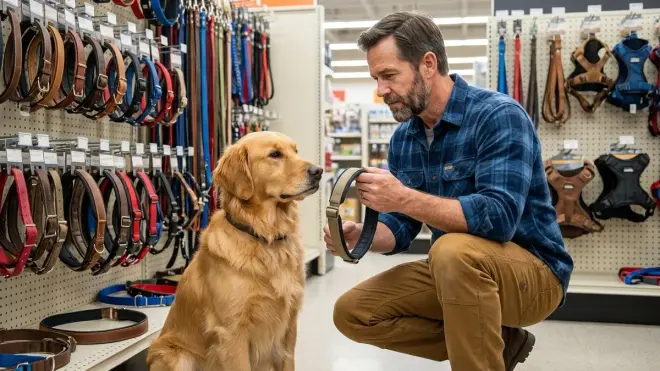
What size collar should I get for my dog?
Measure your dog's neck with a soft measuring tape, adding two inches to that measurement for proper fit—this gives you the collar size you need. For example, if your dog's neck measures 14 inches, you want a collar that adjusts to 16 inches. The collar should sit snugly enough that you can slide two fingers underneath but can't pull it over your dog's head when buckled.
How often should I replace my dog's collar?
Replace your dog's collar every 1-2 years with regular use, or immediately if you notice fraying, cracking, bent hardware, or any other damage. Puppies growing rapidly may need new collars every 6-8 weeks during peak growth phases, while adult dogs with stable weights can use the same well-made collar for several years if you maintain it properly.
Should my dog wear their collar all the time?
Most dogs can wear their collar continuously for ID purposes, but removing it daily—especially during sleep—allows their skin to breathe and lets you check for any irritation or matting underneath. Dogs with thick coats or sensitive skin particularly benefit from collar-free time each day, while dogs who might escape or get lost should keep ID-tagged collars on whenever they're not directly supervised.
What's the difference between a martingale collar and a regular flat collar?
A martingale collar has a limited-slip design with two loops—when your dog pulls, the control loop tightens the main collar loop just enough to prevent escape but includes a built-in stop that prevents full choking, while a flat collar stays the same circumference regardless of tension. Martingales work best for dogs who pull or have head widths similar to their neck sizes (like sighthounds), whereas flat collars suit well-trained dogs who walk calmly on leash.
Can a collar hurt my dog's neck or throat?
Yes, an improperly fitted collar or one used with a dog who pulls constantly can cause tracheal damage, neck strain, or skin irritation over time. Small breeds are particularly vulnerable to tracheal problems from collar pressure, and any dog who coughs during walks or shows breathing changes after pulling may be experiencing collar-related injury that requires switching to a harness or addressing the pulling behavior through training.
Making Your Final Decision
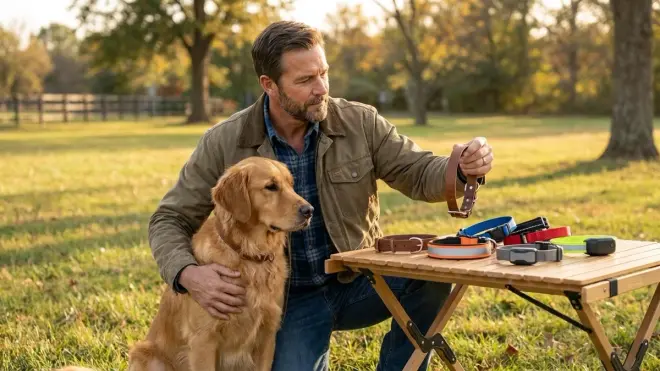
You've got the information. Now it comes down to looking at your specific dog and your specific situation.
Start with the basics: measure your dog's neck, consider their size and breed characteristics, and think honestly about their current training level. A pulling dog needs different support than one who walks perfectly beside you.
Don't overthink the material choice—quality nylon works great for most dogs and costs far less than leather while offering solid durability. Save the premium materials for when your dog is full-grown and has stable behaviors, or when you have specific needs like water resistance or low-maintenance cleaning.
Prioritize proper fit over every other factor. The most expensive, best-designed collar in the world won't work if it doesn't fit your dog correctly. The two-finger rule isn't complicated, and checking fit takes thirty seconds.
Inspect your dog's collar monthly. Look for wear, check that the fit hasn't changed with weight fluctuations, make sure hardware is secure. This simple habit prevents most collar-related emergencies.
Remember that collars are tools, not solutions. If your dog pulls constantly, the answer isn't a different collar—it's training. Use the collar that keeps them safe and comfortable while you work on the underlying behavior.
Your dog will probably wear a dozen different collars over their lifetime as they grow, age, and their needs change. That's normal. Pick the right collar for where they are right now, maintain it properly, and replace it when the next stage arrives.